

The Authority in Global Agricultural Chemistry & Bio-Resources
Poultry Farm Equipment Cost Factors That Affect Long-Term ROI
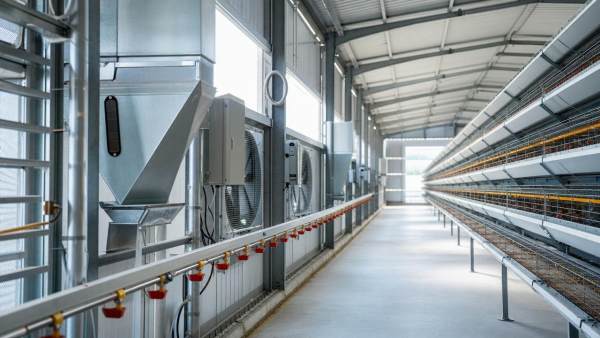
Poultry Farm Equipment Cost Factors That Affect Long-Term ROI
Evaluating Poultry Farm Equipment now requires more than comparing initial quotations, because long-term ROI depends on durability, automation, energy use, maintenance, compliance, and scalability.
As poultry operations face tighter margins and stricter production standards, cost visibility has become a decisive factor in capital planning.
The strongest investment decisions now measure total lifecycle value, not only the purchase price printed on a supplier proposal.
Cost Evaluation Is Moving From Purchase Price To Lifecycle Performance
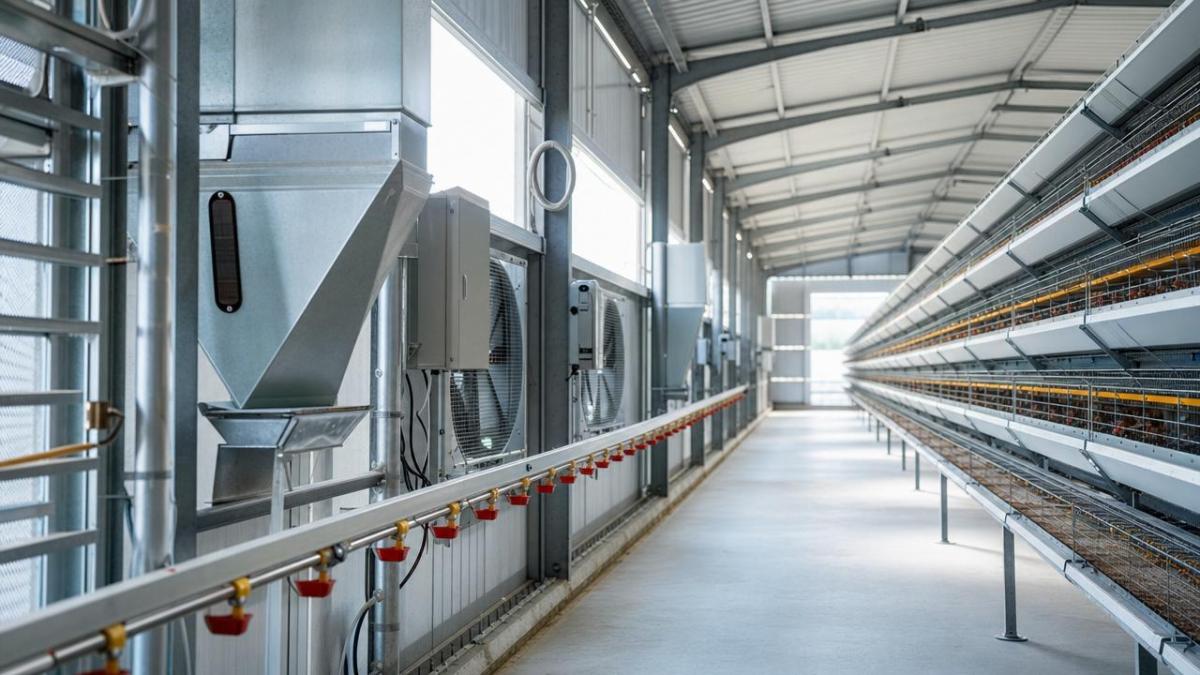
The market for Poultry Farm Equipment is changing as farms adopt integrated houses, automated feeding, climate control, and connected monitoring systems.
A lower upfront price may create hidden costs through downtime, uneven flock performance, frequent replacement, or higher utility consumption.
A higher-grade system can produce stronger ROI when it reduces labor pressure, stabilizes bird growth, and improves biosecurity control.
This shift is especially important where feed conversion, mortality, environmental control, and labor efficiency determine operating profit.
Market Signals Show Why Equipment Economics Are Becoming More Complex
Several signals show that Poultry Farm Equipment cost analysis is becoming more technical and data-driven.
Energy volatility makes ventilation, heating, cooling, and lighting systems central to lifetime cost calculations.
Disease pressure increases the value of equipment that supports cleaning, segregation, air quality, and controlled movement inside poultry houses.
Labor scarcity also changes ROI assumptions, because automation can protect production continuity when skilled farm labor is limited.
At the same time, integrators and retailers are requesting more traceable, welfare-aligned, and consistent production systems.
Key Trend Signals Affecting Poultry Farm Equipment Decisions
Initial Price Still Matters, But It No Longer Defines Value
The acquisition cost of Poultry Farm Equipment includes cages, feeders, drinkers, ventilation, heating, egg collection, manure handling, and control systems.
Installation, commissioning, freight, civil works, electrical upgrades, and staff training can also change the final capital requirement.
A quotation that excludes these items may appear competitive but create budget pressure during project execution.
Cost comparison should therefore separate equipment price from complete project cost and expected operational return.
- Confirm whether motors, sensors, controllers, and installation accessories are included.
- Check whether shipping, duties, and local certification costs are clearly stated.
- Compare warranties by component, not only by general system coverage.
- Review commissioning support and remote troubleshooting availability.
Durability Has A Direct Link To Replacement Cycles And Downtime
Material quality strongly affects the long-term economics of Poultry Farm Equipment in humid, dusty, and ammonia-rich environments.
Galvanized steel thickness, corrosion resistance, bearing quality, motor protection, and plastic component strength influence service life.
Weak materials may fail earlier, causing production disruption and repeated spending on spare parts.
Durable poultry house equipment also supports more predictable flock cycles, because critical functions remain stable during peak production periods.
The most useful comparison is cost per production cycle, rather than cost per installed unit.
Automation Changes Labor Economics And Production Consistency
Automation is one of the largest cost variables in Poultry Farm Equipment planning.
Automatic feeding, nipple drinking, climate control, egg collection, manure removal, and alarm systems increase initial investment.
However, automation can reduce routine labor, improve timing accuracy, and protect flock performance from human error.
The ROI depends on flock size, labor availability, production model, and the value of consistent environmental management.
- Small houses may justify partial automation first.
- Medium operations often gain from feeding and ventilation automation.
- Large integrated farms usually require full system coordination.
Automation should be evaluated by measurable savings, including labor hours, mortality reduction, feed efficiency, and fewer emergency interventions.
Energy Consumption Is Becoming A Major ROI Divider
Energy use can become one of the largest lifetime costs for Poultry Farm Equipment, especially in climate-sensitive regions.
Ventilation fans, heaters, cooling pads, lighting, pumps, and controllers affect daily utility spending.
Efficient equipment may cost more initially but deliver stronger payback through lower electricity and fuel usage.
Energy-efficient poultry systems also support better environmental stability, which influences growth rate, egg output, and feed conversion.
Maintenance Requirements Reveal The Real Operating Burden
Maintenance planning is essential when calculating Poultry Farm Equipment ROI over several production years.
Systems with complex components may require skilled technicians, specialized tools, and consistent spare parts availability.
A reliable maintenance plan lowers downtime risk and keeps feeding, watering, climate control, and waste handling systems functional.
Simple access points, modular parts, clear manuals, and remote diagnostics reduce service time and operating uncertainty.
- Estimate annual spare parts cost before purchase.
- Check replacement intervals for belts, chains, bearings, and sensors.
- Assess local technician support and response time.
- Confirm whether software updates require added fees.
Biosecurity And Compliance Are Now Financial Risk Factors
Modern Poultry Farm Equipment must support hygiene, disease prevention, waste management, and safe food production requirements.
Poorly designed equipment can trap organic matter, limit cleaning access, or allow cross-contamination between production zones.
Biosecurity-compatible systems reduce the financial impact of disease outbreaks, production stoppages, and rejected output.
Compliance-ready poultry farming equipment also protects access to regulated supply chains and export-oriented programs.
Important features include washable surfaces, controlled manure movement, reliable ventilation, and layouts that support restricted access.
Supplier Reliability Can Decide Whether ROI Is Achieved
The supplier behind Poultry Farm Equipment affects installation quality, warranty execution, spare parts flow, and technical troubleshooting.
A low-cost supplier may become expensive if documentation is weak or after-sales support is inconsistent.
Strong suppliers provide engineering drawings, performance references, safety guidance, component specifications, and transparent service commitments.
Supplier evaluation should include financial stability, production capacity, export experience, and quality control systems.
- Request documented performance data from comparable poultry projects.
- Review warranty exclusions and claim procedures.
- Verify spare parts lead times for critical components.
- Check whether technical support is available during peak flock cycles.
Scalability Protects Capital Investment As Production Models Change
Scalability is increasingly important in Poultry Farm Equipment selection because production volumes, welfare rules, and market contracts can change.
Expandable systems allow future houses, additional cage tiers, upgraded controls, or new monitoring tools without full replacement.
Modular poultry equipment can reduce expansion risk by preserving earlier investment and shortening future installation timelines.
Scalable design also supports phased investment, which helps align capital spending with production revenue growth.
Different Farm Functions Feel The Cost Impact In Different Ways
Poultry Farm Equipment cost factors do not affect every business function equally.
Operations teams focus on reliability, cleaning access, alarms, and ease of daily adjustment.
Finance teams need predictable payback, depreciation planning, and lifecycle cost visibility.
Animal health functions emphasize ventilation, drinking consistency, stocking density, and biosecurity-compatible layouts.
Supply chain functions consider spare parts availability, delivery certainty, supplier documentation, and service responsiveness.
A Practical Framework For Judging Long-Term ROI
A structured framework helps compare Poultry Farm Equipment options with different prices, specifications, and service promises.
The Most Important Points To Watch Before Committing Capital
- Calculate total installed cost, not only equipment purchase price.
- Compare energy consumption across realistic climate conditions.
- Confirm that Poultry Farm Equipment supports cleaning and biosecurity routines.
- Assess automation payback using labor, mortality, and feed conversion data.
- Verify supplier service capacity and spare parts availability.
- Choose scalable designs when future expansion is likely.
Smarter Equipment Decisions Start With Total Value Modeling
The most resilient Poultry Farm Equipment investments combine technical reliability, operating efficiency, compliance support, and supplier accountability.
A strong ROI model should include purchase cost, installation, utilities, maintenance, downtime risk, labor savings, and expected production gains.
Before final selection, compare at least two lifecycle scenarios: low upfront cost and higher-performance system investment.
The next practical step is to build a specification sheet that connects each equipment choice to measurable financial outcomes.
When Poultry Farm Equipment is evaluated through total value, capital spending becomes a strategic tool for stable, efficient, and scalable production.
Related Intelligence
- Poultry Housing & CagingHow Cage Specifications Affect Poultry Housing Costs in NigeriaLocally made poultry cage price in Nigeria: compare cage specifications, housing costs, durability, ventilation, manure systems, and installation factors for smarter poultry investment.
- Poultry Housing & CagingWhat Determines Battery Cage Prices in Nigeria Beyond Bird Capacity?Battery cage price in Nigeria depends on more than capacity. Compare steel, automation, logistics, and installation scope for a smarter poultry investment.
- Poultry Housing & CagingBuilding a Poultry Farm Equipment Solution Around Flock Size and LayoutPoultry farm equipment solution planning for flock size and layout—optimize feeding, water, ventilation, automation, and future expansion.
The Morning Broadsheet
Daily chemical briefings, market shifts, and peer-reviewed summaries delivered to your terminal.
