

The Authority in Global Agricultural Chemistry & Bio-Resources
How Ethiopia Poultry Farm Business Plans Shape Equipment Choices
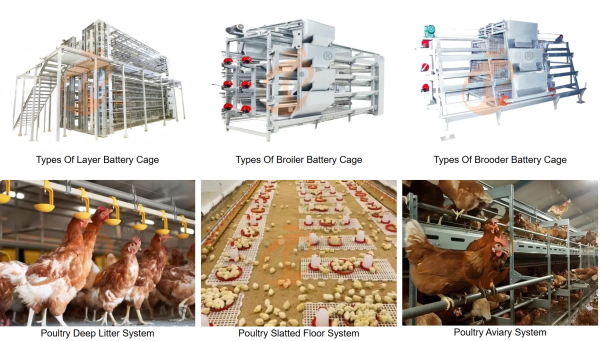
How Ethiopia Poultry Farm Business Plans Shape Equipment Choices
Poultry farming in Ethiopia is increasingly viewed as a structured agribusiness activity rather than a small operational experiment. For investors, farm owners, procurement buyers, and project managers, the central question is no longer only how many birds to raise. A more practical question is how the farm plan should guide housing, feeding, manure handling, ventilation, labor organization, biosecurity, and long-term equipment investment. When a poultry project is planned with clear production targets, site conditions, budget limits, and management capacity, equipment selection becomes more measurable and less dependent on guesswork.
This matters because poultry equipment is not a single purchase decision. Cages, feeders, drinkers, feed mills, manure cleaning systems, manure drying systems, egg collection arrangements, and installation support are connected parts of one production environment. If one part is selected without considering the others, the result may be uneven bird performance, higher labor demand, unnecessary maintenance, or difficulty expanding the farm later. A business plan helps decision-makers connect production ambition with realistic equipment capability.
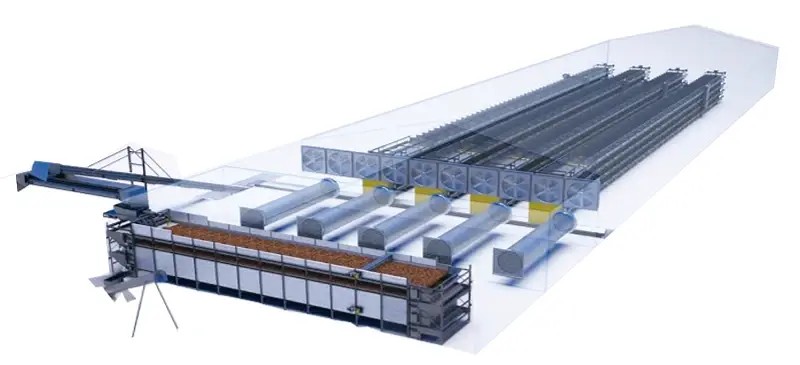
Why planning comes before procurement
In many poultry projects, equipment discussions begin too early. Buyers may compare cage prices before confirming bird capacity, house dimensions, water supply, feed strategy, manure disposal method, or available technical staff. This approach can create hidden risks. A low-cost cage system may not match the target stocking density. A feed mill may be too small for future growth. A manure system may reduce labor but require space, power, or management practices that the farm has not prepared for.
A practical farm plan reduces these risks by setting the framework for procurement. It clarifies whether the farm is designed for layers, broilers, breeders, or a phased combination. It defines the expected production scale, the number of poultry houses, the level of automation, and the investment timeline. With this information, suppliers and consultants can recommend equipment that supports the actual farm model rather than offering a generic package.
For information researchers and business evaluators, this planning-first approach also improves the quality of market comparison. Instead of asking which equipment is “best,” evaluators can ask which system is appropriate for the farm’s climate, land availability, workforce, capital structure, and operating objectives. That distinction is essential in Ethiopia, where project locations, infrastructure conditions, and farm management experience may vary significantly from one site to another.
Key factors that influence poultry equipment choices
A poultry business plan influences equipment selection through several practical factors. These factors should be reviewed before purchase orders are placed, because they affect not only initial cost but also daily operating performance.
- Production type: Layer farms usually require systems that support egg collection, bird comfort, manure removal, and long-term cage durability. Broiler farms may place more emphasis on floor management, feeding efficiency, ventilation, and rapid flock turnover.
- Farm scale: A small commercial farm may prioritize simple, reliable systems with manageable labor needs. Larger farms may require automated feeding, drinking, manure handling, and integrated layout planning.
- Site conditions: Land shape, road access, water supply, electricity reliability, and distance from feed sources all affect equipment suitability.
- Labor availability: Where trained labor is limited, equipment that reduces repetitive manual work may improve consistency. However, more automation also requires technical maintenance capacity.
- Expansion strategy: A farm that plans to grow in phases should avoid equipment layouts that block future poultry houses, feed storage areas, or manure processing zones.
The most effective equipment decision is therefore not always the most advanced system. It is the system that fits the business plan, can be operated consistently, and remains maintainable under real farm conditions.
How cage systems reflect the business model
Poultry cages are often among the most visible equipment investments in a farm project. For layer operations, cage design affects bird density, feeding access, drinking access, egg handling, manure management, and worker movement. In a business plan, cage selection should be connected to expected egg output, flock rotation, house ventilation, and cleaning routines.
Procurement teams should review cage material strength, corrosion resistance, wire spacing, ease of installation, and compatibility with feeding and drinking systems. They should also consider whether the farm intends to begin with semi-automatic operation and later move toward greater automation. If the initial cage structure cannot support future upgrades, expansion may become more expensive than expected.
For enterprise decision-makers, cage choices should be evaluated as part of return-on-operation rather than purchase price alone. A system that reduces egg breakage, simplifies inspection, supports bird uniformity, and improves manure removal may produce operational value over time, even if the initial investment requires more careful budgeting.
Feed processing and feeding systems in farm planning
Feed is one of the most important cost and performance factors in poultry production. A farm business plan should define whether feed will be purchased ready-made, mixed on site, or produced through a dedicated feed mill. This decision influences equipment needs, storage space, ingredient sourcing, labor skills, and quality control practices.
On-site feed mills may offer better control over formulation and supply continuity in some scenarios, but they also require proper planning. Buyers should consider mixer capacity, grinding requirements, ingredient handling, power supply, spare parts, and operator training. If the farm scale is too small, a full feed mill may not be economical at the beginning. If the farm scale is large or expanding, insufficient feed processing capacity can create bottlenecks.
Feeding systems should also match cage design and flock management practices. Manual feeding may suit early-stage farms with limited capital, while automatic feeding can improve uniform distribution and reduce labor intensity. The business plan should clarify when automation becomes justified and how it will affect daily management.
Manure handling as an operational and compliance issue
Manure management is sometimes underestimated during early planning, yet it has direct influence on farm hygiene, odor control, labor demand, and surrounding environmental conditions. A poultry farm with a clear plan should decide how manure will be removed, dried, stored, transported, or reused. Equipment such as manure belts, scrapers, cleaning systems, and drying systems should be assessed according to house layout and daily management capacity.
In practical procurement discussions, manure systems should not be treated as optional accessories after cages have already been selected. The two are closely connected. Cage tier arrangement, aisle design, ventilation, and manure discharge points all influence what cleaning system is feasible. A well-planned manure process may help reduce disease pressure, improve worker conditions, and make the farm easier to manage during rainy or high-humidity periods.
For project managers, manure handling also affects construction planning. Space must be reserved for collection, drying, or temporary storage. Access routes should allow movement of manure without interfering with feed delivery, egg movement, or biosecurity zones. These details are best addressed during planning, not after equipment has arrived on site.
Integrated solutions and supplier evaluation
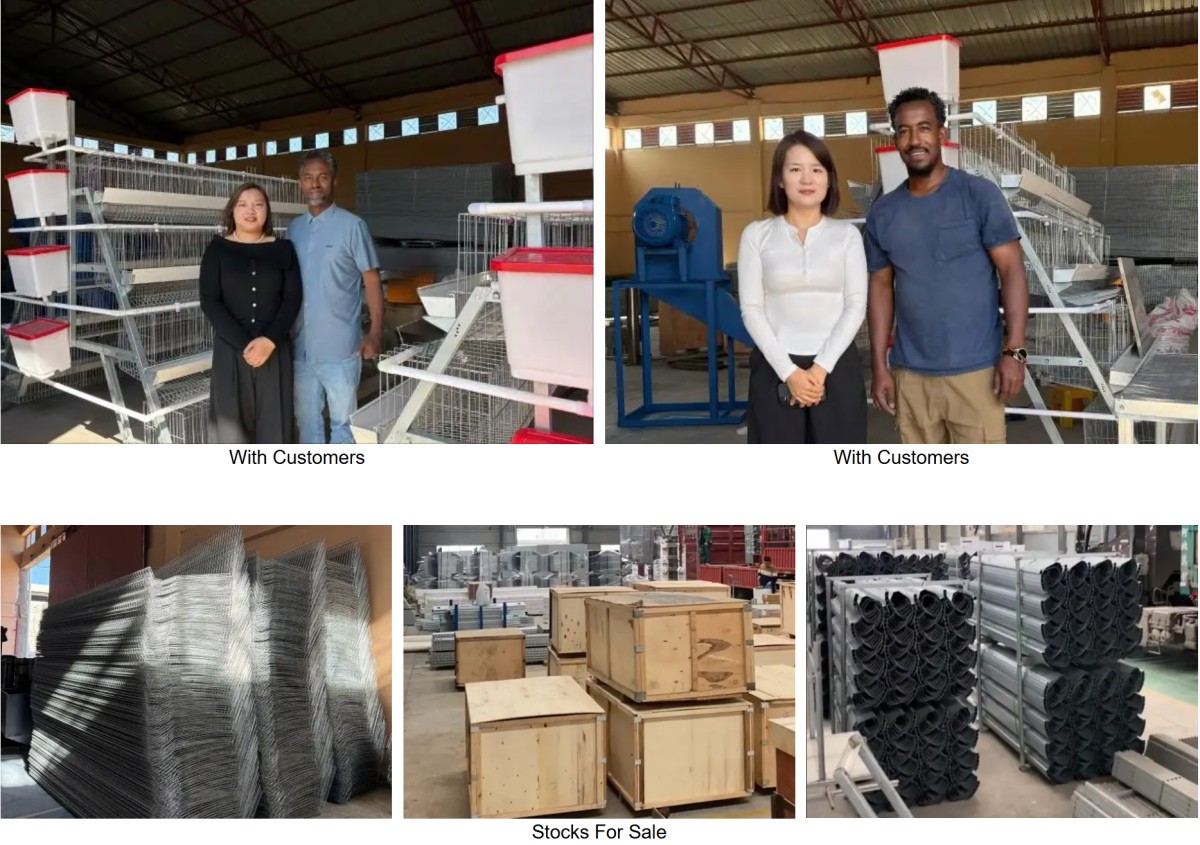
Because poultry equipment systems are interdependent, many buyers look for suppliers that can support planning, design, purchasing guidance, equipment delivery, installation supervision, and technical support. An integrated approach may reduce communication gaps between the farm owner, building team, equipment manufacturer, and installation crew. It may also help ensure that cage systems, feed mills, manure cleaning equipment, drying systems, and other farm components are compatible.
For procurement buyers comparing manufacturers and consultants, Ethiopia Poultry Farm Business Plans can be reviewed within a broader assessment of farm layout design, equipment matching, installation feasibility, spare parts planning, and the supplier’s ability to support the project after delivery.
Supplier evaluation should remain objective. Buyers may consider the manufacturer’s experience in poultry farm equipment, the clarity of technical proposals, the practicality of the layout drawings, and the ability to explain why specific systems are recommended. They may also review whether the supplier understands local project realities such as installation conditions, transport coordination, power availability, and farm management skill levels.
A professional poultry farm equipment consultant and manufacturer with integrated farming solutions can be especially relevant when a project involves multiple equipment categories. Main product areas such as poultry cages, feed mills, manure cleaning and drying systems, and complete poultry farm equipment require coordination. Services including poultry farm planning and design, purchasing guidance, equipment delivery, installation supervision, and technical support can help decision-makers move from concept to operation with fewer disconnects.
Common mistakes in equipment selection
Several mistakes frequently appear when poultry projects move from planning to procurement. The first is focusing only on unit price. While price matters, it should be balanced against durability, maintenance requirements, bird welfare, labor efficiency, and compatibility with future expansion. A cheaper system that requires frequent repair or limits production efficiency may become more costly over time.
The second mistake is purchasing equipment before confirming the poultry house design. House width, length, height, ventilation approach, drainage, access doors, and internal walkways all affect equipment layout. If construction and equipment planning are separated, installation problems may occur.
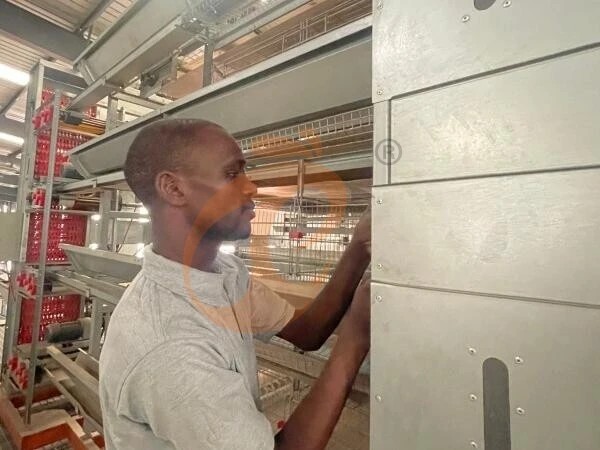
The third mistake is underestimating technical support. Poultry equipment is not finished when it arrives at the farm. Installation supervision, operator guidance, and after-sales communication are important, especially for farms adopting automated or semi-automated systems for the first time. Buyers should ask how installation will be coordinated and what level of technical support is available during commissioning.
Local presence and project coordination
For Ethiopian poultry projects, local communication and coordination can be important during planning, delivery, installation, and technical follow-up. A project address such as WR93+FQ2, Addis Ababa, Ethiopia may support practical engagement for buyers who need local reference points during evaluation. At the same time, manufacturing experience and broader branch networks can contribute to equipment supply and technical coordination when clearly documented and professionally managed.
The background of a company headquartered in Hong Kong since 2011, with branches in China established in 1996, may be relevant for buyers assessing continuity, manufacturing experience, and cross-region project support. However, procurement decisions should still be based on technical fit, proposal clarity, delivery capability, installation planning, and long-term service expectations rather than background information alone.
Practical guidance for decision-makers
Before selecting equipment, enterprise decision-makers should prepare a project brief that includes bird type, target capacity, land information, building concept, budget range, labor plan, electricity and water conditions, feed strategy, and expansion expectations. This brief allows suppliers to provide more accurate recommendations and reduces the risk of mismatched quotations.
Procurement buyers should compare proposals line by line rather than only comparing final prices. A complete proposal should make clear what is included, what is excluded, what installation support is assumed, and what conditions must be prepared by the farm owner. Spare parts, maintenance access, operator training, and delivery packaging should also be discussed before the purchase decision is finalized.
Project managers should pay close attention to implementation timing. Poultry house construction, equipment production, shipping, customs coordination, installation scheduling, and flock placement should be sequenced carefully. Delays in one stage can affect the whole project. A business plan that includes a realistic execution schedule is more useful than a plan focused only on production targets.
Conclusion
Equipment choices in Ethiopian poultry projects are shaped by much more than product catalogs. They depend on the business plan behind the farm: production goals, farm size, site conditions, labor structure, feed supply, manure handling, expansion strategy, and technical support needs. When these elements are clearly defined, procurement becomes more rational and the selected systems are more likely to support stable operation.
For researchers, buyers, evaluators, and project managers, the most valuable approach is to connect planning and equipment selection from the beginning. Poultry cages, feed mills, manure cleaning and drying systems, and complete farm equipment should be assessed as one operating system. A well-structured plan does not eliminate every project risk, but it gives decision-makers a stronger basis for comparing options, controlling investment, and building a poultry farm that can operate with greater consistency over time.
Related Intelligence
- Poultry Housing & CagingHow Cage Specifications Affect Poultry Housing Costs in NigeriaLocally made poultry cage price in Nigeria: compare cage specifications, housing costs, durability, ventilation, manure systems, and installation factors for smarter poultry investment.
- Poultry Housing & CagingWhat Determines Battery Cage Prices in Nigeria Beyond Bird Capacity?Battery cage price in Nigeria depends on more than capacity. Compare steel, automation, logistics, and installation scope for a smarter poultry investment.
- Poultry Housing & CagingBuilding a Poultry Farm Equipment Solution Around Flock Size and LayoutPoultry farm equipment solution planning for flock size and layout—optimize feeding, water, ventilation, automation, and future expansion.
The Morning Broadsheet
Daily chemical briefings, market shifts, and peer-reviewed summaries delivered to your terminal.
