

The Authority in Global Agricultural Chemistry & Bio-Resources
Long Life Poultry Cages: What Materials and Coatings Actually Extend Service Life?
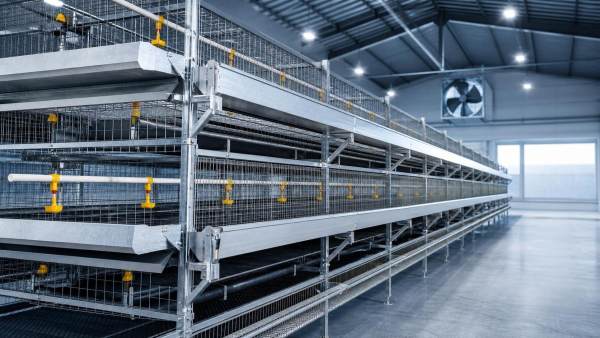
Why service life changes so much from one poultry house to another
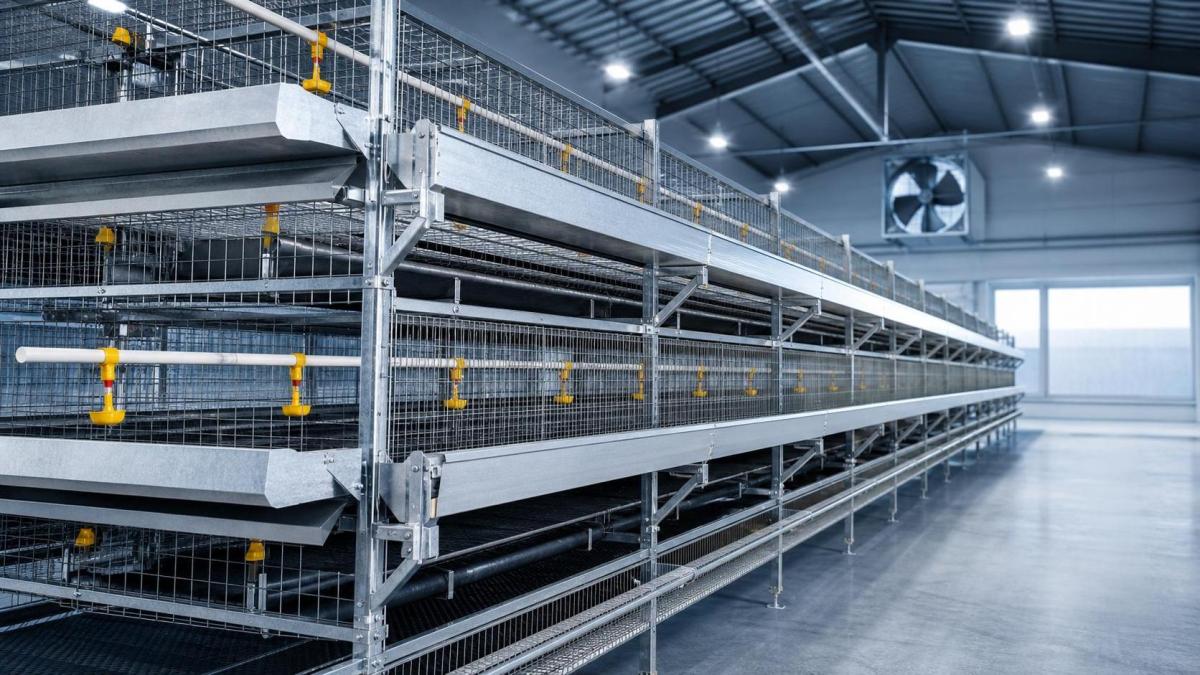
Long life poultry cages are rarely defined by catalog claims alone. Real durability comes from how metal, coating, moisture, manure, cleaning chemistry, and airflow interact over time.
That matters in commercial housing, where corrosion is not a cosmetic issue. It changes wire strength, joint stability, hygiene control, and maintenance frequency.
In practice, one cage system may remain stable for years, while another shows rust at welds within a short cycle. The difference usually starts with material selection.
For AgriChem Chronicle, this topic sits where agricultural machinery, materials science, and operating compliance meet. Equipment life is now part of broader lifecycle risk analysis.
The better question is not simply which long life poultry cages last longest. It is which material and coating combination fits the actual housing environment.
In real housing systems, the environment decides the coating burden
Different poultry houses create different corrosion patterns. High humidity, manure accumulation, poor ventilation, and aggressive washdown routines do not attack steel in the same way.
Layer houses with continuous production often face persistent ammonia exposure. Cage surfaces near manure belts and lower tiers usually age faster than upper sections.
Broiler breeder facilities may introduce heavier mechanical wear. Doors, feed trough edges, and contact points can lose protective layers before general corrosion becomes visible.
Open-sided houses in coastal or tropical regions add another factor. Salt-laden air and condensation can undermine basic zinc coatings much faster than inland installations.
This is why long life poultry cages should be evaluated by corrosion map, not by generic lifespan promises. The operating microclimate is usually more predictive than brochure language.
The steel base matters before any coating is applied
Low-carbon steel remains the standard substrate for most long life poultry cages. It is cost-efficient, easy to form, and compatible with several galvanizing methods.
The issue is not whether carbon steel is acceptable. The issue is wire consistency, weld quality, surface preparation, and whether the steel chemistry supports strong coating adhesion.
Stainless steel can extend service life in highly corrosive zones, especially around wet manure handling or harsh disinfectant cycles. Still, full stainless systems are rarely the default answer.
They raise capital cost sharply, and poor grade selection can still create problems. In chloride-heavy settings, 304 may underperform where 316 is more stable.
Where long life poultry cages usually gain or lose years
Most service-life differences come from coating method, not from steel alone. Zinc thickness, coverage at welds, and post-fabrication treatment often decide long-term performance.
Electro-galvanized cages look uniform and smooth, but the zinc layer is relatively thin. In mild indoor conditions, they can perform adequately. In harsh houses, they age quickly.
Hot-dip galvanizing after fabrication usually performs better for long life poultry cages. It protects welds, corners, and cut edges more completely, which are common corrosion starting points.
Pre-galvanized wire systems sit between those options. They can work well when fabrication quality is controlled, but exposed weld points remain a known weakness.
PVC or polymer-coated wire adds a second barrier. That can be valuable in wet or high-ammonia housing, provided the coating bonds well and resists cracking.
A quick comparison of common material and coating paths
In many installations, hot-dip galvanized systems offer the most reliable balance. They often deliver the practical durability expected from long life poultry cages without the premium of full stainless construction.
The same cage performs differently in dry houses, wet houses, and aggressive cleaning cycles
A dry enclosed house with stable ventilation usually rewards good zinc coverage and strong weld finishing. Here, mechanical integrity may matter as much as corrosion resistance.
A wet house changes priorities. Persistent moisture keeps zinc active, speeds oxidation, and exposes small coating defects much earlier than expected.
Where routine cleaning uses alkaline detergents or acidic descalers, coating chemistry becomes critical. Some finishes tolerate moisture but break down under repeated chemical attack.
This is where long life poultry cages should be reviewed as a maintenance system, not only as fabricated hardware. Cleaning method and corrosion life are directly linked.
What to prioritize under each operating pattern
- In dry, mechanically demanding houses, check wire gauge stability, weld penetration, and abrasion at moving contact points.
- In humid inland houses, prioritize hot-dip galvanizing thickness and corrosion resistance around manure-contact areas.
- In coastal or saline environments, review stainless components or premium dual-layer coatings for exposed sections.
- In frequent washdown systems, request compatibility data for disinfectants, detergents, and drying intervals.
What often gets overlooked when judging long life poultry cages
One common misread is focusing on coating type while ignoring weld treatment. Corrosion usually appears first where metal was heated, cut, or bent.
Another is treating all zinc coatings as equivalent. The label “galvanized” says very little without process details, average thickness, and post-fabrication coverage.
Some systems also look durable at delivery but lose performance after installation damage. Scratches from assembly, transport, or feed equipment can expose bare steel early.
Lifecycle cost is often misjudged as well. Lower upfront pricing can be offset by repairs, localized replacements, sanitation disruption, and premature cage line retirement.
For long life poultry cages, the useful metric is not headline service life. It is stable performance under the exact humidity, manure load, and cleaning regime on site.
Questions worth answering before final selection
- Is the cage located near persistent manure splash, condensate, or high-pressure cleaning zones?
- Are welds coated after fabrication, or only protected before welding?
- What disinfectants are used, and how often do they contact metal surfaces?
- Does the housing site face coastal air, seasonal humidity peaks, or poor drying conditions?
- Which parts are most likely to suffer friction, pecking impact, or repeated operator contact?
A practical way to match materials and coatings to farm reality
A useful starting point is to separate the system into corrosion zones. Not every section needs the same material level, and uniform specification is not always the best value.
High-risk zones include lower tiers, manure-adjacent frames, drinker areas, and any point exposed to standing moisture. These areas justify more protective finishes.
Moderate-risk zones may perform well with high-quality hot-dip galvanizing. Low-risk zones can sometimes tolerate simpler treatment if inspection access is good.
This zoned approach aligns with the broader ACC editorial logic seen across regulated industrial sectors. Material choice should follow exposure evidence, not generic specification inflation.
For long life poultry cages, practical selection usually comes down to documented coating thickness, weld coverage, chemical compatibility, and the quality of field maintenance.
Useful next-step actions
Map the housing environment by moisture, manure contact, airflow, and washdown intensity. That exposes whether the real problem is corrosion, abrasion, or both.
Then compare long life poultry cages using verifiable details: steel grade, galvanizing route, zinc thickness range, polymer type, and coating treatment at welds.
It is also worth reviewing maintenance intervals alongside material data. A coating that lasts longer but complicates repair may not be the best operational fit.
When those conditions are defined clearly, long life poultry cages stop being a marketing phrase. They become a measurable match between farm exposure and engineered protection.
Related Intelligence
- Poultry Housing & CagingHow Cage Specifications Affect Poultry Housing Costs in NigeriaLocally made poultry cage price in Nigeria: compare cage specifications, housing costs, durability, ventilation, manure systems, and installation factors for smarter poultry investment.
- Poultry Housing & CagingWhat Determines Battery Cage Prices in Nigeria Beyond Bird Capacity?Battery cage price in Nigeria depends on more than capacity. Compare steel, automation, logistics, and installation scope for a smarter poultry investment.
- Poultry Housing & CagingBuilding a Poultry Farm Equipment Solution Around Flock Size and LayoutPoultry farm equipment solution planning for flock size and layout—optimize feeding, water, ventilation, automation, and future expansion.
The Morning Broadsheet
Daily chemical briefings, market shifts, and peer-reviewed summaries delivered to your terminal.
