

The Authority in Global Agricultural Chemistry & Bio-Resources
Automatic Poultry Farming Systems: How to Compare Feeding, Climate, and Control Features
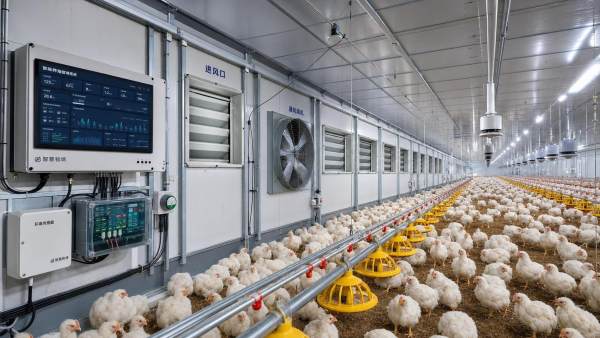
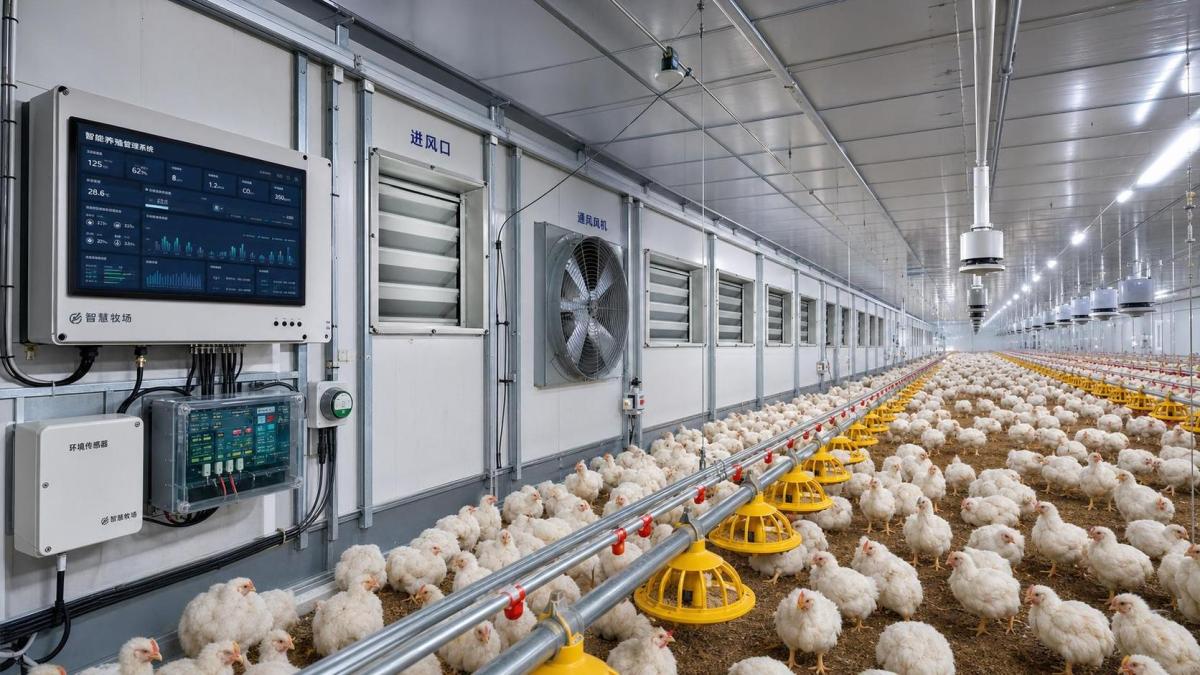
Comparing automatic poultry farming systems requires more than checking whether feed lines, fans, and controllers are labeled automated. In practice, feeding precision, climate consistency, and control logic shape flock performance, biosecurity, labor demand, and compliance outcomes. For operations facing tighter cost pressure and stricter reporting expectations, those details determine whether automation becomes a measurable asset or an expensive weak point.
Why system comparison now carries more weight
Poultry production is no longer evaluated only by throughput. Feed conversion, mortality control, environmental stability, energy use, and audit readiness now sit in the same decision frame.
That wider perspective matters across the primary industries covered by AgriChem Chronicle. Equipment selection increasingly intersects with traceability, environmental oversight, and the reliability of upstream and downstream supply chains.
Automatic poultry farming systems sit at that intersection. They combine mechanical equipment, sensors, software, electrical infrastructure, and management protocols into one operating environment.
A system that performs well in a brochure may still underperform in a live house if feed delivery drifts, ventilation zones are uneven, or alarms are poorly configured.
What an automatic poultry farming system really includes
The term often sounds narrower than it is. Most automatic poultry farming systems include feed transport, drinker coordination, ventilation, heating or cooling support, environmental sensing, lighting schedules, alarm functions, and a central control platform.
Some solutions also extend into weighing, water metering, egg handling, litter monitoring, remote access, and integration with farm management software.
The strongest comparisons start by separating automation depth from automation visibility. A large touchscreen does not mean the system has strong process control.
A practical review asks whether the platform can maintain stable conditions across real production variation, not just ideal design conditions.
Three core layers to assess
- Mechanical layer: feeders, augers, pans, hoppers, inlets, fans, heaters, and backup components.
- Sensing layer: temperature, humidity, static pressure, CO2, ammonia, feed level, water flow, and power status.
- Control layer: logic, scheduling, alarm thresholds, remote access, data logging, and interoperability.
Weakness in any layer can reduce the value of the others. Good hardware with poor control logic still produces unstable results.
How to judge feeding performance beyond rated capacity
Feeding is usually the first claimed advantage of automatic poultry farming systems, yet capacity figures alone tell very little. The better question is how consistently feed reaches birds at the right time, volume, and distribution.
Uniform feed access matters because uneven delivery can widen body weight variation, increase competition, and distort flock response during growth or laying cycles.
Key feeding checkpoints
A useful comparison also looks at how feeding logic interacts with bird age, stocking density, and ration strategy. Flexible scheduling often matters more than maximum throughput.
Climate control is where performance gaps become visible
Climate stability is often the decisive factor when automatic poultry farming systems are compared in real operating conditions. A house can be automated and still suffer from hot spots, wet litter, cold drafts, or poor air exchange.
The issue is not whether the site has fans and inlets. The issue is whether those components are coordinated by reliable logic and informed by accurate sensor data.
Signals worth more attention
- Sensor placement, calibration intervals, and redundancy for critical readings.
- Static pressure management rather than fan speed alone.
- Transition control between minimum ventilation and tunnel mode.
- Response to seasonal volatility, especially humidity swings and cold weather constraints.
- Alarm escalation during power loss, heater failure, or abnormal gas accumulation.
In many cases, system quality shows up during transition events. Stable operation under moderate weather is not the same as resilient control during sudden heat stress or winter pressure changes.
That is why climate benchmarking should include recovery time, deviation tolerance, and the controller’s ability to avoid oscillation.
Control architecture determines whether data becomes usable
Control platforms are often marketed through dashboards, but interface quality is only one part of the evaluation. The deeper question is how the system turns readings into timely, traceable decisions.
Automatic poultry farming systems with strong control architecture usually provide structured alarm trees, event history, user permissions, parameter backups, and exportable records.
Those capabilities support both operational continuity and regulated reporting environments. They also reduce the risk of undocumented setting changes after staff turnover or maintenance interventions.
Questions that reveal control maturity
- Can setpoints be versioned, restored, and compared across houses?
- Does the system log sensor faults separately from process alarms?
- Is remote access secure, role-based, and audit-friendly?
- Can the controller integrate water, feed, energy, and environment data in one timeline?
- What happens if communications fail between local devices and the main interface?
A polished display without disciplined data handling can create confidence without control. That gap becomes expensive during troubleshooting.
Matching system design to the operating scenario
Not all automatic poultry farming systems should be scored against the same priorities. Broiler houses, layer facilities, breeder operations, and retrofit projects bring different stress points.
A greenfield site may prioritize full integration and future expansion. An older house may need modular controls, electrical compatibility, and staged upgrades with minimal disruption.
Climate demands also vary by region. High-humidity zones, cold climates, and areas with unstable power supply change what counts as a robust configuration.
This is where broad industry analysis becomes useful. ACC’s cross-sector perspective on machinery, processing, and regulated supply chains highlights a recurring pattern: performance claims are only meaningful when matched to operating context.
A practical comparison frame
Where hidden cost usually sits
The purchase price rarely captures the full economics of automatic poultry farming systems. Hidden cost often sits in calibration burden, spare parts lead time, software lock-in, maintenance access, and the quality of local technical support.
Energy consumption deserves close review as well. A cheaper control package can become expensive if ventilation and heating stages are poorly optimized.
Another overlooked issue is data ownership. If performance records cannot be exported cleanly, benchmarking across flocks becomes harder and supplier dependence grows.
Useful due diligence therefore extends beyond equipment specification sheets. It should include service structure, firmware update policy, cybersecurity practice, and documented component life cycles.
A disciplined next step for evaluation
A sound review of automatic poultry farming systems starts with a baseline matrix. List flock type, house dimensions, climatic exposure, utility constraints, biosecurity needs, and reporting expectations before comparing vendors.
Then test claims against measurable criteria: feed uniformity, sensor accuracy, alarm logic, climate recovery time, maintenance access, and data transparency.
Site references are valuable when they focus on operating conditions similar to the intended deployment. General satisfaction claims reveal much less than performance under comparable stress.
In the end, the most reliable automatic poultry farming systems are rarely the ones with the longest feature list. They are the systems that keep feeding, climate, and control functions stable, understandable, and auditable under daily production pressure.
That is the point where comparison becomes decision quality. From there, a shortlist can be refined with on-site validation, lifecycle costing, and a clear acceptance standard for commissioning.
Related Intelligence
- Poultry Housing & CagingHow Cage Specifications Affect Poultry Housing Costs in NigeriaLocally made poultry cage price in Nigeria: compare cage specifications, housing costs, durability, ventilation, manure systems, and installation factors for smarter poultry investment.
- Poultry Housing & CagingWhat Determines Battery Cage Prices in Nigeria Beyond Bird Capacity?Battery cage price in Nigeria depends on more than capacity. Compare steel, automation, logistics, and installation scope for a smarter poultry investment.
- Poultry Housing & CagingBuilding a Poultry Farm Equipment Solution Around Flock Size and LayoutPoultry farm equipment solution planning for flock size and layout—optimize feeding, water, ventilation, automation, and future expansion.
The Morning Broadsheet
Daily chemical briefings, market shifts, and peer-reviewed summaries delivered to your terminal.
