

The Authority in Global Agricultural Chemistry & Bio-Resources
Battery Cage Price in 2026: What Changes Between 1,000 and 10,000 Birds
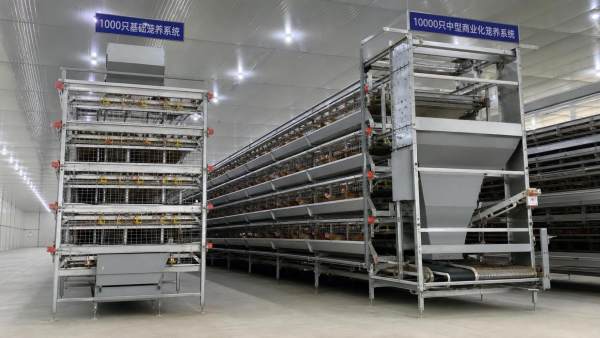
A finance approver looking at layer housing for 1,000 birds versus 10,000 birds is not really comparing cages alone. The decision changes with building use, labor structure, feed handling, manure removal, expected egg output stability, installation complexity, and how much downtime the farm can absorb. By 2026, the biggest shift in cage budgeting is likely to be less about a single headline number and more about what is included around the cage system.
That is why the price gap between a small and a mid-sized commercial layer farm often feels larger than a simple bird-count multiplier. A 10,000-bird project may benefit from lower unit equipment cost, but it also brings new spending categories that a 1,000-bird farm can sometimes avoid or postpone. For a financial reviewer, the useful question is not “What is the cheapest cage?” but “What cost structure appears only after scale changes?”
Why 1,000 birds and 10,000 birds behave like different investments
At 1,000 birds, a farm can still operate with a relatively simple management model. Manual feeding support, simpler water line layouts, less demanding manure handling, and shorter installation times are often workable. If land is available and labor is inexpensive, some owners can accept a lower level of automation because the operational burden is still manageable.
At 10,000 birds, the economics shift. Walking distances increase, feed distribution consistency matters more, manure accumulation becomes a hygiene and workflow issue, and small design mistakes become recurring cost leaks. A system that looks affordable at the quotation stage may create high labor dependency, egg breakage, poor access for inspection, or difficult cleaning routines later. That is where many battery cage budgets expand between initial inquiry and final approval.
For finance teams, this means scale changes the meaning of “price.” A low entry quotation may suit a starter farm, while a larger site often needs a more complete package to protect output and reduce operating friction.
What usually sits inside the cage budget in 2026
When buyers compare offers, they often focus on the cage frame and miss the surrounding cost items. In practice, commercial layer projects usually involve a combination of the following:
- Cage frame material and corrosion protection
- Tier configuration and stocking layout
- Feed trough or automatic feeding arrangement
- Nipple drinking lines and pressure control components
- Egg collection design, whether manual or more assisted
- Manure removal method
- Support structure, fastening parts, and installation accessories
- Packing, inland transport, port handling, and site delivery
- Installation labor, supervision, and commissioning adjustments
- Spare parts allowance for early operation
For 1,000 birds, some of these can remain basic. For 10,000 birds, omitting them may simply move the cost downstream into labor, replacement, sanitation problems, or output losses. This is why evaluating battery cage price by bird capacity alone can be misleading; the commercial farm context determines which components are optional and which become operational necessities.
A finance approver should also separate equipment cost from project cost. The cage package may be one line in the capex plan, but site preparation, ventilation coordination, lighting arrangement, and building compatibility often decide whether the installed system performs as expected.
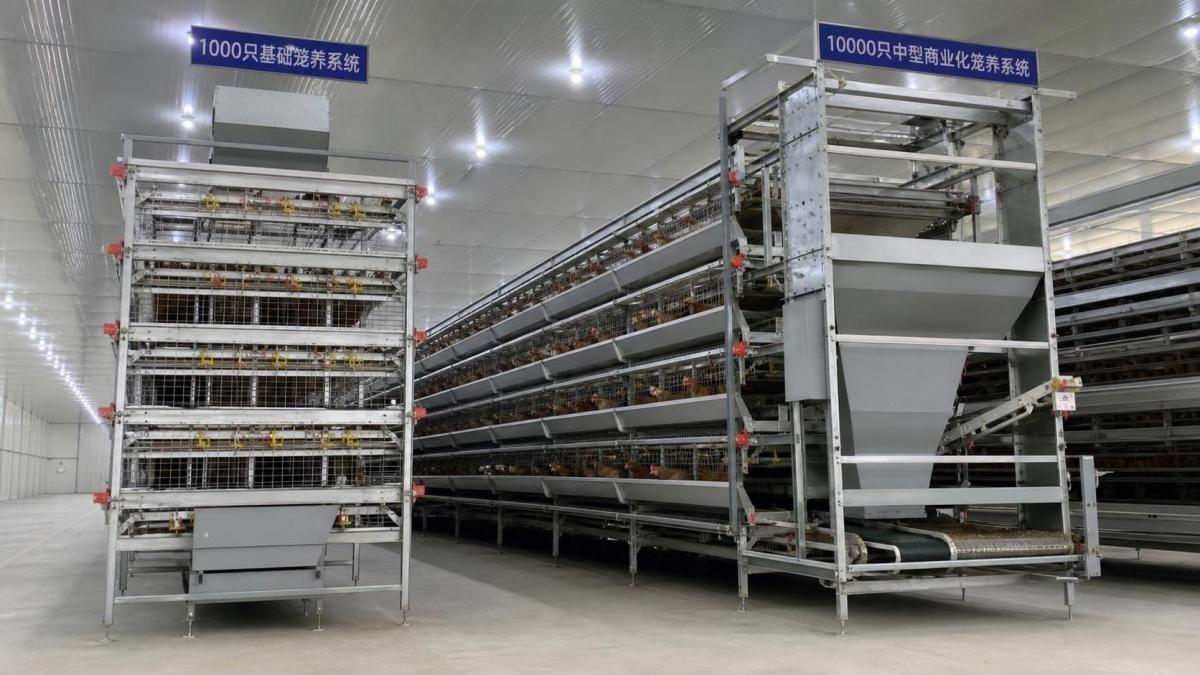
Why unit cost may fall while total project cost rises sharply
Larger projects often enjoy some scale advantage. Shared transport, more efficient packing density, standardized production runs, and lower per-bird overhead in manufacturing can reduce cage cost on a per-bird basis. That is the part many buyers expect.
What changes the approval discussion is that a 10,000-bird farm usually cannot rely on the same operating assumptions as a 1,000-bird farm. Once labor intensity rises above a manageable threshold, the business may need better feed delivery, more durable fittings, improved manure evacuation, or stronger anti-rust treatment because maintenance interruptions become more expensive at scale.
So the per-bird equipment figure may decline, yet the full project budget still rises faster than expected because the farm is no longer buying only housing capacity. It is buying a more controlled operating system.
Cost drivers finance teams should test before approving a quote
Material finish and corrosion exposure
Not all cage steel treatment performs the same in humid poultry houses. Surface treatment quality affects service life, cleaning tolerance, and the risk of early rust around joints, wire welds, and manure-exposed areas. In coastal, high-humidity, or poorly ventilated environments, a cheaper finish can become an expensive choice if sections need replacement well before the depreciation schedule assumed by finance.
Labor substitution value
On small farms, manual routines may still be acceptable. On larger farms, every repetitive task multiplies. If a system needs more manual feed distribution, difficult egg gathering, or time-consuming manure handling, labor cost is only part of the problem. Human error, delayed routines, and staffing instability also affect consistency. Financial approval should test whether a higher upfront specification reduces recurring labor exposure enough to justify itself.
Building compatibility
Cage offers are sometimes assessed without checking the house dimensions, column spacing, floor levelness, drainage path, and ventilation layout. A lower-priced system may need field modification, wasted space, or custom adjustment on site. Those costs rarely appear clearly in early quotations. For larger capacities, even small layout inefficiencies can reduce usable density or complicate movement through the house.
Installation complexity
A 1,000-bird setup may tolerate a slower or less specialized installation process. A 10,000-bird project usually has tighter timing pressures because delays affect pullet transfer schedules, feed planning, and revenue start dates. If the equipment design requires extensive adjustment on site, the indirect cost of delay can exceed what was saved on procurement.
Replacement risk and spare parts access
Low-cost components sometimes fail in ways that do not stop the whole farm but create steady leakage: leaking drinkers, bent doors, weak wire sections, feed waste from poor trough geometry, or hard-to-service manure parts. Finance teams should ask which components are most likely to wear, whether they are standardized, and whether replacements can be sourced without long interruptions.
What actually changes between 1,000, 5,000, and 10,000 birds
A practical way to review cage spending is to treat each capacity band as a different management threshold rather than a simple size increase.
The 5,000-bird level is often where many farms misjudge costs. The project is too large for casual manual handling, yet not always large enough for buyers to accept a more complete systems mindset. That middle range can produce the most expensive mistakes because the farm carries both moderate capex and rising operating inefficiency.
Questions that matter more than the initial quote
Finance approvers usually receive a quotation summary, a capacity statement, and perhaps a materials description. That is not enough to judge long-term value. Better questions include:
- Does the quoted capacity fit the actual house layout, or only a theoretical footprint?
- What parts of the system are manual, semi-automatic, or excluded?
- Which components are most exposed to corrosion or frequent handling?
- How much assembly work is expected on site?
- What operating problems become more likely if the lower-priced option is selected?
- Can the farm expand in stages without abandoning the first installation?
These questions matter because poultry equipment cost is often approved once, while the consequences of a weak decision show up every day in labor allocation, egg collection losses, cleaning effort, and repair interruption.
How to read supplier comparisons without overvaluing the cheapest offer
Two quotations can appear close in bird capacity and still differ substantially in delivered value. One may include stronger structural support, better drinking line components, more suitable manure handling, or packaging that lowers damage risk in transport. Another may exclude installation accessories or assume site conditions that are rarely achieved in real farm buildings.
For a finance reviewer, supplier comparison works best when the offer is normalized into common categories:
- Core cage structure
- Feeding and watering scope
- Waste handling scope
- Installation and fastener completeness
- Transport and delivery assumptions
- Expected maintenance exposure
Once normalized, the cheapest line item often stops being the lowest-risk option. This is especially true when the farm intends to maintain steady layer performance over multiple cycles and cannot afford frequent corrections after birds are placed.
Why 2026 budget planning should include uncertainty, not just equipment numbers
Even without making unsupported market forecasts, procurement teams can expect price planning in 2026 to remain sensitive to steel-related costs, freight conditions, project lead times, and exchange-rate exposure where imports are involved. A prudent budget should leave room for scope clarification, packaging and logistics variation, and site-driven installation adjustments.
That does not mean every project needs a large contingency. It means the approval model should reflect what can still change after the first offer: building fit, accessory completeness, protection level of materials, and the real labor model the farm intends to use.
For commercial layer farms, the smartest reading of battery cage price is not a fixed market number but a structured cost question: what level of system completeness is necessary for this bird volume, in this house, under this labor and maintenance reality? The difference between 1,000 and 10,000 birds begins there, and so does sound financial approval.
Related Intelligence
- Poultry Housing & CagingWhen a Lower Layer Cage Price Can Increase Long-Term Farm Operating CostsLayer cages price is more than an upfront quote. Discover how cheaper systems can raise labor, repair, egg-loss, and automation costs over time.
- Poultry Housing & CagingHow Poultry Equipment Layout Affects Cleaning, Biosecurity, and MaintenancePoultry equipment and their uses shape cleaning access, biosecurity, and maintenance. Discover layout strategies that reduce risks and improve farm efficiency.
- Poultry Housing & CagingMaintenance Challenges and Design Features That Extend Service Life of Automated Poultry Cage Systemsautomated poultry cages face corrosion, jamming & fatigue—discover design features that cut maintenance costs and extend service life by years.
The Morning Broadsheet
Daily chemical briefings, market shifts, and peer-reviewed summaries delivered to your terminal.
