

The Authority in Global Agricultural Chemistry & Bio-Resources
EU Rule Sets CE-EN 62061 Bar for RAS Sensors
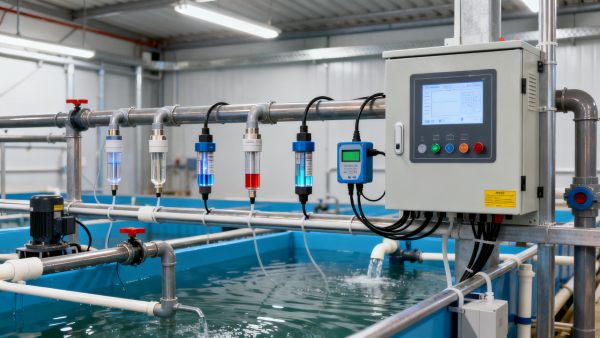
From October 1, 2026, key function-safety sensors used in recirculating aquaculture systems (RAS) entering the EU market will face a new access condition. Under EC 2026/1547, published by the European Commission on August 4, 2026, products such as dissolved oxygen, pH, and real-time ammonia nitrogen monitoring modules that are tied to functional safety must hold CE-EN 62061 certification. For exporters of complete RAS systems, OEM integrators, and core sensor suppliers, this is not just a technical update but a market-entry requirement with direct consequences for customs clearance and continued listing.
What the Regulation Formally Requires
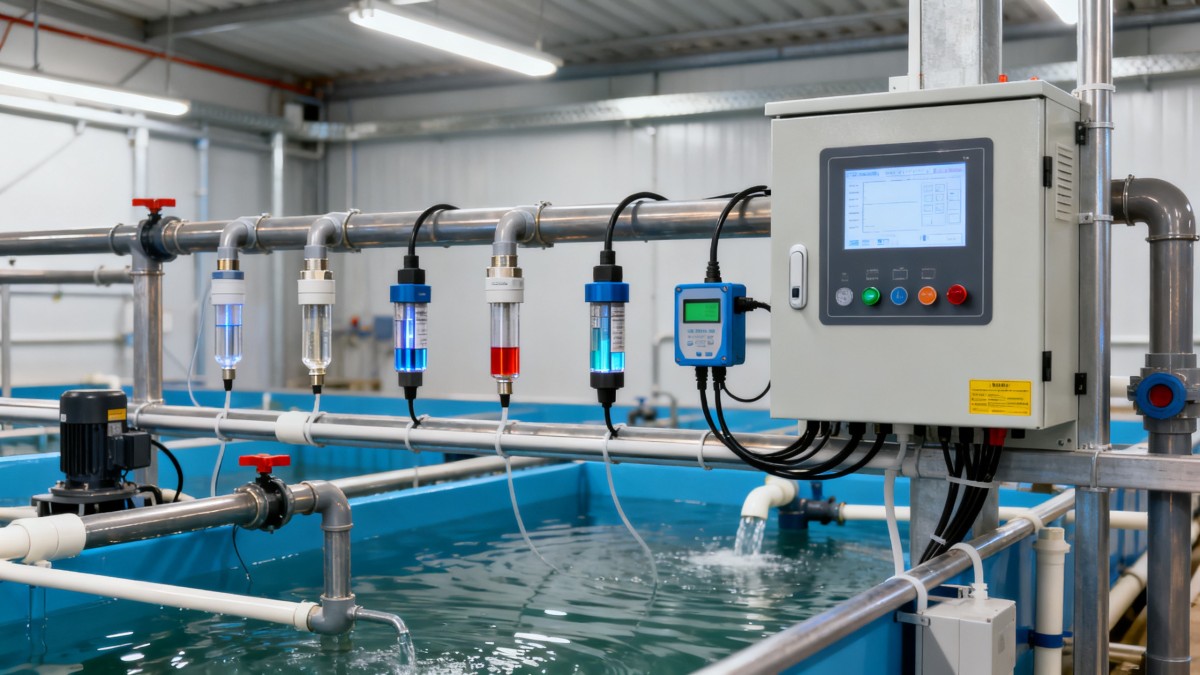
The confirmed facts are clear. The European Commission officially issued Regulation EC 2026/1547 on August 4, 2026. The regulation states that all key sensors in RAS products placed on the EU market, where those sensors are related to functional safety, must comply with CE-EN 62061. The examples provided in the source information include dissolved oxygen sensors, pH sensors, and real-time ammonia nitrogen monitoring modules. The mandatory requirement takes effect on October 1, 2026. Non-compliant products may be denied customs clearance or removed from sale.
The rule directly affects the EU market access path for complete RAS equipment exporters, OEM integrators, and suppliers of core sensing components.
Where the Immediate Pressure Falls in the Supply Chain
Complete RAS exporters face a market-access checkpoint
From an industry perspective, exporters of complete RAS systems are likely to be affected first because the compliance issue sits inside the delivered system, not only at the component level. If a system includes function-safety-related sensors that do not meet the stated certification requirement, the impact may appear at customs clearance or after the product has already entered the market. What deserves closer attention is whether existing export configurations for the EU include any of the named sensor categories within safety-relevant control logic.
OEM integrators need to reassess component selection and documentation
OEM integrators may be affected through system integration, component sourcing, and technical file preparation. Even when the integrator does not manufacture the sensor itself, the rule raises the importance of verifying whether the selected sensor is within the regulation's functional-safety scope and whether the supporting certification documents are complete. The practical pressure is likely to show up in supplier qualification, project delivery preparation, and customer-facing compliance communication.
Core sensor suppliers face a stricter EU entry threshold
For suppliers of dissolved oxygen, pH, and ammonia monitoring modules used in RAS, the regulation creates a more explicit entry condition for EU-bound business. Analysis shows the main effect is not only on product design, but also on certification readiness and sales qualification. Suppliers serving integrators or exporters may need to pay closer attention to whether their products are positioned for safety-related use cases, because that distinction can affect whether they remain usable in EU-targeted RAS projects.
What Companies Should Watch Now
Separate confirmed legal text from broader interpretation
What deserves closer attention is the boundary between the confirmed rule and company-side interpretation. The confirmed point is that function-safety-related key sensors in RAS entering the EU must have CE-EN 62061 certification from October 1, 2026. Companies should avoid assuming that every sensor in every RAS configuration is automatically covered in the same way without checking the safety role of the device in the actual system architecture.
Review EU-bound product and project portfolios
Businesses with active or planned EU deliveries should examine which RAS models, modules, or integration packages include the sensor categories named in the source information. The practical issue is whether those products are already aligned with the certification requirement before shipment, tender submission, or customer acceptance. This matters most for deliveries that cross the effective date or rely on previously approved configurations.
Check supplier credentials and supporting documents early
For procurement, compliance, and project teams, the near-term focus is likely to be document readiness. Observably, the regulation matters not only at the engineering level but also in how a company proves conformity during export, import, and market placement. Supplier certificates, technical declarations, and related compliance materials therefore become a commercial as well as technical concern.
Prepare for customer and channel communication
Companies selling into the EU should also be ready to explain how their RAS systems or sensor modules align with the new requirement. This is especially relevant for OEM supply relationships and distributor communication, where product availability may depend on whether certification status is clear before order confirmation or shipment scheduling.
How This Development Should Be Read at This Stage
Analysis shows this is better understood as an already defined compliance change rather than a tentative policy signal. The effective date is stated, the certification basis is identified, and the business consequence of non-compliance is explicit in the source information. At the same time, it is more appropriate to understand the broader commercial impact as still developing, because the extent of disruption will depend on how widely affected sensors are embedded in current EU-bound RAS offerings and how prepared suppliers and integrators are at the documentation level.
Observably, the longer-term signal is that functional safety requirements are becoming more central to market access in RAS-related equipment, at least for the categories described in the provided information. That does not by itself confirm wider regulatory expansion, but it does indicate that compliance positioning may become more visible in supplier selection and system export planning.
Why the Industry Will Keep Tracking This
The immediate significance of this update is straightforward: for EU-bound RAS business, certain safety-related sensors move from being a technical component choice to being a formal access condition. The broader industry meaning is more measured. It is more appropriate to understand this as a concrete short-term compliance requirement with possible longer-term signaling value for product qualification, supply chain screening, and customer due diligence. The rule is already actionable, while its full commercial effect still needs continued observation.
Basis of This Article
This article is based on the user-provided news title, event date, and event summary concerning the EU requirement for CE-EN 62061 certification for key function-safety sensors used in RAS. Typical source categories for this type of industry update may include official regulatory notices, company announcements, industry association updates, authoritative media reporting, and standards-related documents. A specific official source link was not provided in the input, so the exact primary document path should still be verified on an ongoing basis. Continued attention should focus on any further official wording, implementation clarification, and market-side interpretation related to EC 2026/1547 and its application in EU-bound RAS projects.
Related Intelligence
- RAS SystemsHow to Vet Middle East Oxygenation System Suppliers for RAS ProjectsOxygenation system suppliers Middle East: learn how to vet RAS partners for proven performance, resilience, local service, and lifecycle value.
- RAS SystemsHow to Select an Ammonia Water Quality Sensor for Aquaculture SystemsAmmonia water quality sensor selection guide for aquaculture: compare technologies, accuracy, salinity compatibility, maintenance, and integration for reliable monitoring.
- RAS SystemsDo UV water treatment systems eliminate chlorine-resistant pathogens in aquaculture recirculation?UV water treatment systems can inactivate chlorine-resistant pathogens like Cryptosporidium in aquaculture RAS—when properly engineered, validated, and maintained.
The Morning Broadsheet
Daily chemical briefings, market shifts, and peer-reviewed summaries delivered to your terminal.
