

The Authority in Global Agricultural Chemistry & Bio-Resources
RAS vs. Flow-Through Aquaculture: What Are the Key Differences?
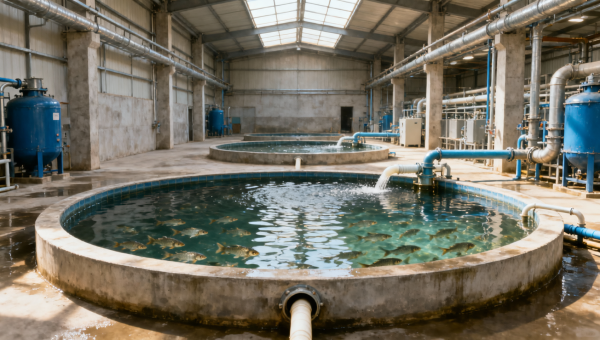
Recirculating aquaculture systems (RAS) treat and reuse production water, while flow-through aquaculture continuously brings in water and discharges it after use. The practical difference is where each system places its dependence: flow-through relies heavily on the quantity and quality of the water source; RAS relies more heavily on treatment equipment, energy, and operational control.
Neither approach is universally cheaper, safer, or more productive. A reliable, gravity-fed water supply can make flow-through highly competitive. Where water availability, temperature, or discharge limits constrain production, RAS can offer greater control—but that control comes with additional infrastructure and responsibilities. The useful comparison is not simply water reuse versus water consumption, but whether the site or the treatment system can reliably support the intended biomass and feeding rate.
What changes when water is reused?
In a flow-through facility, incoming water supplies oxygen and carries away dissolved and suspended wastes. Tanks or raceways may also use supplemental oxygen, aeration, and solids removal. However, the production system still depends on sufficient replacement water to keep conditions within acceptable limits.
RAS separates these functions into treatment processes. Mechanical filtration removes particulate waste; biological filtration converts toxic ammonia into nitrite and then nitrate; gas management removes carbon dioxide and maintains oxygen availability. Depending on the species and design, the treatment train may also include disinfection, temperature control, pH adjustment, and additional treatment for accumulated dissolved substances.
Recirculation does not mean operating without fresh water or discharge. Makeup water replaces losses from sludge removal, filter cleaning, evaporation, and deliberate water exchange. Nitrate and other dissolved compounds can accumulate unless controlled through water replacement or dedicated treatment.
The boundary is not absolute. Partial-reuse systems combine recirculation with substantial water exchange, while flow-through facilities can incorporate advanced inlet and effluent treatment. Comparing actual process designs is more informative than relying on system labels.
Start with the water source, not the equipment quotation
A flow-through proposal is only as strong as its water assessment. Average annual availability is insufficient: the limiting condition may be low seasonal flow, elevated summer temperature, storm-related turbidity, or restrictions on abstraction. Water rights and environmental flow requirements can constrain usable supply even when physical water availability appears adequate.
Source-water chemistry also matters. Groundwater may offer stable temperatures but require treatment for dissolved gases, low oxygen, iron, or other constituents. Surface water can introduce temperature fluctuations, pathogens, suspended solids, or upstream contaminants. Seawater intakes have their own exposure to fouling, suspended material, and biological events.
RAS reduces the volume of incoming water that must be managed, which can make source-water treatment more practical. It does not eliminate source-water suitability requirements. Unsuitable salinity, contaminants, or unstable supply can still undermine performance, and emergency water availability may be important during treatment failures.
Compare water demand using a defined boundary. Ask for makeup water per unit of feed or harvested biomass, the expected operating conditions, and which losses are included. A quoted recirculation percentage alone says little about total site demand. It may describe water moving around the treatment loop rather than how much new water the farm needs.
For flow-through, translate the proposed intake rate into daily and seasonal requirements. Then verify that the permitted supply can support peak feeding and biomass under the least favorable water conditions—not merely at average conditions.
Production capacity depends on waste loading, not tank volume alone
Two facilities with identical tank volumes can have very different production capacities. Fish consume oxygen and release metabolic wastes in relation to species, size, temperature, health, and feeding. Feed input therefore provides an essential basis for sizing both water supply and treatment capacity.
In flow-through systems, increasing flow can supply more oxygen and dilute wastes, but only within the limits of the source, conveyance infrastructure, fish tolerance, and discharge permit. Supplemental oxygen can relieve one constraint without resolving others, such as carbon dioxide accumulation or solids transport.
In RAS, the constraint moves through a connected treatment chain. A biofilter sized for the expected ammonia load cannot compensate for inadequate oxygenation or carbon dioxide removal. Likewise, effective mechanical filtration does not remove dissolved ammonia. Each process must support the same production scenario.
Biological filters also require time to establish and respond to changing loads. A newly commissioned system cannot safely be treated as fully mature simply because its pumps and filters are running. Stocking and feeding plans must reflect verified treatment performance, including nitrite control during startup.
Species suitability remains decisive. Temperature requirements, swimming behavior, solids sensitivity, and tolerance of water-quality variation all affect design. RAS does not automatically justify a higher stocking density, and higher density does not automatically produce a better financial outcome. Growth, survival, feed conversion, welfare, and product quality must remain acceptable at the proposed operating conditions.
Energy and capital costs follow the site hydraulics
RAS generally requires a more extensive treatment and control package than a basic flow-through installation. Pumps, biofilters, oxygenation, degassing, instrumentation, and redundancy increase equipment scope. Buildings and temperature management can add substantial costs where indoor production is necessary.
Yet flow-through is not inherently inexpensive. A remote intake, long pipeline, high pumping lift, difficult civil works, or demanding effluent treatment can materially change the investment case. A gravity-fed site and a pumped-water site should not be assigned the same operating-cost assumptions.
The energy comparison depends on water volume, pumping head, equipment efficiency, oxygen provision, and heating or cooling. RAS repeatedly moves water through treatment equipment, but replacing less water can reduce the thermal load when production temperatures differ from incoming water temperatures. Flow-through can have low pumping demand where gravity supplies the water, yet maintaining a target temperature across a large incoming flow may be impractical.
Evaluate costs per kilogram of saleable production rather than per tank or installed cubic meter. Include:
- Intake, water supply, buildings, production equipment, and effluent infrastructure.
- Electricity, oxygen, water charges, treatment chemicals, labor, and consumables.
- Maintenance, sensor calibration, replacement parts, sludge handling, and backup-system testing.
- Commissioning losses, production ramp-up, financing, and realistic equipment replacement.
Utilization assumptions deserve particular scrutiny. An attractive cost per kilogram based on uninterrupted full production can conceal the financial effect of slow commissioning, reduced growth, maintenance downtime, or mortality. Compare both systems against the same harvest specification and conservative biological assumptions.
Biosecurity improves only when the entire pathway is controlled
RAS can reduce exposure to pathogens entering with source water because a smaller incoming volume is easier to filter and disinfect. Physical separation from natural waters can also support biosecurity. Neither feature makes the facility pathogen-free.
Fish introductions, eggs, people, equipment, feed handling, and shared work areas remain potential entry routes. Once a pathogen enters a connected recirculation loop, water reuse can distribute it among production units. Separate hydraulic zones and quarantine arrangements can therefore matter as much as the presence of disinfection equipment.
Flow-through systems face continuing exposure through incoming water unless effective barriers are installed. However, hydraulic separation between units may limit some internal transmission pathways. The actual arrangement determines the risk; the label alone does not.
Disinfection performance must also be assessed under operating conditions. Suspended particles and water clarity affect UV treatment, while ozone requires appropriate process control and protection against harmful residual oxidants. Treatment equipment should be evaluated against its intended function and validated performance conditions, not treated as a blanket guarantee of disease prevention.
Failure risks differ, but both systems need backup
RAS concentrates production around active life-support processes. Loss of circulation or oxygen delivery can become critical quickly at high biomass. Backup power, emergency oxygen, alarms, spare components, and trained response procedures are therefore part of the production system—not optional accessories.
Redundancy must address common failure points. Two pumps offer limited protection if both depend on one electrical panel or a blocked suction line. Alarm systems need an independent means of communicating when site power or internet connectivity fails.
Flow-through facilities have different vulnerabilities: blocked intakes, drought, flooding, pipeline damage, upstream contamination, or loss of pumping. Gravity-fed supply reduces dependence on powered circulation but does not protect against intake failure or sudden deterioration in water quality.
A meaningful comparison asks how long fish remain within safe conditions after each credible failure, which backup activates automatically, and how quickly someone can intervene. Equipment availability, local service capability, and spare-parts lead times directly influence that answer.
Lower discharge volume does not mean zero environmental obligation
RAS can capture solids in a relatively concentrated stream, making waste collection more manageable. This creates a separate requirement for sludge storage, dewatering, transport, or approved beneficial use. Dissolved nutrients remain relevant: conventional nitrifying biofilters transform ammonia but do not eliminate the resulting nitrogen.
Flow-through effluent spreads waste across a larger water volume. Solids capture may be feasible, but dilute dissolved nutrients can be more difficult to treat economically. Where discharge limits are restrictive, end-of-pipe treatment can become a major design consideration rather than a minor addition.
Environmental comparison should distinguish water withdrawal, consumptive use, nutrient discharge, energy consumption, and receiving-water effects. A flow-through farm may return much of its intake water, although its quality and discharge location matter. A RAS facility may withdraw substantially less water while consuming more electricity. Neither single metric establishes overall environmental performance.
Permitting requirements are jurisdiction- and site-specific. Confirm abstraction rights, discharge conditions, sludge obligations, and any restrictions affecting the receiving water before finalizing either design.
Choose the system that resolves the binding constraint
Flow-through is a strong candidate where water is dependable, suitable for the species, legally available, and economical to convey—and where discharge can be managed acceptably. RAS becomes more compelling when limited water, temperature requirements, source-water exposure, or site location justify investment in treatment and control.
A partial-reuse design may be preferable when some recirculation removes a specific bottleneck without requiring the full complexity of a highly recirculating facility. This is particularly relevant when expanding an existing site: the best intervention may be improved oxygenation, solids removal, or water reuse rather than complete system replacement.
Before committing, require a water balance, feed-based treatment calculations, seasonal operating assumptions, a failure-response assessment, and lifecycle costs using the same production target. The stronger design is the one that demonstrates dependable performance under the site's limiting conditions—not the one with the highest recirculation claim or the lowest initial equipment price.
Related Intelligence
- RAS SystemsHow peak feeding load determines RAS equipment sizingSize RAS equipment around peak feeding loads, not tank volume alone. Learn how to match biofilters, oxygen delivery, and solids removal to real demand and avoid costly capacity gaps.
- RAS SystemsAquaculture Filter Installation Costs: Plumbing, Labor, and CommissioningUnderstand aquaculture filter installation cost, from plumbing and labor to commissioning. Compare complete project scopes, uncover hidden expenses, and budget confidently before you buy.
- RAS SystemsSizing RAS Equipment: Matching Biofilters and Oxygen Supply to Feed LoadSize ras equipment around peak feed load—not tank volume. Learn how to match biofilters and oxygen supply, avoid costly sizing errors, and plan reliable backup capacity.
The Morning Broadsheet
Daily chemical briefings, market shifts, and peer-reviewed summaries delivered to your terminal.