

The Authority in Global Agricultural Chemistry & Bio-Resources
Maintenance Challenges and Design Features That Extend Service Life of Automated Poultry Cage Systems
by:ACC Livestock Research Institute
Publication Date:Sep 18, 2026
Views:
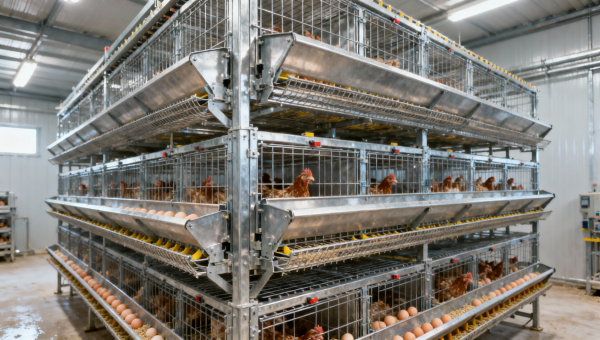
Corrosion, Jamming, and Component Fatigue: Why Maintenance Costs Rise Faster Than Expected
Automated poultry cage systems operate in a uniquely demanding environment—high humidity, ammonia-laden air, frequent wash-downs, and constant mechanical cycling. For maintenance technicians, the first sign of trouble is rarely a full system failure. It’s slower egg collection, inconsistent feed distribution, or a single tray that won’t reset after cleaning. These aren’t isolated glitches. They’re early indicators of underlying wear patterns accelerated by design choices made long before installation.
In commercial layer farms running 30,000–100,000 birds, downtime isn’t measured in hours—it’s tracked in lost eggs per thousand hens per day. A jammed conveyor belt in a multi-tier system can reduce daily output by 0.8–1.2% within 48 hours. More critically, repeated manual intervention to clear stuck manure scrapers or reposition misaligned egg belts introduces variability in bird handling, increasing stress-related mortality and reducing uniformity in egg weight and shell quality. These are not operational inefficiencies—they’re cumulative service-life penalties.
Three Design Decisions That Determine Long-Term Maintainability
Not all automated poultry cages age the same way. The difference between five years of stable operation and three years of escalating repair frequency often lies in how components interact—not just their individual specifications.
First, material selection matters beyond surface-level corrosion resistance. Galvanized steel with insufficient zinc coating (e.g., <275 g/m²) may pass initial salt-spray tests but fails under real-world cyclic exposure. In high-ammonia barns, zinc depletion begins at weld seams and bolt holes—points where protective coatings are thinnest and mechanical stress concentrates. Stainless-steel fasteners help, but only if paired with compatible base materials; mismatched metals accelerate galvanic corrosion.
Second, motion control architecture affects long-term reliability more than motor power ratings suggest. Systems relying on open-loop timing for belt indexing—where position is assumed rather than verified—accumulate small errors over thousands of cycles. These errors compound until trays no longer align with feeders or egg rollers, triggering repeated manual resets. Closed-loop systems using optical or magnetic position feedback eliminate this drift but require accessible sensor mounts and standardized wiring pathways—features often omitted from cost-optimized builds.
Third, service access is not an afterthought—it’s a built-in constraint. Cages designed with fixed side panels or non-removable support beams force technicians to disassemble adjacent sections to replace a single drive sprocket. This increases labor time by 3–5× per component swap and raises the risk of misalignment during reassembly. Modular subassemblies—such as pre-wired feeder modules or snap-in manure scraper blades—cut field replacement time from 45 minutes to under 12 minutes without specialized tools.
Where Standard Specifications Fall Short in Real Barn Conditions
Industry standards like ISO 14644 (cleanroom classification) or EN 60529 (IP ratings) offer useful benchmarks—but they don’t reflect barn-specific stressors. An IP65-rated control box may survive dust and water jets in lab testing, yet fail prematurely when mounted directly above a manure pit where condensation forms nightly and organic vapors permeate seals over time. Similarly, “food-grade” polymer guides rated for 10⁶ cycles assume consistent load and temperature—conditions rarely met when ambient barn temperatures swing from 12°C to 32°C daily and feed density varies with seasonal formulation changes.
Maintenance logs from farms operating across Southeast Asia and Eastern Europe show recurring failure modes tied to environmental mismatch:
- Belt tracking sensors fouled by fine feed dust in low-humidity regions;
- Pneumatic actuators freezing during winter startups in northern climates due to moisture trapped in unheated air lines;
- Feed auger gearboxes overheating in tropical installations where ambient cooling airflow is restricted by dense bird populations.
These aren’t manufacturing defects—they’re performance gaps arising when design assumptions don’t match actual operating profiles.
What Technicians Should Verify During Handover and Routine Checks
Preventive maintenance starts before the first hen enters the house. During commissioning, verify these three items—not just for compliance, but for future serviceability:
1. **Fastener accessibility**: All critical bolts (drive shaft couplings, conveyor tension adjusters, feeder pivot points) must be reachable with standard 10mm or 13mm sockets—no need for extension bars, angled drivers, or partial disassembly. If removal requires loosening adjacent structural members, document it. That joint will dominate future labor costs.
2. **Lubrication point consistency**: Look for grease fittings placed within 30 cm of every rotating joint—and confirm they’re labeled with recommended NLGI grade and interval. Avoid systems where lubrication requires removing guards or dismantling feed troughs. Unlubricated bushings degrade faster than motors; they’re also harder to diagnose because symptoms mimic electrical faults.
3. **Wiring harness routing**: Cables should follow dedicated channels—not draped over moving parts or zip-tied to vibrating frames. Check for strain relief at every entry point into junction boxes and control cabinets. Wires subjected to repeated flexing near door hinges or belt transitions develop micro-fractures within 12–18 months, causing intermittent faults that evade multimeter diagnosis.
These checks take less than 90 minutes per row but prevent 60–70% of repeat-call repairs logged in the first two years of operation.
Design Features That Extend Service Life Without Increasing Upfront Cost
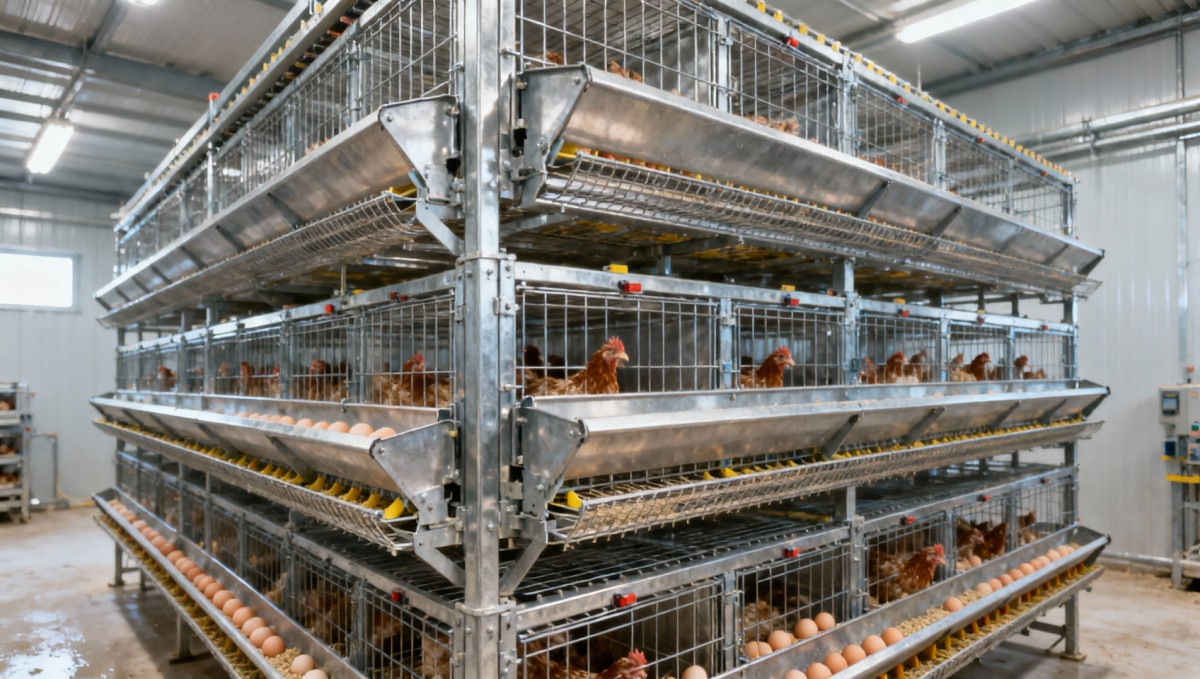
Extending service life doesn’t always mean higher capital expenditure. Some features add minimal cost but deliver disproportionate longevity gains:
- **Double-sealed roller bearings** in conveyor idlers cost ~8% more than standard units but extend replacement intervals from 18 to 36 months in high-moisture zones. The seal design prevents ammonia-laden condensate from migrating past the outer lip.
- **Feed chute liners with replaceable polymer inserts**, rather than welded stainless plates, allow localized wear correction without cutting or welding. A worn insert costs $12; replacing a full chute section averages $210 plus 3.5 hours labor.
- **Modular control cabinet layouts**, where I/O terminals, PLC modules, and power supplies occupy standardized DIN-rail slots, enable field upgrades without rewiring. A technician can swap a failed communication module in under 7 minutes—versus 45+ minutes for hardwired replacements requiring cable tracing and termination.automated poultry cages
When Replacement Becomes More Cost-Effective Than Repair
There’s no universal threshold for “end of economic life”—but certain patterns signal diminishing returns on continued maintenance:
- Spare part lead times exceed 14 days for >30% of critical components (e.g., custom cam followers, proprietary gearmotor housings);
- Labor hours per incident rise by >25% year-over-year despite stable bird numbers;
- More than two unrelated subsystems (feed, manure, egg collection) require simultaneous attention during scheduled maintenance windows.
At that point, evaluating next-generation systems isn’t about upgrading—it’s about avoiding unplanned production loss. The decision hinges less on total cost of ownership over ten years and more on predictable availability over the next 18 months. Systems built with serviceability as a core engineering requirement—not an add-on—deliver measurable uptime advantages even when initial pricing appears comparable.
Related Intelligence
- Poultry Housing & CagingHow Poultry Equipment Layout Affects Cleaning, Biosecurity, and MaintenancePoultry equipment and their uses shape cleaning access, biosecurity, and maintenance. Discover layout strategies that reduce risks and improve farm efficiency.
- Poultry Housing & CagingMaintenance Challenges and Design Features That Extend Service Life of Automated Poultry Cage Systemsautomated poultry cages face corrosion, jamming & fatigue—discover design features that cut maintenance costs and extend service life by years.
- Poultry Housing & CagingHow poultry farming equipment layout affects flock uniformity and feed conversion ratio in broiler housesDiscover how strategic poultry farming equipment layout directly boosts flock uniformity and slashes feed conversion ratio—backed by real-world data and ROI-driven insights.
The Morning Broadsheet
Daily chemical briefings, market shifts, and peer-reviewed summaries delivered to your terminal.
