

The Authority in Global Agricultural Chemistry & Bio-Resources
How Negative Pressure Poultry Housing Works and Which Farm Conditions It Fits Best
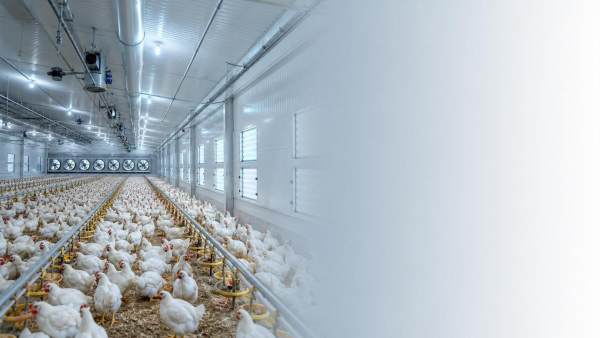
Why is negative pressure poultry housing getting so much attention?
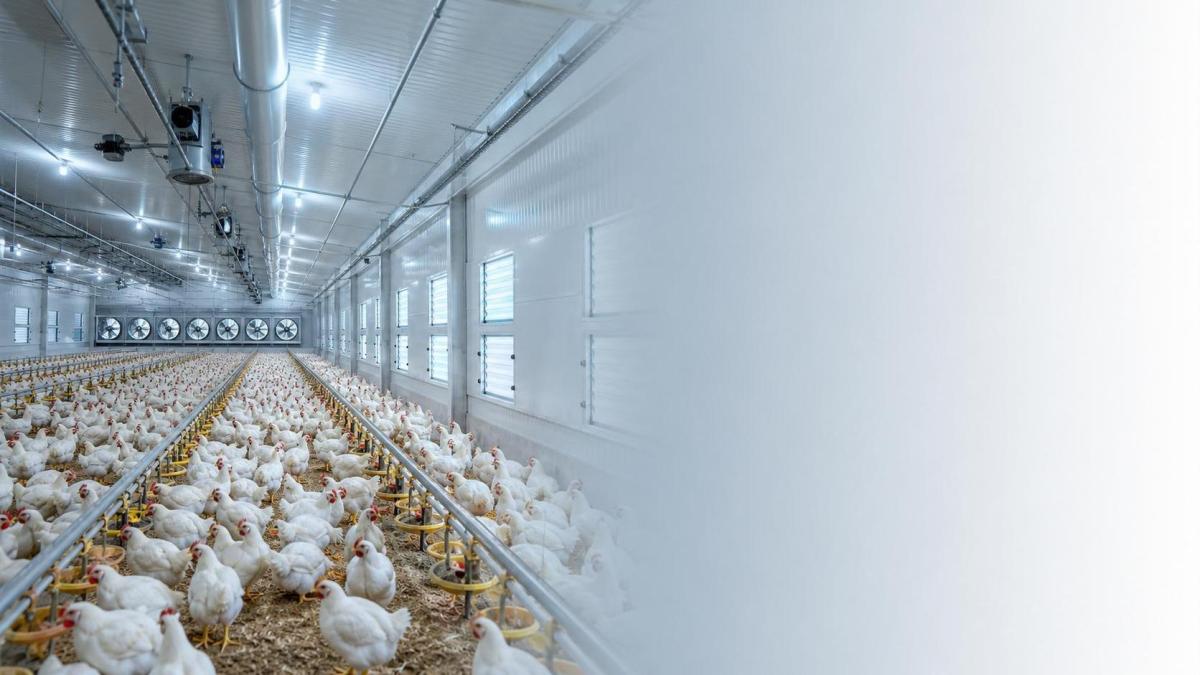
Climate control has moved from a comfort feature to a production variable. In poultry farming, airflow now affects mortality, feed conversion, litter condition, and disease pressure.
That is why negative pressure poultry housing is being discussed more often in technical journals and farm expansion planning. It offers a controlled way to move fresh air through a building.
In simple terms, exhaust fans pull air out of the house. That creates lower internal air pressure, so outside air enters through designed inlets rather than random gaps.
The result is predictable air speed, better mixing, and more stable temperature distribution. When tuned correctly, the system supports flock uniformity and cleaner indoor conditions.
AgriChem Chronicle often tracks systems like this because they sit at the intersection of machinery performance, biosecurity discipline, and operating economics. For farms under tighter compliance and margin pressure, that mix matters.
Still, negative pressure poultry housing is not automatically the right answer for every site. Its value depends on building quality, climate, density, and management consistency.
How does negative pressure poultry housing actually work inside the barn?
The system starts with a sealed structure. Walls, doors, curtains, and roof joints must limit uncontrolled leakage, otherwise the pressure difference becomes weak and uneven.
Exhaust fans remove air at a measured rate. Air then enters through adjustable sidewall or ceiling inlets, which are sized to direct the incoming stream across the barn.
In cold weather, the goal is mixing before air drops onto birds. In warm weather, the objective often shifts toward higher air velocity for heat removal.
A controller ties these pieces together. It responds to temperature, static pressure, and sometimes humidity or carbon dioxide, changing fan stages and inlet openings in real time.
This is where many misunderstand the technology. Negative pressure poultry housing is not just “more fans.” It is a pressure-managed airflow design with calibrated entry points.
When alignment is poor, fresh air may short-circuit to the nearest fan. That creates hot spots, damp litter, and inconsistent bird performance across the same building.
A practical way to read system quality is to ask four questions at once: does air enter where intended, mix before settling, maintain target pressure, and stay stable under changing weather?
Which farm conditions usually fit this system best?
The strongest fit is usually a medium to large commercial house where bird density is high enough to justify precise environmental control. The more birds per square meter, the more valuable airflow accuracy becomes.
It also fits farms in regions with wide seasonal swings. Cold winters, hot summers, or long humid periods create conditions where natural ventilation becomes less predictable.
Longer houses often benefit more than short ones. Distance makes uniform air delivery harder, so pressure-based ventilation can solve problems that open-sided structures struggle to manage.
Sites with recurring respiratory issues or wet litter can also be strong candidates. Better control over moisture and gas removal can improve house hygiene and reduce avoidable stress.
Another good fit is a farm already investing in measurable process control. Negative pressure poultry housing performs best when fan output, inlet setting, insulation quality, and monitoring practices are all managed together.
By contrast, loosely constructed sheds in mild climates may not capture the same return. If leakage is high and weather is forgiving, the capital spent on precision control may not convert into proportional gains.
This kind of fit analysis matters more than vendor language. A technically strong system can still underperform if the farm context is wrong.
Is it better than natural ventilation or cross-ventilation?
Better is not always the right word. More controllable is usually the accurate one. Negative pressure poultry housing gives operators tighter command over airflow pathways and exchange rates.
Natural ventilation can be economical in mild regions. It depends heavily on wind, building orientation, and outdoor temperature. That means performance can drift from day to day.
Cross-ventilation improves directional airflow, but it may still struggle with uniformity in large houses or under variable weather. Pressure-based systems are generally easier to standardize.
Where production planning requires tighter outcome control, negative pressure poultry housing often has the advantage. It can support more consistent body weight, lower ammonia peaks, and steadier litter moisture.
The tradeoff is complexity. Fan maintenance, controller calibration, inlet tuning, and power reliability become central operating disciplines rather than optional improvements.
- Choose natural ventilation when climate is mild and capital discipline is the main constraint.
- Choose pressure-managed housing when flock density, climate stress, or biosecurity sensitivity is higher.
- Choose carefully when upgrading old barns, because leakage can erase the expected benefit.
What are the most common mistakes when farms adopt negative pressure poultry housing?
The first mistake is treating static pressure as a one-time setup. It changes with fan wear, curtain condition, dust loading, and seasonal adjustments.
Another frequent issue is ignoring building envelope quality. If the house leaks around doors, ridge lines, or service penetrations, the system loses directional control.
Some farms also oversize fans without matching inlet geometry. That can create severe drafts near entry points while leaving dead zones farther inside the building.
In practical use, poor sensor placement causes silent problems. If temperature probes sit near heaters, inlets, or direct airflow, controller decisions become distorted.
Energy planning is another blind spot. Negative pressure poultry housing can improve biological performance, but power consumption must be modeled against local utility rates and backup requirements.
A final misconception is believing the system alone solves disease pressure. Ventilation helps remove moisture and contaminants, yet sanitation, litter management, and stocking discipline still decide the outcome.
A quick diagnostic checklist before committing
- Check whether the building can hold stable static pressure.
- Confirm insulation values and condensation risk.
- Review bird density targets by season and production cycle.
- Map fan capacity against house length, width, and inlet design.
- Verify controller logic, probe positions, and alarm redundancy.
- Model energy use, generator capacity, and maintenance intervals.
How should implementation costs and payback really be judged?
Cost discussions often start too narrowly with fan and controller prices. The more accurate calculation includes sealing work, inlets, insulation upgrades, electrical capacity, and backup power readiness.
Payback usually comes from several smaller gains rather than one dramatic improvement. Better liveability, lower wet litter incidence, steadier growth, and fewer environmental swings often combine into the real return.
For some operations, reduced volatility is the main benefit. Predictable flock performance can be worth as much as an average efficiency improvement, especially where contracts and planning windows are tight.
The best evaluation window is usually a full seasonal cycle. A system that looks efficient in one weather pattern may reveal weaknesses during humidity peaks or winter minimum ventilation.
This is also where journal-grade analysis becomes useful. AgriChem Chronicle typically frames agricultural machinery decisions through measurable operating variables, regulatory implications, and lifecycle discipline rather than headline claims.
That mindset fits negative pressure poultry housing well. It is a technical infrastructure decision, not just a barn accessory.
So when does negative pressure poultry housing make the most sense?
It makes the most sense when environmental variability is already costing performance, or when a farm needs tighter consistency across larger enclosed houses.
It is especially relevant where heat load, moisture load, and biosecurity expectations are high. In those settings, uncontrolled ventilation becomes a production risk rather than a manageable inconvenience.
The decision should be based on fit, not trend. Building tightness, regional climate, operating discipline, and power resilience are the main filters.
A practical next step is to benchmark current airflow problems, litter results, and mortality patterns before comparing ventilation options. Then review pressure targets, upgrade scope, and seasonal operating costs as one package.
That approach gives a clearer answer than generic promises. For farms ready to manage ventilation as a precision system, negative pressure poultry housing can be a strong long-term fit.
Related Intelligence
- Poultry Housing & CagingHow Cage Specifications Affect Poultry Housing Costs in NigeriaLocally made poultry cage price in Nigeria: compare cage specifications, housing costs, durability, ventilation, manure systems, and installation factors for smarter poultry investment.
- Poultry Housing & CagingWhat Determines Battery Cage Prices in Nigeria Beyond Bird Capacity?Battery cage price in Nigeria depends on more than capacity. Compare steel, automation, logistics, and installation scope for a smarter poultry investment.
- Poultry Housing & CagingBuilding a Poultry Farm Equipment Solution Around Flock Size and LayoutPoultry farm equipment solution planning for flock size and layout—optimize feeding, water, ventilation, automation, and future expansion.
The Morning Broadsheet
Daily chemical briefings, market shifts, and peer-reviewed summaries delivered to your terminal.
