

The Authority in Global Agricultural Chemistry & Bio-Resources
Grain Milling Equipment Selection: Key Capacity, Fineness, and Energy Factors
Grain Milling Equipment Selection: Key Capacity, Fineness, and Energy Factors
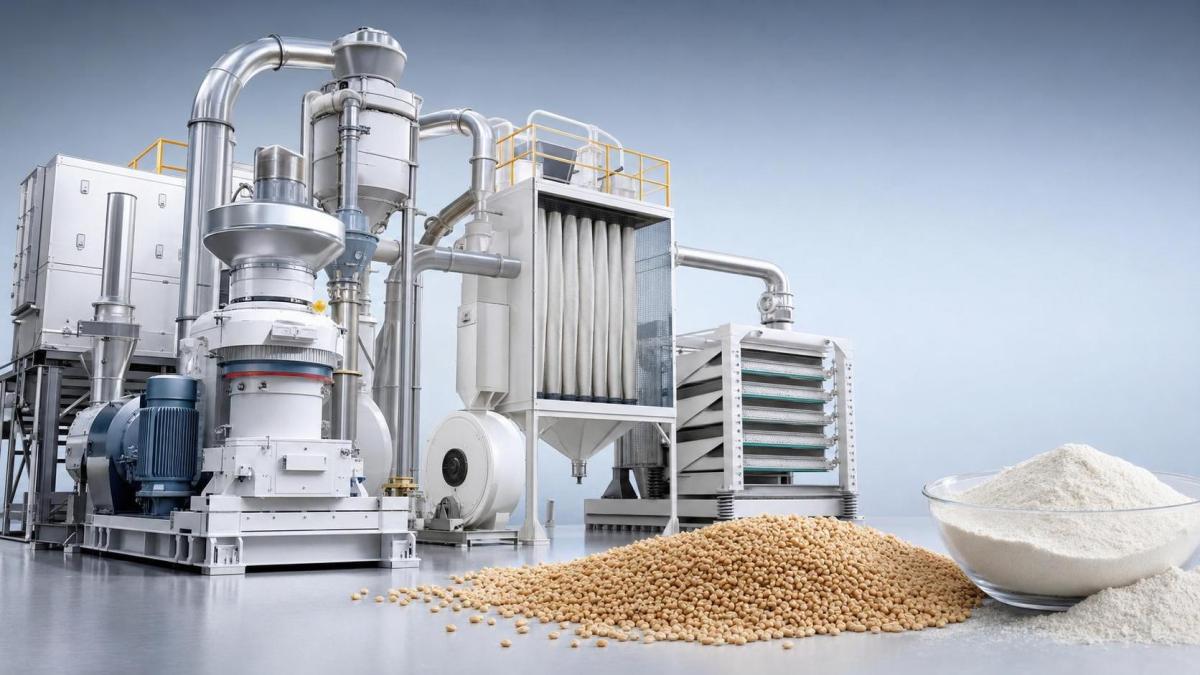
Selecting Grain Milling equipment rarely comes down to nameplate size alone. In real production, capacity, particle fineness, and power draw influence each other at every stage.
That is why a sound purchasing decision starts with process conditions, not brochure claims. Moisture, raw grain hardness, target mesh, and duty cycle all reshape actual performance.
For Grain Milling projects, the better question is simple: which configuration delivers stable output quality at the lowest practical operating cost and acceptable maintenance burden?
This evaluation framework focuses on the three variables that matter most during equipment selection. It also connects them with downstream quality control, utilities planning, and plant economics.
Why Capacity Figures Need a Closer Look
Quoted throughput often reflects ideal feed conditions. Those values may assume uniform grain size, low moisture variation, sharp grinding elements, and uninterrupted feeding.
In practice, Grain Milling capacity shifts with raw material behavior. Corn, wheat, barley, rice, and specialty grains respond differently under compression, impact, or shear.
A machine rated at high tons per hour may underperform when finer output is required. The same unit can also lose efficiency when feed moisture rises beyond the design window.
More importantly, capacity should be measured against usable output, not only gross feed rate. Overs, recycle loads, dust loss, and unstable particle size reduce effective production.
Questions Behind the Nameplate
- What grain types will run most often, and how variable are seasonal characteristics?
- Is the target capacity based on peak demand, average demand, or future expansion?
- How much downtime is acceptable for screen changes, wear parts, and cleaning?
- Does the upstream feeding system maintain a steady load across the grinding chamber?
These questions often reveal whether a single large mill is appropriate, or whether parallel smaller units provide better operational flexibility and lower production risk.
Capacity Should Match the Full Line
Grain Milling equipment should never be sized in isolation. Storage discharge, conveyors, aspiration, sifters, blending, and packing can all become hidden bottlenecks.
A balanced line usually outperforms an oversized grinder feeding undersized downstream systems. That mismatch creates recirculation, dust buildup, unstable residence time, and unnecessary energy waste.
How Fineness Changes Equipment Choice
Particle fineness is not just a quality target. It determines machine type, rotor speed, screen design, pass rate, heat generation, and wear intensity.
For coarse cracking or meal production, simpler Grain Milling systems may perform well. For tighter particle distribution, the selection process becomes more sensitive and technical.
This is where many procurement errors begin. Buyers focus on average particle size, but ignore distribution width, fines ratio, and product temperature after grinding.
A narrow distribution can matter more than a lower nominal micron level. Feed digestibility, flour consistency, mixing behavior, and downstream extraction yields all depend on that stability.
Main Fineness Drivers to Review
- Grinding principle: impact, roller, pin, or hammer systems behave differently with brittle and fibrous materials.
- Screen or gap setting: smaller openings improve fineness but usually reduce capacity.
- Rotor speed: higher speed may improve reduction, yet increase heat and energy use.
- Feed conditioning: moisture control and pre-cleaning strongly affect final particle uniformity.
- Airflow design: aspiration helps remove heat and fines, improving stable Grain Milling performance.
From a selection standpoint, the target should be a measurable particle size specification. Terms like fine, medium, or ultrafine are too vague for supplier comparison.
Ask for test data with sieve analysis or laser diffraction results. Also confirm sample conditions, feed moisture, and throughput during the test run.
Fineness and Product Integrity
Not every application benefits from the smallest possible particle size. Excessive grinding can damage starch functionality, increase oxidation, or create dust handling issues.
In some Grain Milling lines, a slightly coarser but more uniform output produces better downstream results than an aggressive fine grind with broad variation.
Energy Use Is a Selection Variable, Not a Footnote
Energy costs are now central to equipment evaluation. A low purchase price can become expensive when specific energy consumption stays high over long operating hours.
The practical benchmark is usually kWh per ton of acceptable product. That figure should reflect final specification, not raw feed volume.
For Grain Milling operations with narrow margins, even modest differences in energy intensity compound quickly. This becomes more obvious in multi-shift plants and export-oriented facilities.
Energy performance also signals process health. Rising power draw may indicate screen blinding, worn hammers, poor airflow, uneven feeding, or unsuitable raw material conditioning.
What to Compare Beyond Motor Size
A realistic Grain Milling comparison should include the grinder, feeder, aspiration, dust collection, and any cooling or conveying load tied to operation.
Balancing Capacity, Fineness, and Energy Together
These three variables should be treated as a linked system. Higher fineness usually lowers capacity and raises energy demand. Higher throughput can widen particle distribution.
That tradeoff is normal. The objective is not maximum performance in one category, but the best operating window for the intended product portfolio.
A practical Grain Milling evaluation matrix should score each supplier on process fit, test data quality, utility demand, controls, cleanability, maintenance access, and spare part support.
A Useful Decision Sequence
- Define the grain mix, annual volume, moisture range, and contamination profile.
- Set a measurable particle size specification and allowable distribution tolerance.
- Request supplier test runs under conditions close to daily production.
- Compare kWh per ton, wear rates, and effective usable throughput.
- Review integration needs for feeding, aspiration, automation, and dust control.
- Estimate total ownership cost over several years, not only purchase price.
This kind of process brings Grain Milling selection back to facts. It also reduces the chance of buying a machine optimized for a test room, not a production floor.
Common Selection Risks and How to Avoid Them
One common mistake is using supplier capacity data without checking the final grind specification. Another is ignoring how quickly wear parts affect fineness and power draw.
Some projects also overlook sanitation and cleanout requirements. That issue matters when a Grain Milling line handles multiple products or must limit cross-contact risk.
A further risk is underestimating dust management. Fine grinding can increase explosion prevention requirements, filtration load, and housekeeping expectations across the facility.
The better approach is disciplined validation. Ask for performance guarantees, reference installations, maintenance schedules, and documented energy data from comparable applications.
Final Selection Priorities for Grain Milling Projects
Strong Grain Milling decisions come from matching equipment behavior to real operating conditions. Capacity, fineness, and energy use must be reviewed together, not one by one.
When those factors are aligned, the result is usually better output consistency, lower utility cost, and fewer downstream disruptions. That is the basis of a defensible procurement decision.
Before final approval, confirm test evidence, utility assumptions, maintenance access, and full-line compatibility. In Grain Milling selection, disciplined verification usually saves more than aggressive negotiation.
Related Intelligence
- Milling MachineryCan Agricultural Scientists Validate Grain Processing Machinery?Can agricultural scientists validate process machinery performance? Discover how grain equipment testing verifies throughput, quality, and efficiency before you invest.
- Milling MachineryGrain Processing Explained: From Cleaning and Milling to Finished Product QualityGrain Processing explained: discover how cleaning, conditioning, milling, and quality control turn raw grain into safe, consistent flour, feed, and food ingredients.
- Milling MachineryGerman Grain Processing Plants: Evaluating Automation and Energy-Efficiency UpgradesGrain processing Germany: evaluate automation and energy-efficiency upgrades to improve throughput, quality, safety, and lifecycle value.
The Morning Broadsheet
Daily chemical briefings, market shifts, and peer-reviewed summaries delivered to your terminal.
