

The Authority in Global Agricultural Chemistry & Bio-Resources
5 TPH Feed Milling Machinery Selection Guide: Output, Power, and Line Configuration
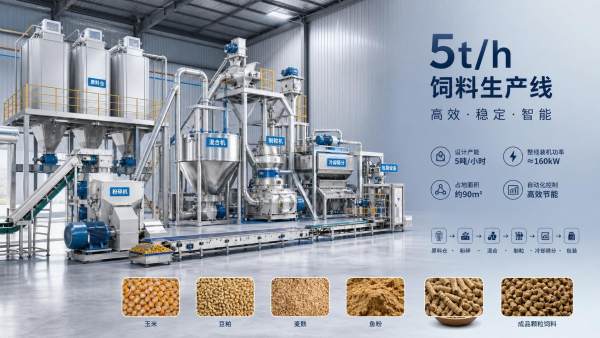
5 TPH Feed Milling Machinery Selection Guide: Output, Power, and Line Configuration
Selecting the right 5 tph feed milling machinery is not only about nameplate capacity.
It shapes energy use, uptime, product consistency, and the total economics of the plant.
In practice, many projects miss their target because equipment is sized by headline output alone.
A reliable decision needs three things aligned: throughput, installed power, and process flow.
Start with what 5 tph really means
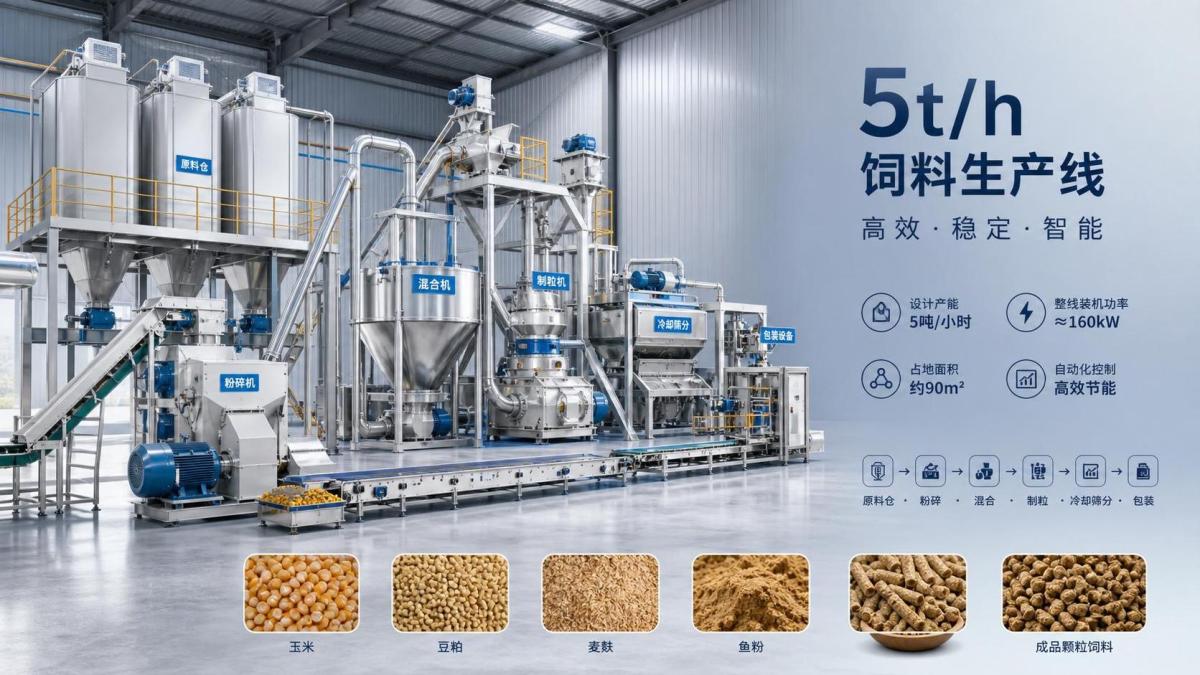
The term 5 tph feed milling machinery sounds simple, but suppliers may define it differently.
Some rate capacity on mash feed, not pellets.
Others assume poultry feed with moderate formulation and low-fiber raw materials.
That matters because pellet diameter, starch level, moisture, and grinding fineness all change actual output.
A line rated at 5 tons per hour may drop below 4 tons in shrimp feed or high-fiber ruminant formulas.
Before comparing quotations, define the product mix clearly.
- Feed type: mash, pellet, crumble, or extruded pre-conditioning feed
- Formula range: corn-soy, bran-rich, high-protein, or aquatic formulas
- Target pellet size: common ranges include 2 mm to 6 mm
- Operating basis: continuous duty, two shifts, or three shifts
- Moisture and steam conditions at the conditioner
This is the baseline for choosing 5 tph feed milling machinery that performs in real production.
Match output with the true bottleneck
A 5 tph feed milling machinery project is never defined by one machine.
The line only runs as fast as its slowest stable section.
In many cases, the bottleneck appears in grinding, pelleting, or cooling.
That is why line balancing matters more than isolated machine ratings.
A practical way to review capacity is to check each section against the design rate.
When assessing 5 tph feed milling machinery, ask for guaranteed output by formula category, not generic nominal capacity.
How to evaluate motor power without oversizing
Power selection affects both investment and operating cost.
Yet oversizing is common in 5 tph feed milling machinery procurement.
A higher motor rating does not automatically mean better performance.
What matters is usable load, transmission efficiency, and process match.
For example, a hammer mill can show a strong motor rating but still underperform with poor air assist.
The same logic applies to pellet mills with unstable steam supply.
In actual projects, power should be reviewed in three layers.
- Installed power: total rated kW of all equipment
- Running power: expected average load during stable production
- Specific energy: kWh consumed per ton of finished feed
The third indicator is usually the most useful for decision-making.
It connects equipment choice with operating margin over time.
For a balanced 5 tph feed milling machinery line, compare supplier data on a per-ton basis.
Also verify whether utilities are included, such as boilers, compressors, and dust collection fans.
Those supporting systems can materially change total plant power demand.
Choose the right line configuration for product mix
There is no single best configuration for 5 tph feed milling machinery.
The right layout depends on feed type, future expansion, and automation target.
A basic line often includes cleaning, grinding, batching, mixing, pelleting, cooling, crumbling, screening, and packing.
But some projects benefit from extra modules.
- Molasses or oil dosing for richer formulations
- Post-pellet liquid application for heat-sensitive additives
- Double grinding for aquatic or fine poultry feed
- Bypass routes for mash feed production
- Automatic bagging and palletizing for labor reduction
From a project standpoint, flexibility is often worth paying for.
A fixed line may look cheaper at first.
Later, product changes can force expensive retrofits and long shutdowns.
That is why many buyers now ask whether the 5 tph feed milling machinery line supports modular upgrades.
Key technical checks before approving a supplier
Technical comparison should go beyond brochures.
A solid 5 tph feed milling machinery review uses measurable checkpoints.
- Pellet mill die diameter, compression ratio, and expected die life
- Hammer mill rotor size, tip speed, and screen replacement time
- Mixer homogeneity and cycle time under full batch load
- Conditioner retention time and steam quality requirements
- Cooler residence time and final pellet moisture target
- Dust control points, aspiration design, and explosion risk management
- Control system logic, alarm history, and remote troubleshooting options
- Spare parts availability and realistic lead times
More importantly, ask how the supplier validates line performance after commissioning.
Acceptance criteria should include throughput, pellet durability, power draw, and loss rate.
This reduces disputes once the 5 tph feed milling machinery line enters production.
Common selection mistakes and how to avoid them
Several procurement mistakes repeat across otherwise well-funded projects.
They usually come from incomplete assumptions at the design stage.
- Using peak capacity as the purchasing basis.
Stable output matters more than short high-load performance. - Ignoring raw material variability.
Seasonal moisture and fiber changes can quickly expose weak sizing decisions. - Underestimating utility systems.
A pellet line is only as stable as its steam, air, and electrical support. - Choosing low-cost automation with poor diagnostics.
Downtime becomes harder to trace, especially in multi-shift operations. - Leaving no room for maintenance access.
That choice reduces serviceability and increases shutdown duration.
Avoiding these issues usually improves total project value more than negotiating a lower purchase price.
A practical decision framework for 5 tph feed milling machinery
A practical buying decision should connect process needs with commercial reality.
The most effective reviews usually follow a simple sequence.
- Define annual production volume and daily operating hours.
- List the feed formulas that will dominate the first three years.
- Set target output separately for mash and pellet products.
- Review specific energy consumption per ton.
- Check bottleneck capacity with at least 10% operating margin.
- Confirm utility demand, footprint, and maintenance access.
- Lock in acceptance tests and spare parts scope before order placement.
This approach keeps the 5 tph feed milling machinery decision grounded in real operating conditions.
It also makes supplier proposals easier to compare on equal terms.
Final takeaway
The best 5 tph feed milling machinery setup is not the one with the highest quoted rating.
It is the one that delivers stable throughput, efficient power use, and room for product variation.
When output, motor power, and line configuration are reviewed together, selection becomes far more accurate.
That is the difference between a line that merely starts and a line that performs for years.
For any 5 tph feed milling machinery project, the most useful next step is a formula-based technical comparison before commercial negotiation begins.
Related Intelligence
- Milling MachineryGrain Processing Explained: From Cleaning and Milling to Finished Product QualityGrain Processing explained: discover how cleaning, conditioning, milling, and quality control turn raw grain into safe, consistent flour, feed, and food ingredients.
- Milling MachineryGerman Grain Processing Plants: Evaluating Automation and Energy-Efficiency UpgradesGrain processing Germany: evaluate automation and energy-efficiency upgrades to improve throughput, quality, safety, and lifecycle value.
- Milling MachineryGrain Processing in the UAE: Designing Facilities for Heat, Ports, and StorageGrain processing UAE insights for designing resilient facilities that manage heat, port logistics, storage quality, dust control, and reliable grain flow.
The Morning Broadsheet
Daily chemical briefings, market shifts, and peer-reviewed summaries delivered to your terminal.
