

The Authority in Global Agricultural Chemistry & Bio-Resources
How to Evaluate a Grain Machinery OEM: Key Capabilities, Quality Standards, and Lead Times
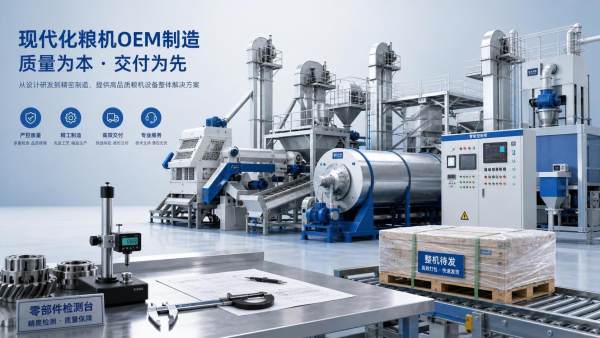
How to Evaluate a Grain Machinery OEM: Key Capabilities, Quality Standards, and Lead Times
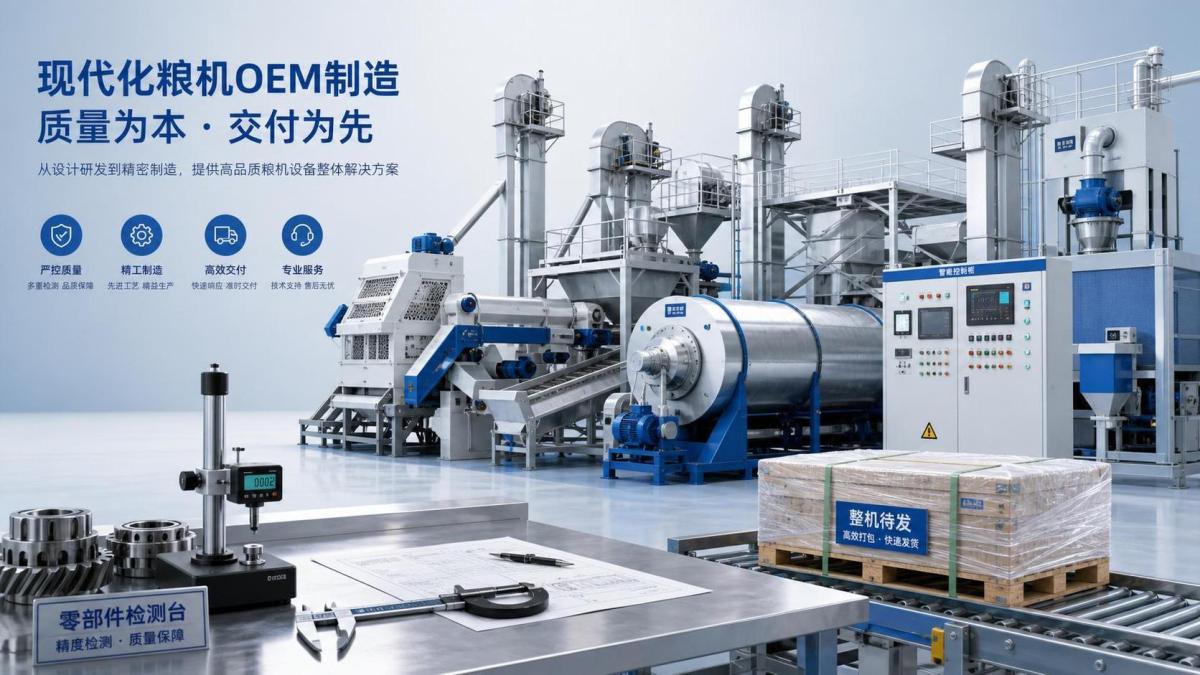
Selecting the right grain machinery OEM can determine production efficiency, compliance performance, and long-term procurement risk.
For buyers facing tight delivery schedules and strict quality expectations, a structured evaluation matters more than price alone.
A capable grain machinery OEM should support output targets, stable quality, and dependable after-sales coordination.
That sounds obvious, but in practice, many supplier comparisons stop too early.
A polished catalog does not confirm process control, material traceability, or production planning discipline.
A more reliable approach is to score each grain machinery OEM across capability, quality systems, and lead-time performance.
This helps reduce sourcing risk before contracts, tooling, and shipment schedules are locked in.
Start with Manufacturing Capability, Not the Sales Deck
The first question is simple: can the grain machinery OEM actually build what your project requires at scale?
This includes technical range, plant layout, fabrication depth, assembly consistency, and testing capacity.
For feed and grain processing lines, this often spans cleaners, dryers, conveyors, mills, storage systems, and control panels.
An experienced grain machinery OEM should show real project references with similar throughput, grain type, and environmental conditions.
Recent projects matter more than older flagship installations.
They show whether the factory is still active in your application segment.
- Production equipment list, including cutting, welding, machining, balancing, and coating assets
- Monthly output by machine category and peak-load flexibility
- In-house engineering coverage for mechanical, electrical, and automation work
- Factory acceptance testing procedures for complete lines or core modules
- Outsourced operations that may affect quality or delivery control
In actual procurement work, hidden subcontracting is one of the most important risk signals.
If a grain machinery OEM outsources key frames, rollers, gearboxes, or control cabinets, oversight becomes harder.
That also means lead times can move unexpectedly when outside suppliers face capacity pressure.
Capability Checks That Reveal Real Capacity
Ask for workshop videos, process maps, and sample inspection reports, not just brochures.
A serious grain machinery OEM can usually provide them quickly.
If responses stay vague, assume the factory’s direct control may be limited.
Check Quality Standards Beyond Basic Certification
Certifications are useful, but they should be the starting point, not the final answer.
A grain machinery OEM may hold ISO credentials and still perform unevenly on tolerances, documentation, or final inspection.
The stronger signal is how the quality system works day to day.
That includes incoming material checks, in-process inspection points, nonconformance handling, and shipment release standards.
For grain handling equipment, quality problems often begin with wear parts, misalignment, vibration, and surface finish control.
A reliable grain machinery OEM should trace these risks to specific inspection routines.
What to Ask for During Quality Review
- Material certificates for structural steel, motors, bearings, and food-contact components where relevant
- Welding procedure records and welder qualification evidence
- Calibration logs for measuring tools and test equipment
- Inspection checklists tied to each production stage
- Corrective action records for recent defects or customer complaints
This review shows whether the grain machinery OEM manages quality as a controlled process or as a final-stage cleanup task.
The difference has direct cost implications after installation.
Compliance and Export Readiness Matter Too
When equipment crosses borders, documentation quality becomes part of product quality.
A qualified grain machinery OEM should support destination-market requirements, including electrical conformity, safety labeling, and shipping documents.
Late or incomplete documents can delay customs clearance and site commissioning.
That risk often gets missed during early supplier screening.
Evaluate Lead Times with More Discipline
Quoted delivery time is easy to compare, but harder to verify.
A grain machinery OEM that promises eight weeks may still ship in twelve if material sourcing is unstable.
That is why lead-time analysis should be broken into components.
Look at engineering release time, raw material procurement, fabrication, assembly, testing, packaging, and port handling.
This gives a more realistic picture of schedule reliability.
A disciplined grain machinery OEM should explain which stages are fixed and which depend on external supply.
From recent market shifts, the clearer signal is component availability rather than basic fabrication time.
For that reason, any grain machinery OEM should disclose which items drive schedule risk.
Ask for Evidence of On-Time Performance
Historical delivery data is far more useful than a verbal assurance.
Request recent on-time shipment rates, average delay days, and the main causes of schedule slippage.
A transparent grain machinery OEM will usually discuss delays with specifics rather than general excuses.
Compare Total Procurement Cost, Not Unit Price Alone
Low quoted pricing can hide higher ownership cost later.
When evaluating a grain machinery OEM, total procurement cost should include installation, spare parts, energy use, maintenance frequency, and downtime exposure.
This is especially important for high-throughput grain lines where hourly losses add up fast.
A lower-cost machine with unstable performance can become the more expensive option within months.
That is why serious teams compare commercial offers on a life-cycle basis.
- Base equipment price and tooling charges
- Freight, packaging, and destination compliance cost
- Warranty scope and response commitments
- Recommended spare parts package
- Expected maintenance intervals and consumable usage
A strong grain machinery OEM should be comfortable discussing operating cost assumptions, not only sales price.
That usually indicates confidence in long-term equipment performance.
Use a Practical Supplier Scorecard Before Final Selection
A structured scorecard keeps evaluations consistent across suppliers and internal stakeholders.
It also helps separate measurable strengths from sales impressions.
For a grain machinery OEM, five categories usually provide a strong baseline.
- Technical fit: throughput, layout compatibility, and customization depth
- Quality control: documentation, traceability, and inspection discipline
- Lead times: realism, stability, and backlog visibility
- Commercial terms: payment, warranty, and spare support
- Service response: commissioning help and problem resolution speed
Weighting can change by project.
A fast-track expansion may prioritize lead time.
A high-spec export facility may prioritize documentation and compliance.
In both cases, the right grain machinery OEM is the one that matches project risk, not the one with the lowest headline quote.
Final Takeaway for Better OEM Selection
Choosing a grain machinery OEM is ultimately a risk management decision.
Strong manufacturing capability, disciplined quality standards, and believable lead times should carry more weight than polished sales language.
The most dependable grain machinery OEM will show evidence, answer technical questions directly, and stay transparent about constraints.
That is usually the clearest sign of a partner built for stable procurement, not just a single transaction.
Before issuing the final purchase order, review factory capability, audit quality records, break down lead times, and compare life-cycle cost.
That process takes more effort up front, but it leads to better sourcing decisions and fewer surprises after delivery.
Related Intelligence
- Milling MachineryCan Agricultural Scientists Validate Grain Processing Machinery?Can agricultural scientists validate process machinery performance? Discover how grain equipment testing verifies throughput, quality, and efficiency before you invest.
- Milling MachineryGrain Processing Explained: From Cleaning and Milling to Finished Product QualityGrain Processing explained: discover how cleaning, conditioning, milling, and quality control turn raw grain into safe, consistent flour, feed, and food ingredients.
- Milling MachineryGerman Grain Processing Plants: Evaluating Automation and Energy-Efficiency UpgradesGrain processing Germany: evaluate automation and energy-efficiency upgrades to improve throughput, quality, safety, and lifecycle value.
The Morning Broadsheet
Daily chemical briefings, market shifts, and peer-reviewed summaries delivered to your terminal.
