

The Authority in Global Agricultural Chemistry & Bio-Resources
EU REACH Adds 17 Botanical Extract Restrictions
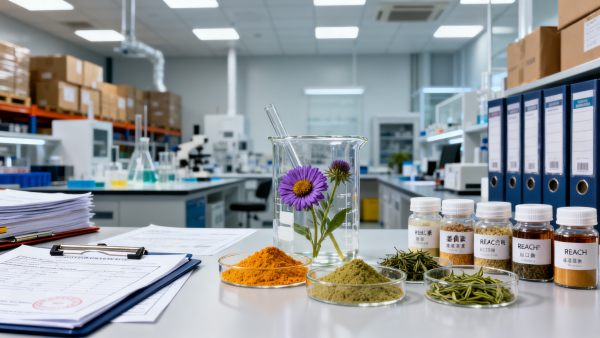
On July 14, 2026, ECHA released a REACH amendment that brings 17 commonly used botanical extracts, including echinacea, curcumin, and green tea polyphenols, into a tighter compliance framework under Annex XVII Amendment No. 92, with effect from August 2026. For exporters, importers, and downstream distributors working with botanical extracts, the immediate issue is not only product classification but also whether toxicological documentation and batch-level compliance statements can be prepared in time for customs clearance and market access.

What the amendment confirms
According to the information provided, ECHA issued the REACH regulatory revision notice on July 14, 2026 under Annex XVII Amendment No. 92. The amendment places 17 categories of commonly used botanical extracts on the SVHC restriction list, including examples such as echinacea, curcumin, and green tea polyphenols.
The same notice requires importers to provide a complete toxicological dossier and a batch compliance declaration before customs clearance. The stated effective timing is August 2026.
The confirmed business impact described in the source information is that the change directly affects registration obligations for botanical extract exporters and access to downstream distribution channels. It also creates a material compliance threshold for Chinese suppliers that have not completed EU-REACH pre-registration.
Where pressure is likely to appear across the supply chain
Export-facing suppliers may face an immediate documentation gap
From an industry perspective, exporters of botanical extracts are among the first parties likely to feel the impact because the rule change is tied to registration obligations and customs-related documentation. The operational pressure is likely to center on whether product files, toxicological materials, and batch declarations are complete enough to support shipment and clearance.
Importers will carry a heavier gatekeeping role at customs
Importers are directly named in the requirement to submit a full toxicological dossier and batch compliance declaration before goods clear customs. Analysis shows this may shift more compliance screening to the pre-import stage, making importer-side document review and supplier qualification more important in actual transactions.
Distributors and downstream channels may tighten entry conditions
The source information states that downstream distribution access will be directly affected. Observably, this means channel participants may pay closer attention to whether the relevant extract categories have complete compliance support before accepting products into distribution, even when the commercial relationship already exists.
Chinese suppliers without pre-registration face a sharper barrier
The information provided specifically highlights Chinese suppliers that have not completed EU-REACH pre-registration. What deserves closer attention is that the issue is not framed only as a regulatory update, but as a practical market-entry barrier that may affect order continuity, customer confidence, and eligibility to move goods into the EU market.
What companies should watch now
Check whether affected product lines are exposed
Companies dealing in botanical extracts should first identify whether their portfolios include any of the 17 categories referenced in the amendment. In this case, the key issue is not broad regulatory interpretation, but whether specific traded or supplied items now fall into a more demanding compliance path.
Review dossier readiness before shipment arrangements
Because the notice links customs clearance to toxicological dossiers and batch compliance declarations, businesses should pay close attention to whether those materials are already available, incomplete, or still under preparation. This is especially relevant for shipments planned close to the August 2026 effective date.
Reassess supplier qualification and pre-registration status
Analysis shows supplier screening may become more important than usual for buyers, importers, and channel partners. For companies sourcing from China, the pre-registration status of suppliers becomes a practical checkpoint rather than a background compliance detail.
Separate regulatory language from execution risk
What deserves closer attention is the difference between the published rule and day-to-day business execution. Even where the amendment language is clear, the actual business risk may emerge through delayed document preparation, shipment timing, customs processing, and counterpart communication.
Why this looks more like a compliance signal than a one-day event
Analysis shows this development should be read as more than a short-term notice about a restricted substances list. The combination of SVHC-related restriction treatment, pre-clearance documentation, and downstream access implications suggests that compliance expectations around botanical extracts are becoming more operational and transaction-specific.
At the same time, it is more appropriate to understand this as an active regulatory development rather than a fully settled market outcome. The confirmed facts establish the rule change and its compliance direction, but the full commercial effect will still depend on how companies, importers, and channel partners implement those requirements in practice.
How the market may need to interpret the update
For the botanical extracts trade, this update is best understood as a near-term compliance change with longer-term signaling value. In the short term, it affects documentation, registration obligations, and customs-related readiness. In a broader sense, it signals that commonly traded plant-derived ingredients may face closer scrutiny when market access depends on both substance status and batch-level supporting materials.
A neutral reading is that the amendment does not by itself define every commercial consequence, but it clearly raises the threshold for doing business in the affected categories. For companies exposed to EU trade flows, the immediate priority is not speculation about market size or pricing, but confirming whether documentation and registration status can support uninterrupted access.
Basis of this report and points for further verification
This article is based on the user-provided news title, event date, and event summary. The factual core used here includes the July 14, 2026 release timing, the REACH amendment reference to Annex XVII Amendment No. 92, the inclusion of 17 botanical extract categories in the stated restriction framework, the requirement for toxicological dossiers and batch compliance declarations before customs clearance, and the stated impact on exporters, distribution access, and Chinese suppliers without EU-REACH pre-registration.
For this type of industry update, commonly relevant source categories may include official regulatory notices, company disclosures, industry association updates, authoritative media coverage, and standard-setting documents. A specific official source link was not provided in the input, so continued verification is still necessary. Follow-up attention should focus on any further official wording, implementation guidance, and how affected market participants interpret documentation and access requirements in practice.
Related Intelligence
- Botanical ExtractsChoosing Botanical Extracts for Pharmaceuticals: Potency, Purity, and ComplianceBotanical extracts for pharmaceuticals: learn how to assess potency, purity, traceability, and GMP compliance for confident, regulatory-ready supplier selection.
- Botanical ExtractsBotanical Extracts Market Outlook: Supply, Pricing, and Buyer RisksBotanical extracts market insights on supply, pricing, quality control, and buyer risks—compare suppliers confidently and protect your sourcing strategy.
- Botanical ExtractsEurope Botanical Extracts Market: Key Growth Drivers, Risks, and OpportunitiesEurope botanical extracts market insights: explore growth drivers, regulatory risks, supply-chain challenges, and scalable opportunities for compliant, high-value ingredients.
The Morning Broadsheet
Daily chemical briefings, market shifts, and peer-reviewed summaries delivered to your terminal.
