

The Authority in Global Agricultural Chemistry & Bio-Resources
EU Tightens Batch Traceability for Botanical Extract Imports
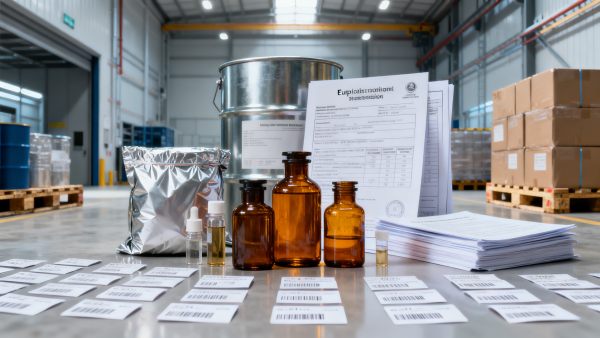
On July 12, 2026, the European Commission issued Implementing Regulation (EU) 2026/1389, introducing a new batch traceability requirement for imported botanical extracts from October 1, 2026. For importers, exporters, and supply chain operators involved in botanical extract trade, the development deserves close attention because it links customs processing directly to the completeness of traceability data submitted through EU-TRACES, with clear implications for compliance workflows and clearance timing.
What the new EU requirement confirms
According to the information provided, from October 1, 2026, all importers of botanical extracts will be required to submit complete batch traceability information through the EU-TRACES system. The required information includes the origin of raw materials, extraction process parameters, and solvent residue testing reports.
The same information states that the measure will directly affect compliance declaration procedures and customs clearance efficiency for Chinese exporters. Goods that do not meet the requirement will be automatically intercepted and will enter official sampling inspection procedures.
Where the impact is likely to be felt first
Export documentation moves closer to the center of trade execution
From an industry perspective, direct trading companies are likely to feel the impact early because the rule is tied to batch-level declarations rather than broad product-level descriptions. The operational pressure will likely appear in document preparation, information consistency, and submission timing before shipment or entry.
Upstream sourcing records become more business-critical
For companies involved in raw material procurement, the stated requirement on raw material origin means upstream traceability records may become more important in export preparation. What deserves closer attention is whether procurement-side information can be matched clearly to each shipment batch used for EU-bound orders.
Processing and quality teams may face tighter data coordination
For processors and manufacturers, the requirement to provide extraction process parameters and solvent residue testing reports suggests that production and quality documentation will matter not only for internal control but also for import compliance. The effect is likely to be felt in record retention, batch mapping, and cross-team coordination between production, quality, and export functions.
Logistics and customs service providers may see timing risk increase
Supply chain service providers, including customs and clearance support teams, may be affected because incomplete or inconsistent filings can slow movement at the border. Analysis shows that the operational risk here is less about transport itself and more about whether submission readiness aligns with customs timelines.
What companies should watch now
Follow the implementation language around EU-TRACES filings
Companies should pay close attention to how the filing requirement is expressed and applied in practice through EU-TRACES. The regulation sets the direction clearly, but day-to-day execution often depends on how data fields, submission routines, and review expectations are handled at the operational level.
Check whether batch records can support shipment-level declarations
The practical issue is not only whether information exists, but whether it can be assembled into complete batch traceability records for each relevant shipment. This is especially important where sourcing, extraction, testing, and export preparation are managed by different teams or entities.
Review lead times around testing and document readiness
Because solvent residue testing reports are explicitly included in the required information, companies should examine whether testing output and related documentation can be aligned with delivery schedules. Delays in document readiness may translate into clearance delays once the requirement takes effect.
Prepare customer and supplier communication in advance
Observably, the rule may increase the need for earlier coordination between exporters, EU importers, and upstream suppliers. Businesses should focus on who is responsible for collecting origin data, who validates process information, and when compliance documents need to be finalized before goods move.
Why this looks bigger than a routine filing update
Analysis shows that this is not simply an additional formality. The requirement connects market access to traceability depth at the batch level and places operational weight on verifiable production and testing information. That makes it relevant not only as a short-term compliance change, but also as a signal that documentation quality and traceability readiness are becoming more central to cross-border trade in botanical extracts.
At the same time, it is more appropriate to understand this as an implemented regulatory change with ongoing operational implications, rather than as a fully settled industry outcome. The immediate rule is clear, but the full business effect will depend on how companies adapt their filing, documentation, and coordination processes after October 1, 2026.
How the market may need to read this development
In practical terms, this update should be read as a concrete compliance requirement with near-term execution consequences. For companies exporting botanical extracts to the EU, the main issue is not abstract policy direction but whether batch origin information, extraction process data, and solvent residue reports can be prepared in a complete and usable form for EU-TRACES submission.
A neutral reading is that the rule creates a clearer threshold for entry rather than an immediate judgment on all market participants. Businesses that depend on EU trade flows should treat it as a real operational checkpoint and continue watching how implementation affects filing practices and clearance efficiency.
Basis of this article and points for continued verification
This article is based on the user-provided news title, event date, and event summary. For this type of development, commonly relevant source categories include official regulatory notices, company disclosures, industry association updates, authoritative media coverage, and standards-related documents.
No specific official source link was provided in the input, so the exact official link still requires continued verification. What remains worth monitoring is whether there are further official clarifications, process details related to EU-TRACES submissions, and any additional implementation guidance that may affect practical compliance for botanical extract import trade.
Related Intelligence
- Botanical ExtractsChoosing Botanical Extracts for Pharmaceuticals: Potency, Purity, and ComplianceBotanical extracts for pharmaceuticals: learn how to assess potency, purity, traceability, and GMP compliance for confident, regulatory-ready supplier selection.
- Botanical ExtractsBotanical Extracts Market Outlook: Supply, Pricing, and Buyer RisksBotanical extracts market insights on supply, pricing, quality control, and buyer risks—compare suppliers confidently and protect your sourcing strategy.
- Botanical ExtractsEurope Botanical Extracts Market: Key Growth Drivers, Risks, and OpportunitiesEurope botanical extracts market insights: explore growth drivers, regulatory risks, supply-chain challenges, and scalable opportunities for compliant, high-value ingredients.
The Morning Broadsheet
Daily chemical briefings, market shifts, and peer-reviewed summaries delivered to your terminal.
