

The Authority in Global Agricultural Chemistry & Bio-Resources
Vietnam Tightens Feed Pellet Import Filing Rules
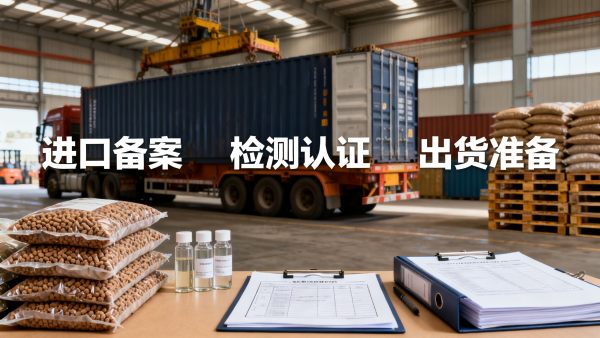
On July 12, 2026, Vietnam’s Ministry of Agriculture and Rural Development (MARD) announced a new filing requirement for Commercial Feed Pellet imports that will take effect on September 1, 2026. The change centers on VETNET registration tied to FSSAI-equivalent qualifications and new supporting documentation, which makes this more than a routine administrative update. For importers, Chinese manufacturers, exporters, compliance teams, and testing-related service providers, the immediate issue is how the added certification and document review steps may affect market access timing, shipment preparation, and delivery planning.
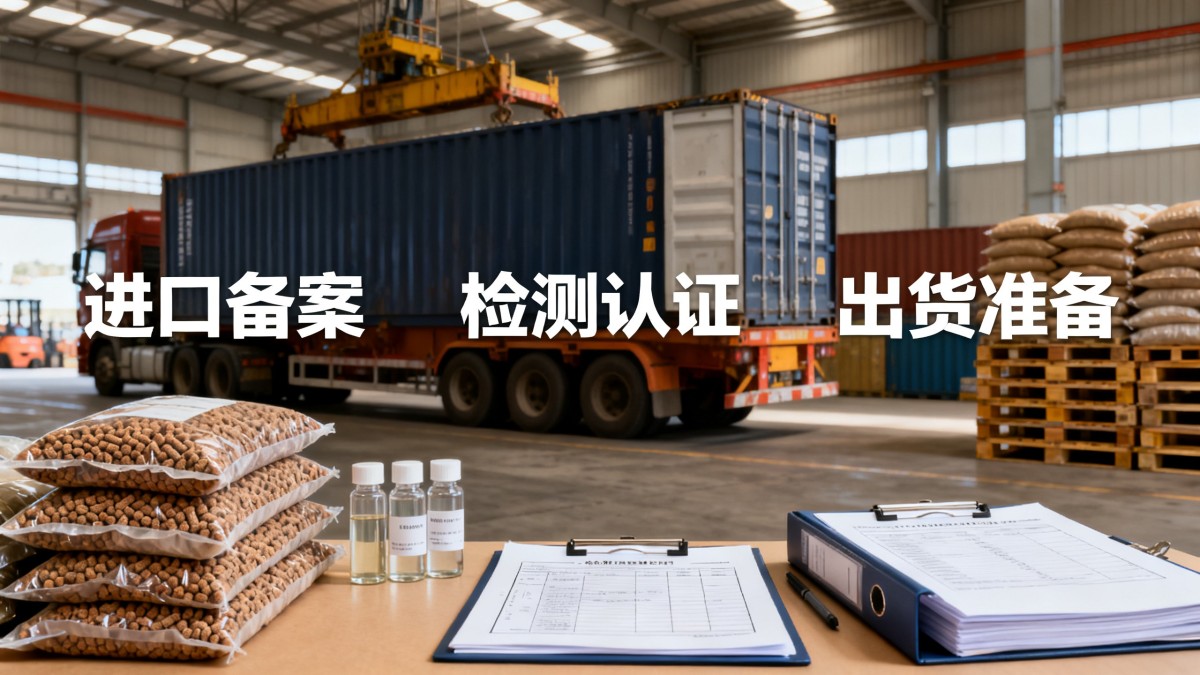
What the new requirement formally changes
According to the information provided, MARD notified the market on July 12, 2026 that, from September 1, 2026, all Commercial Feed Pellet importers must complete FSSAI-equivalent qualification filing in the VETNET system. The required submission package includes the Chinese manufacturer’s GMP certificate, a full ingredient analysis report, and proof of antimicrobial resistance testing. The stated purpose of the measure is to strengthen oversight of antibiotic residues in feed. The same information also indicates that the average certification preparation cycle for Chinese exporters is expected to extend to 21 working days.
Where the pressure is likely to appear first
Import-side market access and document coordination
From an industry perspective, importers are likely to feel the change first because the filing obligation sits directly at the point of market entry. The practical impact is less about the existence of one new rule in isolation and more about whether supporting documents can be assembled, matched, and submitted in time through VETNET. What deserves closer attention is the coordination burden between importers and upstream suppliers when qualification records and technical documents must move together.
Chinese manufacturers and exporters facing a longer pre-shipment process
Analysis shows that Chinese production and export-side participants may face added pressure in pre-export compliance preparation. The required GMP certificate, full ingredient analysis report, and antimicrobial resistance testing proof all point to a more document-driven review path before shipments move smoothly. Based on the information provided, the expected extension of the preparation cycle to 21 working days means exporters may need to reassess scheduling around order confirmation, document readiness, and handover timing.
Testing and compliance service workflows becoming more time-sensitive
Observably, the requirement for ingredient analysis and antimicrobial resistance-related proof may increase the time sensitivity of testing and compliance support work. Even without additional confirmed execution details, this change suggests that documentation quality, consistency, and issuance timing could become more important for companies supporting certification and shipment preparation. The main business effect is likely to appear in review sequencing, file completeness, and the risk of delays if records are not aligned early.
Procurement and delivery planning may need earlier lock-in
For buyers and supply chain coordinators, the rule change matters because compliance preparation now appears more directly connected to delivery lead time. Analysis shows that procurement scheduling may need to account for a longer administrative and certification window, especially where supply contracts or replenishment plans assume shorter export readiness cycles. The issue to watch is not only whether goods meet product expectations, but whether the supporting compliance package is ready within the required timeline.
What companies should track in practice now
Check whether existing qualification files match the new filing path
It is more appropriate to understand the current phase as one of document gap checking. Companies involved in Commercial Feed Pellet trade should review whether their existing qualification records can support VETNET filing tied to FSSAI-equivalent recognition, and whether internal compliance teams and trade counterparts are using the same document set and naming logic.
Prepare the three required documents as a linked compliance package
Analysis shows that the GMP certificate, full ingredient analysis report, and antimicrobial resistance testing proof should not be handled as isolated paperwork items. In practice, the quality of submission may depend on whether these materials are prepared as a consistent package for the same product and manufacturer, reducing the chance of timing mismatches during filing and review.
Adjust delivery and purchasing assumptions around the 21-day preparation period
What deserves closer attention is the expected extension of the certification preparation cycle for Chinese exporters to 21 working days. Companies with active or planned trade flows may need to revisit lead-time assumptions in procurement planning, shipment scheduling, and customer communication. This should be treated as an operational planning issue, not only a regulatory reading issue.
Continue watching for execution language and market interpretation
The information provided confirms the filing requirement and the required supporting materials, but it does not provide full downstream execution detail. For that reason, companies should continue tracking how the requirement is reflected in official wording, review practice, trade documentation requests, and counterpart expectations. At this stage, attention to execution interpretation is as important as attention to the rule text itself.
Why this looks like an execution signal, not just a headline
Observably, this development is best read as a concrete compliance signal rather than a generic policy statement, because it sets a clear effective date, specifies the filing channel, and identifies the required supporting documents. At the same time, analysis shows it should not yet be overstated as a fully settled operating framework for every transaction scenario, since the provided information does not include detailed review procedures, exception handling, or market-level implementation feedback. The industry therefore has reason to treat this as an active rule change with practical consequences, while continuing to watch how it is applied in execution.
How the market may need to read this change for now
At this point, the measure is more appropriately understood as a real compliance adjustment with direct implications for import filing, export document preparation, and shipment timing in the Commercial Feed Pellet trade. The immediate significance lies in the stronger linkage between regulatory filing and supporting technical records. A cautious reading is warranted: the change is already defined in timing and document scope, but its full operational effect will depend on how filing practice, review expectations, and business-side response develop after implementation begins.
Basis of this article and what still needs verification
This article is generated solely from the user-provided news title, event date, and event summary. For developments of this kind, commonly relevant source types may include official notices, regulatory authority releases, customs or trade administration information, industry association updates, standards-related documents, and reporting by authoritative trade media. A specific official source link was not provided in the input, so the underlying notice and later implementation details still require ongoing verification. What remains worth monitoring includes policy detail, certification interpretation, filing practice in VETNET, changes in procurement or tender documentation, market feedback, and how affected companies execute against the new requirement.
Related Intelligence
- Commercial Feed PelletHow to Build a Sanitary Feed Production Plan That Reduces Cross-ContaminationSanitary feed production planning: reduce cross-contamination with smarter sequencing, validated flushing, material segregation, and traceable sanitation controls.
- Commercial Feed PelletFeed Pellet Mill Sourcing: How to Vet Suppliers for Capacity, Quality, and SupportFeed pellet mill sourcing made smarter: vet suppliers for proven capacity, pellet quality, lifecycle cost, factory controls, commissioning, and reliable after-sales support.
- Commercial Feed PelletFeed Production System Price Trends: Cost Drivers and Budgeting for New LinesFeed production systems price trend insights: compare cost drivers, automation, utilities, compliance, and total ownership costs to budget smarter for new feed lines.
The Morning Broadsheet
Daily chemical briefings, market shifts, and peer-reviewed summaries delivered to your terminal.
