

The Authority in Global Agricultural Chemistry & Bio-Resources
India Mandates FSSAI Trace Codes for Feed Pellet Imports
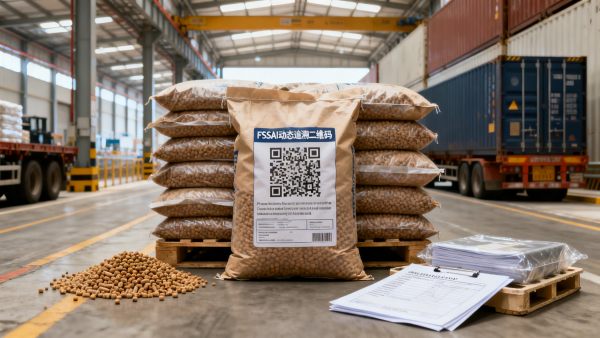
India’s food safety regulator brought a new import requirement into effect on July 10, 2026, requiring all imported commercial feed pellets to carry a dynamic FSSAI traceability QR code on the packaging. For exporters, importers, and supply chain service providers handling this product category, the development is worth close attention because the code must connect to cloud-based records covering origin country of raw materials, farm or factory identification, processing batch details, and third-party test reports, while non-connection to an FSSAI-recognized platform may lead to customs delays or full shipment returns.
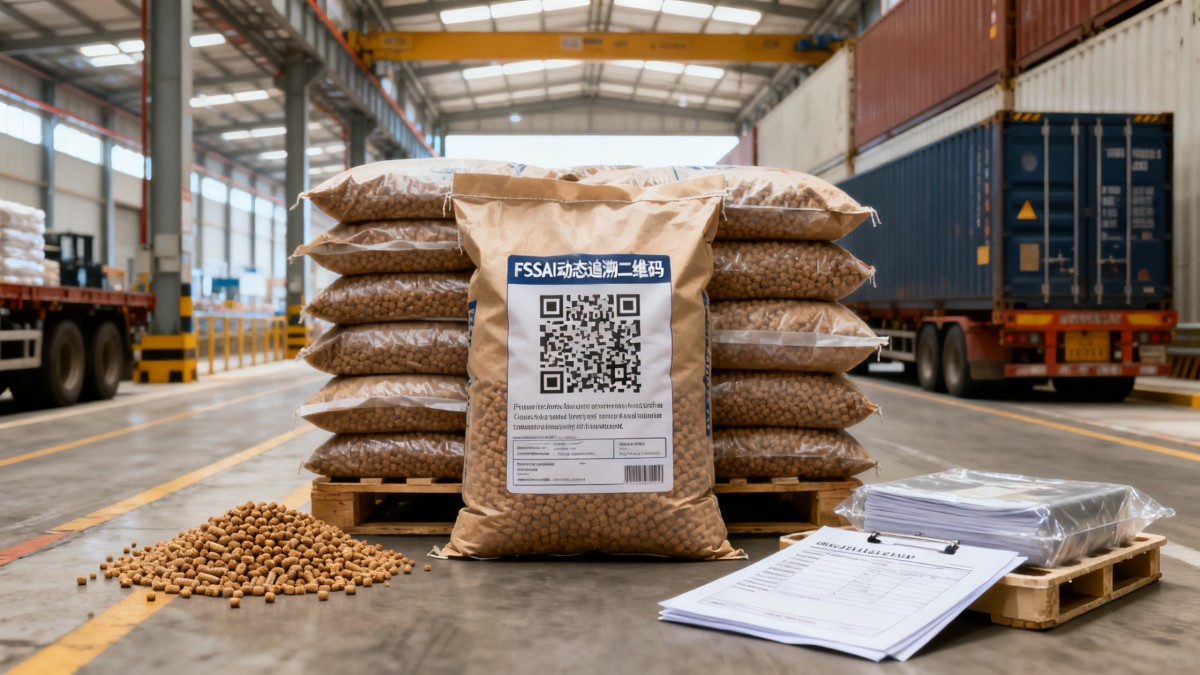
What the New Import Rule Requires
According to the provided information, the Food Safety and Standards Authority of India (FSSAI) made the new rule effective on July 10, 2026. The requirement applies to imported commercial feed pellets.
The rule requires packaging to display a dynamic FSSAI traceability QR code. That code must link to a cloud database containing at least four categories of information: the country of origin of raw materials, the farm or factory number, the processing batch, and third-party testing reports.
The provided information also states that Chinese exporters that are not connected to an FSSAI-recognized platform, such as AgriTrace India, may face customs clearance delays or the risk of full shipment rejection and return.
Where the Immediate Pressure May Appear in the Supply Chain
Export transactions may face a new compliance checkpoint
From an industry perspective, direct trading companies are likely to feel the impact first because packaging compliance and data connectivity now appear tied to customs outcomes. The practical pressure point is no longer only product shipment, but whether the shipment can be matched with the required digital traceability record in a form accepted by Indian authorities.
Manufacturers may need tighter batch-to-package coordination
Processing manufacturers involved in commercial feed pellet exports may be affected at the stage where production records, packaging execution, and third-party test documentation need to align. What deserves closer attention is whether batch information, plant identifiers, and test records can be connected to the QR code in a consistent and shipment-ready format before dispatch.
Importers and distributors may face delivery timing risk
For importers, channel operators, and downstream distribution participants, the issue is not only regulatory formality but delivery reliability. Analysis shows that if platform access or package-level traceability information is incomplete, the disruption may surface in customs timing, cargo release planning, and customer delivery commitments.
Supply chain service providers may become part of compliance execution
Service providers involved in labeling, documentation, customs coordination, or digital compliance support may also be drawn more directly into execution. Observably, the new requirement links physical packaging with cloud-hosted traceability data, which means coordination errors could emerge across multiple handoff points rather than within a single company alone.
What Companies Should Track Now
Whether platform access is operational, not just nominal
One practical focus is the difference between policy wording and operational readiness. Companies should pay attention to whether they are actually connected to an FSSAI-recognized platform in a usable way for live shipments, because the provided information indicates that lack of such connection may create customs delays or shipment return risk.
Whether source data can be assembled shipment by shipment
Another key point is document and data readiness. The rule refers to raw material origin country, farm or factory number, processing batch, and third-party testing reports. Companies involved in procurement, production, and export coordination should therefore pay close attention to whether these records can be collected and matched at shipment level rather than held only in separate internal files.
Whether packaging workflows are aligned with compliance timing
Businesses should also watch the packaging stage carefully. Since the rule requires the QR code to appear on the package, operational timing matters: if traceability data is not finalized when packaging is completed, relabeling or shipment delay risk may increase. This is a business process issue as much as a regulatory one.
Whether customer communication and delivery planning need adjustment
For companies supplying the Indian market, customer-side communication deserves attention as well. If compliance setup is still being finalized, importers and buyers may need updated delivery expectations, especially where customs timing is contract-sensitive. Analysis shows that early coordination may matter more than after-the-fact corrective action.
Why This Looks Like More Than a One-Off Labeling Change
Observably, this development is not just about adding another package mark. The stated requirement combines packaging, digital traceability infrastructure, production identification, and third-party testing into one compliance path. That makes it more appropriate to understand the rule as a supply chain visibility requirement attached to import access, rather than as a simple labeling update.
At the same time, it would be premature to treat this as proof of wider market outcomes beyond the product scope provided here. Based on the confirmed facts, the immediate conclusion is narrower: companies dealing in imported commercial feed pellets for India now face a more data-dependent compliance threshold, and market participants should continue watching how implementation works in practice.
How the Market May Need to Read This Development
At this stage, the most balanced reading is that the rule is both an immediate operational change and a longer-term regulatory signal. The immediate change is clear because the requirement is already effective as of July 10, 2026. The longer-term signal, based on analysis rather than confirmed expansion, is that traceability acceptance may increasingly depend on verifiable digital records connected to packaging and shipment identity.
For industry participants, the significance lies less in abstract policy interpretation and more in execution risk. Where data linkage, packaging control, and recognized platform access are incomplete, the business effect may appear quickly through clearance delays or return exposure. That is why this update is better understood as an actionable compliance development that still warrants continued observation.
Basis of This Article and Ongoing Verification
This article is based on the user-provided news title, event date, and event summary. In reporting of this type, relevant source categories usually include official regulatory notices, company disclosures, industry association updates, authoritative media reporting, and standards-related documents.
No specific official source link was provided in the input, so the exact primary regulatory document and any later clarification still require continued verification. What deserves closer attention going forward is whether further official wording, implementation guidance, or platform-related details alter how the rule is applied in real shipment workflows.
Related Intelligence
- Commercial Feed PelletHow to Build a Sanitary Feed Production Plan That Reduces Cross-ContaminationSanitary feed production planning: reduce cross-contamination with smarter sequencing, validated flushing, material segregation, and traceable sanitation controls.
- Commercial Feed PelletFeed Pellet Mill Sourcing: How to Vet Suppliers for Capacity, Quality, and SupportFeed pellet mill sourcing made smarter: vet suppliers for proven capacity, pellet quality, lifecycle cost, factory controls, commissioning, and reliable after-sales support.
- Commercial Feed PelletFeed Production System Price Trends: Cost Drivers and Budgeting for New LinesFeed production systems price trend insights: compare cost drivers, automation, utilities, compliance, and total ownership costs to budget smarter for new feed lines.
The Morning Broadsheet
Daily chemical briefings, market shifts, and peer-reviewed summaries delivered to your terminal.
