

The Authority in Global Agricultural Chemistry & Bio-Resources
EU REACH Draft Flags 2 New SVHCs in Botanical Extracts
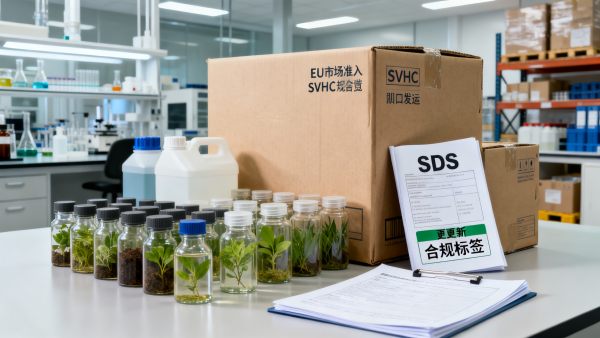
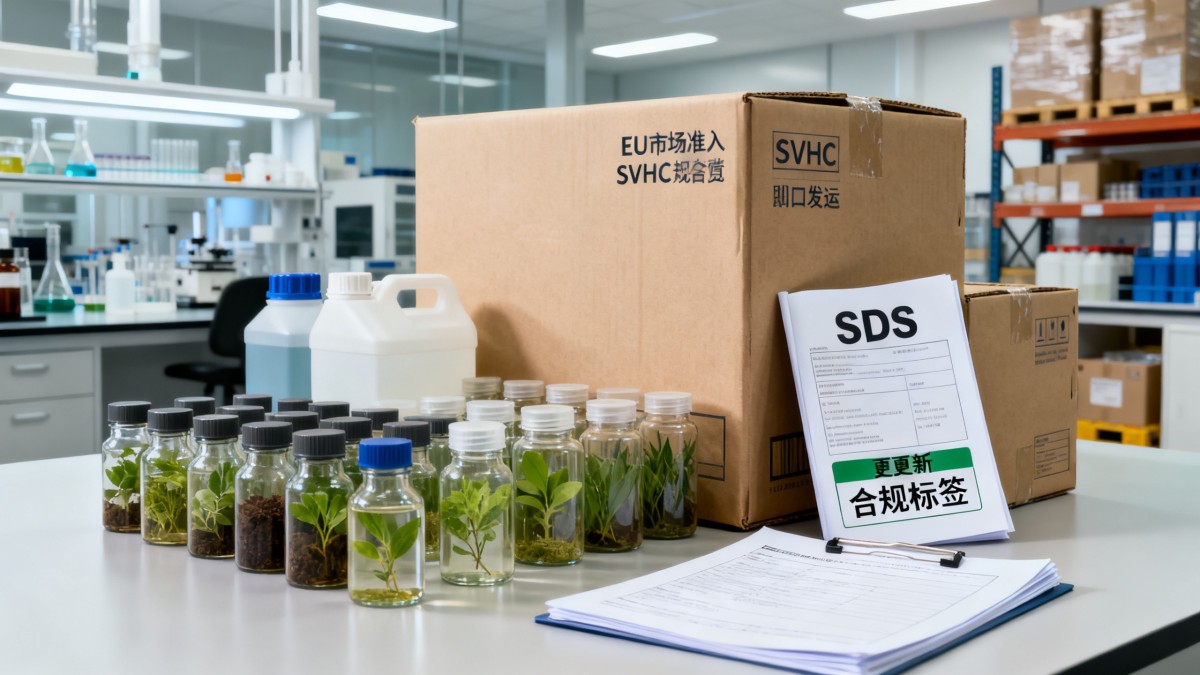
On July 10, 2026, a new REACH draft revision signaled a near-term compliance change for Botanical Extracts entering the EU market. The draft would add Taxol-D3 and Matrine-N-Oxide to the SVHC Candidate List, and the immediate operational issue for exporters is the August 1 deadline to update SDS Sections 2.3 and 15.2 and bring multilingual labeling into line. This matters not only for export sellers, but also for procurement, documentation, distribution, and delivery teams, because non-compliant shipments may face customs detention and distribution restrictions.
What the draft revision specifically changes
The confirmed information is limited but commercially significant. ECHA issued a REACH draft revision on July 10, 2026, identified as COM/2026/412. Under that draft, Taxol-D3 and Matrine-N-Oxide are proposed for inclusion in the SVHC Candidate List.
The event directly concerns Botanical Extracts exporters. For plant extracts containing either of those substances, SDS Sections 2.3 and 15.2 must be updated by August 1, and multilingual label compliance must also be revised within that timeframe. The stated enforcement risk is clear: failure to complete those updates may lead to EU customs holds and distribution bans.
Where pressure is likely to appear first in the trade chain
Export documentation will become the first control point
For exporters shipping Botanical Extracts to the EU, the most immediate exposure is documentary compliance. The rule change is tied directly to SDS content and labeling, so the impact is likely to show up first in pre-shipment review, customs-facing files, and product release documentation. What deserves closer attention is whether internal product files, customer-facing compliance packets, and shipment documents remain aligned once SDS Sections 2.3 and 15.2 are revised.
Procurement and ingredient review may need to move faster
For companies sourcing plant-based raw materials or intermediate extracts, the issue is not only the final export file. Analysis shows that procurement teams may need to verify whether supplied materials contain Taxol-D3 or Matrine-N-Oxide and whether suppliers can support timely document updates. The practical effect may fall on supplier qualification, incoming compliance checks, and purchasing decisions where uninterrupted EU delivery matters.
Processing and labeling operations could face short-cycle adjustments
Manufacturers and processors handling affected Botanical Extracts may feel the change through packaging lines, label control, and release workflows. Because multilingual labels must be updated by August 1, the operational burden is likely to sit with artwork review, stock replacement, and batch release coordination. From an industry perspective, this is less about broad formulation change in the information provided and more about whether products can still move with compliant labeling and supporting documents.
Distributors and logistics partners may carry downstream risk
Channel distributors and supply-chain service providers may not be the originators of compliance documents, but they can still be exposed if goods are held at the border or blocked from distribution. Observably, this creates a practical need to confirm that consignments received from exporters already reflect updated SDS and labeling status, especially where delivery schedules and onward sales depend on uninterrupted EU market entry.
What companies should be checking now
Screen affected product portfolios against the named substances
Companies dealing in Botanical Extracts should first identify whether any exported products contain Taxol-D3 or Matrine-N-Oxide. The input information does not provide wider scope details, so it is more appropriate to focus on product-by-product screening rather than assume a broad category impact beyond the named substances.
Review whether SDS updates are internally consistent
The stated requirement refers specifically to SDS Sections 2.3 and 15.2. Analysis shows that companies should check whether revised SDS content is consistent across technical files, customer declarations, and shipment paperwork. Where multiple language versions are used, document control may become a practical compliance issue rather than a purely regulatory one.
Confirm multilingual label readiness before shipment release
The August 1 timing makes label execution a near-term business issue. What deserves closer attention is whether existing label inventory, translation control, and packaging approval steps can support compliant release on time. If those steps lag behind document updates, export-ready status may still remain incomplete.
Keep watching for the final regulatory wording and enforcement interpretation
Because the information provided refers to a draft revision, companies should avoid treating every implementation detail as settled beyond the confirmed update requirement and stated enforcement exposure. Observably, the next area to monitor is how official wording, enforcement interpretation, customer requirements, and related commercial documents develop around this change.
How this signal should be read at this stage
Analysis shows that this development should be understood as both a regulatory signal and an immediate compliance trigger for affected exporters. It is not just a policy discussion item, because the information provided already ties the draft revision to a concrete August 1 deadline for SDS and labeling updates. At the same time, it is still more appropriate to treat broader downstream effects, market reactions, and execution patterns as matters requiring continued observation rather than fixed outcomes.
From an industry perspective, the key issue is not whether the change exists, but how quickly companies can convert regulatory language into shipment-ready documents and labels. That is where trade disruption, procurement friction, and delivery delays are most likely to emerge if internal coordination is weak.
Why this matters beyond the headline
This update matters because it compresses regulatory change into a short operational window for Botanical Extracts entering the EU. The confirmed requirement is narrow in wording but broad in business effect: substance identification, SDS updates, multilingual labels, and shipment release controls now need to work together. It is more appropriate to understand this event as an active compliance signal with immediate trade relevance, while still reserving judgment on wider market impact until further official detail and industry feedback become clearer.
Basis of this article and what still needs verification
This article is generated from the user-provided news title, event date, and event summary. The analysis is based only on the stated facts: the July 10, 2026 REACH draft revision, the proposed addition of Taxol-D3 and Matrine-N-Oxide to the SVHC Candidate List, the August 1 SDS and multilingual labeling update requirement, and the stated risk of customs detention and distribution bans for non-compliance.
For events of this type, relevant source categories commonly include official regulatory notices, releases from supervisory authorities, customs or trade administration updates, industry association communications, standard-setting documents, and reporting by established trade media. A specific official source link was not provided in the input, so that link remains to be verified. What still requires continued checking includes final regulatory wording, enforcement interpretation, certification and compliance practice, changes in customer or tender documentation, industry feedback, and how companies implement the update in actual export operations.
Related Intelligence
- Botanical ExtractsChoosing Botanical Extracts for Pharmaceuticals: Potency, Purity, and ComplianceBotanical extracts for pharmaceuticals: learn how to assess potency, purity, traceability, and GMP compliance for confident, regulatory-ready supplier selection.
- Botanical ExtractsBotanical Extracts Market Outlook: Supply, Pricing, and Buyer RisksBotanical extracts market insights on supply, pricing, quality control, and buyer risks—compare suppliers confidently and protect your sourcing strategy.
- Botanical ExtractsEurope Botanical Extracts Market: Key Growth Drivers, Risks, and OpportunitiesEurope botanical extracts market insights: explore growth drivers, regulatory risks, supply-chain challenges, and scalable opportunities for compliant, high-value ingredients.
The Morning Broadsheet
Daily chemical briefings, market shifts, and peer-reviewed summaries delivered to your terminal.
