

The Authority in Global Agricultural Chemistry & Bio-Resources
FDA Flags 3 Botanical Extract Bases for Priority Import Checks

On July 11, 2026, the U.S. Food and Drug Administration updated its priority import inspection list for botanical extracts, adding elderberry, echinacea, and ashwagandha extract bases to the key inspection scope for the second half of 2026. For companies shipping these materials into the U.S., the update deserves attention because it directly affects documentation readiness, laboratory compliance, customs timing, and delivery planning, especially where import clearance depends on complete testing records.
What the FDA update confirms
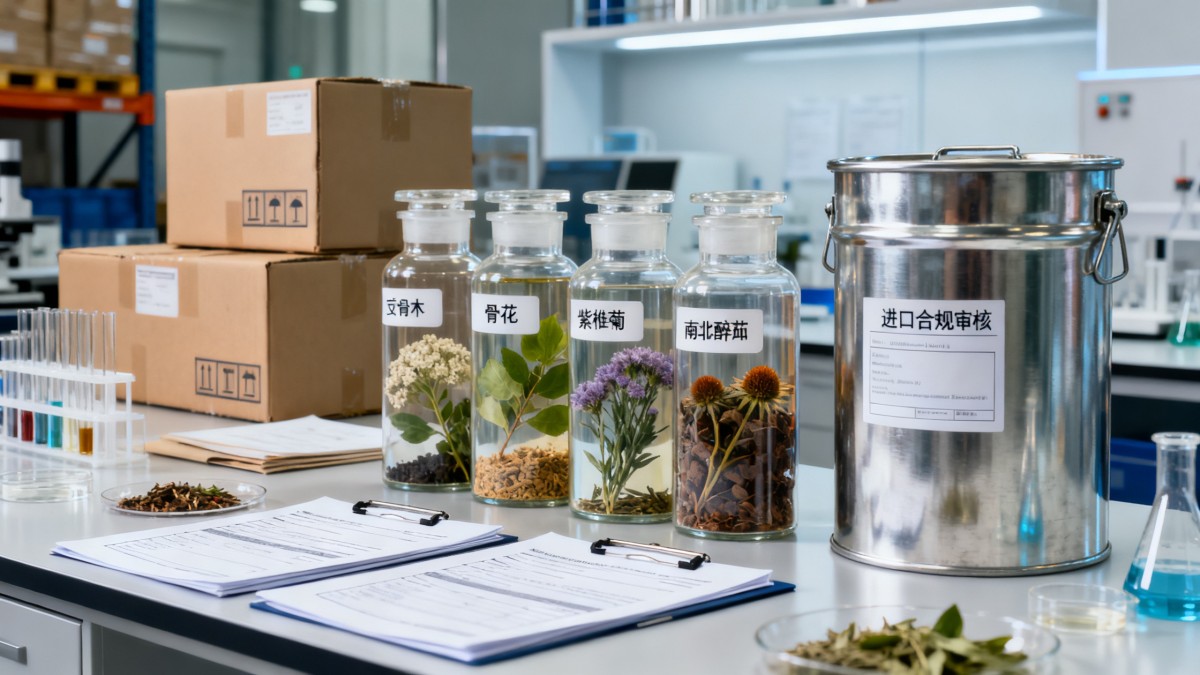
According to the provided event summary, the FDA placed extracts based on Sambucus, Echinacea, and Ashwagandha on its priority import inspection list for the second half of 2026. The update requires shipments to be accompanied by full reports on heavy metals, pesticide residues, and mycotoxins issued by laboratories accredited to ISO/IEC 17025. Goods that do not meet the requirement will be subject to automatic detention, and the average port delay is stated as 22 working days.
Where the immediate pressure may appear
Import traders face a tighter documentation threshold
From an industry perspective, direct trading companies handling these botanical extract bases may be the first to feel the impact because the FDA update is tied to import inspection priority and supporting test documents. The main pressure point is whether shipment files are complete and aligned with the stated laboratory accreditation requirement before cargo reaches the U.S. border.
Raw material buyers and manufacturers may need to review upstream evidence
Analysis shows that procurement teams and processing manufacturers using elderberry, echinacea, or ashwagandha extracts should pay closer attention to upstream test coverage and report validity. The issue is not only product sourcing, but whether the supplied materials can be supported by full heavy metal, pesticide residue, and mycotoxin reports from qualified laboratories when import transactions are executed.
Logistics and delivery coordination could become more sensitive
For supply chain service providers and fulfillment teams, the stated risk of automatic detention and an average 22-working-day port delay means shipment timing may require closer coordination. What deserves closer attention is the potential effect on booking schedules, customs expectations, handover timing, and communication with downstream customers waiting on delivery.
What companies should watch now
Check whether test reports match the stated compliance condition
Companies involved in affected product lines should verify whether existing reports for heavy metals, pesticide residues, and mycotoxins are complete and whether the issuing laboratory holds ISO/IEC 17025 accreditation. In practical terms, the FDA signal is not only about testing itself, but also about whether the supporting documents are acceptable at the point of import review.
Separate policy wording from shipment execution
Observably, the operational issue is broader than the list update alone. Businesses should distinguish between knowing that a product category has entered priority inspection and being able to present shipment-ready evidence that meets the stated requirement. This distinction matters in purchase confirmation, pre-shipment review, and customs document preparation.
Review delivery promises and customer communication
Where contracts or sales plans depend on U.S. arrival dates, teams should reassess whether lead times remain realistic under a higher detention risk. The concern is not a confirmed disruption across all shipments, but a practical need to prepare for longer clearance cycles if documentation is incomplete or non-compliant.
Pay closer attention to supplier readiness
For companies relying on external extract suppliers, current attention should go to supplier qualification, report completeness, and response speed when additional paperwork is requested. In affected categories, the ability to produce compliant documents quickly may become as important as price and availability.
How this signal may be understood at this stage
Analysis shows that this update is best read as an operational compliance signal with immediate trade handling implications rather than as a complete reshaping of the botanical extract market. It already creates a concrete near-term requirement for three named extract bases, but it is still more appropriate to understand the broader market impact as something that needs continued observation. The key reason is that the confirmed facts relate to inspection priority, documentation requirements, and detention consequences, while wider effects on sourcing patterns or commercial demand are not established in the provided information.
Why the market should keep tracking it
At this point, the industry significance lies in the combination of category targeting, specific testing documentation, and a defined detention consequence. That makes the update relevant not only as a short-term compliance matter for the second half of 2026, but also as a signal that documentation quality and laboratory qualification remain central in botanical extract import transactions. It is more appropriate to understand this development as a concrete near-term control measure with possible longer-term implications that still require monitoring.
About the basis of this article
This article is based on the user-provided news title, event date, and event summary for the FDA update dated July 11, 2026. For this type of industry news, commonly relevant source categories may include official agency notices, company statements, industry association updates, authoritative media coverage, and standards-related documents. A specific official source link was not provided in the input, so the precise publication reference still needs to be verified on an ongoing basis. Continued attention should focus on any follow-up FDA wording, implementation details, and whether additional inspection priorities or documentation expectations are further clarified.
Related Intelligence
- Botanical ExtractsChoosing Botanical Extracts for Pharmaceuticals: Potency, Purity, and ComplianceBotanical extracts for pharmaceuticals: learn how to assess potency, purity, traceability, and GMP compliance for confident, regulatory-ready supplier selection.
- Botanical ExtractsBotanical Extracts Market Outlook: Supply, Pricing, and Buyer RisksBotanical extracts market insights on supply, pricing, quality control, and buyer risks—compare suppliers confidently and protect your sourcing strategy.
- Botanical ExtractsEurope Botanical Extracts Market: Key Growth Drivers, Risks, and OpportunitiesEurope botanical extracts market insights: explore growth drivers, regulatory risks, supply-chain challenges, and scalable opportunities for compliant, high-value ingredients.
The Morning Broadsheet
Daily chemical briefings, market shifts, and peer-reviewed summaries delivered to your terminal.
