

The Authority in Global Agricultural Chemistry & Bio-Resources
Industrial Aquaculture Filtration: Which System Fits RAS, High Solids Loads, and Water Reuse?
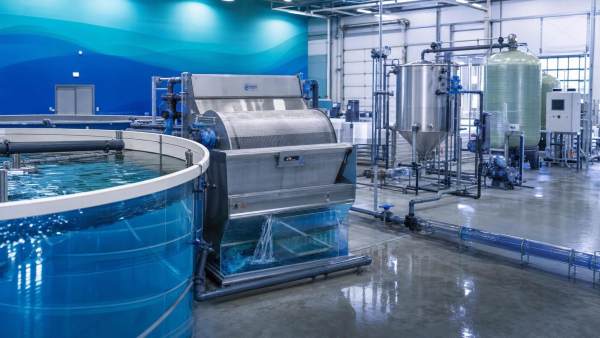
Industrial Aquaculture Filtration: Matching System Design to RAS, Solids Load, and Reuse Goals
Selecting the right industrial aquaculture filtration strategy shapes far more than water clarity.
It affects fish survival, labor demand, sludge handling, energy use, and the reliability of every downstream process.
That matters most in RAS facilities, where water stays in the loop and small design errors multiply quickly.
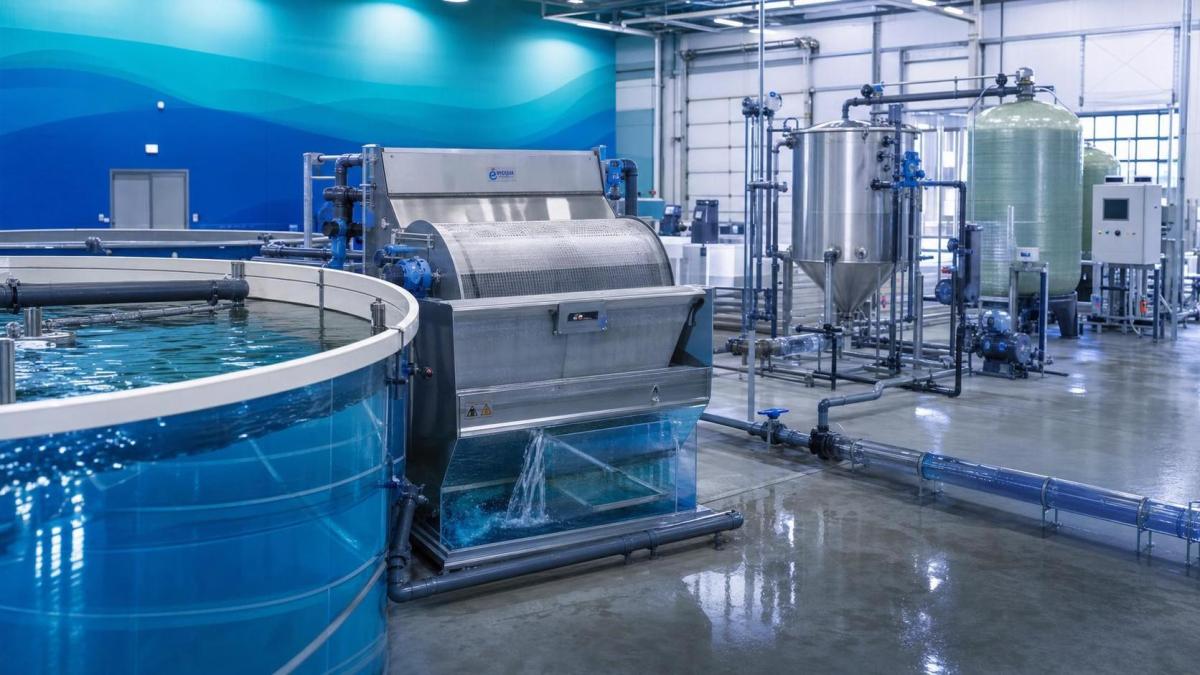
From recent project trends, one signal is clear.
Industrial aquaculture filtration is no longer chosen as a single machine purchase.
It is now an integrated process decision tied to biomass density, feed rate, water reuse targets, and discharge compliance.
In practice, the best answer depends on what must be removed, how fast it accumulates, and how stable the biology must remain.
This also means there is no universal filtration train for every species or site.
Start with the Real Constraint, Not the Catalog
A strong industrial aquaculture filtration plan begins with mass balance.
How much feed enters daily, what fraction becomes feces, and how much fine particulate breaks apart in circulation?
Those numbers matter more than vendor flow claims.
For RAS, solids are usually the first operational pressure point.
If coarse and settleable solids stay too long in the loop, they fragment.
Once that happens, removal becomes harder, oxygen demand rises, and biofilters face a more unstable load.
A useful screening checklist includes:
- daily feed input and peak feeding windows
- species sensitivity to suspended solids and dissolved CO2
- target makeup water percentage
- expected sludge dryness and disposal route
- available footprint, head height, and bypass tolerance
This framing keeps industrial aquaculture filtration tied to production reality instead of generic equipment sizing.
When Drum Filters Make the Most Sense
For many intensive systems, rotary drum filters remain the front-line choice.
They remove suspended solids continuously, react quickly to load changes, and fit well into compact RAS layouts.
That makes them a common anchor in industrial aquaculture filtration for smolt, salmon post-smolt, tilapia, and marine hatchery applications.
Their main advantage is speed.
Solids can be captured before long circulation time breaks them into fine particles.
But drum filters are not a complete answer.
Under heavy solids loading, mesh blinding, spray water demand, and short cycling can limit stable performance.
A project should review three points early:
- Actual hydraulic peak, not average flow.
- Particle size distribution after pumps and tank hydraulics.
- How reject water returns to sludge concentration.
In short, drum filters work best when the design protects particle integrity and keeps the solids line moving fast.
Where Settlers and Lamella Systems Still Win
Gravity-based separation still has a place in industrial aquaculture filtration.
Settlers and lamella clarifiers often look old-fashioned, yet they remain practical for high solids loads and lower energy operation.
They perform best when fecal particles stay intact and hydraulic surges are controlled.
This is especially relevant in partial reuse systems or upstream treatment before finer polishing stages.
The tradeoff is footprint and response time.
If flows swing sharply, performance can drift unless equalization is built in.
Still, when sludge handling cost drives the business case, gravity separation can lower downstream dewatering burden.
That is why many efficient plants combine settlers with screens instead of choosing only one method.
Biofiltration Changes the Decision in High Reuse RAS
When water reuse targets become aggressive, industrial aquaculture filtration must support biology, not fight it.
Mechanical removal protects biofilters by reducing solids carryover, but nitrification remains the core stability layer in RAS.
Moving bed biofilm reactors, fixed media systems, and hybrid configurations each respond differently to solids leakage.
The practical implication is straightforward.
Poor primary solids capture increases cleaning frequency, raises oxygen demand, and weakens ammonia conversion margin.
At higher stocking densities, that margin disappears fast.
A robust industrial aquaculture filtration design for high reuse should align these elements:
- rapid solids removal near source tanks
- stable hydraulic loading into the biofilter
- degassing sized for real respiration peaks
- backup paths for maintenance and emergency bypass
In other words, water reuse is not only about saving water.
It is about keeping every treatment stage inside a predictable operating window.
High Solids Loads Demand a Sludge Strategy, Not Just Filtration Equipment
This is where many projects underestimate risk.
Industrial aquaculture filtration does not end when solids leave the water loop.
If sludge storage, thickening, or dewatering is undersized, the whole system feels unstable.
Backwash water increases, odor risk rises, and labor starts compensating for design gaps.
A stronger approach links filtration selection to sludge residence time and disposal economics.
For example, a fine screen may improve water quality, yet produce dilute sludge that is expensive to handle.
A settler may remove less fine material, but generate thicker sludge with lower hauling cost.
That tradeoff should be priced before equipment is approved.
Common Design Errors That Distort Performance
Several recurring mistakes weaken industrial aquaculture filtration, even when quality equipment is installed.
The first is sizing from average daily flow.
Real plants operate around peaks, cleaning cycles, and feeding pulses.
The second is separating filtration from fish tank hydraulics.
Bad outlet design can shred particles before treatment ever begins.
The third is ignoring maintainability.
If screen access, spray bars, valves, or sludge lines are awkward, actual performance drifts over time.
Finally, many teams overvalue nominal removal efficiency and undervalue process resilience.
A slightly lower capture rate with stable operation can outperform a theoretically finer system that cycles unpredictably.
A Practical Selection Path for Industrial Aquaculture Filtration
A workable decision path keeps the process disciplined.
- Define feed load, biomass ramp, and target reuse rate.
- Map solids by size, settling behavior, and likely fragmentation points.
- Choose primary capture around the dominant solids form.
- Confirm compatibility with biofiltration, degassing, and disinfection.
- Price sludge handling over the full operating year.
- Test emergency scenarios, maintenance downtime, and partial bypass events.
This sequence keeps industrial aquaculture filtration aligned with output goals, not isolated component preferences.
For most facilities, the winning design is a train of complementary steps.
Coarse capture, polishing, biological conversion, and sludge management must reinforce one another.
When those links are engineered together, industrial aquaculture filtration supports stronger water reuse, steadier RAS performance, and fewer operational surprises over the life of the project.
Related Intelligence
- RAS SystemsSustainable Aquaculture Practices That Cut Feed Waste and Protect Fish Farm Water QualitySustainable aquaculture for fish farms: reduce feed waste, protect water quality, and build resilient, efficient systems with practical strategies.
- RAS SystemsDrum Filter System Price: How Flow Rate, Micron Rating, and Automation Affect CostDrum filter system price depends on flow rate, micron rating, automation, materials, and lifecycle costs. Compare quotes confidently and choose the right system.
- RAS SystemsHow to Specify Large-Scale Fish Farming Equipment for High-Output RAS ProjectsLarge scale fish farming equipment guide for high-output RAS projects—specify tanks, filtration, oxygen, automation, and redundancy for reliable growth.
The Morning Broadsheet
Daily chemical briefings, market shifts, and peer-reviewed summaries delivered to your terminal.
