

The Authority in Global Agricultural Chemistry & Bio-Resources
Global Supplier Comparison for Grain Silos in the Middle East: Specs, Lead Times, and Service
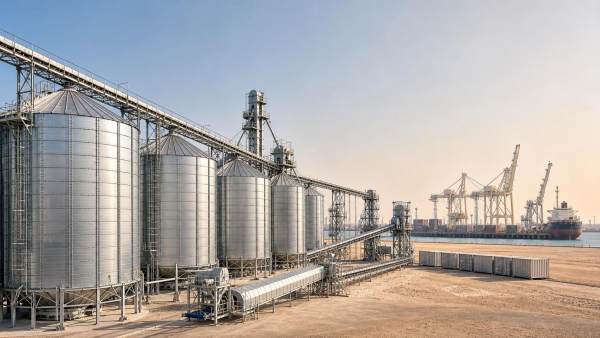
Why does a global supplier comparison for grain silos Middle East matter more than a price list?
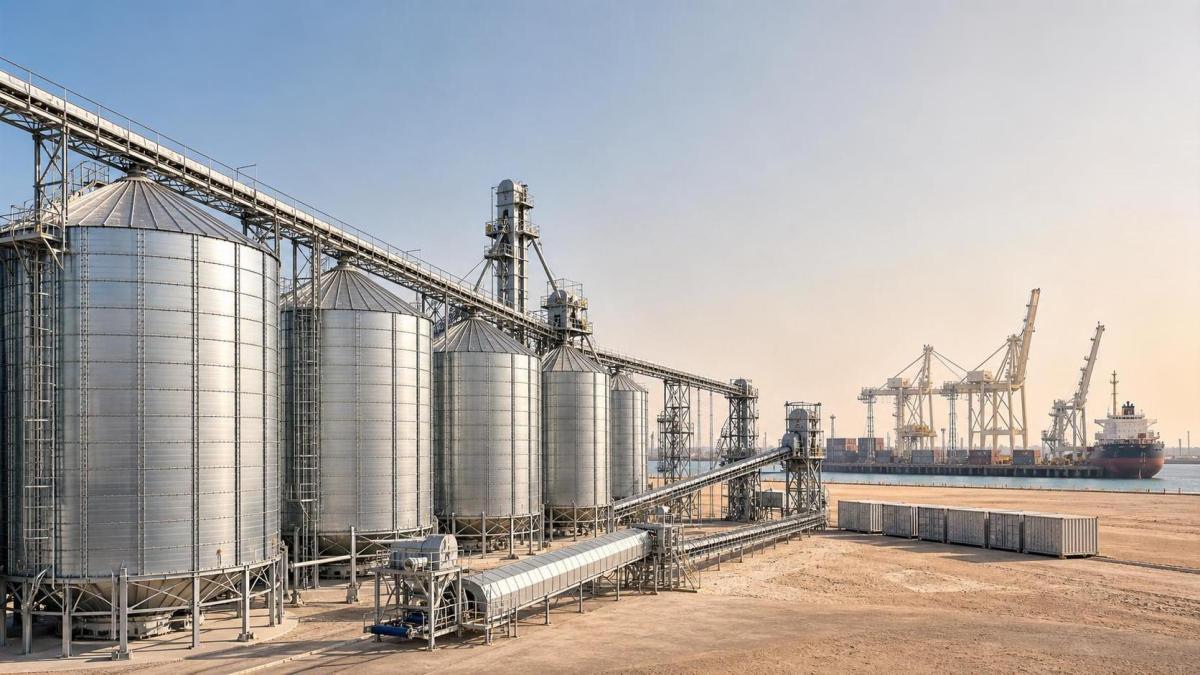
Storage decisions in the Middle East rarely fail on headline price alone. They fail when specification gaps, delayed shipments, or weak service create operating losses after installation.
That is why a global supplier comparison for grain silos Middle East needs to go beyond brochures. The useful comparison is commercial, technical, and logistical at the same time.
In practical terms, heat, salinity, dust loading, and long inland transport routes reshape what looks competitive on paper. A lower bid can become expensive once corrosion upgrades and commissioning delays appear.
ACC regularly covers supply chains where compliance and technical certainty matter. The same discipline used in regulated industrial sourcing applies here: verify capability, documentation, and execution history before judging cost.
A balanced review usually asks four connected questions. Are the silo specs fit for climate and grain type? Can the supplier deliver on time? Is documentation complete? Will service still respond after handover?
Which technical specifications actually separate strong silo suppliers from average ones?
Not every supplier defines performance the same way. Capacity figures may match, while durability, airflow design, and structural reserve differ sharply.
For a credible global supplier comparison for grain silos Middle East, the first filter should include the following technical checkpoints.
- Steel grade and galvanization thickness, especially for coastal or high-humidity zones.
- Wind, seismic, and thermal design assumptions used in structural calculations.
- Aeration floor layout, fan sizing, and temperature monitoring points.
- Discharge system performance, including sweep augers and hopper flow behavior.
- Dust control, explosion venting, and fire safety integration.
- Control system compatibility with existing plant automation.
In hot climates, thermal cycling can affect roof panels, seals, and condensation management. Suppliers with real regional references usually discuss these details early, not after contract award.
Another useful sign is documentation depth. Serious suppliers can provide load calculations, coating data, airflow curves, and foundation inputs without long delays.
When comparing vendors from Europe, Turkey, India, or China, the most relevant difference is often engineering transparency rather than origin alone.
A quick technical comparison table helps narrow the field
The table below is not a ranking. It is a practical lens for reviewing offers during a global supplier comparison for grain silos Middle East.
How should lead times be judged when every supplier promises fast delivery?
Quoted lead times often describe factory completion, not operational readiness. That distinction matters.
A realistic global supplier comparison for grain silos Middle East should break the schedule into engineering release, fabrication, shipping, customs clearance, inland logistics, erection, and commissioning.
More common than outright delay is partial readiness. Shell sections may arrive on time while ladders, sensors, cables, or discharge components follow weeks later.
The better question is not “What is your lead time?” It is “Which items define critical path, and which dependencies remain outside your scope?”
Suppliers with regional agents or established freight channels usually manage this better. Those shipping first-time into the region may underestimate port handling, permits, and local subcontractor timing.
Look for evidence, not confidence. Factory slot confirmation, packaging lists, precedent project schedules, and commissioning records say more than optimistic Gantt charts.
What lead time ranges are usually credible?
For standard bolted silos, supply-only programs can move faster than turnkey packages. Once civil works, conveyors, and controls are included, schedules widen quickly.
- Small to mid-scale standard systems: often 10 to 18 weeks for fabrication.
- Larger engineered packages: commonly 16 to 28 weeks before shipping.
- Turnkey installations with automation: regularly 5 to 9 months to handover.
These are broad planning ranges. Project-specific steel markets, port congestion, and approval cycles still change the outcome.
Does origin country still predict quality, or is service capability the bigger differentiator?
Country of origin still influences design culture, documentation habits, and pricing structure. It does not guarantee performance by itself.
European suppliers are often strong on engineering packages, certification alignment, and automation depth. Turkish suppliers can be competitive on regional logistics and practical execution.
Indian suppliers may offer attractive commercial flexibility, especially for mixed equipment packages. Chinese suppliers often compete hard on manufacturing scale and cost.
Still, in a global supplier comparison for grain silos Middle East, local response matters just as much as factory strength. A strong plant with weak service coverage can create long outages.
The practical test is simple. Who handles installation supervision? Who owns performance troubleshooting? Who stocks sensors, motors, seals, and control parts within reachable distance?
This is where ACC-style sourcing discipline becomes useful. In regulated and capital-heavy sectors, the best suppliers are usually the ones whose evidence chain is visible from design file to site support.
Where do buyers usually misread cost in a global supplier comparison for grain silos Middle East?
The first mistake is treating CAPEX as the whole decision. The more expensive mistake is underestimating cost after startup.
A cheaper silo package may exclude foundations, erection tools, sensor calibration, import duties, operator training, or electrical integration. Those omissions distort the comparison.
There is also quality cost. Poor aeration, coating weakness, or unreliable unloading can reduce grain condition and throughput. Those losses rarely appear in the purchase order, but they appear later in inventory value.
A more reliable way to compare offers is to separate them into four cost blocks.
- Equipment scope: shell, roof, handling, controls, sensors, safety systems.
- Project execution: shipping, customs, erection, commissioning, training.
- Operating cost: power demand, maintenance frequency, spare part pricing.
- Risk cost: delay exposure, grain loss, downtime, warranty response.
When these layers are visible, a global supplier comparison for grain silos Middle East becomes far more useful than a simple bid ranking.
What should be confirmed before contract award to reduce project risk?
This is where many decisions become clearer. A short pre-award checklist often exposes weak offers quickly.
- Request a full scope matrix showing inclusions, exclusions, and owner responsibilities.
- Verify design codes, corrosion assumptions, and local climate adaptation.
- Ask for reference projects with similar grain types and storage duration.
- Confirm spare parts availability and service response times in writing.
- Review warranty triggers, remedy terms, and performance acceptance criteria.
- Check whether civil, electrical, and automation interfaces are fully defined.
Needless complexity is not the goal. Clarity is. Better contracts usually come from sharper questions, not longer documents.
For teams using this article as a starting point, the next step is to build a side-by-side supplier sheet. Weight technical fit, lead time credibility, service depth, and total project cost together.
That approach aligns with how high-consequence industrial sourcing is evaluated across agriculture, feed processing, and adjacent sectors. It also turns a global supplier comparison for grain silos Middle East into a practical decision tool rather than a marketing exercise.
Related Intelligence
- Grain Silos & StorageHow Modular Feed and Grain Systems Support Scalable Storage and Processing ExpansionModular feed and grain systems enable smarter, scalable expansion across storage, conveying, processing, and loadout. Discover how to eliminate bottlenecks, protect future capacity, and keep operations moving.
- Grain Silos & StorageHow to Size a Grain Pre-Cleaner for Capacity, Crop Type, and Impurity LoadGrain pre cleaner machine sizing guide: match capacity, crop type, moisture, and impurity load to improve flow, separation quality, and downstream performance.
- Grain Silos & StorageHow Can You Verify That a Grain Handling System Meets Export Standards?How do I know if a grain handling system meets export standards? Explore practical checks for traceability, sanitation, quality control, and export-ready compliance.
The Morning Broadsheet
Daily chemical briefings, market shifts, and peer-reviewed summaries delivered to your terminal.
