

The Authority in Global Agricultural Chemistry & Bio-Resources
Buying Bulk Natural Extract Ingredients: How to Compare Purity, MOQ, and Documentation
Buying Bulk Natural Extract Ingredients: How to Compare Purity, MOQ, and Documentation
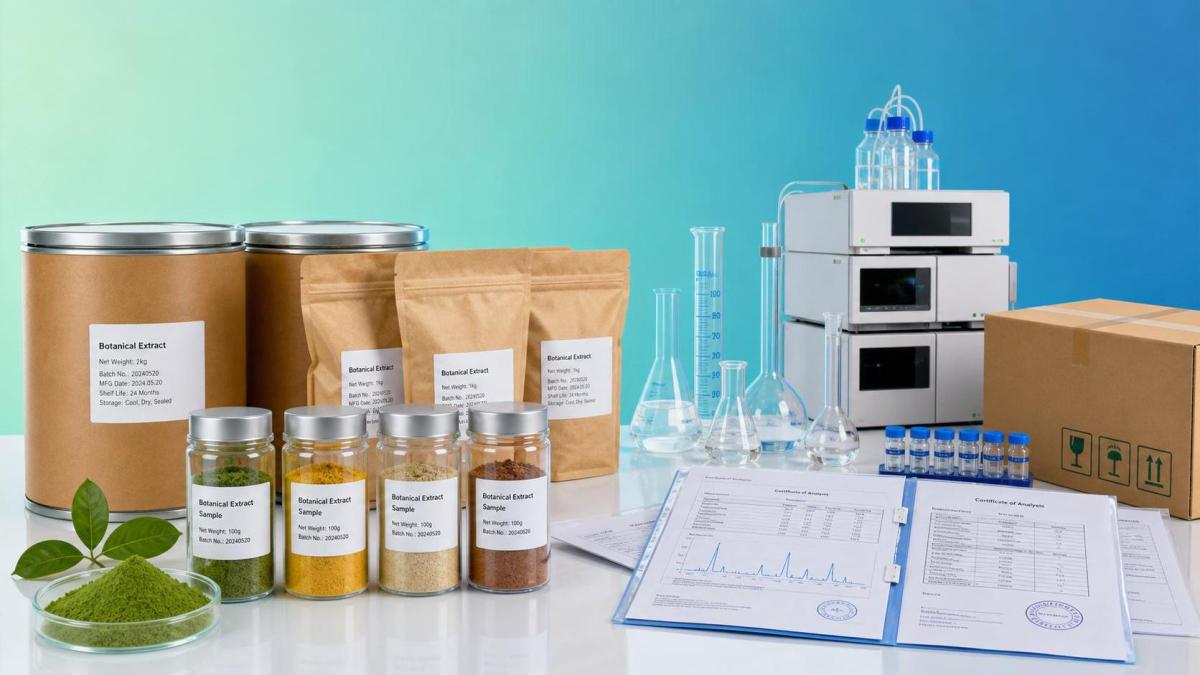
Sourcing bulk natural extract ingredients at scale demands more than a price check.
A lower quote can hide unstable purity, weak paperwork, or unrealistic volume terms.
That is why smart comparison starts with technical fit, not unit cost alone.
When buying bulk natural extract ingredients, three factors usually decide long-term performance.
Those factors are purity, MOQ flexibility, and documentation quality.
If one of them is weak, the total procurement cost often rises later.
This matters even more in regulated supply chains and specification-driven manufacturing.
From recent market shifts, a clearer signal is growing scrutiny on traceability and batch consistency.
That also means supplier evaluation must be more structured than before.
Start with Purity, But Define What Purity Really Means
Purity is often the first claim shown in a quotation for bulk natural extract ingredients.
Yet the number alone can be misleading without a test method and specification basis.
For example, 98% by HPLC is not the same as 98% by UV.
One extract may also be standardized to an active marker, not the total extract mass.
In actual buying work, this is where many comparison errors begin.
A useful review starts with five questions:
- What compound or marker defines the purity claim?
- Which test method supports that claim?
- What is the acceptable assay range by batch?
- Are solvents, carriers, or excipients included?
- How is moisture controlled during storage and shipment?
These details help buyers compare bulk natural extract ingredients on a like-for-like basis.
They also reduce surprises when incoming inspection results differ from sample data.
Look Beyond the Headline Assay
Good sourcing decisions include impurities, not just active content.
Residual solvents, heavy metals, pesticide residues, and microbiological limits all matter.
This is especially important for food, nutraceutical, cosmetic, and API-adjacent applications.
A strong supplier of bulk natural extract ingredients should present full specification ranges.
If the supplier only shares a marketing sheet, the risk profile remains unclear.
How to Compare MOQ Without Distorting Total Cost
MOQ is rarely just a minimum order quantity on paper.
It affects inventory pressure, cash flow timing, testing cost, and supply flexibility.
Some suppliers offer attractive pricing on bulk natural extract ingredients only at high breakpoints.
That may work for steady demand, but not for qualification stages or variable production plans.
A better comparison uses landed economics across several order scenarios.
This approach gives a more honest cost picture for bulk natural extract ingredients.
It also helps separate a low quote from a workable supply model.
Ask Whether MOQ Is Operational or Negotiable
Not every MOQ is fixed for the same reason.
Sometimes it reflects extraction yield and production efficiency.
Other times it mainly reflects sales policy or preferred customer tier.
That distinction matters when negotiating bulk natural extract ingredients for repeat demand.
A supplier with transparent planning may offer staged delivery under one production batch.
That can reduce stock exposure without sacrificing price stability.
Documentation Is Where Supplier Credibility Becomes Visible
Documentation often decides whether bulk natural extract ingredients move smoothly through approval workflows.
It is also the fastest way to test how mature a supplier really is.
Reliable suppliers should provide documents quickly, consistently, and in current versions.
Missing, outdated, or inconsistent files usually signal deeper control problems.
In practical terms, the core file set usually includes:
- Certificate of Analysis for recent production batches
- Technical Data Sheet and product specification
- Safety Data Sheet
- Manufacturing flow summary or process overview
- Allergen, GMO, irradiation, and BSE/TSE statements when relevant
- Residual solvent, heavy metal, and pesticide screening data
- Origin and traceability declaration for plant source material
For bulk natural extract ingredients, documentation should support both quality review and compliance review.
If paperwork only supports sales claims, it is not enough.
Check Batch-Level Consistency
One clean COA is helpful, but three recent COAs are more useful.
They reveal how stable the supplier is across production cycles.
That is critical for bulk natural extract ingredients used in repeat formulations.
Large swings near spec limits may create downstream adjustment costs.
Consistency often saves more money than a small unit-price discount.
Build a Practical Comparison Framework for Bulk Natural Extract Ingredients
A structured scorecard makes supplier selection easier and more defensible.
It also improves internal alignment between procurement, QA, R&D, and regulatory teams.
For bulk natural extract ingredients, the scorecard should stay simple enough to use repeatedly.
- Define the required assay, test method, and impurity limits.
- Set target MOQ, annual volume, and acceptable lead time.
- List mandatory documents and version control requirements.
- Score suppliers on technical fit before price negotiation.
- Compare total cost across trial, pilot, and steady-state orders.
- Review supply risk, including crop seasonality and origin dependence.
This process keeps decisions grounded in real operating needs.
It also helps explain why one supplier is stronger even when prices look close.
Common Red Flags During Supplier Review
A few warning signs appear repeatedly in bulk natural extract ingredients sourcing.
- Purity claims change between sales sheet and COA
- MOQ cannot be explained by process or capacity
- Documents arrive with mixed dates or inconsistent product names
- Traceability stops at trader level, not production level
- Recent batches show high variability near spec limits
Any one issue may be manageable.
Several at once usually justify deeper qualification or supplier replacement.
Final Buying Guidance for Better Cost Control
The best buying decision for bulk natural extract ingredients rarely comes from price alone.
It comes from matching purity, MOQ, and documentation to actual business use.
When these three elements align, procurement becomes more predictable and efficient.
Quality deviations fall, internal approvals move faster, and emergency buying becomes less frequent.
For teams evaluating bulk natural extract ingredients now, start with a comparison sheet built around evidence.
Request batch data, clarify MOQ logic, and verify every critical document early.
That small discipline often prevents the most expensive procurement mistakes later.
Related Intelligence
- Natural IngredientsBotanical Ingredient Prices in Europe: Comparing Quotes by Grade and Order VolumeCompare Europe botanical ingredients price quotes by grade and order volume. Discover how potency, testing, delivery, and inventory costs reveal real savings before you buy.
- Natural IngredientsMayonnaise vs. Salad Dressing: Ingredient and Texture DifferencesMayonnaise vs. salad dressing: discover key ingredient, texture, stability, and application differences to choose the right product for every recipe.
- Natural IngredientsIndustrial-Scale Agricultural Sourcing: Key Criteria for Reliable SupplyIndustrial scale agri sourcing made reliable: assess supplier capacity, traceability, landed cost, logistics, and resilience to protect production continuity.
The Morning Broadsheet
Daily chemical briefings, market shifts, and peer-reviewed summaries delivered to your terminal.
