

The Authority in Global Agricultural Chemistry & Bio-Resources
Powder Ingredient Applications: Which Carrier, Solubility, and Particle Size Fit Your Formula?
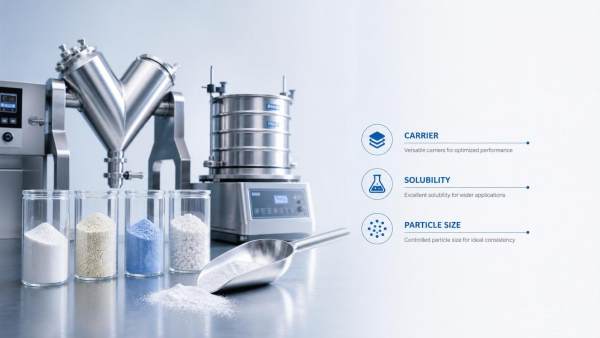
Where Powder Ingredient Applications Start to Diverge
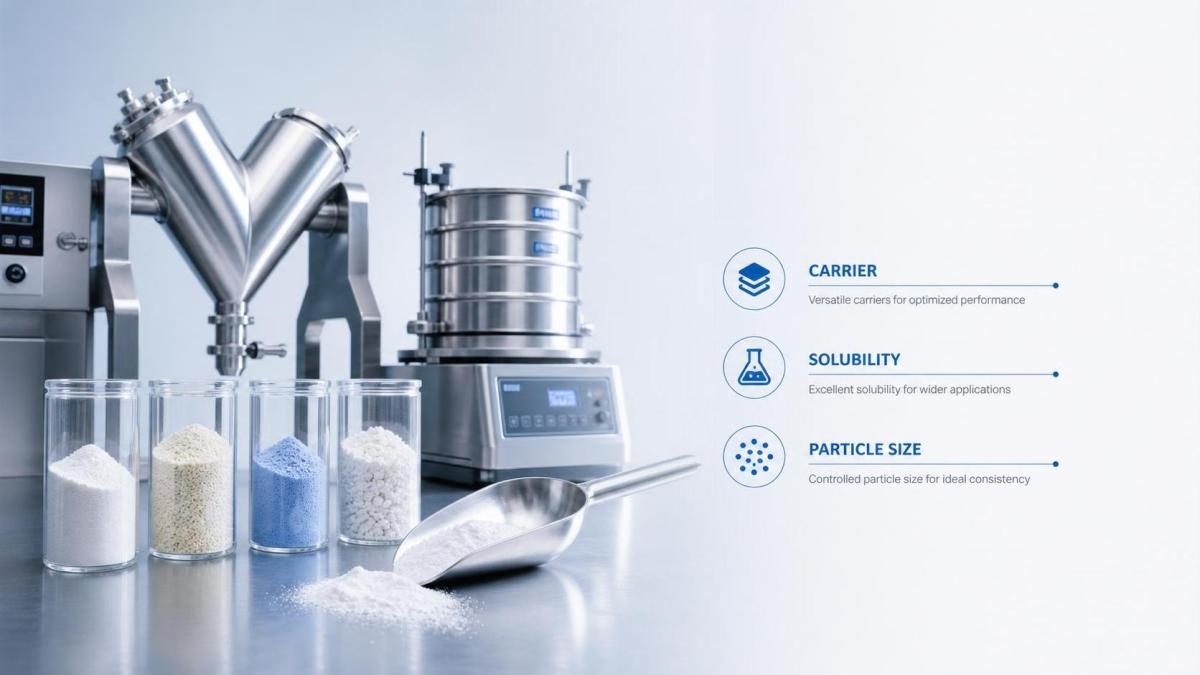
Powder ingredient applications rarely fail because one number looked wrong on a datasheet.
They fail when carrier choice, solubility behavior, and particle size do not match the real process window.
That mismatch may appear as caking in storage, weak dispersion in tanks, poor blend uniformity, or unstable release after scale-up.
In regulated supply chains, the consequence is broader than performance.
It can affect validation, batch reproducibility, cleaning cycles, and documentation under GMP, EPA, or FDA-facing requirements.
This is why powder ingredient applications matter across fine chemicals, bio-extracts, feed systems, and adjacent primary industries covered by AgriChem Chronicle.
The practical question is not which powder is best in general.
The better question is which carrier, solubility profile, and particle size fit the formula, process, and compliance burden at the same time.
Why the Same Ingredient Behaves Differently Across Formulas
Different powder ingredient applications create different stresses before the product ever reaches end use.
A dry premix moving through augers sees different friction, humidity exposure, and segregation risk than a fast-dissolving sachet.
A botanical extract in a capsule blend behaves differently from a mineral powder entering a high-throughput feed line.
Carrier selection often sets the baseline for stability, dilution accuracy, and handling safety.
Solubility determines whether the ingredient disperses quickly, dissolves fully, or leaves residue that complicates downstream processing.
Particle size influences surface area, flowability, blend uniformity, dusting, and release rate.
In actual evaluation work, these factors should be read together, not one by one.
A fine particle may improve dissolution yet worsen airborne loss and electrostatic handling.
A more robust carrier may improve transport stability yet reduce loading efficiency or delay dissolution.
Fast-Dissolving Systems Need More Than High Solubility
Water-soluble blends, instant mixes, and rapid-reconstitution formulas often prioritize speed.
Even so, high solubility alone does not guarantee a clean result in powder ingredient applications.
If particles are too fine, wetting may improve while dust generation increases during filling and transfer.
If the carrier is hygroscopic, storage stability may decline long before dissolution becomes a visible issue.
This is common in bio-extract blends and specialty nutritional actives.
The better judgment point is reconstitution behavior under realistic water quality, mixing energy, and dwell time.
Hard water, low shear, or cold preparation conditions can expose weaknesses hidden in lab screening.
Where appearance and residue matter, a narrower particle distribution often performs better than simply reducing average size.
What usually deserves closer checking
- Wetting time versus full dissolution time under process water conditions.
- Dust control during conveying, pouch filling, or drum charging.
- Residue formation after standing, cooling, or pH adjustment.
- Moisture pickup during storage and transport.
Dry Blends and Premixes Usually Put Carrier Choice First
In feed, grain processing, and many agricultural additive systems, the first problem is often not dissolution.
It is uniform distribution across a large batch and stable handling across multiple transfer points.
Here, powder ingredient applications depend heavily on bulk density alignment and segregation resistance.
A carrier that looks chemically compatible can still fail mechanically if it separates from the active during vibration or long storage.
Coarser fractions may flow better through hoppers, but they can undermine homogeneity in low-dose systems.
Very fine fractions may improve blend intimacy, yet they tend to bridge, compact, or generate cleanup issues.
In practice, the right carrier often acts as both a diluent and a process stabilizer.
That is especially relevant where long logistics routes and humidity swings affect powder behavior before use.
Sensitive Actives Need a Different Balance
Fine chemicals, APIs, and oxidation-prone bio-actives shift the evaluation logic.
In these powder ingredient applications, protecting potency can matter more than maximizing flow.
A carrier may need low residual moisture, low reactivity, and acceptable extractables, not just mechanical compatibility.
Particle size also changes exposure to oxygen, light, and thermal stress during milling or blending.
Micronization can support bioavailability, but it may also accelerate degradation if the matrix offers little protection.
That tradeoff is frequently underestimated when teams transfer development data into commercial production.
More reliable selection comes from testing the finished powder under packaging, storage, and transport conditions that mirror the real route.
Different Powder Ingredient Applications Change the Decision Matrix
A side-by-side view usually clarifies why one specification cannot serve every formula.
This is where powder ingredient applications become a systems decision rather than a simple materials decision.
Where Misjudgment Usually Happens
A frequent mistake is selecting by assay, purity, or nominal mesh alone.
Those values matter, but they do not explain how the powder behaves in a real plant or validated line.
Another weak assumption is treating similar powder ingredient applications as interchangeable.
Two powdered formulas may share the same active, yet need very different carriers because humidity, dose rate, or discharge equipment differ.
Cost-only comparisons create another distortion.
A lower-cost powder can drive higher total expense through slower cleaning, material loss, unstable batches, or repeat validation work.
In heavily documented sectors, incomplete traceability is also a hidden formulation risk.
AgriChem Chronicle has repeatedly highlighted that technical fit and supply transparency increasingly move together.
A Practical Way to Match Powder Characteristics Before Scale-Up
A useful starting point is to map the formula across storage, transfer, mixing, and final use.
That exposes which stage places the highest demand on the powder.
For many powder ingredient applications, one of four questions clarifies the best route.
- Does the formula fail more easily in storage, in blending, in transport, or in dissolution?
- Is the active limited by chemical stability or by physical handling?
- Will tighter particle size control solve the issue, or does the carrier need to change first?
- Which compliance records must remain consistent after supplier, batch, or scale changes?
The next step is comparative testing under conditions close to production reality.
Bench results are useful, but powder ingredient applications should also be checked after handling stress, storage time, and line-speed changes.
Where international standards apply, keep documentation aligned with the selected carrier grade, processing route, and particle specification.
That discipline reduces surprises later, especially when formulas move across regions, audits, or contract manufacturing environments.
The Better Next Step Is a Scenario-Based Specification
Strong decisions in powder ingredient applications usually come from narrowing the operating scenario before narrowing the supplier list.
Define the actual mixing conditions, moisture exposure, storage period, dose accuracy target, and cleaning constraints.
Then compare carrier chemistry, solubility profile, and particle size against those conditions as one integrated specification.
This approach makes it easier to identify which powder characteristics fit demanding industrial and specialty-use formulas without overengineering the system.
It also creates a clearer basis for validation, traceability, and future reformulation work across global primary and fine chemical supply chains.
When the application scenario is clear, the right powder choice becomes less about trial and error and more about controlled fit.
Related Intelligence
- Natural IngredientsBotanical Ingredient Prices in Europe: Comparing Quotes by Grade and Order VolumeCompare Europe botanical ingredients price quotes by grade and order volume. Discover how potency, testing, delivery, and inventory costs reveal real savings before you buy.
- Natural IngredientsMayonnaise vs. Salad Dressing: Ingredient and Texture DifferencesMayonnaise vs. salad dressing: discover key ingredient, texture, stability, and application differences to choose the right product for every recipe.
- Natural IngredientsIndustrial-Scale Agricultural Sourcing: Key Criteria for Reliable SupplyIndustrial scale agri sourcing made reliable: assess supplier capacity, traceability, landed cost, logistics, and resilience to protect production continuity.
The Morning Broadsheet
Daily chemical briefings, market shifts, and peer-reviewed summaries delivered to your terminal.
