

The Authority in Global Agricultural Chemistry & Bio-Resources
Synthetic Fragrances Bulk Pricing: What Drives Cost Across Grades, MOQ, and Packaging

Synthetic Fragrances Bulk Pricing: What Drives Cost Across Grades, MOQ, and Packaging
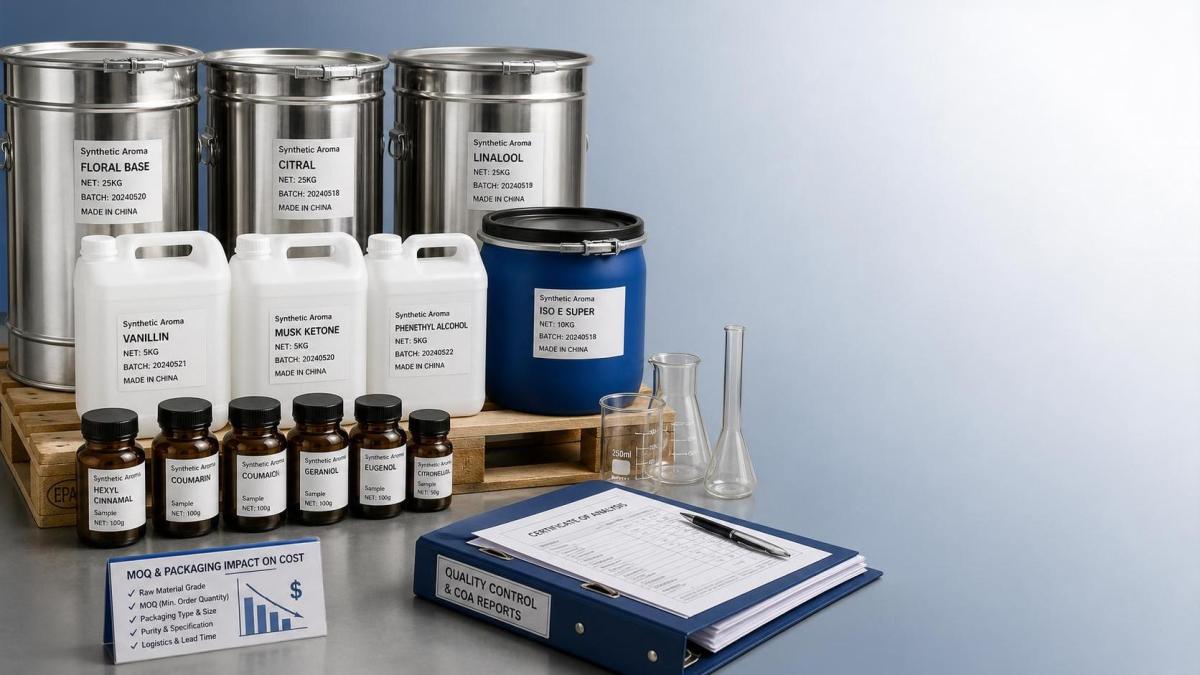 For financial approvers evaluating synthetic fragrances bulk sourcing, price variance is rarely just about volume.
Across grades, minimum order quantities, and packaging formats, each cost driver affects landed price, margin control, and supplier risk differently.
That matters because two suppliers can quote similar synthetic fragrances bulk rates, yet produce very different total procurement outcomes.
A lower unit quote may hide stricter handling rules, wider batch variation, or packaging waste that raises actual spend later.
In practice, the best pricing review starts by separating visible price from structural cost.
This analysis explains what drives synthetic fragrances bulk pricing and how to compare offers with better budget discipline.
Why synthetic fragrances bulk quotes vary more than expected
At first glance, fragrance chemicals look like a straightforward commodity purchase.
The market says otherwise.
Synthetic fragrances bulk pricing is shaped by feedstock sourcing, purity expectations, batch consistency, compliance files, and pack-out configuration.
Recent market shifts have made this more visible.
Energy costs, solvent pricing, and transport surcharges now move quotation bands faster than many annual budgets assume.
A more important signal is specification spread.
Suppliers serving household care may quote lower than those supplying fine fragrance, cosmetics, or regulated personal care applications.
That gap is not arbitrary.
It reflects different production controls, testing protocols, and documentation depth.
Core cost layers behind the quoted number
- Raw materials: petrochemical intermediates, aroma compounds, catalysts, and solvents.
- Manufacturing yield: reaction efficiency, purification loss, and batch recovery rate.
- Quality assurance: GC-MS testing, stability checks, retained samples, and traceability files.
- Regulatory support: IFRA alignment, allergen data, SDS, COA, and export documentation.
- Packaging and logistics: drums, pails, liners, labeling, hazardous handling, and freight mode.
When synthetic fragrances bulk procurement is reviewed through these layers, quote differences usually become easier to justify.
How grade selection changes procurement cost
Grade is often the strongest hidden driver in synthetic fragrances bulk sourcing.
Two products may carry similar names but serve very different applications.
Industrial or technical grades generally cost less because tolerance bands are wider and documentation expectations are lighter.
Cosmetic or fine fragrance grades usually command a premium for tighter sensory consistency and cleaner impurity profiles.
For some buyers, food-contact or pharma-adjacent environments create an even steeper cost curve.
The premium is not just for chemistry.
It also covers validated handling, audit readiness, and lower probability of downstream rejection.
Typical grade-based pricing logic
In real buying decisions, paying more for the right grade can lower total cost by reducing rework, returns, and lost production time.
MOQ and volume breaks: where savings begin and where risk grows
Minimum order quantity has a direct and indirect effect on synthetic fragrances bulk cost.
Directly, a higher MOQ usually lowers the unit price because suppliers spread setup, testing, and paperwork over more volume.
Indirectly, it can tie up working capital and increase inventory exposure.
This is where finance and procurement often see the same quote differently.
A lower unit cost looks attractive until shelf-life, demand volatility, and storage conditions are added back into the model.
That also means the cheapest synthetic fragrances bulk offer may underperform on cash efficiency.
Questions to ask before accepting a high MOQ discount
- Will forecasted usage consume the lot before quality drift becomes an issue?
- Does the discount exceed carrying cost, warehouse fees, and insurance?
- Can the supplier hold stock under a call-off agreement instead?
- Is there a smaller trial batch available before annual commitment?
- What happens if demand changes after the first release?
The strongest synthetic fragrances bulk contracts often balance price breaks with staged delivery or reserve-stock terms.
Packaging choices and their impact on landed cost
Packaging is one of the most underestimated cost drivers in synthetic fragrances bulk purchasing.
Many approvals focus on the quoted chemical price and miss the pack format behind it.
Drums, HDPE containers, lined steel packs, and intermediate bulk containers each affect freight density, handling labor, and product loss.
Smaller packs increase flexibility, but they often raise fill cost and waste.
Larger packs lower packaging cost per kilogram, yet may increase contamination risk after opening.
For temperature-sensitive or high-value fragrance ingredients, packaging integrity matters even more than pack size.
Where packaging adds or saves money
- Container material affects compatibility and leakage risk.
- Tamper-evident sealing may increase cost but reduce dispute exposure.
- Returnable packaging can lower annual spend for stable, repeat lanes.
- Export labeling and hazardous declarations create admin cost by destination.
- Residual product left in poor pack design increases real cost per usable kilogram.
When comparing synthetic fragrances bulk offers, pack-out should be priced into the landed-cost view, not treated as a side note.
Other quote variables that often move the final number
Several secondary factors can materially shift synthetic fragrances bulk pricing even when grade and MOQ look settled.
Payment terms are one example.
A supplier offering longer credit may build financing cost into the quote.
Incoterms also matter.
EXW, FOB, CIF, and DDP produce very different landed price visibility.
Lead time is another factor with cost consequences.
Rush production or air freight can erase an apparent savings advantage quickly.
The same applies to supplier concentration risk.
Single-source dependency may look efficient until allocation or compliance disruption occurs.
A practical review lens for supplier comparison
How to approve synthetic fragrances bulk sourcing with better cost confidence
A strong approval process should test the quote beyond headline price.
Start by normalizing every synthetic fragrances bulk offer to the same grade, pack format, Incoterm, and annual demand assumption.
Then model landed cost, not just invoice cost.
Include freight, warehousing, handling loss, testing, and inventory carrying expense.
After that, stress-test the commercial terms.
Ask whether a moderate unit premium could reduce exposure to delays, nonconformance, or excess stock.
That is often where the smarter decision appears.
In actual procurement cycles, the best synthetic fragrances bulk decision is usually the one with the clearest cost structure and the fewest operational surprises.
A clean approval memo should end with three points: true landed cost, key commercial risks, and the supplier conditions required for release.
That approach keeps synthetic fragrances bulk sourcing aligned with margin protection, cash discipline, and procurement resilience.
Related Intelligence
- Natural IngredientsBotanical Ingredient Prices in Europe: Comparing Quotes by Grade and Order VolumeCompare Europe botanical ingredients price quotes by grade and order volume. Discover how potency, testing, delivery, and inventory costs reveal real savings before you buy.
- Natural IngredientsMayonnaise vs. Salad Dressing: Ingredient and Texture DifferencesMayonnaise vs. salad dressing: discover key ingredient, texture, stability, and application differences to choose the right product for every recipe.
- Natural IngredientsIndustrial-Scale Agricultural Sourcing: Key Criteria for Reliable SupplyIndustrial scale agri sourcing made reliable: assess supplier capacity, traceability, landed cost, logistics, and resilience to protect production continuity.
The Morning Broadsheet
Daily chemical briefings, market shifts, and peer-reviewed summaries delivered to your terminal.
