

The Authority in Global Agricultural Chemistry & Bio-Resources
Market Entry Framework for Ingredient Brands: Key Steps, Costs, and Channel Risks
Market Entry Framework for Ingredient Brands: Key Steps, Costs, and Channel Risks
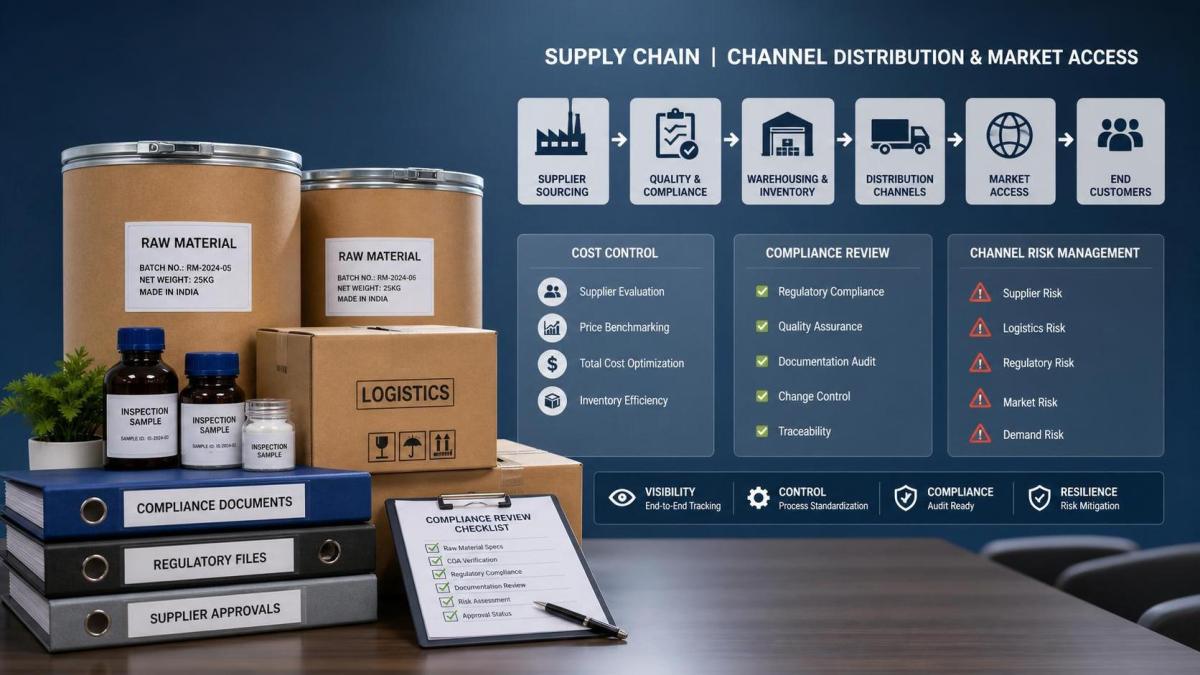
A practical market entry framework helps ingredient brands turn opportunity into scalable growth while avoiding costly missteps.
In regulated ingredient markets, good demand alone rarely guarantees a workable launch.
The real test is whether the target market can support margin, compliance, and repeatable channel execution.
That is why a disciplined market entry framework matters.
For ingredient brands, expansion decisions usually sit at the intersection of regulation, sourcing resilience, customer qualification, and commercial timing.
A weak assumption in any one area can erase months of investment.
From recent market shifts, the stronger signal is clear.
Buyers now expect traceability, technical documentation, and local responsiveness much earlier in the sales cycle.
This article breaks down a usable market entry framework, covering the key steps, likely costs, and channel risks that shape entry decisions.
Why Ingredient Expansion Is Harder Than It Looks
Many ingredient categories look attractive when viewed through import data or headline growth rates.
However, a working market entry framework starts deeper than top-line demand.
Ingredient brands often face hidden barriers that do not appear in basic market screens.
- Different product registrations by use case, dosage form, or end-market application.
- Long approval cycles with food, nutraceutical, feed, or industrial customers.
- Local documentation requirements beyond global certificates.
- Price erosion caused by distributor layering and rebate expectations.
- Unstable demand from reformulation trends or sudden policy changes.
In practice, market entry fails less from lack of opportunity and more from poor sequencing.
Brands rush into sales outreach before confirming product-market fit, regulatory readiness, and local channel economics.
Step 1: Define the Real Market, Not the Broad One
A strong market entry framework begins with narrowing the addressable market.
That means segmenting demand by application, customer profile, and buying trigger.
For ingredient brands, the same product may compete very differently across sectors.
- Food manufacturers may prioritize label claims and sensory performance.
- Pharma-adjacent buyers may focus on validation data and batch consistency.
- Feed and agri-input users may emphasize cost-in-use and logistics reliability.
This changes the channel plan, pricing strategy, and technical support burden.
The useful question is not, “Is the country attractive?”
It is, “Which buyer segment can absorb our product with the least friction and strongest renewal potential?”
What to Validate Early
- Current import volumes by ingredient grade and intended application.
- Share of business controlled by local formulators or multinational buyers.
- Approval timelines from sample to commercial order.
- Required claims, certifications, and shelf-life expectations.
- Service gaps that incumbents are failing to address.
Step 2: Map the Compliance Burden Before Commercial Spend
In complex sectors, regulatory readiness is often the gatekeeper of the entire market entry framework.
This is especially true for ingredients linked to health claims, feed safety, residue limits, or traceability standards.
A commercial team can build demand, but it cannot shortcut registration or documentation gaps.
That also means compliance work should not be treated as back-office administration.
It is a core market entry cost and timing driver.
Typical Compliance Cost Areas
The exact cost range varies, but underestimating compliance usually damages the budget more than overestimating it.
Step 3: Build a Channel Model That Protects Margin
A market entry framework is only commercially useful when the channel model works at scale.
Ingredient brands usually choose among direct sales, master distribution, specialist importers, or hybrid structures.
Each route carries different control, cost, and risk.
Direct Model
Direct entry offers stronger pricing control, closer customer insight, and cleaner brand positioning.
But it needs local sales coverage, technical support, and often more working capital.
Distributor Model
Distributors accelerate access, especially when customer relationships are concentrated.
The tradeoff is lower visibility and weaker influence over pricing discipline.
Hybrid Model
A hybrid model often fits the best market entry framework for ingredient brands.
Key accounts stay direct, while smaller accounts flow through local partners.
This structure balances speed with strategic control.
Main Channel Risks That Distort Market Entry Decisions
Channel risk is where many entry plans quietly break down.
The market entry framework should test channel risk as seriously as market demand.
- Partner concentration risk when one distributor controls most opportunities.
- Pricing opacity created by layered markups or undisclosed rebates.
- Channel conflict between direct outreach and partner-led selling.
- Low technical capability at partner level during customer qualification.
- Regulatory exposure from poor storage, relabeling, or documentation handling.
More importantly, channel risk compounds over time.
A weak partner may still generate early orders.
But poor forecasting, customer churn, and noncompliant handling usually appear later, when replacement costs are higher.
Step 4: Budget for the Full Entry Cost Stack
An effective market entry framework does not stop at headline setup costs.
It should capture the full cost stack across the first 12 to 24 months.
That includes visible and hidden expenses.
- Market research and regulatory assessment.
- Product registration, legal review, and local representation.
- Sampling, reformulation support, and customer trials.
- Distributor onboarding, training, and commercial incentives.
- Localized packaging, labeling, and document translation.
- Trade finance, inventory buffering, and freight volatility.
This also means breakeven analysis should reflect qualification cycles.
In many ingredient categories, revenue lags effort by several quarters.
Without that adjustment, the market entry framework will look better on paper than in operation.
Step 5: Localize the Offer Beyond Translation
Localization is often misunderstood as a packaging exercise.
In reality, it is a central part of the market entry framework.
Ingredient buyers want evidence that a supplier understands local operating conditions.
- Application guidance tailored to local formulations.
- Documents aligned with domestic audit expectations.
- Order sizes that fit local manufacturing patterns.
- Response times suitable for technical and procurement teams.
This is where technically strong brands can win share without starting a price war.
Better fit often matters more than lower list price.
A Simple Scorecard for Better Entry Decisions
To make the market entry framework actionable, use a scorecard before approving expansion.
Final Takeaway
A reliable market entry framework gives ingredient brands a way to test opportunity before capital is locked in.
The strongest plans connect five things clearly: target segment, compliance path, channel structure, cost stack, and localization demands.
When those pieces are aligned, expansion becomes far more predictable.
When they are not, even a promising market can become an expensive distraction.
Before entering a new market, pressure-test the market entry framework against real operating constraints, not just sales potential. That is usually where the best decisions are made.
Related Intelligence
- Natural IngredientsBotanical Ingredient Prices in Europe: Comparing Quotes by Grade and Order VolumeCompare Europe botanical ingredients price quotes by grade and order volume. Discover how potency, testing, delivery, and inventory costs reveal real savings before you buy.
- Natural IngredientsMayonnaise vs. Salad Dressing: Ingredient and Texture DifferencesMayonnaise vs. salad dressing: discover key ingredient, texture, stability, and application differences to choose the right product for every recipe.
- Natural IngredientsIndustrial-Scale Agricultural Sourcing: Key Criteria for Reliable SupplyIndustrial scale agri sourcing made reliable: assess supplier capacity, traceability, landed cost, logistics, and resilience to protect production continuity.
The Morning Broadsheet
Daily chemical briefings, market shifts, and peer-reviewed summaries delivered to your terminal.
