

The Authority in Global Agricultural Chemistry & Bio-Resources
How to Audit a Botanical Ingredient Supplier for GMP, Traceability, and Risk?
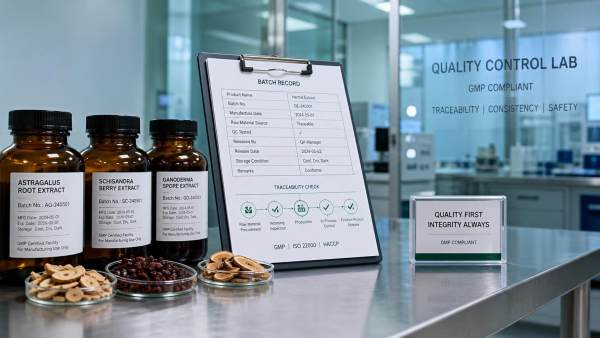
A rigorous botanical ingredient supplier audit is essential when GMP compliance, traceability, and risk control directly affect product safety and regulatory exposure. For quality control and safety managers, the challenge is not just verifying documents, but confirming process integrity, source transparency, and contamination prevention across the supply chain. This guide outlines how to evaluate suppliers with a practical, risk-based framework that supports compliant, defensible procurement decisions.
In botanical supply chains, the audit question is rarely “Does the supplier have a certificate?” It is closer to “Can this supplier consistently produce the same material, from the declared plant source, under controlled conditions, with deviations visible before they become a quality event?” That distinction matters because botanical ingredients sit at the intersection of agricultural variability, extraction chemistry, microbiological risk, pesticide exposure, and documentation gaps that are less common in fully synthetic inputs.
For teams responsible for release decisions, supplier qualification, and product safety, a botanical ingredient supplier audit should test three things at the same time: whether the quality system is mature enough for GMP-relevant operations, whether traceability is real rather than paper-based, and whether the supplier understands the specific risks associated with plant-derived materials.
Why botanical ingredients require a different audit lens
Botanical materials are not inherently noncompliant, but they are inherently variable. Plant identity can be confused at harvest, active marker levels may shift by season and geography, drying conditions can affect microbial load, and extraction solvents can introduce additional control points. A supplier may present a clean specification sheet while still operating a weak source-control system.
This is why a botanical ingredient supplier audit cannot be limited to ISO-style document review or a basic vendor questionnaire. GMP relevance depends on intended use. If the ingredient enters food, nutraceutical, cosmetic, or pharmaceutical-adjacent applications, the audit depth must reflect the product’s regulatory and safety impact. In practice, that means looking beyond certificates of analysis and asking whether the supplier can reconstruct the full material history: origin, harvest lot, primary processing, transport, storage, extraction, blending, testing, release, and complaint handling.
A common mistake is to audit the processor while ignoring upstream aggregation. Many botanical suppliers are not vertically integrated. They may buy from collectors, cooperatives, primary dryers, or traders. If the supplier’s own controls start only at the warehouse gate, traceability may already be compromised before GMP procedures begin.
Start with a risk-based pre-audit review
Before the site visit or remote audit, the quality team should classify the ingredient and the supplier by risk. This is where resources are used most effectively. Not every supplier needs the same audit depth.
Risk ranking should usually consider:
- botanical species and likelihood of adulteration or substitution;
- country or region of origin, including pesticide practices and regulatory maturity;
- material type, such as raw herb, powder, extract, standardized extract, or concentrate;
- intended end use and regulatory burden of the finished product;
- history of OOS results, recalls, import alerts, warning letters, or customer complaints;
- microbiological and mycotoxin exposure potential;
- supply-chain complexity, especially multi-tier sourcing and broker involvement.
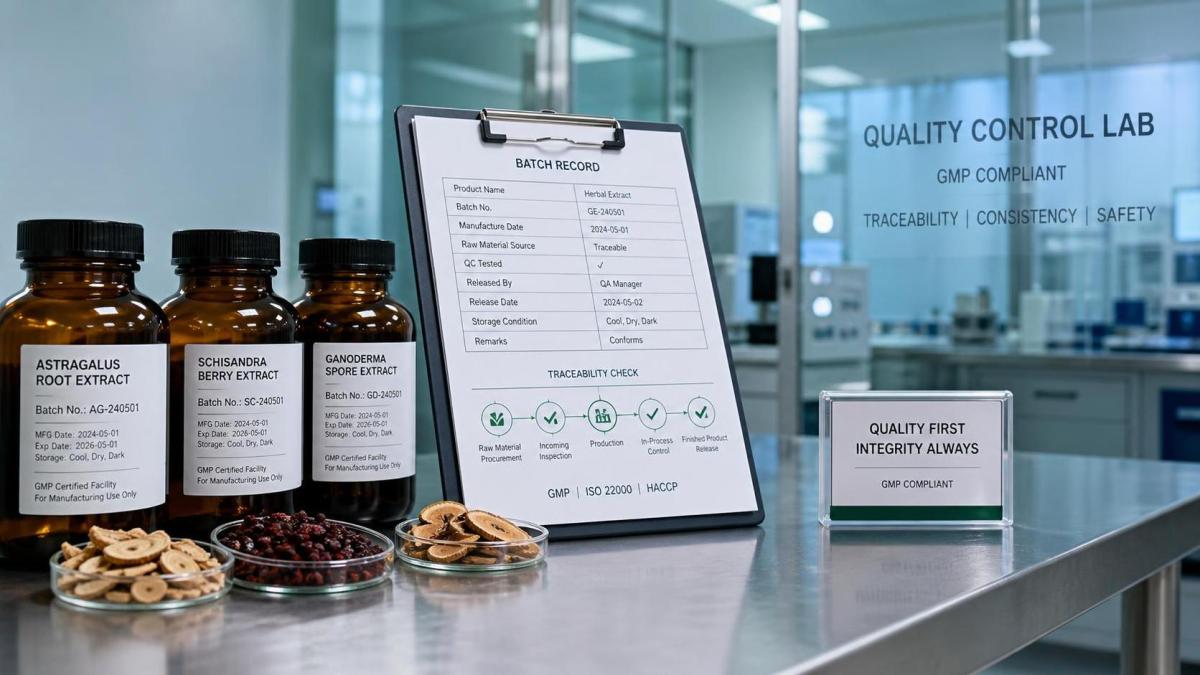
The pre-audit document package should include quality manuals, site certifications, product specifications, master manufacturing records or process summaries where appropriate, traceability examples, change-control procedures, deviation handling, stability approach if relevant, and sample batch records. If the supplier hesitates to share even redacted process control documents, that reluctance is itself a signal. A supplier with a mature quality culture usually understands why qualified customers need visibility into control architecture.
What GMP compliance really means in a botanical context
GMP in botanical manufacturing is often misunderstood as a certificate displayed in reception. In reality, quality managers should test whether GMP principles are translated into routine operating discipline. For botanical ingredients, several GMP elements deserve special scrutiny.
Material identity control. The supplier should be able to demonstrate how botanical identity is confirmed at receipt and before release. Depending on the material and market, this may involve macroscopic and microscopic examination, chromatography, marker-compound analysis, or other validated identification methods. Reliance on supplier declarations alone is weak control, particularly for high-risk species prone to substitution.
Segregation and line clearance. Shared equipment is not automatically unacceptable, but it must be controlled. Ask how the facility prevents carryover between species, plant parts, and extract types. In botanical processing, cross-contact is not just an allergen issue; it can create identity failure, undeclared actives, or regulatory mislabeling.
Water, solvent, and cleaning controls. If extraction occurs onsite, the audit should review solvent handling, residual solvent monitoring where relevant, water quality management, equipment cleaning validation or verification practices, and environmental hygiene. “Food-grade solvent” is not enough as an answer. The quality team needs to see how purity, recovery, reuse, and contamination risks are controlled.
Batch definition. This point is frequently weak. Ask the supplier to define what a batch means operationally. Is one batch one harvest lot, one extraction vessel, one production day, or a blend of multiple incoming lots? In botanical processing, commercial standardization often involves blending. That is not necessarily problematic, but the batch definition must be clear and traceable, especially when standardization masks natural variability.
Deviation and CAPA quality. Do not just verify that a corrective and preventive action system exists. Read actual cases. Strong suppliers investigate root cause, assess product impact, implement corrective actions, and verify effectiveness. Weak suppliers close deviations with retraining alone, even when the event points to systemic process failure.
Change control. Botanical quality can shift significantly with changes in origin, harvest season, extractor parameters, drying subcontractors, or analytical methods. A supplier should have a formal process to assess and communicate changes that may affect specification conformance, safety, or regulatory status.
Traceability is proven by retrieval speed and record integrity
Traceability claims are easy to make and harder to validate. During the audit, request a live trace exercise rather than a policy statement. Select a released batch and ask the supplier to trace it backward to raw material origin and forward to all customers or internal destinations, as permitted by confidentiality controls.
A credible system should be able to show:
- supplier or collector identity at each upstream tier;
- harvest or collection records where applicable;
- receiving dates, lot codes, and quantity reconciliation;
- processing records linking raw lots to intermediate and finished lots;
- blending logic and yield reconciliation;
- quarantine, release, rejection, and rework status history;
- distribution records sufficient for targeted recall execution.
If records rely heavily on manual relabeling, spreadsheets outside validated control, or inconsistent lot code formats across sites, the practical traceability risk is high even when paperwork appears complete. Quality and safety managers should pay attention to whether the site can reconcile inventory physically and electronically. Unexplained gains, losses, or relabeling events often indicate deeper control weaknesses.
Another useful test is to ask how the supplier manages mixed-source raw material. Some suppliers aggregate the same species from several farms or collection zones before processing. That may be commercially necessary, but the system should still preserve source granularity where risk requires it. Once material is pooled without controls, traceback during a contamination event becomes slow and sometimes impossible.
High-risk areas that deserve deeper audit attention
Not all nonconformities carry the same weight. In botanical ingredients, several risk areas repeatedly drive serious quality failures, border rejections, and customer disputes.
Adulteration and authenticity risk. This includes deliberate substitution with cheaper species, undeclared addition of synthetic marker compounds, spiking to meet assay targets, or dilution with carrier materials. Suppliers handling premium extracts, scarce species, or volatile commodity markets deserve heightened scrutiny.
Pesticide and heavy metal exposure. Agricultural origin matters. The audit should review how the supplier evaluates origin-related contamination risk, sets testing frequency, qualifies farms or collectors, and responds to trends. Blanket statements such as “we test every batch” are less useful than seeing the actual risk rationale, methods, and action thresholds.
Microbiological control. Dry botanicals and plant powders can carry elevated microbial loads, especially if field drying, humid storage, or delayed processing occurs. Ask where microbial risk is introduced and how it is reduced or controlled without compromising product integrity. If a decontamination step exists, review its validation logic and its effect on the material.
Mycotoxins and storage conditions. For susceptible botanicals, warehouse humidity control, packaging integrity, stock rotation, and incoming inspection discipline matter as much as finished-product testing. Testing alone cannot compensate for poor storage practice.
Allergen and cross-contact management. While not every botanical operation is allergen-intensive, shared facilities processing multiple plant-derived materials may still create labeling and safety issues. Audit whether cleaning procedures and segregation logic match the actual production mix.
Subcontracting. Drying, milling, sterilization, extraction, packaging, and testing are often outsourced. If critical steps are subcontracted, the supplier’s own vendor control program becomes part of your risk profile. A supplier cannot outsource responsibility simply because a third party performs the operation.
Audit the laboratory, but do not confuse testing with control
A capable laboratory supports supplier reliability, but a large instrument list does not prove a robust quality system. Review method suitability, reference standards management, OOS investigation practice, sample retention, analyst training, and data integrity controls. Where applicable, ask whether methods are compendial, internally developed, or customer-specific, and how method changes are approved.
Data integrity deserves particular attention. Basic questions are revealing: Who can edit analytical results? Are audit trails enabled in relevant systems? How are raw data retained? How are unofficial trials distinguished from reportable results? In higher-risk contexts, the absence of clear data governance should be treated seriously.
At the same time, quality teams should avoid a common misconception: more end-product testing does not eliminate upstream process weakness. A supplier that relies on final testing to catch problems may still be unstable, especially when contamination or substitution is unevenly distributed within a lot.
How to score findings and make the approval decision
Audit reports become useful only when they support a defensible decision. For quality control and safety managers, the goal is not to produce a long list of observations but to separate acceptable risk from unmanaged risk.
A practical approach is to classify findings into critical, major, and minor categories tied to product impact:
- Critical: evidence of falsification, loss of traceability, uncontrolled contamination, serious data integrity concerns, or inability to verify identity;
- Major: weak deviation handling, poor batch reconciliation, inadequate supplier qualification for subcontractors, or insufficient segregation controls;
- Minor: isolated documentation gaps with low immediate product risk.
Approval should then align with actual exposure. A supplier with no critical findings but several major findings may still be usable under conditional approval, tighter incoming testing, restricted applications, or a defined remediation timeline. A supplier with elegant documentation but one unresolved traceability failure may not be acceptable at all.
It is also sensible to distinguish between “supplier can make compliant product” and “supplier can make compliant product consistently.” Many audit decisions go wrong because the first is mistaken for the second.
Common audit blind spots
Several issues are often missed even by experienced teams:
- accepting a third-party certificate without understanding scope, site coverage, and excluded activities;
- failing to verify whether the audited entity is the actual manufacturer or merely a trading company;
- reviewing SOPs without following one batch from receipt to release;
- ignoring seasonal and harvest-related variability because the audit occurred during a stable production window;
- assuming standardization solves raw material inconsistency rather than potentially concealing it;
- overlooking packaging controls, especially for hygroscopic or light-sensitive extracts;
- not checking complaint and recall history in enough detail to identify repeating patterns.
These blind spots matter because botanical failures are often cumulative. One weak point in sourcing, one weak point in processing, and one weak point in records may individually appear manageable. Together they create an unreliable supplier.
What a strong supplier usually looks like
In practice, strong botanical suppliers are rarely defined by polished presentations. They are defined by operational transparency. They can explain why a batch passed, not just show that it passed. They know their upstream sources, can justify their testing plan through risk assessment, maintain consistent lot coding through processing stages, and treat deviations as process-learning events rather than administrative tasks.
They also tend to be realistic about limitations. If a supplier openly identifies higher-risk seasons, vulnerable origins, or steps where contamination control depends on subcontractors, that transparency is often more reassuring than broad claims of zero risk. Mature quality systems rarely describe botanical supply as perfectly uniform, because it is not.
For companies building or refining a botanical ingredient supplier audit program, the most effective mindset is not adversarial but forensic. The audit is there to test whether the supplier’s controls are strong enough to withstand routine variability, not whether their documentation package looks complete on a single day. GMP compliance, traceability, and risk control only become meaningful when they remain intact under real supply-chain pressure.
That is the standard worth auditing for.
Related Intelligence
- Natural IngredientsIndustrial-Scale Agricultural Sourcing: Key Criteria for Reliable SupplyIndustrial scale agri sourcing made reliable: assess supplier capacity, traceability, landed cost, logistics, and resilience to protect production continuity.
- Natural IngredientsHow Microencapsulated Botanical Ingredients Improve Stability and Controlled ReleaseMicroencapsulated botanical ingredients enhance stability, protect sensitive actives, and enable controlled release for reliable performance across demanding applications.
- Natural IngredientsHow to Evaluate Bioactive Compounds for Nutraceuticals by Stability, Efficacy, and FormatBioactive compounds for nutraceuticals should be evaluated by stability, efficacy, and format. Learn how to compare ingredients, reduce formulation risk, and choose options that perform in real products.
The Morning Broadsheet
Daily chemical briefings, market shifts, and peer-reviewed summaries delivered to your terminal.
