

The Authority in Global Agricultural Chemistry & Bio-Resources
How Microencapsulated Botanical Ingredients Improve Stability and Controlled Release
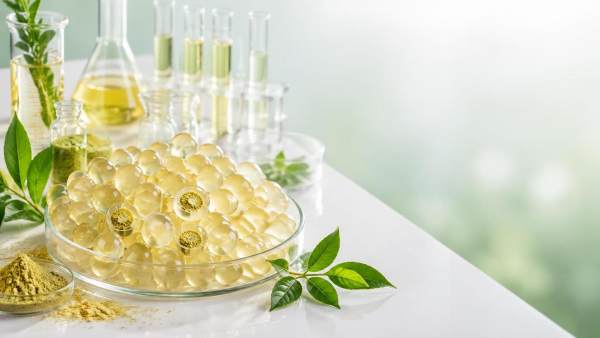
A botanical active can perform well in a fresh laboratory sample yet fail after storage, extrusion, blending, or exposure to moisture and oxygen. The visible symptoms may be a fading aroma, reduced assay value, discoloration, clumping, or inconsistent activity at the point of use. In applications where the ingredient must survive transport and processing before it reaches its target environment, an unprotected extract is often the weak point in an otherwise sound formulation.
Microencapsulated botanical ingredients improve performance by placing a protective wall material around an active core, separating it from damaging conditions and releasing it only when defined triggers are present. The benefit is not simply “longer shelf life.” A suitable encapsulation system can reduce exposure to oxygen, light, humidity, heat, incompatible ingredients, and premature volatilization while also controlling where, when, and how quickly the botanical compound becomes available. Whether that result is achieved depends on the active profile, the carrier material, the manufacturing method, and the release conditions used in validation.
Why unprotected botanical actives become unstable
Plant-derived ingredients are rarely single, inert molecules. Essential oils contain volatile fractions with different vapor pressures and oxidation sensitivities. Polyphenol-rich extracts may be sensitive to oxygen, alkaline conditions, trace metals, or light. Carotenoids and chlorophyll derivatives can degrade under photooxidative stress. Alkaloids, flavonoids, terpenes, organic acids, and enzymes each bring their own compatibility limits.
In a dry powder formulation, the problem does not disappear simply because water activity is low. Headspace oxygen can still drive oxidation. Fine particles expose a large surface area. Hygroscopic components can create localized moisture around the botanical ingredient, and a blend containing minerals, proteins, fats, acids, or oxidizing agents may accelerate degradation. In liquid systems, solubility and partitioning create another challenge: a lipophilic botanical may separate, migrate to packaging surfaces, or interact with emulsifiers before it can perform its intended function.
Processing can be equally destructive. Feed pelleting, granulation, compression, spray drying, sterilization, and thermal filling may expose actives to temperatures or shear conditions that are tolerable for a few seconds but damaging over a full production cycle. A technical review should therefore distinguish between the ingredient’s intrinsic stability and its formulation stability. An extract may be stable in its supplier container yet become unstable after it is added to a commercial matrix.
The protective mechanism is more than a physical coating
Encapsulation is often described as a core surrounded by a shell. That model is useful, but real systems can take several forms: a continuous matrix in which the active is dispersed, a multilayer particle, an inclusion complex, a lipid-based particle, or a porous carrier whose surface is further sealed. The architecture affects both protection and release.
In most systems, the wall material creates a barrier that slows mass transfer. Oxygen, water vapor, and volatile molecules must diffuse through or around the matrix rather than directly contacting the active. A low-permeability wall can reduce oxidative loss, while a glassy carbohydrate matrix may immobilize sensitive compounds and restrict molecular movement. Lipid coatings can protect moisture-sensitive cores or delay release in aqueous environments. Proteins and polysaccharides can form films, stabilize emulsified oils, or respond to pH and enzymatic conditions.
Protection also comes from isolation. When an oil-rich botanical is kept separate from a reactive mineral, an aggressive surfactant, or an oxidizable lipid phase, the probability of direct interaction falls. This is especially relevant in premixes and multi-ingredient powder blends, where a small amount of a highly reactive component can have a disproportionate effect during storage.
The wall is not an absolute shield. Every encapsulated particle has possible routes of failure: cracks formed during drying, pores that permit oxygen ingress, weak interfacial adhesion, leakage of core oil to the particle surface, or premature swelling in humid storage. Technical evaluation should focus on the barrier’s behavior under actual handling conditions rather than relying only on a generic description such as “coated” or “protected.”
Stability improvements must be tied to a specific stress pathway
A useful starting question is: what is causing loss of the botanical active in the intended product? The answer determines whether microencapsulation is appropriate and what wall chemistry should be considered.
For example, an essential oil incorporated into a dry agricultural formulation may need protection from volatilization and oxidation before field application, but it should disperse or release promptly when diluted in water. A botanical added to animal feed may need to remain protected through storage and feed manufacture, then release under moisture, pH, digestive enzymes, or mechanical conditions encountered after ingestion. A nutraceutical powder may need to prevent a bitter or pungent active from contacting the palate while still releasing efficiently in gastrointestinal fluid.
These are different technical objectives. A coating that delays release in water could be beneficial in one application and a failure in another. Stability should therefore be evaluated alongside the desired release profile, not treated as an independent property.
Choosing wall materials by function rather than familiarity
Wall materials are sometimes selected because they are common, inexpensive, or compatible with a preferred manufacturing route. Those factors matter, but they should not override the active’s chemistry and the release requirement. Carbohydrates, modified starches, maltodextrin-type carriers, gums, proteins, cellulose-derived materials, lipids, waxes, cyclodextrins, and combinations of these materials can all be used in botanical encapsulation. Their suitability differs substantially.
Hydrophilic carbohydrate and gum matrices
These are often used where aqueous processing and spray drying are practical. They can stabilize oil-in-water emulsions before drying and produce powders with manageable flow characteristics. Their limitations include sensitivity to high humidity and, depending on composition, relatively fast dissolution when the powder contacts water. They are often useful for instant-release or rapid-dispersion products rather than long delayed-release applications.
Protein-based systems
Proteins may provide good emulsification and film formation, particularly for lipophilic botanical cores. Their behavior can change with pH, ionic strength, heat exposure, and interaction with other formulation components. A protein wall that performs well in a neutral dry blend may behave differently in an acidic beverage or a mineral-rich premix. Evaluators should confirm whether the intended matrix alters protein solubility, aggregation, or release.
Lipid and wax barriers
Lipid-based coatings are often considered where moisture resistance or delayed aqueous release is needed. Their melting range, crystallinity, and susceptibility to fat migration require attention. A coating that softens during warm storage may lose integrity; one that is too hydrophobic may prevent adequate release in the target environment. In feed, pharmaceutical, and agricultural applications, the release trigger may depend on melting, surfactant action, enzymatic digestion, or mechanical abrasion rather than simple dissolution.
Inclusion complexes and multilayer systems
Some small volatile or lipophilic molecules can be held within host structures rather than enclosed in a conventional shell. Such systems can reduce odor, improve handling, and alter apparent solubility. Multilayer particles can combine a primary matrix for core retention with an outer coating for moisture resistance or release control. These designs are useful when one material cannot satisfy both protection and release targets, although their manufacturing complexity increases the need for tighter specifications.
Controlled release begins with a defined trigger
“Controlled release” should not be accepted as a broad product claim. It needs a stated mechanism and a test method that reflects the actual use environment. Common triggers include water contact, pH change, temperature, ionic strength, enzymes, mechanical force, and time-dependent diffusion. More than one trigger may operate at once.
A water-soluble matrix may release its core rapidly because the wall dissolves. A pH-responsive material may remain relatively intact in one environment and dissolve or swell in another. An enzyme-sensitive coating may be designed to break down only when exposed to a relevant biological system. A lipid barrier may release as the coating melts or is emulsified. In practice, release rarely occurs as a clean on-off event. There may be an initial burst from surface-associated active, followed by a slower phase governed by diffusion or matrix erosion.
The first technical question is not “How long does the release last?” It is “What concentration is needed at the target location, and what premature loss is unacceptable?” Without that definition, a slow-release profile can be mistaken for better performance even when it leaves too little active available at the required time.
How to evaluate microencapsulated botanical ingredients before scale-up
Supplier documentation is a starting point, not a substitute for application testing. A practical review links core identity, particle construction, process tolerance, and final release behavior. The following sequence helps prevent a common error: approving a powder because it looks stable in isolation, then discovering that it fails in the finished product.
- Define the critical active marker. Identify the constituent or functional measure that represents quality. For a complex extract, this may involve more than one marker because a single assay value may not reveal volatile loss, oxidation, or compositional shift.
- Map the exposure profile. Record expected temperature, moisture, oxygen exposure, shear, pH, contact time, and interacting ingredients from receiving through end use. Include temporary stresses such as warm warehousing or repeated opening of bulk containers.
- Review physical specifications. Particle-size distribution, bulk density, flow, moisture content, water activity, and surface oil or surface active level can affect blending, segregation, dusting, and early release. A particle that is chemically stable but too fragile for pneumatic transfer may not remain stable in operation.
- Test the actual process step. Subject samples to representative mixing, heating, compression, extrusion, reconstitution, or spraying conditions. Measure retained marker content and inspect whether the release behavior has changed after processing.
- Use a release method that resembles use. A simple water-dispersion test may be informative for a soluble product, but it does not establish gastrointestinal, soil, or sustained-release behavior. The media, agitation, temperature, pH, and sampling intervals should be relevant to the intended application.
- Assess storage in the final package and matrix. Test the encapsulated ingredient alone and in the finished blend where feasible. Matrix interactions are frequently the reason a promising encapsulated active behaves unpredictably after storage.
Analytical selection matters. Gas chromatography may be appropriate for volatile constituents, while chromatographic or spectrophotometric methods may be used for other markers. Particle imaging, moisture sorption analysis, thermal analysis, and microscopy can help explain a failure mechanism, but no single method proves encapsulation quality. The most useful evidence connects physical observations to retained active and release performance.
Signs that the encapsulation design is mismatched
Several failure patterns point to a design problem rather than ordinary batch variation. A strong odor immediately after opening a supposedly protected volatile ingredient may indicate excessive surface oil or incomplete retention. A rapid assay decline at moderate humidity may suggest that the wall absorbs moisture, plasticizes, and becomes more permeable. Poor flow after storage can indicate moisture uptake, wall collapse, or leakage. A release curve that changes after thermal processing suggests that the barrier has cracked, fused, or undergone a structural transition.
Another frequent issue is assuming that a higher encapsulation efficiency automatically means better field performance. High core retention during manufacture can coexist with poor release at the target. Conversely, a system with moderate loading may provide more reliable dosing because the active is distributed uniformly and protected from reactive components. The right design is therefore the one that meets the required retention and release specifications together, at a practical use level.
Documentation that supports a defensible technical decision
When evaluating materials for regulated or high-consequence uses, request information that allows the formulation team to understand what is being purchased. Useful documentation may include the botanical source and identity, declared active markers, carrier composition, processing aids where relevant, moisture and particle specifications, storage guidance, lot-specific analytical data, and a description of the release test method. It is also important to clarify whether the stated active content refers to the total active in the particle or the fraction expected to become available under defined conditions.
For applications governed by internal quality systems or external requirements, compatibility with the intended regulatory framework should be assessed for the specific product category and geography. Encapsulation materials that are technically effective are not automatically suitable for every pharmaceutical, feed, food, agricultural, or environmental use. The review should include permitted-use status, impurity considerations, labeling implications, and the suitability of the proposed analytical controls.
Microencapsulation is most valuable when it addresses a known failure mode: protecting a volatile botanical through processing, separating an oxidation-prone extract from reactive ingredients, reducing sensory exposure, or delivering the active under a defined trigger. Treating it as a generic upgrade can lead to unnecessary cost and poorly matched release behavior. Treating it as a measurable barrier-and-release system gives technical teams a clearer basis for selecting, testing, and approving the ingredient.
Related Intelligence
- Natural IngredientsFreeze-Dried Fruit Ingredients: A Packaging Checklist for Bulk StorageBuying freeze dried fruit ingredients? Use this bulk packaging checklist to assess moisture barriers, seals, and pack sizes, reduce waste, and protect quality from storage to production.
- Natural IngredientsBotanical Ingredient Prices in Europe: Comparing Quotes by Grade and Order VolumeCompare Europe botanical ingredients price quotes by grade and order volume. Discover how potency, testing, delivery, and inventory costs reveal real savings before you buy.
- Natural IngredientsMayonnaise vs. Salad Dressing: Ingredient and Texture DifferencesMayonnaise vs. salad dressing: discover key ingredient, texture, stability, and application differences to choose the right product for every recipe.
The Morning Broadsheet
Daily chemical briefings, market shifts, and peer-reviewed summaries delivered to your terminal.
