

The Authority in Global Agricultural Chemistry & Bio-Resources
Choosing Botanical Extracts for Pharmaceuticals: Potency, Purity, and Compliance
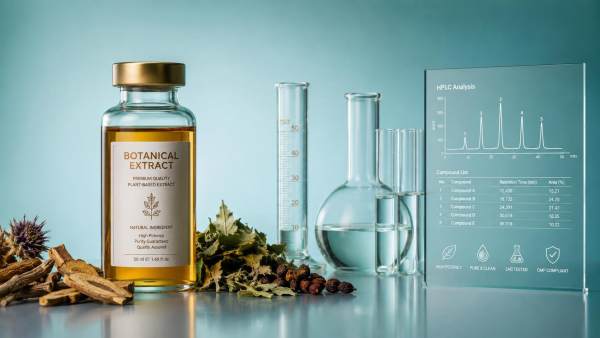
A botanical extract is not suitable for pharmaceutical use merely because it has a plausible pharmacological activity or an acceptable assay result on one batch. The decisive question is whether its identity, composition, impurities, and manufacturing history can be controlled well enough to support a defined drug substance or drug product throughout development and commercial supply.
That distinction matters because a botanical extract is inherently more variable than a single-molecule synthetic API. Plant species, chemotype, cultivation conditions, harvest timing, plant part, post-harvest handling, extraction solvent, concentration method, and storage can all alter the chemical profile. A specification based only on “total flavonoids,” “polyphenols,” or one marker compound can therefore create a false sense of control. Potency, purity, and compliance must be assessed as one connected system rather than as separate supplier documents.
Start with the regulatory classification, not the plant name
The same plant-derived material may face very different evidentiary expectations depending on its intended market and therapeutic claim. A botanical ingredient used in a food supplement cannot automatically be treated as an acceptable pharmaceutical starting material. The applicable controls depend on whether the material is being developed as a drug substance, used in a traditional herbal medicinal product, incorporated into an investigational product, or supplied as an excipient-like ingredient with no intended pharmacological effect.
In the United States, FDA’s Botanical Drug Development: Guidance for Industry is a central reference for products containing botanical raw materials, preparations, or mixtures intended for drug development. The guidance recognizes that complete characterization of every constituent may not always be feasible, but it does not remove the need for robust controls. Instead, it places strong emphasis on botanical raw-material control, manufacturing consistency, chemical characterization, and clinically relevant batch comparability.
In the European Union, the regulatory route may involve the requirements for herbal medicinal products, including relevant European Medicines Agency guidance and monographs developed by the Committee on Herbal Medicinal Products (HMPC). For manufacturing, EU GMP expectations remain relevant, including EudraLex Volume 4, Part II for active substances and Annex 7 for herbal medicinal products where applicable. A substance that meets a pharmacopoeial herbal monograph may still require additional controls if its intended pharmaceutical use, extraction process, dosage form, or route of administration creates risks not addressed by that monograph.
The practical implication is simple: define the intended regulatory status and markets before approving a supplier specification. Otherwise, a material may be purchased under a food-grade or cosmetic-grade framework and later prove unsuitable for the pharmaceutical dossier because cultivation records, solvent controls, stability data, or traceability are incomplete.
Potency is a profile, not just an assay number
For conventional APIs, potency frequently refers to the content of a defined active molecule. For botanical extracts for pharmaceuticals, that approach is often inadequate. Pharmacological activity may arise from multiple known constituents, partially characterized fractions, or interactions among components. A high concentration of one selected marker does not establish that the extract is equivalent to previous clinical, toxicological, or commercial batches.
A meaningful potency strategy begins by separating three concepts that are often confused:
- Analytical marker: a measurable constituent used to monitor identity or process consistency. It may not contribute materially to therapeutic activity.
- Active marker: a constituent with a known or reasonably supported link to pharmacological activity.
- Bioactivity measure: an assay that evaluates a relevant biological effect, such as receptor binding, enzyme inhibition, antimicrobial activity, or cell-based response.
One or more markers may be useful, but marker assays should sit within a broader control strategy. Chromatographic fingerprinting, commonly developed by HPLC, UPLC, GC, TLC, or hyphenated mass-spectrometric techniques, can reveal changes in the overall chemical pattern that a single-marker assay will miss. The fingerprint must be established from justified reference batches, not chosen simply because it produces a visually clean chromatogram.
Where a relevant bioassay is technically feasible, it can provide valuable support for potency control. Yet bioassays introduce their own risks: variable cell lines, reagent drift, matrix interference, broad acceptance ranges, and poor correlation with clinical activity can undermine their value. A biological assay should be qualified for its intended role and linked to the proposed mechanism or critical quality attributes. It is not a substitute for chemical characterization, microbial control, or contaminant testing.
Batch standardization by adding purified marker compounds deserves particular scrutiny. Adjusting an extract to meet a target marker concentration can mask a weakened or altered botanical profile. If the manufacturing process allows spiking, the dossier should clearly distinguish naturally occurring constituent ranges from post-extraction adjustment, establish the identity and quality of any added material, and demonstrate that the resulting profile remains comparable to qualified batches.
Identity control must extend from plant source to finished extract
Misidentification is one of the most consequential failure modes in botanical supply chains. Common names are unreliable; the same name can refer to different species across regions, while closely related species or economically motivated substitutes can be difficult to distinguish after drying, milling, or extraction.
The botanical raw-material specification should normally define the accepted scientific name, author citation where relevant, plant family, permitted plant part, geographic origin where it affects quality, and conditions for collection or cultivation. “Leaf extract” is not sufficiently precise when different developmental stages, drying practices, or subspecies produce different constituent patterns.
Macroscopic and microscopic examination remain useful for intact botanical materials, especially when supported by authenticated voucher specimens and trained examination. Their value declines substantially after comminution or extraction. Chemical fingerprinting can distinguish many materials but may fail when species have similar metabolite patterns or when the extract has been heavily processed.
DNA-based methods may provide additional protection against species substitution, particularly for raw botanicals. They have limitations: DNA can degrade during heat treatment and solvent extraction, and a positive DNA result does not prove that the detected material is present at a pharmacologically meaningful level. Conversely, inability to recover DNA from a finished extract does not prove absence of the declared species. The strongest identity programs use orthogonal evidence—botanical authentication, supplier records, morphological examination where feasible, chemical fingerprinting, and targeted DNA analysis when appropriate to the material.
Purity means controlling a changing contaminant map
Purity in botanical materials cannot be reduced to “absence of synthetic adulterants.” The relevant contaminant profile is shaped by the plant’s environment, agricultural inputs, extraction chemistry, and storage conditions. A risk assessment should identify plausible hazards for the particular species, origin, plant part, and process rather than apply the same testing panel to every extract.
Pesticide residues require special attention where cultivated plants are sourced from multiple farms or regions. The analytical scope should reflect local agricultural practice and the concentrating effect of extraction. A residue level acceptable in crude plant material may become more significant after solvent extraction and concentration. Testing should use sufficiently sensitive, validated multiresidue methods and should account for the intended daily intake of the final pharmaceutical product.
Elemental impurities can enter through soil, irrigation water, processing equipment, mineral-based processing aids, or packaging. ICH Q3D provides a risk-based framework for elemental impurities in drug products and should inform the assessment. For elemental testing, USP <232> and USP <233> are widely used references for limits and procedures, but the final control approach must remain appropriate to route of administration and daily exposure.
Mycotoxins are particularly relevant for botanicals exposed to humid harvest, slow drying, poor warehousing, or long transit periods. Aflatoxins and ochratoxin A are common control concerns for certain plant materials, but the actual panel should be justified by commodity risk and origin. Visual inspection cannot establish mycotoxin safety; contaminated lots may appear normal, and toxin distribution within a lot can be heterogeneous.
Microbiological quality requires more than a total aerobic count. Water activity, drying method, storage time, and extraction solvent influence survival and growth. Objectionable organisms, including specified pathogens where relevant, need to be assessed according to the intended use and dosage form. An extract used in a non-sterile oral product and one used in a product with a higher microbiological sensitivity should not automatically share the same acceptance criteria.
Residual solvents are a direct consequence of extraction and purification. The solvent system must be declared, controlled, and assessed against ICH Q3C principles. “Ethanolic extract” is not enough information if other solvents, denaturants, processing aids, or solvent-recovery steps are involved. A supplier should disclose all solvents used during cultivation processing, extraction, fractionation, purification, and standardization—not only the final extraction solvent.
Adulteration can involve undeclared synthetic drugs, added isolated phytochemicals, dyes, cheaper plant extracts, or non-declared excipients. Risk is highest where a botanical is associated with acute symptomatic claims, such as weight management, sexual performance, or stimulant effects, but adulteration controls should not be limited to those categories. Non-targeted high-resolution mass spectrometry may be valuable for higher-risk materials, while targeted screens should be periodically reviewed as known adulteration patterns change.
Traceability is a quality attribute of the supply chain
A certificate of analysis demonstrates only that a tested sample met stated results. It does not establish whether the lot was correctly identified, whether the sample was representative, or whether the supplier can reproduce the material after an agricultural disruption or process change.
Traceability should connect the finished extract to the original botanical lot or defined pooled lots, including supplier identity, cultivation or collection location, harvest period, plant part, drying conditions, transport history, extraction batch, solvents, processing aids, and packaging. For wild-collected materials, controls over collection practices, ecological source, and substitution risk become especially important. For cultivated materials, agricultural records should show whether pesticides, fertilizers, fumigants, or irradiation were used.
Lot blending is not inherently unacceptable, but it must be transparent and controlled. Blending can reduce natural variability, yet it can also dilute a problematic lot into a larger batch and make root-cause investigation more difficult. The blending rationale, composition, acceptance criteria, and retention-sample strategy should be documented. If commercial material is blended, stability and comparability evidence should reflect the blended product rather than only individual source lots.
Supplier change control deserves the same seriousness as a manufacturing change. A new farm, a different extraction facility, altered solvent ratio, changed drying temperature, or revised marker-adjustment practice can shift the extract’s quality profile even when the specification is still met. A well-designed quality agreement should require advance notification of such changes and define the evidence needed before release under the existing pharmaceutical program.
Specifications should reflect critical quality attributes, not inherited supplier claims
Many supplier specifications are designed for commercial trading rather than pharmaceutical control. They may list appearance, loss on drying, one marker assay, and generic microbial limits while omitting key information about identity, impurities, extraction ratio, or batch profile.
A pharmaceutical specification should be justified by the material’s role in the product and by development knowledge. It may include, as appropriate, botanical identity, organoleptic description, chromatographic fingerprint acceptance criteria, assay ranges for relevant markers, extract ratio, solvent composition, water content, particle characteristics, microbial limits, pesticide residues, mycotoxins, elemental impurities, residual solvents, adulterant screening, and storage conditions. Not every test belongs in every release specification; some controls may be managed through raw-material qualification, in-process controls, periodic verification, or supplier oversight. What matters is that each risk has an accountable control point.
Compendial methods can provide a strong starting point. USP chapters such as <561> Articles of Botanical Origin, <563> Identification of Articles of Botanical Origin, and <565> Botanical Extracts are relevant references where applicable. However, compendial compliance should not be presented as universal proof of fitness for purpose. The selected monograph, method, and acceptance criteria must be appropriate for the specific extract and intended drug product.
Analytical methods need to be validated or otherwise qualified for their intended use. Matrix complexity creates frequent problems in botanical testing: co-elution can distort marker quantitation, sample preparation can selectively lose constituents, and reference standards may be unstable or poorly characterized. Method transfer between laboratories should include actual extract matrices, not only neat standard solutions.
Stability and comparability cannot be deferred to the final product stage
Botanical extracts may oxidize, hydrolyze, absorb moisture, lose volatile constituents, or undergo profile changes under heat and light. A passing release result does not establish that the material will remain comparable during shipping, storage, and drug-product manufacture.
Stability protocols should monitor the attributes most likely to change: fingerprint profile, marker levels, moisture or water activity, microbial quality where relevant, degradation products, and physical properties that affect processing. Packaging should be selected against the actual vulnerability of the extract—oxygen, moisture, light, or temperature—not selected solely on cost or conventional practice.
Comparability becomes essential when changing suppliers, scaling extraction, relocating manufacture, or modifying the source plant. For complex mixtures, demonstrating that the post-change batch meets the old specification may be insufficient. The assessment should compare expanded chromatographic and impurity profiles, marker distribution, relevant bioactivity, contaminant risks, and, where needed, product-level performance. The more the clinical evidence depends on a particular extract profile, the less acceptable it is to treat source or process changes as routine procurement events.
A defensible approval decision
The most defensible selection decision is not “the extract meets a COA.” It is that the material has a defined botanical source, a controlled manufacturing history, an analytically justified quality profile, contaminant controls matched to real risk, and documentation capable of supporting the intended regulatory pathway.
For pharmaceutical development, a lower-priced extract with incomplete origin records or a narrow assay specification can create disproportionate downstream cost: failed comparability work, reformulation, additional toxicology questions, import delays, investigation burden, or inability to bridge clinical and commercial batches. The appropriate standard is therefore not whether the extract appears acceptable today, but whether its quality can be explained, reproduced, and defended across its full lifecycle.
Related Intelligence
- Botanical ExtractsAre Botanical Extracts Classified as Agrochemicals Under New Rules?Are bio extracts considered agricultural chemicals under new rules? Learn how claims, composition, and market rules affect classification—and what to verify before launch.
- Botanical ExtractsChoosing Botanical Extracts for Pharmaceuticals: Potency, Purity, and ComplianceBotanical extracts for pharmaceuticals: learn how to assess potency, purity, traceability, and GMP compliance for confident, regulatory-ready supplier selection.
- Botanical ExtractsBotanical Extracts Market Outlook: Supply, Pricing, and Buyer RisksBotanical extracts market insights on supply, pricing, quality control, and buyer risks—compare suppliers confidently and protect your sourcing strategy.
The Morning Broadsheet
Daily chemical briefings, market shifts, and peer-reviewed summaries delivered to your terminal.
