

The Authority in Global Agricultural Chemistry & Bio-Resources
Europe Botanical Extracts Market: Key Growth Drivers, Risks, and Opportunities
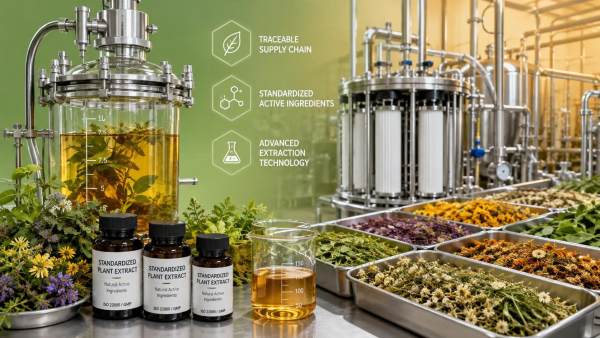
Why the European Market Matters Now
The Europe botanical extracts market deserves attention because it sits at the intersection of several high-value manufacturing priorities: differentiated formulations, ingredient traceability, regulatory defensibility, and supply security. Demand from pharmaceuticals, nutraceuticals, functional foods, beverages, cosmetics, and personal care is important, but it does not by itself explain which companies will create durable value. In Europe, the commercial advantage increasingly belongs to businesses that can demonstrate what an extract contains, where the botanical material came from, how it was processed, and whether its intended use can be supported under the relevant product rules.
For decision-makers, this is therefore not a simple “natural ingredients growth” story. A plant-derived extract may look attractive at the concept stage, yet become difficult to scale if raw-material quality varies by harvest, the active-marker profile is poorly controlled, or the supplier cannot provide a documentation package suitable for the target market. Conversely, a technically modest extract with reliable specifications, stable supply, and a clear regulatory route may be more commercially valuable than a more novel ingredient with uncertain claims or inconsistent performance.
The market is likely to reward disciplined suppliers and buyers over companies that treat botanical sourcing as a branding exercise. The immediate question for manufacturers is not whether botanical ingredients fit the European market. It is whether their chosen ingredients can withstand procurement scrutiny, formulation requirements, and regulatory review as volumes increase.
Growth Is Being Pulled by Formulation Needs, Not One Consumer Trend
Botanical extracts are used for very different commercial purposes. A food producer may seek a familiar plant source with flavor, color, or antioxidant functionality. A supplement manufacturer may require a standardized extract linked to a specific composition profile. A cosmetics business may be focused on sensory qualities, origin narratives, and compatibility with a wider natural-positioned formulation. Pharmaceutical and API-adjacent applications impose a much higher burden around identity, impurities, batch consistency, and manufacturing controls.
That diversity creates opportunity, but it also prevents the Europe botanical extracts market from behaving as a single category. A supplier successful in premium personal care may not be prepared for the documentation and change-control expectations of a regulated health-product customer. Equally, a buyer accustomed to commodity herbs may underestimate the work required to qualify an extract used for a formulated product with defined performance claims.
Several commercial forces continue to support interest in botanical ingredients:
- Manufacturers are looking for formulation routes that can support natural, plant-based, or recognizable ingredient positioning without abandoning technical performance.
- Higher-value food, supplement, and personal care products often depend on ingredients that can be differentiated by origin, extraction method, composition, or traceability.
- European customers and regulators place growing importance on supply-chain visibility, responsible sourcing, and substantiated product communication.
- Biorefining, solvent recovery, membrane separation, and other process improvements can make some extraction pathways more efficient or help producers target more consistent fractions.
None of these factors guarantees broad-based volume growth for every botanical. The commercial outcome depends heavily on the end-use category. Ingredients that can be standardized, supplied at dependable quality, and incorporated into established product formats usually have a clearer route to repeat purchasing than extracts promoted mainly through broad wellness language.
Standardization Has Become a Commercial Requirement
Botanical extracts are inherently variable. Species, plant part, geography, weather conditions, cultivation practices, harvest timing, drying, storage, and extraction conditions can all alter the resulting composition. That variability is manageable, but only when it is acknowledged early in product design and procurement.
For many buyers, the first technical question should be: what exactly is being standardized? A specification based solely on a botanical name and an extraction ratio may provide insufficient assurance for a product where functionality depends on particular compounds or a controlled chemical profile. Standardization to selected markers can improve consistency, although marker selection must be relevant to the intended application. A high marker value does not automatically prove superior efficacy, sensory performance, or formulation behavior.
The more useful commercial approach is to connect the specification with the product’s real requirements. This may include identity testing, chromatographic fingerprinting, active or characteristic marker ranges, moisture, microbiological limits, residual solvent controls, pesticide screening, heavy-metal limits, allergens where relevant, and contaminant risk assessment. The required package will vary by application, but the underlying principle is stable: a buyer needs enough evidence to understand whether batches are comparable and whether the ingredient remains suitable after processing and shelf-life exposure.
Procurement teams should be wary of offers that emphasize a broad botanical claim while providing limited information on batch-to-batch composition. Low initial pricing can conceal a larger cost if formulation adjustments, extra laboratory testing, rejected deliveries, or claim revisions become necessary later. For a high-value finished product, a more expensive extract with a defined and reproducible specification may produce a lower total cost of ownership.
Extraction Method Can Change the Business Case
Extraction is not merely a manufacturing detail. Water, ethanol, hydroalcoholic systems, supercritical carbon dioxide, glycerin-based systems, and other approaches can yield materially different ingredient profiles. They may also affect odor, color, solubility, stability, residual solvents, concentration, cost, and the type of formulation in which an extract can be used.
A purchasing brief should therefore avoid asking only for “an extract from” a named plant. It should state the intended dosage form or product matrix, the desired physical form, target solubility, acceptable carrier materials, required concentration, and any restricted processing aids. This gives suppliers a chance to propose a technically appropriate material rather than an apparently comparable extract that later fails in the customer’s formulation.
There is also a sustainability dimension. Buyers increasingly ask whether solvent use, energy demand, waste streams, and by-product handling are being managed responsibly. A process should not be labeled sustainable simply because the feedstock is botanical. The relevant assessment is more practical: can the supplier explain the process, control the inputs, manage recoverable materials, and maintain quality without creating avoidable environmental or compliance exposure?
Regulation Separates Viable Opportunities from Attractive Narratives
Europe is not one uniform regulatory market for botanical extracts. The legal treatment of an ingredient depends on its intended use, formulation, labeling, claims, dosage, route of administration, and national implementation. A material that can be used in a cosmetic formulation may face a different assessment when positioned in a food supplement. A botanical with a long commercial history may still require careful review when supplied in a new format, concentration, or combination.
This creates a recurring mistake: companies assess the botanical itself but not the final use case. The relevant question is rarely “Is this plant allowed in Europe?” It is more often “Can this specified extract, at this use level, in this product category, with these claims, be lawfully and credibly placed in the intended countries?”
Claim strategy is particularly important. Commercial teams may see a botanical’s traditional association with a health benefit as a ready-made marketing route. Regulatory treatment of health, nutrition, cosmetic, and medicinal claims is more constrained. A business that selects an extract before clarifying the permitted communication framework risks developing a product whose most compelling commercial claim cannot be used as intended.
Regulatory diligence should be built into supplier qualification rather than treated as a late-stage legal check. The following questions are useful before a buyer commits to scale-up:
- Is the botanical correctly identified, including botanical name, plant part, and relevant chemotype or subspecies where applicable?
- Does the supplier provide a consistent technical dossier, certificates of analysis, allergen information, contaminant controls, and traceability records?
- Are extraction solvents, carriers, and processing aids compatible with the target category and label requirements?
- Has the proposed use been assessed country by country where national practices may differ?
- Can product claims be supported without relying on vague implication or scientific overreach?
- Does the supply chain include materials from regions with heightened biodiversity, labor, land-use, or access-and-benefit-sharing concerns?
Businesses entering new botanical segments often gain speed by creating a cross-functional review process involving regulatory affairs, quality, procurement, product development, and commercial leadership. This may appear slower at the outset, yet it reduces the chance that a promising ingredient reaches a late development stage with an unresolved classification, documentation, or claims problem.
Supply Risk Is Concentrated in a Few Practical Weak Points
Plant-based sourcing is exposed to forms of disruption that do not always appear in conventional chemical procurement models. Harvest quality can shift with climate conditions. Wild collection can be affected by access restrictions, overharvesting concerns, local labor availability, and changing conservation requirements. Agricultural cultivation may compete with food crops, face disease pressure, or generate variable yields. Long supply chains can make it difficult to confirm whether material substitution or dilution has occurred before the extract reaches the processor.
Adulteration is a material risk in botanical markets because visual or basic documentation checks may not reveal substitution, undeclared fillers, or ingredients that do not match the stated botanical profile. The appropriate response is not to assume every supplier is unreliable. It is to establish controls proportionate to product criticality. Higher-risk materials, especially those with premium pricing, limited supply, or a history of confusion with related species, warrant more rigorous identity and authenticity verification.
Single-source dependence is another common weakness. Dual sourcing can improve resilience, but it only works when alternate suppliers are genuinely qualified against the same specification and formulation requirements. A nominal second supplier that produces a chemically different extract may offer little protection during a disruption. Some companies will find that strategic inventory, contracted cultivation, regional processing capacity, or supplier development provides a better answer than simply adding another name to an approved vendor list.
Traceability should extend beyond a country-of-origin statement. A useful system can link batches to the plant material, collection or cultivation route, primary processing, extraction site, and quality-release documentation. For buyers with sustainability commitments or regulated product lines, this level of visibility increasingly supports both risk management and commercial credibility.
Where Opportunities Are More Defensible
The strongest opportunities are likely to emerge where botanical extracts solve a defined formulation or sourcing problem. This could mean a stable natural antioxidant system for a particular food matrix, a standardized ingredient for a premium supplement line, an extract with favorable sensory performance for topical products, or a co-product stream that improves the economics of agricultural processing.
European processors may also benefit from tighter integration between raw-material sourcing and extraction. Companies that understand agricultural variability, establish transparent grower relationships, and control post-harvest handling can differentiate on more than marketing language. They can reduce input uncertainty and develop specifications that reflect the biology of the plant rather than an idealized laboratory profile.
There is room for innovation in upcycled feedstocks and side streams, particularly where fruit, herb, seed, forestry, or agricultural processing generates underused biomass. However, “upcycled” does not remove the need for quality control. Such projects must demonstrate predictable input composition, safe processing, contaminant management, and a viable route for the resulting extract in its intended category. The commercial value comes from converting a variable side stream into a controlled ingredient, not merely from describing it as circular.
For ingredient suppliers, product portfolios may become more resilient when they balance distinctive extracts with operationally dependable lines. Novelty can open customer conversations; consistency, documentation, and delivery performance determine whether those conversations become repeat business. For buyers, the better opportunity often lies in selecting fewer botanical platforms that can support multiple products, regions, or formats instead of pursuing a wide range of poorly qualified ingredients.
A Decision Framework for Market Participants
Companies evaluating the Europe botanical extracts market should begin with the end product, then work backward through compliance, specification, process, and raw-material supply. Starting with a trending plant name reverses the decision sequence and can create expensive rework.
A practical first screen is to assess four areas together: the commercial role of the extract, the evidence needed for the intended communication, the ability to produce a consistent specification, and the resilience of the supply chain. An ingredient is strategically attractive when these four elements reinforce one another. It becomes fragile when market appeal depends on claims that cannot be maintained, sourcing that cannot be traced, or composition that cannot be reproduced at commercial scale.
The next phase of market development will be shaped less by broad enthusiasm for botanicals than by execution. Businesses able to translate natural-source interest into controlled, compliant, and dependable ingredients will be better placed to secure long-term positions in Europe’s higher-value food, health, and personal care segments.
Related Intelligence
- Botanical ExtractsAre Botanical Extracts Classified as Agrochemicals Under New Rules?Are bio extracts considered agricultural chemicals under new rules? Learn how claims, composition, and market rules affect classification—and what to verify before launch.
- Botanical ExtractsChoosing Botanical Extracts for Pharmaceuticals: Potency, Purity, and ComplianceBotanical extracts for pharmaceuticals: learn how to assess potency, purity, traceability, and GMP compliance for confident, regulatory-ready supplier selection.
- Botanical ExtractsBotanical Extracts Market Outlook: Supply, Pricing, and Buyer RisksBotanical extracts market insights on supply, pricing, quality control, and buyer risks—compare suppliers confidently and protect your sourcing strategy.
The Morning Broadsheet
Daily chemical briefings, market shifts, and peer-reviewed summaries delivered to your terminal.
