

The Authority in Global Agricultural Chemistry & Bio-Resources
Botanical Extracts Market Outlook: Supply, Pricing, and Buyer Risks
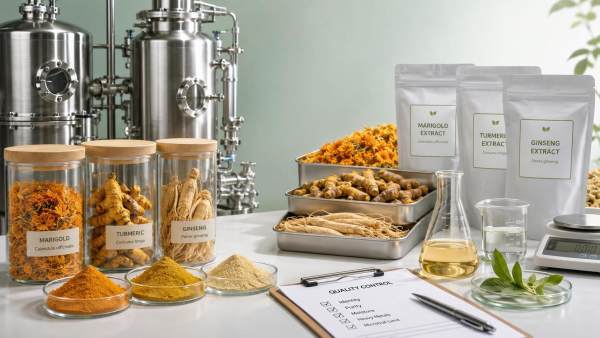
The central procurement issue in the botanical extracts market is not whether a supplier can quote an acceptable price. It is whether the quoted material can be reproduced, documented, and delivered without a change in botanical identity, active-marker profile, contaminant risk, or regulatory status. A low-cost offer can be commercially sound for a non-critical application, but it becomes expensive when incoming testing, reformulation, rejected batches, or delayed registrations expose differences hidden behind the same product name.
Botanical extracts are often purchased as if they were interchangeable commodities: “ginseng extract,” “green tea extract,” “milk thistle extract,” or “turmeric extract.” In practice, a common name may conceal substantial variation in species, plant part, origin, harvest conditions, extraction solvent, concentration ratio, carrier content, and assay method. Procurement decisions therefore need to separate a price comparison from a material-equivalence assessment. Without that separation, unit price becomes a misleading indicator of total cost.
Supply conditions are determined upstream, long before extraction
The supply base for botanical extracts is shaped first by agricultural and wild-harvest realities. Cultivated materials depend on seed or planting stock, grower practices, weather, irrigation, crop disease, labor availability, and harvest timing. Wild-collected materials introduce further variables: collection permits, land access, species pressure, inconsistent collection practices, and the risk that harvesting exceeds what can be credibly documented as legal and sustainable.
For extracts derived from perennial plants, trees, roots, bark, or slow-growing medicinal species, supply cannot always respond quickly to a higher purchase order. A processor may have extraction capacity available, but that does not mean it can secure adequate raw herb of the specified age, part, or origin. Root materials, for example, may require multiple growing seasons before harvest. Bark and resin supply may be limited by collection cycles and environmental restrictions. Buyers should treat a supplier’s stated annual capacity as incomplete unless it distinguishes between theoretical extraction capacity and secured raw-material availability.
Seasonality also matters more than it appears in a quotation. Harvest windows affect moisture, active-compound development, and the timing of raw-material purchases. When a buyer enters the market outside the normal procurement season, a supplier may be drawing from stored herb rather than current harvest. Storage itself is not inherently problematic, but the quality implications depend on warehouse conditions, pest control, drying method, packaging integrity, and the stability of the relevant markers.
Origin claims require equal scrutiny. A country of extraction may not be the country where the plant was grown or collected. This distinction is commercially relevant when origin is linked to a customer specification, a protected reputation, pesticide concerns, import controls, or expected phytochemical composition. “Produced in” and “originating from” should not be used interchangeably in supply agreements.
Why botanical extract pricing is rarely linear
The price of an extract is not simply the raw-herb price multiplied by an extraction margin. The relationship changes with yield, target compounds, processing losses, testing requirements, and the form of the finished ingredient. Two materials with the same declared extract ratio can have very different cost structures if one requires tighter standardization or repeated purification to meet a marker specification.
A basic powdered extract may be made by aqueous or hydroalcoholic extraction and then dried with a processing aid or carrier. A higher-value standardized extract may require control of a defined constituent range, reduced levels of unwanted compounds, or concentration of a particular fraction. Resin removal, deodorization, solvent recovery, pesticide mitigation, microbial reduction, and heavy-metal management can all add cost, sometimes with a significant effect on yield.
For this reason, an extract ratio such as 10:1 should not be interpreted as an automatic measure of potency or value. Ratios can describe the relationship between starting botanical and final extract, but they do not establish the level of a biologically relevant constituent. They may also be calculated on different bases, including fresh versus dried starting material. A 10:1 extract with a substantial maltodextrin carrier is not directly comparable with a solvent extract standardized to a defined marker level.
Assay basis is another source of false price comparisons. A quote for “95% curcuminoids,” for instance, needs clarification on the analytical method, reference standard, individual constituent profile, moisture basis, and whether the result is expressed as total curcuminoids or a specified composition. Similar issues arise with polyphenols, saponins, flavonoids, alkaloids, and polysaccharides. If the test method differs, the numerical specification may not represent the same material property.
Freight, currency movement, and energy costs still affect landed cost, particularly for bulky, lower-value extracts. Yet for higher-specification materials, quality failure costs can outweigh logistics savings. A shipment that requires extensive confirmatory analysis or cannot support a customer’s dossier may tie up inventory and disrupt production even if its delivered price is lower.
The hidden gap between a specification sheet and a controlled ingredient
A certificate of analysis is necessary, but it is not sufficient evidence of control. It confirms results for a presented batch; it does not explain how the supplier prevented substitution, contamination, or batch drift across its supply chain. The more commercially sensitive the extract, the more important it is to understand the control system behind the document.
Botanical identity should be established at the raw-material stage, ideally with reference to the accepted Latin binomial, plant part, and a defined identification approach. Common names are particularly weak controls where closely related species, regional naming conventions, or economically motivated substitution are possible. Powdered botanical material is difficult to identify visually, and DNA techniques may have limitations after extraction. Identity assurance should therefore rely on a combination of supplier qualification, botanical documentation, chromatographic fingerprinting where relevant, and raw-material traceability rather than a single test alone.
Plant part deserves explicit treatment in purchase specifications. Leaf, root, rhizome, seed, fruit, flower, bark, and whole-herb material can differ significantly in chemical profile and contaminant exposure. A specification that names only the plant creates room for substitution with a cheaper or more available part. The same applies to extraction solvent and processing aids. If ethanol, water, ethyl acetate, glycerin, or another system is material to formulation, claims, or regulatory review, it should be defined rather than assumed.
Carrier content is frequently underappreciated in cost calculations. Maltodextrin, gum acacia, starches, silica, and other excipients may be technically appropriate for flow, stability, or spray drying. They also affect active concentration, formulation behavior, label declarations, and price per kilogram. Procurement should calculate cost per kilogram of the relevant active marker or agreed functional fraction, not merely cost per kilogram of powder.
Contaminant control is application-specific, not a generic checklist
Testing expectations should reflect the botanical, source region, intended use, and destination market. A universal test panel can waste resources on low-relevance analyses while overlooking a material-specific concern. The relevant risk profile may include pesticide residues, heavy metals, microbiological contamination, mycotoxins, residual solvents, polycyclic aromatic hydrocarbons, pyrrolizidine alkaloids, or adulteration with undeclared synthetic compounds.
For botanicals sourced from areas with intensive agriculture, pesticide screening needs to align with the crop’s actual exposure profile rather than rely only on a short generic panel. Root and leaf materials may differ in their tendency to accumulate metals or surface residues. Materials dried over direct combustion may warrant attention to combustion-related contaminants. Extracts made using organic solvents require appropriate residual-solvent control, while water-based extracts are not automatically free from microbial or mycotoxin concerns.
Specifications also need to distinguish legal compliance from customer acceptance. A material may meet the supplier’s internal limits but fail a finished-product customer’s more restrictive requirement. This is especially important when the extract will be used in dietary supplements, conventional foods, cosmetics, animal nutrition, or pharmaceutical development, where the applicable expectations and documentation pathways differ. A supplier’s statement that a product is “GMP” should be clarified: which manufacturing standard applies, what scope is covered, and whether the status relates to the extraction site, the final packing operation, or both.
Organic certification, kosher, halal, non-GMO, allergen, and sustainability claims should be treated as controlled commercial requirements, not informal declarations. Chain-of-custody documents, certificate scope, validity, and product inclusion need verification. A broad facility certificate does not automatically confirm that the exact extract, source material, and processing route meet the claim.
Supplier resilience is a measurable procurement variable
Supplier qualification often focuses heavily on laboratory results and not enough on operational resilience. A processor may produce a compliant pilot batch yet remain unable to support a repeat program because it relies on opportunistic herb purchases, a single collector network, one drying facility, or a third-party extraction plant. These dependencies do not necessarily disqualify a supplier, but they should shape contract structure and inventory policy.
Useful diligence questions concern the actual chain of custody: who purchases the raw botanical, where it is dried, whether lots are segregated, where extraction occurs, who performs microbiological reduction, and whether final milling and packing are controlled in-house. The answers reveal whether a supplier is a manufacturer with traceable upstream management, a processor dependent on brokers, or a trading entity assembling documentation from multiple sources.
Batch consistency should be assessed over time rather than from a single qualification sample. Historical certificates for several production lots can show the normal range of assay, moisture, particle size, bulk density, microbial counts, and marker ratios. A narrow specification with repeated results at one extreme may indicate a process that is difficult to maintain. Conversely, normal variation is not necessarily a quality defect if it remains inside an agreed range and does not affect formulation or finished-product performance.
Lead-time discussions should include the time needed for raw-material procurement, extraction scheduling, testing, release, and export documentation. “Available” can mean available as raw herb, in-process extract, finished stock, or a sample retained from a prior lot. Those are different commercial positions. Contract language should identify whether supply is made to order, allocated from stock, or supported by reserved raw material.
Where buyers commonly misread risk
The most frequent error is accepting a standard sample as proof that commercial batches will match it. Samples are often selected from preferred inventory or produced under conditions that cannot be repeated at the same cost. A reference sample should be retained, but the purchase agreement also needs measurable acceptance criteria and a defined approach for resolving borderline or disputed results.
Another error is using the supplier’s assay result as the sole release basis. Independent verification is particularly important during onboarding, after a source change, when the botanical has a known adulteration history, or when the material supports a high-value finished product. The extent of testing can be adjusted after the supplier has demonstrated consistency, but removing verification entirely transfers too much risk to a single document.
Buyers also underestimate the consequence of changing specifications after commercial discussions begin. Tightening microbial limits, removing carriers, requiring a different solvent system, adding a marker assay, or demanding a particular origin can materially alter yield and lead time. These requests should be resolved before price is fixed, not treated as routine post-award amendments.
A more reliable basis for comparing offers
A practical comparison begins with a common technical description rather than a supplier quotation template. The description should state the Latin botanical name, plant part, origin requirement if applicable, extraction solvent, extract ratio only where meaningful, marker specification and method, carrier allowance, particle-size requirement, microbiological limits, contaminant tests, packaging, shelf-life basis, and intended application.
Commercial comparison can then move beyond the nominal kilogram price. The relevant measure may be cost per kilogram of standardized marker, cost per unit of finished-product output, or total landed cost after incoming testing and expected process losses. An extract with a higher purchase price may reduce dosage, improve blend uniformity, simplify label claims, or lower rejection risk. Those benefits should be quantified where the formulation permits, rather than assumed.
Supply agreements benefit from clear provisions on change notification. Changes in botanical origin, plant part, extraction process, carrier, assay method, manufacturing site, primary packaging, or subcontracted processing should trigger review before shipment. Notification requirements are especially important because a technically compliant substitute may still create regulatory, labeling, sensory, or performance consequences downstream.
In the botanical extracts market, the strongest sourcing position is built on defined equivalence and transparent supply controls, not on the lowest initial quote. Price remains important, particularly in formulations with modest technical differentiation. But the more an extract is tied to a marker claim, a regulated application, a sensitive customer specification, or a limited botanical source, the more procurement value lies in securing evidence that the next batch will be the same commercial material as the one that was approved.
Related Intelligence
- Botanical ExtractsAre Botanical Extracts Classified as Agrochemicals Under New Rules?Are bio extracts considered agricultural chemicals under new rules? Learn how claims, composition, and market rules affect classification—and what to verify before launch.
- Botanical ExtractsChoosing Botanical Extracts for Pharmaceuticals: Potency, Purity, and ComplianceBotanical extracts for pharmaceuticals: learn how to assess potency, purity, traceability, and GMP compliance for confident, regulatory-ready supplier selection.
- Botanical ExtractsBotanical Extracts Market Outlook: Supply, Pricing, and Buyer RisksBotanical extracts market insights on supply, pricing, quality control, and buyer risks—compare suppliers confidently and protect your sourcing strategy.
The Morning Broadsheet
Daily chemical briefings, market shifts, and peer-reviewed summaries delivered to your terminal.
