

The Authority in Global Agricultural Chemistry & Bio-Resources
How to Choose Oyster Processing Equipment for Capacity, Hygiene, and Labor Efficiency
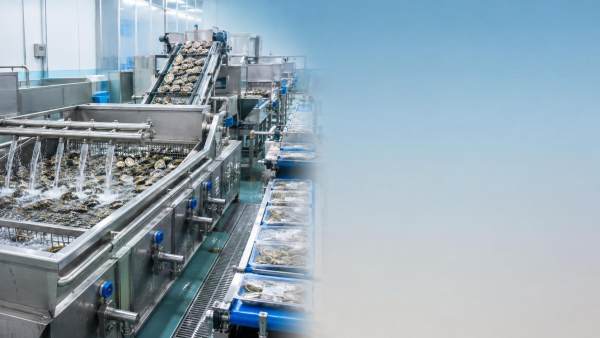
Start with the product flow, not the machine list
Oyster processing equipment should be selected around the condition of the incoming harvest and the form in which oysters leave the facility. A line designed for live, shell-on retail oysters has very different priorities from one supplying half-shell product, frozen meat, or value-added prepared items. Buyers often receive quotations organized by machine category: washer, grader, shucker, conveyor, packer. That format is useful for comparison, but it can obscure whether the machines form a workable process.
The first procurement question is therefore simple: where does product handling create the greatest constraint today? It may be dirty incoming shells, inconsistent sizing, an understaffed shucking station, slow packing, or poor separation between raw and finished-product areas. Installing automation at the wrong point can transfer the bottleneck downstream rather than remove it.
A practical line map should follow the oysters from receiving through dispatch:
- Receiving, unloading, and lot identification
- Initial washing and removal of mud, loose debris, and shell fragments
- Inspection, culling, sizing, and grading
- Live handling, shucking, or shell separation, depending on the finished product
- Meat rinsing, inspection, draining, and portioning where applicable
- Packaging, labeling, chilled holding, and dispatch
At each step, procurement teams should record throughput, labor requirement, dwell time, water use, reject rate, and opportunities for cross-contamination. This produces a more useful specification than a request for a certain number of oysters per hour. A stated capacity means little unless it accounts for the size distribution of the harvest, the proportion of damaged shells, the number of product changes, cleaning time, and the pace of the slowest downstream operation.
For example, a high-capacity washer may process shellstock faster than workers can sort or grade it. Likewise, an automated shucking system may have an impressive nominal output while requiring tightly controlled oyster orientation and size uniformity that the supplier's harvest stream cannot consistently provide. The relevant capacity is sustained usable output over a normal production day, including handling losses and sanitation breaks.
Capacity should be specified as a system requirement
When comparing oyster processing equipment, buyers should distinguish between machine throughput and line throughput. The supplier may state the first under ideal operating conditions. The processor needs the second.
A robust capacity model starts with expected daily volume and working hours, then adds realistic allowances for cleaning, setup, inspection, maintenance, breaks, and changes between oyster sizes or product formats. It should also include seasonal peaks. A line sized only for average supply can force expensive overtime, delayed processing, or product-quality compromises during the periods when raw material availability is strongest.
That does not automatically justify buying the largest available system. Oversizing can create its own inefficiencies: excess water and energy consumption, unused floor space, equipment that is difficult to clean at low utilization, and capital tied up in a line that needs more skilled operators than the site can sustain. Modular capacity is often preferable where volume is variable. A processor may install conveyors, wash modules, grading stations, or packing lanes that can be expanded without rebuilding the whole hygienic layout.
Ask suppliers to define the operating assumptions
Capacity claims should be converted into a documented set of conditions. A useful supplier discussion asks:
- What shell-size range and shell shape were used to establish the quoted throughput?
- How many operators are required at normal output, not merely at startup?
- Does the figure include loading, unloading, sorting, quality inspection, and packing?
- How does performance change when oysters arrive with more fouling, variable size, or fragile shells?
- What level of stoppage is expected for cleaning, clearing jams, changing guides, or replacing wear parts?
- What is the actual discharge rate into the next process, and can that process absorb it?
This is particularly important for grading and automated shucking equipment. Oysters are biological material, not uniform industrial components. Shell geometry, attachment of marine debris, seasonal meat condition, and handling history can all affect feeding consistency. Equipment that depends on a narrow operating window may still be appropriate, but the buyer should understand the cost of preparing raw material to fit that window.
The line also needs buffer capacity. Short accumulation conveyors, holding zones, or staging tables can protect output when a small interruption occurs at one station. Buffers should be designed carefully because they can also increase dwell time or make cleaning harder. Their purpose is to absorb routine variation, not to conceal an under-sized or poorly integrated process.
Hygiene is determined by cleanability and process separation
In oyster processing, hygienic performance cannot be judged from stainless steel alone. A machine can look suitable for food use yet remain difficult to clean, hold debris in inaccessible areas, or force product and waste streams across the same working zone. Procurement specifications should focus on how the equipment behaves during sanitation as much as how it performs during production.
For shellstock handling, the design must prevent dirty wash water, shell debris, and external contamination from reaching cleaned oysters or exposed meat. For shucked products, the standard becomes more demanding because edible tissue is handled directly. Product-contact surfaces, wash systems, drains, conveyors, guides, baskets, and transfer points should all be assessed as part of one hygienic system.
Equipment should support a logical progression from incoming, potentially contaminated material toward cleaned or finished product. Where site constraints prevent a fully linear layout, physical barriers, controlled access, dedicated tools, and well-defined traffic paths become more important. A sophisticated shucker placed in an unsuitable room will not compensate for poor zoning around it.
What cleanability looks like in a procurement review
Buyers should inspect machine design with sanitation personnel involved, rather than leaving this assessment solely to engineering or operations. The best questions are practical: Can the team see the surfaces that need cleaning? Can they reach them without dismantling half the machine? Can parts be removed and reinstalled correctly? Does washdown drain away rather than pooling inside frames, beneath conveyors, or around bearings?
Request a demonstration of cleaning access before placing an order. A supplier should be able to explain routine sanitation points, recommended disassembly, compatible cleaning methods, and the parts most likely to require inspection or replacement. This is more informative than broad claims that a machine is “easy to clean” or “hygienic by design.”
Water systems deserve special attention. Washing is necessary, but more water does not necessarily mean better sanitation. Excessive spray can spread debris, increase wastewater load, and make floors harder to control. The design should apply water where it is needed, capture solids effectively, and drain without creating standing water. The appropriate approach will depend on local regulatory requirements, facility utilities, wastewater treatment capacity, and the intended product form.
Labor efficiency is about task quality, not headcount alone
Labor is often the strongest business case for new oyster processing equipment, especially where shucking, sorting, and packing rely on experienced workers. Yet labor-saving claims can be misleading when equipment replaces one repetitive task while adding loading, orientation, monitoring, recovery from jams, cleaning, or technical support elsewhere.
A better measure is labor productivity across the whole line: usable output per labor hour, together with product quality, yield, and safety. If automation lowers the number of people at a station but increases shell damage, meat loss, or rework, the apparent gain may disappear.
Manual shucking illustrates the trade-off clearly. Skilled shuckers can adapt to irregular shell shape and assess product condition at the point of opening. Their output and availability may be variable, and the work carries ergonomic and safety concerns. Automated or semi-automated systems can improve consistency in a suitable product stream, but they usually require more disciplined feeding, size control, preventive maintenance, and operator training. They should be evaluated as a different operating model, not simply as a mechanical substitute for a set number of people.
Semi-automation is frequently the more resilient choice for processors with fluctuating volumes or broad size variation. Mechanized washing, conveying, grading, lifting, or packing support can remove strenuous and repetitive work while retaining people at tasks where visual judgment matters. Fully automated lines are most defensible when raw-material characteristics, product format, and anticipated volume are stable enough to keep the equipment productive for a substantial share of its available time.
Examine ergonomics and recovery work
The routine operator tasks around a machine deserve as much attention as its automation cycle. Ask where workers stand, how often they reach, whether lifts and loading points suit the expected container weights, how shell waste is removed, and what happens when the equipment stops. A line that is technically fast but forces awkward intervention can create injuries, fatigue, and inconsistent output.
Operators also need a manageable way to identify and reject defects. Inspection points should have adequate lighting, a stable product presentation, and enough time to make a decision. Compressing quality inspection into an overloaded line may reduce staffing on paper while increasing the risk of unsuitable product reaching packing.
Supplier evaluation should extend beyond the factory acceptance test
A factory demonstration is useful, but it rarely reproduces the receiving conditions, staffing profile, floor layout, and sanitation regime of the buyer's site. Procurement teams should therefore evaluate the supplier's ability to support installation and sustained operation, particularly when the equipment is specialized or imported.
Request detailed utility requirements for electricity, water, compressed air, drainage, and ventilation where relevant. Confirm machine footprint, access for installation, safe maintenance clearances, and the load-bearing capacity of the intended floor. The equipment price can be a small part of the final project cost if drainage changes, electrical upgrades, refrigeration interfaces, structural works, or wastewater modifications are discovered late.
Serviceability is equally material. Buyers should identify wear items, critical spare parts, expected lead times, remote-support capability, local technical coverage, and the practical skill level needed for fault diagnosis. Oyster operations may be seasonal or time-sensitive; extended downtime during a harvest window can be more damaging than a marginally higher purchase price.
Acceptance criteria should be written before the order is finalized. They should cover the actual product range, sustained output, product damage, reject handling, hygiene-related access, operator numbers, and training. Where a full site test is feasible, it should include the transfer between machines rather than testing each unit in isolation. The central question is whether the complete line can deliver saleable product at the required pace under representative conditions.
Build the decision around the constraint you can verify
The strongest equipment choice is rarely the one with the highest quoted capacity or the most automation. It is the line that fits the processor's oysters, product mix, labor model, sanitation capability, and physical site without introducing a larger constraint elsewhere.
Before committing capital, buyers should validate three things in order: the usable output required during peak operating periods, the cleaning and segregation method the facility can execute every day, and the labor tasks that will remain after installation. Those answers usually reveal whether the priority should be a larger machine, a more cleanable design, better upstream grading, targeted semi-automation, or a phased line expansion. That is a more durable basis for selecting oyster processing equipment than comparing purchase prices alone.
Related Intelligence
- Commercial FishingAustralis Secures Vietnam Leases for 30,000-Tonne Barramundi Hub, Opens Processing PlantAustralis secures 16 Vietnam marine leases for a 30,000-tonne barramundi hub and opens its Blue Loop processing plant. Explore the potential impact on seafood sourcing.
- Commercial FishingWhat Certifications Do Fishery Supplies Need for Export?What certifications should fishery supplies carry for export? Explore requirements for equipment, feed, and chemicals to avoid costly delays and ship with confidence.
- Commercial FishingWhat Should You Check in a Fishery Equipment Maintenance Contract?What should I look for in a fishery equipment maintenance contract? Explore coverage, response times, costs, records, safety, and biosecurity essentials.
The Morning Broadsheet
Daily chemical briefings, market shifts, and peer-reviewed summaries delivered to your terminal.
