

The Authority in Global Agricultural Chemistry & Bio-Resources
How Net Maintenance Equipment Helps Aquaculture Farms Reduce Downtime and Losses
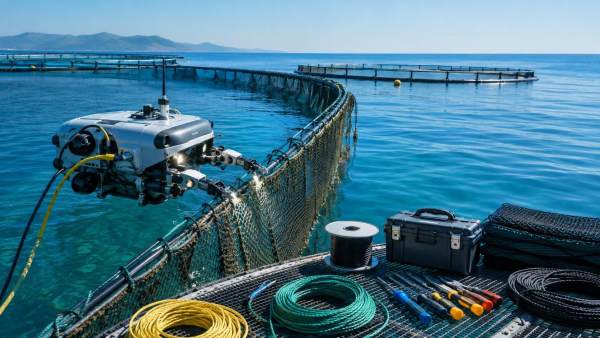
How Net Maintenance Equipment Helps Aquaculture Farms Reduce Downtime and Losses
For aquaculture after-sales maintenance teams, damaged or fouled nets can quickly lead to stock escapes, disease exposure, and costly production interruptions. Reliable net maintenance equipment for aquaculture helps technicians inspect, clean, repair, and replace containment systems with greater speed and consistency. The real benefit is not simply a cleaner net or a faster patch. It is the ability to keep containment integrity under control before a minor defect turns into an operational event.
In sea cages, pond systems, hatchery barriers, and land-based facilities with protective screens, nets sit at the intersection of fish welfare, biosecurity, predator exclusion, water exchange, and site safety. Their condition is often easy to underestimate because damage may begin below the waterline, along high-load seams, or around components that are difficult to access during normal feeding and inspection routines. A farm may continue operating with a compromised net for days before the risk becomes visible.
That is why maintenance capability deserves to be considered as part of farm uptime planning rather than as a reactive support function. The right tools, work methods, spare-net strategy, and inspection records can reduce the time between identifying a defect and returning the containment system to a safe operating condition.
Why net failures create more than a repair job
A torn panel is rarely an isolated technical issue. In offshore and nearshore farms, a breach can result in fish escapes, unwanted wild-fish interaction, regulatory reporting obligations, harvesting disruption, and urgent deployment of divers or workboats. In freshwater operations, tears may allow stock to move between production areas or expose fish to predators. Fouling creates a different but equally serious problem: reduced water movement through the mesh can affect oxygen availability, increase handling needs, and add weight and drag to a net structure.
Maintenance teams also face a timing problem. A net defect discovered during calm weather may be manageable. The same defect found just before a storm, during a treatment operation, or when the site is short-staffed can force difficult decisions. Taking a cage offline may affect stocking and harvest schedules; leaving it in service may expose the farm to a larger loss. Downtime is therefore not only the period when a net is physically removed or repaired. It includes lost operating flexibility.
Well-planned net maintenance equipment for aquaculture reduces this exposure by making routine intervention more practical. Teams are more likely to address abrasion, broken twine, loose stitching, damaged ropes, and fouling accumulation when the required equipment is available, fit for site conditions, and familiar to use.
The maintenance chain: inspect, clean, repair, verify
Net maintenance works best as a chain of connected activities. A cleaning unit alone will not prevent escapes if post-cleaning inspection is weak. A repair kit will not protect a cage if operators cannot safely reach the affected section. Similarly, a spare net has limited value if lifting and handling arrangements delay installation.
The first stage is inspection. Depending on site design, this may include surface checks from a work platform, diver inspection, remotely operated observation, or lifting selected sections for closer examination. The objective is not merely to find visible holes. It is to identify changes that may precede failure: chafing near moorings, tension around attachment points, mesh deformation, worn selvedges, loose knots, corrosion on hardware, and areas where fouling has become difficult to remove.
Cleaning follows a different logic. Excessive cleaning pressure, unsuitable nozzle selection, poor stand-off distance, or repeated handling can damage fibres and seams. Equipment should therefore be selected around the net material, mesh size, coating type, fouling condition, and cleaning method used at the farm. Some operations clean nets in situ, while others rotate them through dedicated shore-based washing systems. Neither approach is universally better; the practical choice depends on cage design, available vessels, environmental conditions, local rules, labour capacity, and the farm’s net inventory.
Repair is where preparation often determines whether downtime stays short. Common field equipment may include mesh repair needles, twine or cordage compatible with the original net construction, cutting tools, clamps, tensioning aids, marking materials, and portable lighting. For larger repairs, teams may need lifting gear, net handling frames, stitching stations, or access arrangements that allow damaged panels to be controlled without creating new stress points.
The final step is verification. A completed repair should be checked for mesh opening consistency, knot security, local tension, and interaction with adjacent ropes or cage components. Where a repair changes the geometry of the mesh, the team should consider whether it could create a weak edge or snag point under current and wave loading. A patch that looks acceptable on deck may perform differently once submerged and loaded.
What equipment should solve at the site level
This distinction matters because farms sometimes buy equipment by category rather than by maintenance bottleneck. A high-capacity washer may appear to solve fouling, for example, but its benefit is limited if cleaned nets cannot be inspected, dried, repaired, and returned to inventory in an orderly sequence. The most useful system is the one that removes delay from the entire workflow.
Reducing unplanned downtime through preventive routines
Preventive net maintenance does not mean inspecting every metre of mesh with the same frequency. It means directing attention to predictable failure points. These commonly include areas exposed to cage movement, rubbing against brackets or sinker systems, interfaces between net and frame, predator-contact zones, lifting points, and previous repair locations. A farm’s own history is usually more valuable than a generic checklist because it reveals how its current, stocking density, net design, vessel operations, and handling practices interact.
A practical routine often begins with a baseline record when a net is installed. The record may include net identification, material, mesh specification, installation date, repair history, observed high-wear areas, and relevant handling notes. Subsequent inspections can then identify whether a condition is stable or worsening. Without this baseline, maintenance crews may repeatedly treat symptoms without recognising a recurring mechanical cause.
It is also sensible to separate urgent repairs from scheduled repairs. An opening that presents an immediate escape risk needs containment action without delay. Localised wear that remains structurally stable may be scheduled alongside a planned cleaning or net change, provided the farm’s risk assessment supports that decision. Treating every defect as an emergency wastes resources; treating every defect as minor creates avoidable exposure.
Spare-net planning is part of the same discipline. A replacement net should not simply be stored somewhere on site. Teams need to know its condition, identification, compatibility with the cage system, storage method, and the equipment required to deploy it. Long storage periods, inadequate protection from ultraviolet exposure, poor labelling, or incomplete repair records can turn an apparent spare into an uncertain asset at the moment it is needed most.
Choosing equipment around the net, not the catalogue
The phrase net maintenance equipment for aquaculture covers a broad range of tools, from basic repair hardware to integrated washing and handling systems. Selection should start with the installed net fleet. Material type, twine diameter, knotless or knotted construction, mesh opening, coating, panel configuration, and expected service environment all influence what is appropriate.
For example, repair materials should be compatible with the net’s original construction and intended duty. Using whatever cordage is available may restore a physical barrier in the short term, but it can produce uneven load distribution or a repair that behaves differently during cleaning and handling. The same caution applies to cleaning settings. A method that is acceptable for one net material or fouling profile may not be suitable for another.
Site logistics matter just as much. Offshore sites may prioritise compact, corrosion-resistant equipment that can be operated safely from workboats in variable weather. Shore-based operations may gain more from controlled repair benches, haul-out systems, wash areas, and organised net storage. Remote farms should assess consumable availability and serviceability: a specialist tool with a long replacement lead time may not support resilience if critical parts cannot be sourced during the farming cycle.
Before committing to a system, maintenance leaders should clarify a few practical points:
- Which failures consume the most unscheduled labour or vessel time?
- Can the equipment be used safely in the actual working environment, not only under ideal workshop conditions?
- What training is required to avoid damaging nets during cleaning, lifting, or repair?
- Are spare parts, repair consumables, and technical documentation traceable and available over the expected service period?
- Does the equipment fit the farm’s environmental controls, waste-water arrangements, and local operating requirements?
Documentation is a maintenance tool, not administrative overhead
When a net incident occurs, teams need more than memory. Clear records help establish what was inspected, what was found, what repair was performed, which materials were used, and whether recurring damage is linked to a particular location or operating activity. This can support internal management, supplier discussions, insurance processes, and any reporting required under applicable local rules.
Documentation is particularly useful when farms operate multiple sites or use outside service providers. A consistent defect classification and repair record makes it easier to compare conditions across net batches and maintenance crews. It also helps prevent a familiar failure mode: a temporary repair becoming permanent simply because its status was not carried into the next maintenance cycle.
Technical procurement in aquaculture increasingly depends on this kind of traceability. The same principle appears across the primary industries covered by AgriChem Chronicle: equipment decisions are stronger when they are supported by verifiable specifications, maintenance history, supply-chain visibility, and realistic operating evidence rather than broad performance claims. For aquaculture operators, that evidence should connect equipment selection to the actual condition of nets in service.
A more resilient maintenance position
No equipment package can eliminate weather exposure, predator pressure, material ageing, or handling mistakes. It can, however, make the farm faster and more disciplined in responding to them. The strongest maintenance programs combine suitable tools with defined inspection intervals, trained personnel, repair criteria, spare-net readiness, and records that reveal recurring weak points.
When reviewing net maintenance equipment for aquaculture, the central question is not whether a tool looks advanced. It is whether it shortens the path from detection to verified containment integrity without adding new risks to the net or the crew. That assessment should be based on net specifications, site access, cleaning practice, available lifting capacity, service support, and the farm’s own incident history.
For teams planning an upgrade, a useful next step is to map one recent net-related interruption from the first sign of trouble through to closure. The points where work paused, information was missing, or equipment was unavailable usually show where investment and procedure changes will have the greatest practical effect.
Related Intelligence
- RAS SystemsAquaculture Filter Installation Costs: Plumbing, Labor, and CommissioningUnderstand aquaculture filter installation cost, from plumbing and labor to commissioning. Compare complete project scopes, uncover hidden expenses, and budget confidently before you buy.
- RAS SystemsSustainable Aquaculture Practices That Cut Feed Waste and Protect Fish Farm Water QualitySustainable aquaculture for fish farms: reduce feed waste, protect water quality, and build resilient, efficient systems with practical strategies.
- RAS SystemsDrum Filter System Price: How Flow Rate, Micron Rating, and Automation Affect CostDrum filter system price depends on flow rate, micron rating, automation, materials, and lifecycle costs. Compare quotes confidently and choose the right system.
The Morning Broadsheet
Daily chemical briefings, market shifts, and peer-reviewed summaries delivered to your terminal.
