

The Authority in Global Agricultural Chemistry & Bio-Resources
Drum Filter System Price: How Flow Rate, Micron Rating, and Automation Affect Cost
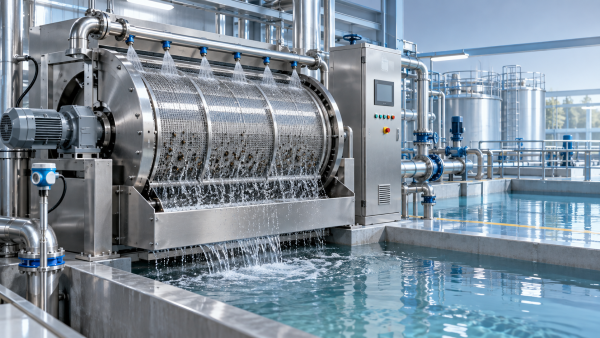
A drum filter quotation can look straightforward until the procurement team begins comparing systems that appear similar on paper. One supplier proposes a compact unit with a modest screen area; another specifies a larger stainless-steel package with automated backwash controls, sensors, and a control cabinet. Both may be described as “drum filters,” yet the gap in drum filter system price can be substantial.
That difference is not necessarily a sign that one quotation is inflated. In aquaculture, feed and grain processing, wastewater polishing, and industrial process-water applications, the purchase price reflects a chain of engineering decisions: hydraulic capacity, solids loading, target particle size, cleaning method, construction material, controls, and the supplier’s ability to document performance. Buyers who compare only the headline number often discover later that the lower-cost system requires more manual labor, struggles during peak loading, or introduces expensive downtime.
The more useful question is not “What does a drum filter cost?” It is: What configuration will achieve the required water quality and throughput at the lowest credible lifecycle cost?
Why Drum Filter System Price Varies So Widely
A drum filter is a mechanical microscreen filter. Water passes through a rotating cylindrical screen, while captured solids are removed by a backwash system. The principle is simple; the design conditions are not. A unit handling clean intake water at steady flow is fundamentally different from one treating high-solids recirculating aquaculture water, fish-farm effluent, food-processing wash water, or process streams containing fibrous material.
When reviewing quotes, procurement teams should separate the price into three layers:
- Base equipment: drum body, screen panels, drive assembly, spray nozzles, inlet/outlet connections, and support frame.
- Application-specific configuration: larger drum dimensions, a finer mesh, corrosion-resistant materials, upgraded seals, flow-balancing features, sludge handling interfaces, or redundant components.
- Project delivery costs: control panels, instrumentation, factory acceptance testing, documentation, shipping, site installation, commissioning, and spare parts.
Two suppliers can therefore offer different prices while both are technically honest. The challenge is to confirm whether both systems are being quoted against the same duty point and acceptance criteria.
Flow Rate: The Primary Cost Driver, but Not the Whole Story
Flow rate is usually the most visible factor behind drum filter system price. Higher hydraulic capacity typically calls for a larger drum diameter or length, more screen surface area, stronger structural components, a larger backwash pump, and more robust inlet and discharge channels. These changes affect manufacturing cost, transport dimensions, installation complexity, and the footprint reserved in the plant layout.
However, buyers should avoid treating nominal flow rate as a universal measure. A supplier may state a high maximum flow based on clean water, a coarse screen, or a minimal water-level differential across the filter. That number may not represent performance under the buyer’s actual solids loading.
A more meaningful comparison asks for the rated flow under defined conditions:
- Influent suspended-solids concentration and expected peak loading;
- Screen micron rating;
- Maximum permitted upstream water level or head loss;
- Water temperature and viscosity where relevant;
- Continuous versus intermittent operation;
- Required redundancy during maintenance or seasonal peaks.
For example, an aquaculture facility may experience a sharp rise in suspended solids after feeding cycles, grading, harvesting, or cleaning events. A filter sized only for average daily flow can become a bottleneck precisely when water quality is most vulnerable. In a feed processing or grain-wash application, the issue may be variable debris composition rather than flow alone: fines, fibers, husks, and sticky organic matter can reduce effective screen capacity.
Procurement should request a hydraulic sizing basis rather than accepting a single “capacity” value. A moderately higher capital cost for sufficient screen area can be more economical than operating a smaller drum continuously at high differential level and frequent wash cycles.
Micron Rating: Fine Filtration Has a Real Economic Trade-Off
Micron rating is often discussed as a water-quality choice, but it is also a direct cost variable. A finer mesh captures smaller particles and can improve downstream performance, reduce visible solids, and protect sensitive equipment. Yet as the openings become smaller, the screen generally has less open area and becomes more sensitive to clogging. This may require more filtration surface, more backwash water, tighter control logic, or a larger unit to maintain the same flow.
In practical procurement terms, a lower micron rating can raise both initial investment and operating expense. The right rating depends on what must happen after the drum filter. If the filter protects UV treatment, ozone systems, heat exchangers, membrane processes, or sensitive recirculation equipment, finer screening may have a clear value. If it serves as a primary solids-removal stage before settling, flotation, or biological treatment, an unnecessarily fine mesh may simply create maintenance burden.
Buyers should frame the requirement around removal objectives rather than a familiar micron number. Ask operations, process engineering, and environmental compliance stakeholders: Which particle fraction must be controlled? Is the target driven by discharge conditions, fish health, product protection, or downstream equipment reliability? Can a staged filtration design deliver the same result more economically?
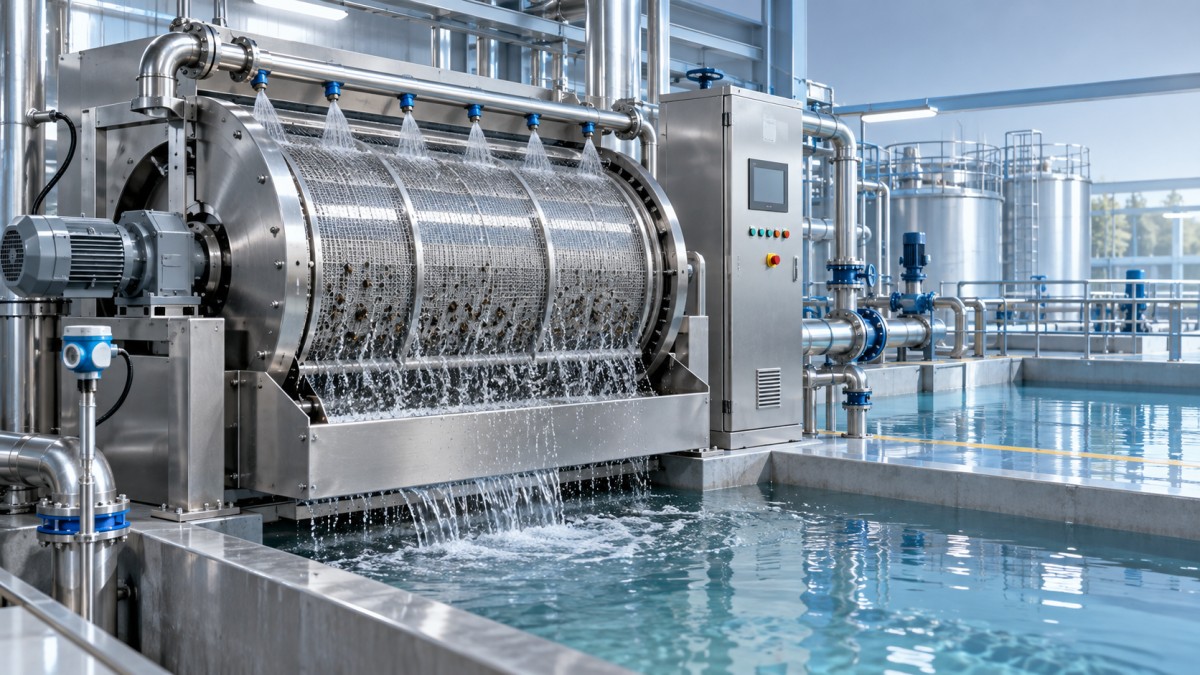
Screen material also deserves attention. Polyester, nylon, stainless steel, and specialized woven or perforated media behave differently under abrasion, chemical exposure, temperature variation, and cleaning pressure. The least expensive screen is not automatically the least expensive ownership choice if frequent replacement disrupts production.
Automation Changes More Than the Equipment Quote
Automation is one of the clearest reasons why drum filter quotes diverge. A basic system may use a fixed timer to activate drum rotation and backwash. A more advanced system can use differential water-level sensors, variable-frequency drives, automatic flushing sequences, alarms, remote status signals, and programmable logic controls integrated with a site SCADA platform.
For a small operation with trained staff nearby, a simpler arrangement may be appropriate. For a commercial recirculating aquaculture system, an unmanned water-treatment area, or a processing facility running extended shifts, automation can prevent a relatively minor filter issue from becoming a production event.
The procurement decision should not be framed as “manual versus automatic” in absolute terms. Instead, assess the cost of intervention. How quickly can an operator respond to rising water level? What happens if a spray nozzle blocks overnight? Does a temporary loss of filtration threaten stock, product quality, discharge compliance, or downstream machinery? The economic value of sensor-based control rises sharply when failure consequences are high.
Automation packages should be specified with discipline. Request clarity on the control architecture, sensor make and range, alarm philosophy, network communication protocol, local manual override, electrical enclosure rating, and availability of wiring diagrams. A control panel that cannot be easily supported by the site maintenance team may become a hidden operating risk, regardless of its sophistication.
Material Selection and Compliance Can Shift the Budget
Construction material is often where a low initial quote can conceal limitations. Galvanized or coated carbon steel may suit benign utility-water service. Stainless steel, engineered polymers, duplex grades, or marine-grade components may be justified in saline aquaculture, corrosive wash water, chemical processing environments, and high-humidity facilities.
Salinity, chlorides, cleaning chemicals, pH swings, UV exposure, and ambient moisture should all be documented in the inquiry package. A filter exposed to saltwater does not merely need a corrosion-resistant drum shell; fasteners, bearings, shafting, spray headers, electrical components, and support structures also require scrutiny.
Regulated sectors may add further requirements. Food and feed processors can need hygienic design features and traceable material documentation. Pharmaceutical or biochemical operations may require defined surface finishes, cleaning compatibility, validation support, or supplier quality records. Environmental permits can influence the required monitoring and reliability provisions. These elements may increase the equipment price, but they reduce the risk of buying a system that is difficult to approve, clean, audit, or maintain.
Look Beyond CAPEX: The Cost Items That Appear After Purchase
A responsible drum filter system price comparison includes operating cost. The main variables are electrical consumption, backwash-water use, labor, screen replacement, bearing and seal maintenance, spare-parts lead time, and lost production during service. In water-constrained regions, backwash-water recovery may have financial and compliance implications of its own.
Backwash performance deserves particular attention. Poor nozzle design, uneven spray coverage, or inadequate pressure can leave solids embedded in the mesh. The immediate consequence is reduced throughput; the longer-term consequence may be premature screen wear and increasingly frequent manual cleaning. Ask suppliers to explain the spray system, pump duty, nozzle access, filtration of the backwash supply, and recommended inspection interval.
It is also wise to price a first-year or two-year critical-spares package separately. Typical items may include screen panels, bearings, seals, drive components, nozzles, level sensors, and control relays. The purpose is not to purchase every possible spare, but to identify which small components could immobilize a major asset if they fail.
A Practical Quotation Comparison Method
Before issuing requests for quotation, prepare a one-page duty sheet. It should define the process fluid, normal and peak flow, solids characteristics, desired micron rating, operating hours, available footprint, utility connections, materials constraints, control interface, and commissioning expectations. Include what is known—and label what is uncertain. This reduces the chance that each supplier makes different assumptions.
Once proposals arrive, compare them in a normalized matrix rather than placing only the total purchase price side by side. Useful comparison headings include:
Ask each bidder to identify exclusions in plain language. Civil works, channels, pumps, pipework, crane access, electrical installation, sludge disposal, and start-up labor can materially affect the installed cost. A quotation that appears favorable can become expensive if these interfaces were assumed to be outside the supplier’s scope.
Questions That Reveal Whether a Supplier Understands the Application
Technical dialogue is often more valuable than a polished brochure. A capable supplier should be able to explain how the drum filter will respond to peak solids, changing water levels, damaged screen sections, loss of backwash pressure, and planned maintenance. They should also distinguish between a maximum theoretical capacity and a defensible operating capacity.
Useful questions include: What sizing margin is recommended for this duty? How is screen loading monitored? What is the expected backwash-water demand? Which components are normally replaced during routine service? Can the screen be changed without major disassembly? What performance documentation is included? Who provides commissioning support, and what site conditions must be ready before start-up?
For international procurement, evaluate documentation quality and service access alongside equipment cost. Clear drawings, wiring schematics, maintenance manuals, spare-parts identification, and responsive technical support are not administrative extras. They influence how quickly a plant can recover when filtration performance changes.
Choosing the Right Price, Not Simply the Lowest One
The best drum filter system price is the one attached to a transparent, application-matched design. A low-cost unit may be appropriate where flows are modest, solids are predictable, and manual oversight is available. A larger automated stainless-steel system may be the rational choice where water quality, compliance, continuity, or labor availability makes interruption costly.
For procurement teams, the goal is to convert a broad equipment category into a comparable technical purchase. Define the operating duty, test the assumptions behind stated capacity, weigh micron rating against downstream value, and put automation and maintenance requirements into the commercial evaluation from the beginning. That approach makes the final decision easier to defend—not only at purchase approval, but throughout the operating life of the filtration system.
Related Intelligence
- RAS SystemsSustainable Aquaculture Practices That Cut Feed Waste and Protect Fish Farm Water QualitySustainable aquaculture for fish farms: reduce feed waste, protect water quality, and build resilient, efficient systems with practical strategies.
- RAS SystemsDrum Filter System Price: How Flow Rate, Micron Rating, and Automation Affect CostDrum filter system price depends on flow rate, micron rating, automation, materials, and lifecycle costs. Compare quotes confidently and choose the right system.
- RAS SystemsHow to Specify Large-Scale Fish Farming Equipment for High-Output RAS ProjectsLarge scale fish farming equipment guide for high-output RAS projects—specify tanks, filtration, oxygen, automation, and redundancy for reliable growth.
The Morning Broadsheet
Daily chemical briefings, market shifts, and peer-reviewed summaries delivered to your terminal.
