

The Authority in Global Agricultural Chemistry & Bio-Resources
How to Design Agricultural Research Poultry Housing for Reliable Study Results
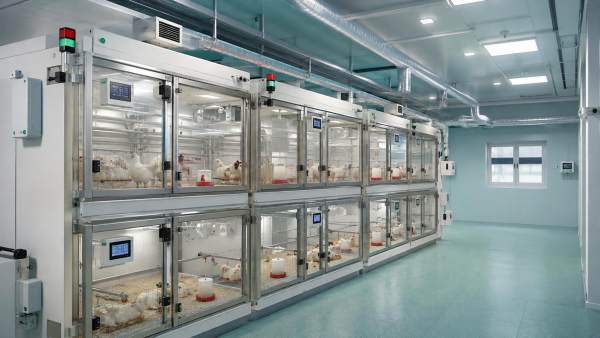
When a poultry study produces inconsistent results, the cause is not always the feed formulation, vaccine protocol, or test compound under review. It may be a poorly balanced ventilation zone, an inconvenient service corridor, a difficult-to-clean pen partition, or a flock exposed to uneven light. For project managers and engineering leads, agricultural research poultry housing is not simply a building project. It is part of the experimental system.
A well-designed research facility protects the credibility of the work performed inside it. It gives scientists greater control over variables, gives animal-care teams a safer and more practical workplace, and gives sponsors confidence that findings can be repeated under defined conditions. The challenge is that these goals do not always point in the same direction. High-density layouts may improve capacity, for example, while making isolation, observation, or sanitation more difficult. A flexible building can accommodate changing studies, yet too much openness may weaken environmental separation.
The most dependable approach is to treat poultry housing design as a study-enablement exercise from the first feasibility discussion—not as a standard commercial barn adapted after construction.
Begin with the research questions, not the building footprint
Commercial poultry facilities are commonly designed around throughput, labor efficiency, and predictable production cycles. Research facilities need a different starting point: what must be controlled, measured, sampled, compared, or isolated during a study?
Before selecting a site, drawing a pen layout, or specifying mechanical equipment, the project team should assemble a research-use brief. This document should describe likely study categories and their operational implications. Nutritional trials may require many statistically independent replicates, strict feed allocation, and precise collection of intake and performance data. Vaccine or pathogen-challenge studies introduce higher containment and decontamination demands. Genetics work may require pedigree separation and controlled breeding arrangements. Welfare, behavior, or lighting studies often need reliable observation access without repeatedly disturbing birds.
These distinctions shape the entire agricultural research poultry housing plan. A facility intended for broiler nutrition trials cannot simply be assumed suitable for layer research, breeder work, or microbiological investigations. If several program types are expected, identify the non-negotiable requirements for each and separate them from desirable future options. This avoids a familiar project failure: building a highly capable facility for the current protocol that becomes restrictive when the next funding cycle begins.
A practical early-stage question set
- Which bird types, ages, and flock sizes will be housed?
- How many experimental units and treatment groups must run at one time?
- Which variables require independent control: temperature, humidity, photoperiod, feed, water, air quality, or exposure status?
- Will studies involve conventional, specific-pathogen-free, or higher-biosecurity populations?
- What samples must move out of the room, and what materials must move in?
- How frequently will staff enter pens for weighing, scoring, sampling, egg collection, or health checks?
- What level of cleaning and downtime is needed between trials?
Answers should be recorded in terms that architects, mechanical engineers, animal scientists, biosafety personnel, and operations teams can all interpret. Ambiguous phrases such as “clean area” or “flexible layout” create expensive disagreements later. Define what they mean in practice: access sequence, room separation, drainage strategy, HVAC zoning, material finishes, and allowable equipment sharing.
Design the flow of birds, people, feed, and waste as separate journeys
Reliable study results depend heavily on preventing unwanted crossover. That crossover may be biological, such as the movement of pathogens between rooms, but it can also be procedural. A technician who enters a treatment room before a control room, a feed trolley used across diets, or a sampling cart that passes through multiple zones can introduce confounding factors that are difficult to detect after the fact.
For that reason, circulation planning deserves as much attention as pen dimensions. Map the movement pathways before finalizing walls and doors. Birds should arrive through a receiving or quarantine route that does not intersect with finished-study departures. Personnel should have a clear transition from external clothing to facility clothing, with handwashing, boot changes, and entry controls appropriate to the program’s risk level. Feed delivery, litter handling, carcass removal, and waste movement need their own considered routes.
A useful principle is to make the correct workflow the easiest workflow. If staff must walk around a building to reach a wash station, it will be tempting to bypass it during a busy morning. If a clean corridor doubles as a waste exit, even well-trained teams face an avoidable conflict. Physical design should reinforce operating discipline rather than relying entirely on reminders and procedures.
For larger sites, organizing the facility into biosecurity zones can be particularly effective. Public and administrative areas remain outside the animal-care boundary. Support spaces, such as storage and preparation rooms, form a transition zone. Individual research rooms or suites can then operate as distinct units with defined entry, cleaning, and access controls. The appropriate level of separation depends on the studies performed and applicable institutional, veterinary, environmental, and animal-welfare requirements.
Environmental control is a data-quality system
Temperature, relative humidity, air speed, ammonia concentration, carbon dioxide, dust load, and lighting conditions influence bird health and behavior. In a production setting, a degree of variation may be manageable. In research, unrecognized variation can blur treatment effects or create false differences between groups.
Mechanical systems should therefore be designed around consistency, monitoring, and recovery—not merely around nominal capacity. A room may meet its target temperature at a central sensor while corners, upper cage tiers, or pens near air inlets experience a different microclimate. The engineering team should examine airflow distribution at bird level, likely heat loads across bird ages, and the implications of partial room occupancy. Ventilation performance must remain stable when external conditions change, when one room is emptied and another is stocked, and when doors are opened during routine work.
Independent environmental zones are often preferable where different studies, bird ages, or treatment conditions operate simultaneously. Room-level control can reduce cross-study influence and make troubleshooting more precise. At the same time, more zones introduce more equipment, more maintenance points, and more opportunities for calibration drift. The objective is not maximum complexity; it is control that can be verified and maintained.
Continuous monitoring should be planned as part of the facility infrastructure. Sensors, alarms, data logging, backup power arrangements, and remote notifications need to be selected with clear ownership in mind. Decide early who reviews trends, who responds to deviations, how records are retained, and how sensor accuracy is checked. Data are valuable only when an unusual reading triggers a timely and documented response.
Lighting needs the same discipline as ventilation
Light intensity, spectrum, timing, and uniformity may affect growth, reproduction, behavior, and welfare-related outcomes. A research room should allow the intended photoperiod to be delivered consistently while limiting light leakage from adjacent spaces. Blackout capability, controllable fixtures, protected timers, and access protocols are especially important where lighting is itself an experimental variable.
Do not overlook maintenance access. A lighting system that cannot be safely inspected or replaced without disrupting birds will eventually create operational compromises. The same applies to fans, filters, ducts, sensors, and water lines. Maintainability is not a secondary engineering detail; it protects protocol continuity.
Choose layouts that support replication without sacrificing animal care
Experimental replication often drives the number and arrangement of pens. Yet a mathematically tidy layout can become burdensome if animal-care staff cannot inspect every bird, clean surfaces effectively, or remove a sick animal without disrupting neighboring groups. The right layout balances statistical requirements with humane handling and daily practicality.
Pen modules should permit clear treatment identification, reliable feed and water access, and visual observation from an aisle where appropriate. Partition design matters. Solid barriers may reduce direct contact and litter transfer, while more open materials can improve visibility and airflow. There is no universal choice; the decision should reflect the study design, biosecurity expectations, bird behavior, and ventilation approach.
Flexibility is valuable when it is deliberate. Removable partitions, interchangeable feeders, adjustable drinker heights, and modular cages or floor pens can extend the useful life of a facility. However, every adaptable feature should be evaluated for cleanability, durability, and the risk of inconsistent reassembly. If pen dimensions change between replicates, or if a movable barrier creates gaps that trap litter, flexibility can undermine standardization.
Project leaders should also reserve space for the less visible but essential work: weighing stations, sample preparation, secure feed storage, equipment cleaning, laundry or PPE management, recordkeeping, and temporary isolation. These functions are frequently squeezed after the animal rooms are planned, only to become daily bottlenecks.
Materials and utilities should withstand the real cleaning regime
Research poultry units may turn over more frequently than commercial barns and may require more intensive cleaning between studies. Floor finishes, wall systems, drains, ceiling details, door hardware, electrical enclosures, and service penetrations should all be selected for repeated washing, disinfectant exposure, moisture, and physical impact.
Seamless or well-sealed surfaces reduce places where organic material can accumulate. Sloped floors and appropriately located drainage support washdown, but drainage design also requires biosecurity attention. Poorly managed drains can become reservoirs for contamination or create unwanted airflow and odor pathways. The facility’s cleaning method—dry cleaning, foam application, pressure washing, thermal treatment, or a combination—should be confirmed before specifications are finalized.
Water is another critical utility. Research teams may need metered delivery by room or pen, medication capability, backflow protection, filtration, flushing points, and accessible sampling locations. Feed systems should prevent accidental mixing between diets and allow accurate verification of delivery. In nutrition work, a small carryover issue can compromise an otherwise carefully controlled trial.
Redundancy deserves measured investment. Complete duplication of every utility may be unrealistic, but the consequences of failure should be understood. Determine which systems need standby capacity, which require rapid repair access, and which require emergency operating procedures. Power loss, ventilation interruption, water failure, or alarm malfunction can quickly become both an animal-welfare event and a study-integrity event.
Build compliance and welfare review into the project schedule
Applicable requirements vary by country, institution, study type, and animal-health status. Project managers should identify the relevant animal-care, environmental, occupational safety, building, veterinary, and research-governance obligations early. Where work may involve pharmaceuticals, biological materials, residues, or regulated waste, additional controls may be necessary. A late compliance review can force redesign of room pressure relationships, drainage, waste storage, emergency systems, or documentation spaces.
Rather than treating welfare oversight as a final approval gate, invite veterinarians, animal welfare officers, and study leads into concept design workshops. They will often identify operational realities that are absent from drawings: where a bird can be calmly examined, how an injured animal can be removed, whether staff can observe water access, or whether a cleaning sequence creates stress for adjacent groups.
Good welfare design and sound science generally reinforce one another. Birds maintained in stable, suitable conditions are less likely to produce data distorted by avoidable stressors. That does not mean every study requires identical housing; it means any purposeful environmental difference must be defined, monitored, ethically justified, and separated from unintended variation.
Commission the facility as if it were a research instrument
Opening day should not be the first time systems are tested under realistic conditions. Commissioning needs to go beyond confirming that fans run and lights switch on. Test room controls across expected operating ranges, verify alarm pathways, check door and access sequences, validate water and feed systems, inspect cleaning reach, and simulate likely faults. If possible, conduct a dry-run of actual workflows with the people who will receive birds, collect samples, clean pens, and manage waste.
Document baseline performance before the first study begins. This may include environmental mapping, sensor calibration records, airflow verification, lighting checks, equipment inventories, and standard operating procedures. The goal is to establish a known starting condition against which future issues can be investigated.
A post-occupancy review after the first few study cycles is equally valuable. Staff will reveal where traffic conflicts occur, which doors are awkward, whether storage is insufficient, and where cleaning takes longer than expected. Correcting these issues early can prevent them from becoming embedded operational habits.
A facility that makes reliable work easier
The strongest agricultural research poultry housing projects do not attempt to predict every future protocol. Instead, they establish a controlled, maintainable framework in which new studies can be conducted without repeatedly reinventing the operating environment. They distinguish clean from dirty movement, isolate variables that matter, give staff practical room to care for birds, and make system performance visible rather than assumed.
For engineering and project leaders, the central decision is not whether to build a more sophisticated poultry unit. It is where sophistication genuinely reduces uncertainty. When design choices are tied back to research objectives, animal welfare, biosecurity, and daily workflow, the facility becomes more than an enclosure. It becomes a dependable platform for evidence that research teams, regulators, and industrial decision-makers can evaluate with confidence.
Related Intelligence
- Poultry Housing & CagingCage Materials and Support Loads in Housing for 1,000 Laying HensPlanning dimension poulailler pour 1000 poules pondeuses? Discover cage materials, support loads and layout checks to help create safe, efficient housing for 1,000 laying hens.
- Poultry Housing & CagingLayer Cage Wire and Galvanizing: Durability Checks for Farms in ZambiaComparing chicken layers cages for sale in zambia? Discover essential wire, weld and galvanizing checks to choose durable cages, reduce repair costs and buy with confidence.
- Poultry Housing & CagingHow Cage Specifications Affect Poultry Housing Costs in NigeriaLocally made poultry cage price in Nigeria: compare cage specifications, housing costs, durability, ventilation, manure systems, and installation factors for smarter poultry investment.
The Morning Broadsheet
Daily chemical briefings, market shifts, and peer-reviewed summaries delivered to your terminal.
