

The Authority in Global Agricultural Chemistry & Bio-Resources
How Cage Specifications Affect Poultry Housing Costs in Nigeria
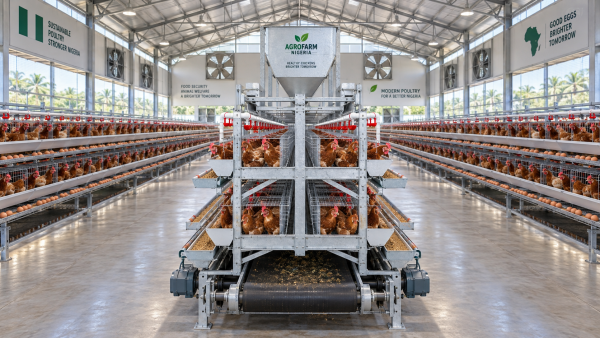
For a Nigerian poultry project, the cage line is not a single equipment cost. Its specifications influence the size of the building, the amount of steel needed for support frames, ventilation demand, manure handling, labour routines, replacement exposure, and the risk of production disruption. A cage quoted at a lower unit price can require more repairs or occupy more floor area than expected; a more robust specification can be uneconomic if it exceeds the farm’s flock size, management capacity, or housing design.
Technical evaluators therefore need to assess poultry cages as part of a housing system rather than as isolated metal products. The relevant question is not simply how much a cage costs at delivery. It is whether the cage geometry, material protection, row arrangement, feeding equipment, and waste-management provisions fit the intended birds, site conditions, and operating model.
Specification choices begin with the housing model
Most commercial layer cage projects use tiered systems because they place more birds within a given building footprint than deep-litter housing. That density can reduce land and roof cost per bird, but it also concentrates heat, dust, ammonia, water leakage, and manure in one structure. The cage specification must allow the building to manage those conditions.
A technical review should establish the intended system before evaluating quotations: single-tier, A-frame multi-tier, H-type stacked cages, or a hybrid layout. Each option changes the supporting structure and operating requirements.
- Single-tier cages are generally simpler to inspect and clean beneath, but use more floor area for the same bird population.
- A-frame configurations can offer a comparatively straightforward layout and may be practical where manual feeding, egg collection, or manure removal is planned. Their usable capacity depends heavily on aisle spacing and roof clearance.
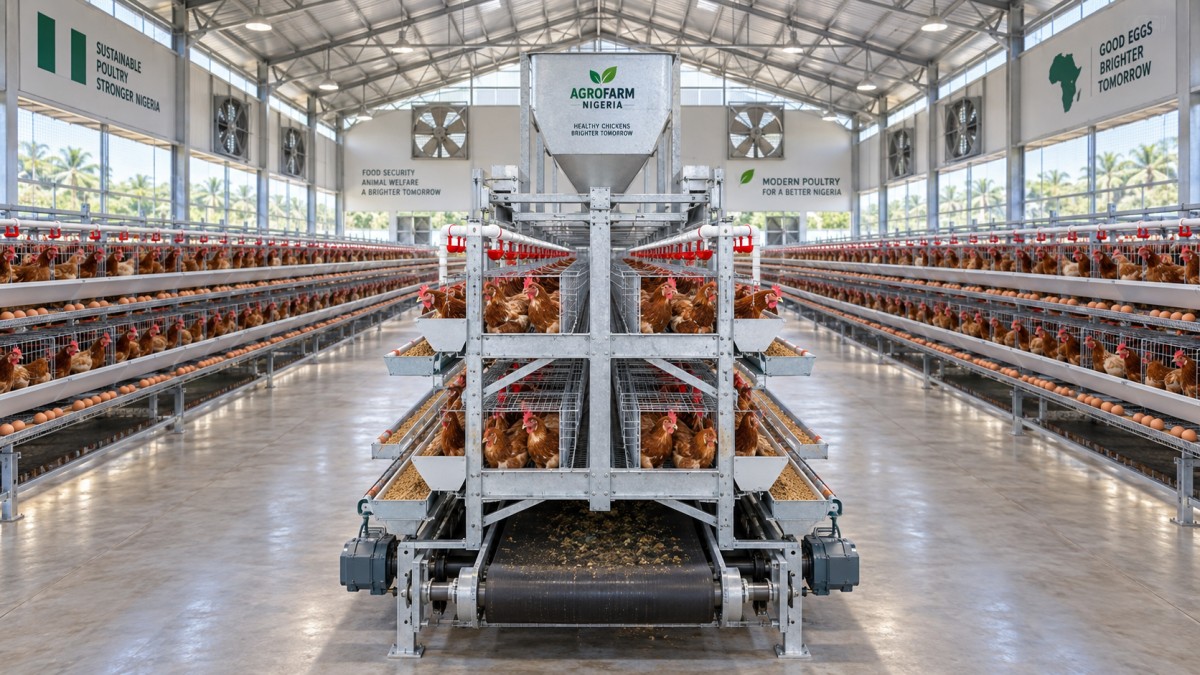
- H-type or vertical systems use building volume more intensively. They can reduce the building footprint per hen, yet usually demand closer attention to ventilation distribution, manure belt operation, electrical reliability, access for maintenance, and installation accuracy.
The apparent saving from putting more birds into a shorter building can disappear when airflow is inadequate. In hot conditions, birds located in poorly ventilated central or upper areas may experience greater heat stress. The result may be lower feed intake, poorer egg output, or more mortality, even when the cage itself remains structurally sound. Housing cost should therefore be evaluated per productive bird place, not only per square metre or per cage compartment.
Bird space and cage geometry affect both output and building cost
Cage width, depth, front opening, internal height, partition arrangement, and the number of birds per compartment all affect the usable space available to each bird. These dimensions also determine the number of cage sections required for a target flock. Small changes in compartment geometry can alter the length of rows, the number of feeders and drinker points, and the building length needed to accommodate them.
Overcrowding is often treated as a stocking decision rather than a cage-design problem, but the two cannot be separated. If the compartment was designed around a certain bird size and bird count, adding birds to reduce the initial cage quantity can create practical problems: restricted access to feed, increased pecking, more broken eggs, and difficulty removing weak birds. A narrow cage door can also add labour time during vaccination, inspection, or removal of spent layers.
Depth deserves particular attention. A deeper cage may increase birds per module, but it must still allow birds to reach feed and water without excessive competition. It also affects egg roll. The floor slope must be sufficient for eggs to move toward the collection edge without causing frequent cracks or allowing eggs to strike each other with too much momentum. Where eggs remain inside the cage, workers may need to reach further into the compartment, which turns a minor design decision into a recurring labour cost.
Wire quality is a lifecycle cost variable
Wire diameter, mesh pattern, weld integrity, and surface protection determine whether the cage keeps its intended shape under bird load, worker contact, cleaning, and exposure to corrosive manure gases. A low initial price may reflect lighter wire, inconsistent welding, or limited corrosion protection. None of these conditions automatically makes a cage unsuitable, but each requires a clearer inspection and a realistic maintenance allowance.
For layers, the cage floor carries a repeated load and directly affects egg handling. If floor wires deform, sag, or separate at weld points, the egg roll path can change. Eggs may remain in the cage, pile at the front, or crack more frequently. Floor damage can also create areas that are harder to wash and inspect. Side mesh and front panels matter for containment and feeding access, while the main frame must keep rows aligned over time.
Galvanized wire is commonly specified to slow corrosion, but a procurement document should clarify what is actually being supplied. The evaluator can ask whether protection is applied before or after fabrication, how cut ends and welded areas are treated, and whether different components receive different finishes. These questions are useful because corrosion often begins at joints, welds, damaged coatings, and points where wet manure or leaking water remains in contact with metal.
Nigeria’s climate makes site conditions especially relevant. In a humid location, an open-sided house with poor rain control can expose cage lines to repeated moisture. In a drier area, dust may accelerate wear in moving feeding or manure systems. Water with high mineral content can cause drinker deposits and leak-related corrosion if pressure regulation is poor. The same nominal cage can have a different replacement profile under these conditions.
Feed and water systems change the real cost of a cage line
Feed trough design affects feed access, wastage, cleaning time, and the amount of feed that falls into manure areas. A shallow or poorly supported trough may flex, collect dirt, or allow birds to scatter feed. In manual systems, trough length and access determine how evenly workers can distribute feed. In automated systems, the cage geometry must match the feed carriage or chain arrangement; otherwise, feed may not be delivered consistently along the row.
Drinker specification is equally important. Nipple drinkers, cups, headers, regulators, filters, and pipe supports should be assessed as one assembly. An incorrectly positioned drinker can leave smaller birds unable to reach water or encourage dripping. A slow leak may seem minor, yet continuous wetting beneath a row raises corrosion risk, worsens manure conditions, and can increase ammonia around the birds.
Technical evaluations should include practical checks rather than relying only on a supplier drawing:
- Confirm the number and placement of feed and drinker points for the planned bird type and age.
- Check whether pressure regulators, flushing points, filters, and spare fittings are included or separately priced.
- Review how feeders and drinker lines can be cleaned without dismantling major cage sections.
- Identify components that depend on motors, pumps, belts, or controllers, then match them to available power arrangements.
Automation can lower routine labour demand, but it transfers part of the cost into electrical infrastructure, controls, maintenance skills, and backup planning. A farm that experiences frequent power interruptions may need to consider what happens if feed movement, water pumping, manure belts, or ventilation stops. The cost of a cage specification should include the measures required to keep essential systems operating safely during an outage.
Manure design influences corrosion, ventilation, and civil work
Manure is a major source of hidden housing cost. Under-cage pits, scrapers, removable trays, and manure belts each create different structural and operating requirements. A simpler system may require more manual removal and more clearance below the cages. A belt system can improve the frequency and control of manure removal when properly operated, but it adds rollers, belts, drive units, alignment requirements, and maintenance points.
The decision should reflect the manure destination. If manure is stored, dried, bagged, or moved off-site, the farm needs a defined route from the house to the handling area. A design that leaves insufficient access for collection equipment can force manual handling through narrow passages. If manure accumulates for long periods under cages, ammonia and moisture may increase, contributing to corrosion and making ventilation more demanding.
Foundation and floor preparation must be assessed alongside the manure method. Cage rows need a level base to maintain egg roll, water-line alignment, and stable load distribution. An uneven concrete slab can create twisting in the frame or cause doors and feeders to sit out of line. Correcting these issues after cages are assembled is more expensive than checking floor tolerances before installation.
How to compare local fabrication and supplied cage systems
Local fabrication can offer advantages in transport logistics, component replacement, and adaptation to building dimensions. Imported or externally supplied systems may provide a more standardized package, but can involve longer lead times and more dependence on specific replacement parts. Neither route is automatically lower cost. The meaningful comparison is between complete installed systems with equivalent bird capacity, material specification, accessories, and expected service needs.
When reviewing a locally made poultry cage price in nigeria, buyers should avoid comparing only a headline amount per unit. A quote may exclude delivery, unloading, installation tools, fasteners, drinker lines, water regulators, feed equipment, electrical items, or site modifications. It may also describe capacity differently, such as birds per compartment rather than usable bird places across the entire house.
A fair comparison starts with a bill of quantities that lists cage rows, tiers, compartments, frames, doors, flooring, feed troughs, drinkers, water piping, egg collection provisions, manure components, and all supports. The document should state the assumed house dimensions and aisle widths. If a proposal requires a longer building or narrower working aisles to reach its stated capacity, that effect belongs in the total housing calculation.
Inspection should happen before and after installation
A cage sample inspection before full acceptance can reveal inconsistencies that are difficult to correct once the house is filled. Evaluators can check mesh openings, weld points, sharp edges, door operation, floor slope, frame squareness, trough attachment, and the fit of drinker components. Measurements should be taken from actual materials rather than inferred from photographs or nominal descriptions.
After installation, the system should be checked as an operating line. Run water through every drinker section and inspect for leakage. Verify that feed distribution reaches row ends. Confirm that egg collection edges align and that eggs can roll without obstruction. Where powered equipment is included, test normal operation and restart procedures. The house should also be inspected from the worker’s perspective: can staff safely reach birds, collect eggs, clean components, and access failed parts without dismantling adjacent rows?
The lowest cage purchase price can be appropriate where the flock scale is modest, manual management is deliberate, and replacement parts are readily available. More elaborate specifications may be justified where land is constrained, labour is costly, manure handling is mechanized, or the farm has the electrical and maintenance capacity to support automated equipment. The sound decision comes from matching cage details to the whole housing system and pricing the consequences of those details over the operating life of the project.
Related Intelligence
- Poultry Housing & CagingHow Cage Specifications Affect Poultry Housing Costs in NigeriaLocally made poultry cage price in Nigeria: compare cage specifications, housing costs, durability, ventilation, manure systems, and installation factors for smarter poultry investment.
- Poultry Housing & CagingWhat Determines Battery Cage Prices in Nigeria Beyond Bird Capacity?Battery cage price in Nigeria depends on more than capacity. Compare steel, automation, logistics, and installation scope for a smarter poultry investment.
- Poultry Housing & CagingBuilding a Poultry Farm Equipment Solution Around Flock Size and LayoutPoultry farm equipment solution planning for flock size and layout—optimize feeding, water, ventilation, automation, and future expansion.
The Morning Broadsheet
Daily chemical briefings, market shifts, and peer-reviewed summaries delivered to your terminal.
