

The Authority in Global Agricultural Chemistry & Bio-Resources
What Determines Battery Cage Prices in Nigeria Beyond Bird Capacity?
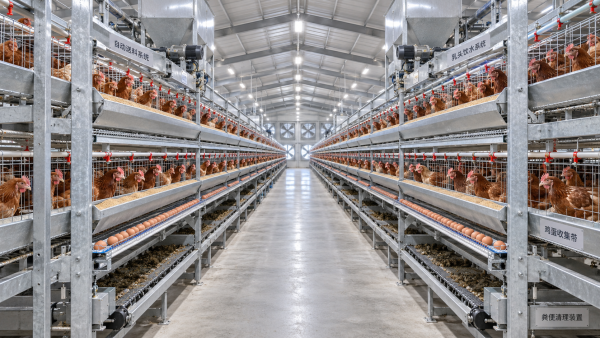
A 5,000-bird layer project can cost materially more than another 5,000-bird project even when both use the same basic cage arrangement. Bird capacity is a useful starting point for budgeting, but it does not describe the steel specification, corrosion protection, feeding method, manure handling, building interface, shipping basis, or the scope of installation support. For procurement teams in Nigeria, those differences often determine whether an initial quotation becomes a workable operating asset or a source of recurring maintenance and retrofit costs.
The practical question is not simply “What is the cost per bird?” It is “What equipment scope is being priced, what operating conditions is it designed for, and which future costs are being shifted back to the farm?” A low headline figure can exclude components that are essential for reliable egg collection, feed delivery, water access, manure removal, ventilation coordination, and safe operation.
Capacity sets the scale, but specification sets the price
Battery cage quotations are commonly structured around bird numbers because capacity helps suppliers estimate cage rows, tiers, feeding lines, drinker lines, and supporting frames. Yet two systems designed for the same flock can have very different material quantities and functional requirements. The difference becomes especially pronounced when a farm moves from a basic manually operated house to a multi-tier installation with mechanized feeding, egg collection, or manure removal.
Procurement should separate the quotation into three layers:
- The cage structure: frames, partitions, doors, floors, troughs, egg guards, support legs, and fastening hardware.
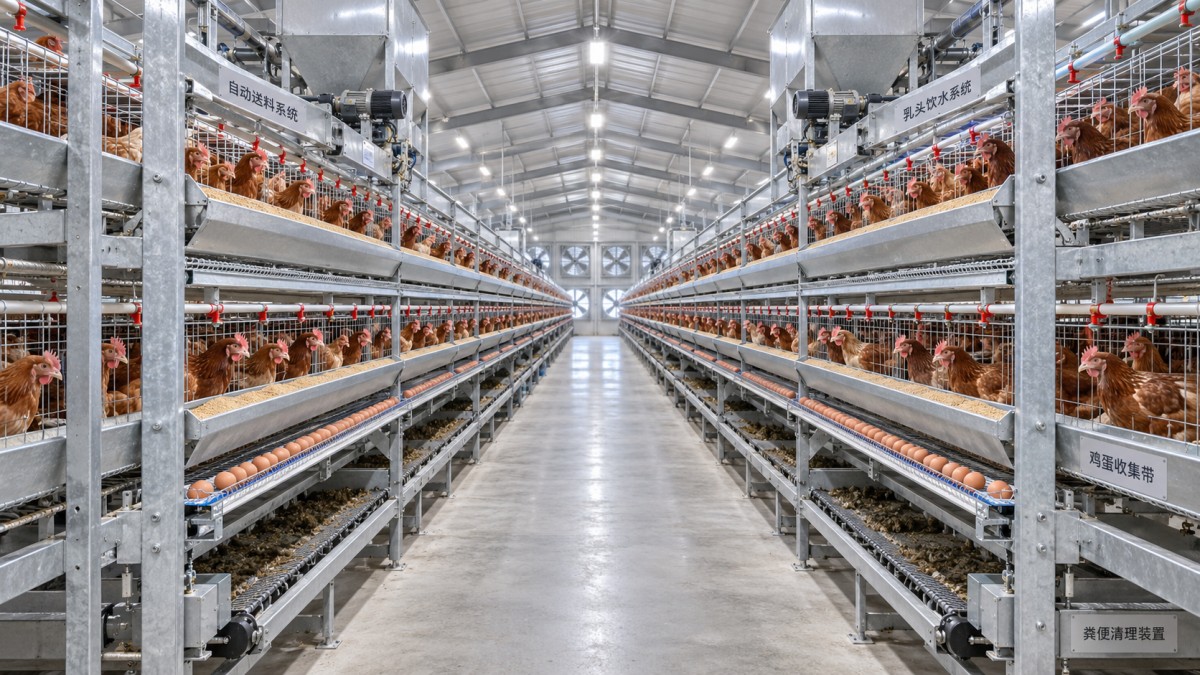
- The production equipment: drinker systems, feed hoppers, feed distribution equipment, egg collection components, manure belts or scrapers, and electrical controls where included.
- The project interface: building dimensions, concrete works, ventilation coordination, delivery terms, installation labour, commissioning, spares, and operator training.
A quotation that only states bird capacity does not allow a meaningful comparison. Buyers need to know cage dimensions, bird allocation per compartment, tier configuration, wire gauge or wire diameter, coating process, equipment inclusions, and the assumptions behind the layout. Capacity without these details can conceal a major difference in stock density, structural strength, or automation level.
For example, a three-tier system may require a different support arrangement and manure-management approach from a four-tier system. A farm that expects regular mechanized manure removal may need reinforced frames, drive units, belts, rollers, and electrical components that are absent from a manual-cleaning design. Neither option is universally better; the right choice depends on labour availability, house width, power reliability, flock size, and the farm’s intended operating discipline.
Steel, wire construction, and corrosion protection affect lifecycle cost
In poultry housing, cage material is exposed to moisture, dust, cleaning water, manure gases, feed residue, and frequent contact with birds and equipment. This makes the finish on wire and structural steel more than a cosmetic issue. Procurement teams should ask which components are hot-dip galvanized, pre-galvanized, zinc-aluminium coated, painted, or otherwise protected, rather than accepting a generic description such as “galvanized cage.”
Hot-dip galvanizing and continuously galvanized sheet are different processes and are commonly covered by different product standards. ASTM A123/A123M addresses zinc coatings on fabricated iron and steel articles, while ASTM A653/A653M addresses steel sheet with zinc or zinc-alloy coatings produced by the hot-dip process. These standards do not establish that one cage is suitable for every poultry house, but they illustrate why buyers should identify the coating method and the component to which it applies rather than treating all galvanized materials as equivalent. (Sources: ASTM International, ASTM A123/A123M and ASTM A653/A653M.)
Wire diameter is another important price driver. Heavier wire can improve resistance to deformation, especially around floors, doors, and frequently handled feeding areas, but it also increases steel consumption and shipping weight. Very light wire may reduce initial cost while increasing the risk of sagging floors, bent doors, loose fasteners, and difficult egg roll-out over time. The buyer’s job is not to demand the heaviest possible material; it is to confirm that the design is appropriate for the intended number of birds per compartment, tier height, cleaning method, and expected service conditions.
Questions that expose material differences
- What are the wire diameters for the floor, side mesh, front mesh, and door?
- Which parts receive which coating treatment?
- Are cut edges, weld points, brackets, and fasteners protected or exposed?
- What is the specified steel thickness for primary supports and cross-members?
- Can the supplier provide a bill of materials that matches the proposed layout?
These questions are particularly relevant where a house has high humidity, poor drainage, limited cleaning control, or periods of low ventilation. A cage system cannot compensate for persistent environmental problems, but robust material selection can reduce the speed at which those problems turn into repairs.
Automation is priced as a system, not as an accessory
Feed distribution, nipple drinking lines, egg collection, and manure removal are often described as optional equipment. In practice, they change the system’s operating model. Adding automation affects equipment cost, electrical requirements, spare-parts planning, installation time, and staff responsibilities. It may also require a more precise house layout to leave access space for drives, collection points, walkways, and maintenance.
Manual feeding may fit a smaller house with stable labour availability and manageable row lengths. It can become harder to control when feed delivery varies between rows or when staff must carry feed repeatedly through a crowded building. Automated feed systems can improve consistency of feed distribution when properly commissioned, but they introduce motors, gearboxes, switches, sensors, and control points that need preventive maintenance. Procurement documents should state whether motors, control panels, cables, hoppers, feed lines, and installation hardware are included.
Water systems deserve similar scrutiny. Nipple drinkers, regulators, filters, pipe connections, pressure gauges, and flushing arrangements should be specified as a package. The World Organisation for Animal Health notes that poultry housing should support access to feed and water and enable inspection of birds; equipment configuration can influence both daily observation and response to equipment faults. (Source: World Organisation for Animal Health, Terrestrial Animal Health Code, Chapter 7.10, Animal Welfare and Broiler Chicken Production Systems.) Although management practices and local production conditions differ by farm, the operational principle is relevant: access and inspection should not be compromised by a layout that is difficult to maintain.
For buyers reviewing a stated battery cage price in nigeria, the most useful comparison is often a scope-adjusted one. Place the price beside a component schedule and mark what is included, excluded, optional, or dependent on local work. This avoids comparing a cage-only offer with a quotation that includes drinkers, feed equipment, manure handling, and installation supervision.
House design can change the equipment bill
Battery cage equipment is installed inside a building, so the building and equipment cannot be assessed separately. Before finalizing an order, procurement should verify the internal width, length, eave height, column locations, floor level, entrances, service corridors, drainage points, ventilation openings, and available electrical supply. A layout that appears efficient on a drawing may create operational problems if there is insufficient room to remove manure, load feed, collect eggs, or service end-drive components.
Imported or factory-fabricated equipment may need adjustment if the final building differs from the design dimensions supplied during quotation. Late changes to aisle width, row spacing, or support positions can cause extra fabrication, missing components, or unused materials. These costs often appear after a purchase order has been issued, when the buyer has limited flexibility.
A practical pre-order package should include:
- A dimensioned house drawing showing internal clear dimensions and obstructions.
- A cage layout with row count, tier count, aisle widths, service areas, and collection points.
- A utility schedule identifying power supply, water source, drainage, and ventilation interfaces.
- A responsibility matrix stating who supplies civil works, wiring, local fittings, lifting equipment, installation labour, and commissioning support.
Where the building is not yet complete, the equipment layout should be treated as an input to the building design rather than an item to be fitted later. That approach can prevent avoidable compromises in access and maintenance.
Logistics, currency exposure, and delivery scope can alter the landed cost
Nigeria-focused procurement decisions should distinguish factory price from landed project cost. A quote may be based on ex-works collection, free-on-board shipment, cost and freight, or another delivery arrangement. Those terms allocate responsibility for transport, insurance, documentation, port handling, customs clearance, inland haulage, and risk at different points in the transaction. The International Chamber of Commerce’s Incoterms® 2020 rules provide standard definitions for these delivery terms, but the commercial contract still needs to identify the exact named place or port. (Source: International Chamber of Commerce, Incoterms® 2020.)
Shipping volume matters because cages are often shipped as disassembled parts. A denser packing plan may reduce freight per bird place, yet packaging must still protect wire panels, drive components, drinker pipes, and electrical items from damage. Buyers should ask for package lists, container-loading assumptions, gross weights, and the number of containers assumed in the quotation. This is especially useful when comparing alternative tier configurations or different levels of automation.
Currency risk also deserves attention. If the supplier’s quote is denominated in a foreign currency while the farm’s revenue and operating budget are largely in naira, exchange-rate movement can affect the final project cost before shipment is completed. Procurement teams can reduce ambiguity by recording the quote currency, validity period, deposit schedule, balance-payment trigger, and the treatment of changes in freight or local charges.
Installation quality is part of the equipment decision
A well-manufactured cage can still perform poorly if it is installed out of level, inadequately anchored, incorrectly aligned, or connected to an unstable water system. Floor irregularities can affect egg roll-out and door operation. Incorrect drinker-line pressure can cause leaks or insufficient water flow. Misaligned feed lines can lead to uneven distribution or premature wear. These are commissioning issues, but they begin with procurement because installation scope and acceptance criteria must be agreed before delivery.
Buyers should ask whether the supplier provides assembly instructions, layout drawings, a parts-identification system, installation supervision, commissioning guidance, and a recommended spare-parts list. If local installers will perform the work, the purchase order should clarify whether remote or onsite technical support is included and what site conditions must be ready before installation begins.
Acceptance should be based on observable checks, not only on a visual review of the completed house. Useful checks include row alignment, anchoring, cage-door movement, water-line leak testing, nipple accessibility, feed-line movement, equipment rotation, electrical protection, and safe access for workers. Any defects, shortages, or damaged parts should be recorded before birds are placed, when corrections are generally easier than after production begins.
How to compare quotations without reducing the decision to price per bird
A structured comparison table can prevent the lowest initial offer from becoming the default choice. Procurement teams can score each quotation against the same technical and commercial criteria.
The appropriate decision is usually the quotation with the clearest fit between equipment specification, building conditions, labour model, maintenance capability, and delivery responsibilities. Bird capacity remains useful for comparing scale, but it is not a complete pricing metric. A procurement file that identifies material grades, mechanical systems, interfaces, logistics assumptions, and acceptance requirements gives decision-makers a far more reliable basis for approving a battery cage project.
Related Intelligence
- Poultry Housing & CagingHow Cage Specifications Affect Poultry Housing Costs in NigeriaLocally made poultry cage price in Nigeria: compare cage specifications, housing costs, durability, ventilation, manure systems, and installation factors for smarter poultry investment.
- Poultry Housing & CagingWhat Determines Battery Cage Prices in Nigeria Beyond Bird Capacity?Battery cage price in Nigeria depends on more than capacity. Compare steel, automation, logistics, and installation scope for a smarter poultry investment.
- Poultry Housing & CagingBuilding a Poultry Farm Equipment Solution Around Flock Size and LayoutPoultry farm equipment solution planning for flock size and layout—optimize feeding, water, ventilation, automation, and future expansion.
The Morning Broadsheet
Daily chemical briefings, market shifts, and peer-reviewed summaries delivered to your terminal.
