

The Authority in Global Agricultural Chemistry & Bio-Resources
What Should You Check in a Fishery Equipment Maintenance Contract?
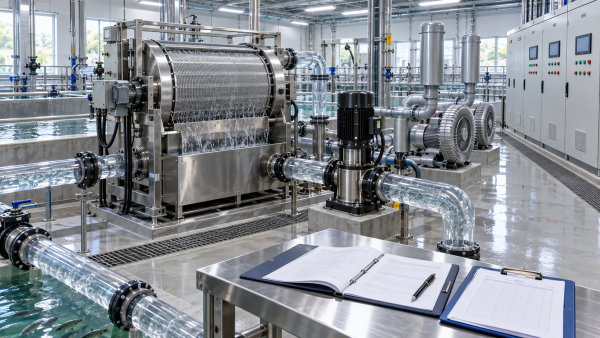
A maintenance contract can look adequate until a blower trips during a warm night, a drum filter loses throughput, or a feeding control fault interrupts a production cycle. At that point, the difference between “service included” and a clearly defined response obligation becomes operationally important. The contract should protect more than equipment condition: it should support water quality stability, fish welfare, biosecurity, staff safety, and predictable operating costs.
When asking what should I look for in a fishery equipment maintenance contract, start with five practical areas: exactly which assets are covered, what work the provider must perform, how quickly they must respond to faults, how parts and labour are charged, and which performance records must be supplied. A useful agreement turns maintenance from a vague promise into a documented operating process with clear responsibilities on both sides.
Begin with an accurate equipment schedule
The contract should not simply refer to “the farm system,” “the hatchery,” or “aquaculture equipment.” It needs an attached equipment schedule identifying the assets included in the agreement. This is especially important where a site has been expanded in stages, equipment has been retrofitted, or different suppliers have installed pumps, sensors, control cabinets, and treatment units.
For each covered asset, the schedule should normally state the equipment type, manufacturer and model where available, serial number or internal asset ID, location, installation date if known, and the systems it supports. A pump serving a critical recirculation loop is not equivalent to a washdown pump, even if both are included under a general “pump maintenance” line.
Review the schedule against the actual site walk-through. Equipment that is frequently overlooked includes:
- Duty and standby circulation pumps, including variable-speed drives and seals
- Blowers, diffusers, oxygen cones, oxygen generators, and gas distribution components
- Drum filters, screens, backwash pumps, sludge handling units, and ultraviolet systems
- Protein skimmers, ozone-related equipment, dosing pumps, and water-treatment controls
- Automatic feeders, feed conveyors, hoppers, and feed-control software interfaces
- Water-quality probes, telemetry devices, alarms, cameras, data loggers, and control panels
- Emergency power connections, transfer arrangements, and equipment linked to backup systems
Also identify exclusions. A supplier may maintain the motor but not the electrical feeder cable, service the filter mechanism but not the civil structure around it, or calibrate a sensor without replacing its consumable membrane or reagent. Exclusions are not automatically unreasonable; they become a problem when they are buried in broad wording and only discovered during a failure.
Separate planned maintenance from breakdown support
A strong contract distinguishes routine preventive work from corrective work after a fault. These are different services, with different staffing, timing, and cost implications. “Maintenance visits” alone does not confirm that the provider will attend a failed critical unit outside normal business hours.
Planned maintenance should describe the service frequency and the actions to be completed during each visit. A contract may call for monthly, quarterly, seasonal, or condition-based activities, depending on the equipment and operating environment. The useful question is not whether a visit happens, but what the technician is required to inspect, clean, test, adjust, lubricate, calibrate, or replace.
For example, a preventive scope for a recirculating aquaculture system may include checking pump vibration and seal condition, inspecting filter wear points, testing alarms, reviewing control-panel faults, verifying feeder operation, examining air-delivery pressure, and confirming the condition of sensor cables and connectors. It should also say whether calibration materials, cleaning chemicals, small consumables, and travel time are included.
Corrective maintenance needs its own rules. The contract should define how a fault is reported, who can authorize a callout, whether remote diagnosis is attempted first, and what happens when replacement parts are unavailable. Without this distinction, a provider may reasonably regard a night-time alarm or urgent repair as chargeable work outside the agreement.
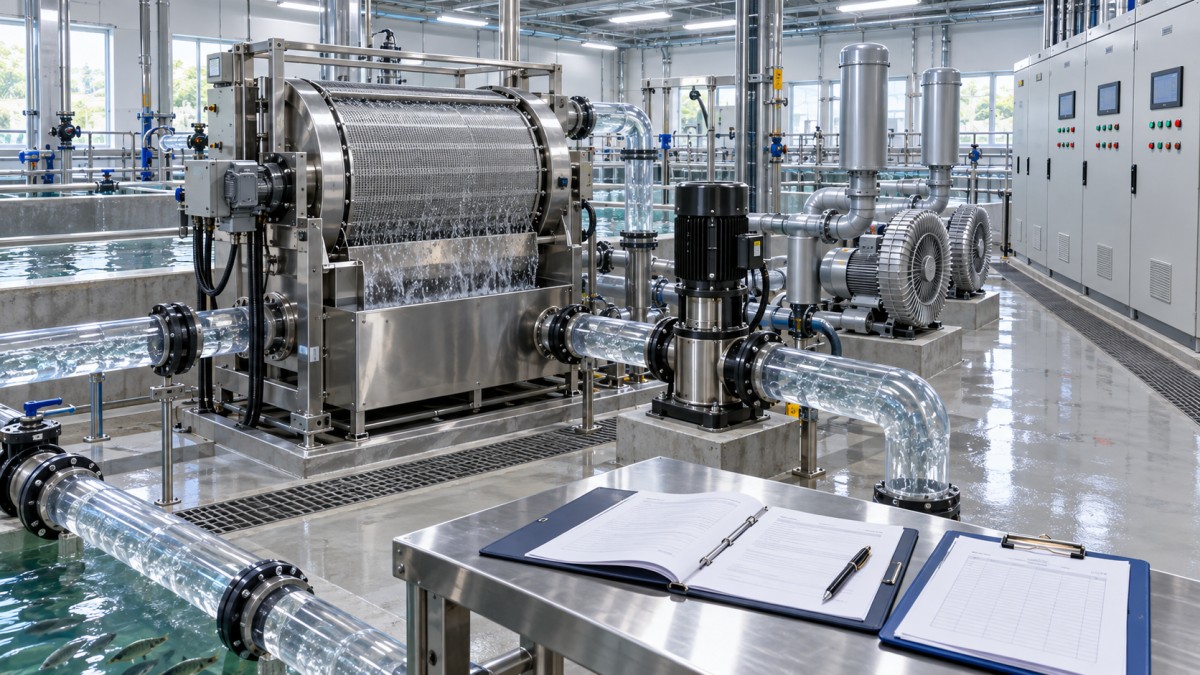
Set response times according to operational criticality
Not every equipment fault deserves the same response target. A failed office computer, a feeder issue with manual feeding capacity, and a circulation failure affecting stocked tanks have very different consequences. The agreement should classify equipment or incidents by criticality and connect each category to a response process.
Response time must be defined precisely. “Rapid response” has little contractual value. Ask whether the stated time means acknowledgement of the call, remote troubleshooting, dispatch of a technician, or arrival on site. Clarify the coverage period as well. A nominal 24-hour help line is not the same as a 24-hour on-site emergency service.
Where a farm operates continuously, the agreement should name the escalation contacts on both sides. It should explain what happens if the first technician cannot resolve the issue, whether the provider can access specialist electrical, automation, refrigeration, or process support, and whether a site representative has authority to approve emergency parts or overtime work. Delays often arise from unclear authorization rather than lack of technical capability.
Read the parts terms as carefully as the service fee
A low annual maintenance price can shift substantial cost into parts, callout charges, travel, software support, consumables, and labour outside standard hours. Look for a transparent charging structure rather than relying on a single headline figure.
The contract should state whether replacement parts are included, discounted, supplied at a published rate, or billed at the provider’s current price. It should distinguish ordinary wear items from major components. Seals, belts, bearings, probes, lamps, filter panels, feeder components, and electrical contactors may all have different treatment under the agreement.
Ask how urgent parts are handled. Key points include who decides that replacement is necessary, whether the operator may source an equivalent component independently, how compatibility is confirmed, and whether using a non-original part affects warranty or future service obligations. There should also be a clear process for obsolete equipment. A provider cannot guarantee immediate repair of a discontinued controller or sensor, but the agreement can require timely notice of obsolescence and a proposal for viable replacement options.
For critical assets, examine the spare-parts strategy rather than relying solely on delivery promises. The site may need to hold selected spares such as pump seals, sensor probes, contactors, fuses, drive components, feeder motors, or control-panel backups. The contract should identify who recommends this stock, who owns it, how it is stored, and whether the service provider checks it during routine visits.
Make responsibilities on the farm side explicit
Maintenance providers cannot maintain equipment properly if they do not have safe access, accurate operating information, or a site team that carries out agreed daily checks. A fair contract states what the operator must provide without using those obligations as a blanket reason to reject every service claim.
Typical operator responsibilities can include providing access to plant rooms and tanks, maintaining safe working conditions, reporting alarms promptly, keeping equipment areas reasonably clean, maintaining basic records, and following normal operating instructions. Where water chemistry, solids loading, salinity, cleaning regimes, or power quality can affect asset life, the agreement should acknowledge those operating conditions.
Pay close attention to clauses that exclude failures caused by “misuse,” “neglect,” or “abnormal conditions.” Those terms should be defined or supported by evidence. For instance, a pump damaged by running dry may be outside coverage, but the provider should be able to explain how that conclusion was reached. The same applies when a sensor drifts, a filter jams, or a control fault follows a power interruption.
Require service records that can be used operationally
A technician’s signature on a generic work sheet is not enough for equipment that affects production conditions. Each completed visit should generate a report that identifies the asset worked on, the observed condition, work completed, parts used, test results, faults found, and any action that remains outstanding.
Reports should separate completed work from recommendations. “Monitor condition” may be useful as a note, but it is not the same as a repair recommendation with a stated risk, priority, and required decision. Where relevant, the report should record calibration status, alarm test results, pressure or flow observations, vibration findings, electrical readings, or controller error codes. The exact measurements depend on the system, but the contract should establish that evidence is expected.
Access to maintenance history matters when there is staff turnover, an insurance query, a warranty claim, or a recurring defect. Confirm who owns the service records, how quickly they are delivered, and whether the operator can access them if the contract ends. Digital records are useful only when they are complete, exportable, and understandable to the site team.
Check the boundary between maintenance, warranty, and performance claims
Maintenance contracts are often confused with warranties or output guarantees. They are not the same. A service provider may commit to inspect and repair equipment according to the agreed scope without guaranteeing that a particular fish-growth outcome, water-quality result, or production target will always be achieved. Those outcomes can depend on stocking density, feed management, incoming water, operator actions, biological load, and many other variables.
The agreement should nevertheless define what happens when a maintained component repeatedly fails. Look for provisions covering repeat repairs, defective replacement parts, workmanship defects, and follow-up visits needed because the original repair was incomplete. It should be clear whether labour for a return visit is chargeable and how long the provider stands behind its own repair work.
If equipment remains under a manufacturer’s warranty, establish who handles the claim process. The maintenance contractor may diagnose the fault, but the manufacturer or installer may control the warranty decision. Clarify who collects evidence, removes and reinstalls failed components, pays freight where applicable, and supplies temporary equipment if available.
Review safety, biosecurity, and access procedures
Fishery maintenance work can involve wet electrical environments, confined plant areas, lifting operations, chemical treatment systems, elevated walkways, and contact with water bodies or stock areas. The contract should state that work will be planned and performed in line with site safety requirements, while also defining the operator’s responsibility to disclose known hazards.
Biosecurity procedures deserve similar attention. A technician moving between production areas or sites may need to follow site-specific rules for clothing, footwear, tools, disinfection, and access sequencing. The agreement does not need to prescribe every operational detail, but it should require compliance with the farm’s documented procedures and give the operator the right to refuse entry where those procedures cannot be followed.
Also confirm who controls system shutdowns. A technician may need to isolate a pump, stop filtration, test an alarm, or disconnect a feeder. The contract should require coordination before work that could affect water movement, oxygen delivery, treatment capacity, or feeding. For critical systems, it is sensible to document the shutdown method, expected duration, fallback arrangements, and conditions for returning the equipment to service.
Look closely at term, termination, and handover provisions
Longer service terms can support continuity, but they should not prevent an operator from changing provider when service quality is poor or site requirements change. Review the initial term, renewal mechanism, notice period, price-review method, and termination rights. Automatic renewal clauses are easy to miss, especially where the notice deadline falls well before the renewal date.
Termination provisions should cover more than non-payment. There may need to be a route out where critical response obligations are repeatedly missed, required reports are not supplied, safety rules are breached, or the provider cannot support essential equipment. The wording should also allow a practical handover: return of maintenance history, completion of outstanding reports, disclosure of open faults, and return of operator-owned spares or software access credentials.
Before signing, take the proposed contract to the equipment room, feed area, treatment plant, and control station. Match every promise in the document to the equipment and risks present on site. The strongest agreement is not necessarily the longest one; it is the one that makes coverage, response, costs, evidence, and responsibility clear before the next equipment failure tests them.
Related Intelligence
- Commercial FishingWhat Should You Check in a Fishery Equipment Maintenance Contract?What should I look for in a fishery equipment maintenance contract? Explore coverage, response times, costs, records, safety, and biosecurity essentials.
- Commercial FishingDo commercial fishing vessels with hybrid diesel-electric propulsion reduce fuel cost per kg landed by more than 12%?Commercial fishing vessels with hybrid diesel-electric propulsion *can* cut fuel cost per kg landed by >12%—but only under precise operational and infrastructure conditions. Discover the real ROI.
- Commercial FishingHow to Choose Oyster Processing Equipment for Capacity, Hygiene, and Labor EfficiencyOyster processing equipment guide: compare capacity, hygienic design, and labor efficiency to build a reliable, scalable line and make smarter buying decisions.
The Morning Broadsheet
Daily chemical briefings, market shifts, and peer-reviewed summaries delivered to your terminal.
