

The Authority in Global Agricultural Chemistry & Bio-Resources
Enzyme-Based Process Engineering: Designing Robust Biocatalytic Scale-Up
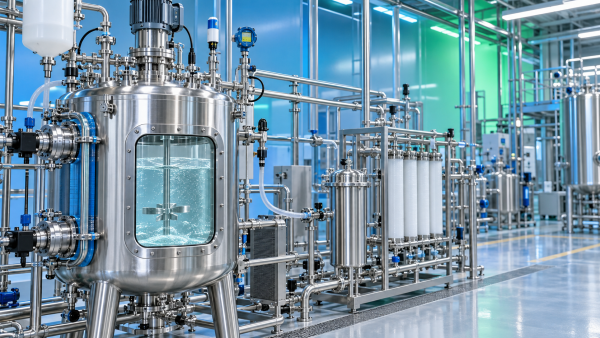
A biocatalytic process is not ready for scale-up because an enzyme gives a high conversion in a small flask. It is ready when the intended operating window can tolerate realistic variation in raw materials, mixing, temperature control, enzyme quality, and downstream handling without creating unacceptable losses in yield, selectivity, cost, or product quality.
That is the practical purpose of enzyme based process engineering: converting a promising reaction into a controlled manufacturing system. The enzyme remains central, but industrial performance is determined by the interaction between biochemistry and equipment. A catalyst with excellent laboratory activity can fail in production because substrates do not dissolve, oxygen does not reach the reaction zone, local pH shifts during feeding, impurities inhibit the enzyme, or product recovery becomes more expensive than the reaction itself.
For fine chemicals, API intermediates, bio-extracts, feed ingredients, and processing applications, the first evaluation question should therefore be: what process conditions must remain stable for this enzyme to deliver the required product specification? The answer defines reactor selection, control strategy, raw-material requirements, cleaning approach, and validation plan.
Start with the process envelope, not the enzyme datasheet
Supplier datasheets are useful for initial screening, but they usually describe performance under defined conditions. Manufacturing rarely operates under such clean conditions. A robust scale-up begins by translating the chemistry into an operating envelope: the range of pH, temperature, substrate concentration, water activity, mixing intensity, reaction time, and impurity burden within which the process still produces acceptable material.
This distinction matters because enzyme activity is only one measurement. A high initial rate may have limited value if the enzyme loses selectivity after prolonged exposure to substrate, if it cannot withstand the solvent system needed for solubility, or if it becomes difficult to remove from the final product. A lower-activity biocatalyst can be the stronger commercial option when it permits higher substrate loading, simpler isolation, repeated use, or fewer corrective adjustments.
Technical evaluation should establish at least four linked profiles:
- Kinetic behavior: reaction rate across the proposed substrate concentration range, including whether high substrate levels inhibit the catalyst.
- Stability behavior: activity retention over the complete batch duration, including exposure to feed additions, solvent, salts, shear, and product.
- Selectivity behavior: sensitivity of regioselectivity, enantioselectivity, or impurity formation to practical operating changes.
- Recovery behavior: how the enzyme, product, by-products, and process liquids separate after reaction completion.
The process envelope should be based on material likely to reach manufacturing, not only on purified development-grade reagents. Feedstock from agricultural processing, fermentation, natural extracts, and commodity chemical streams can vary in moisture, trace metals, residual proteins, microbial load, color bodies, or inhibitor content. These variations are not secondary procurement details. They can alter reaction kinetics and separation performance enough to invalidate an otherwise sound laboratory design.
Scale-up exposes transport limits that small experiments conceal
In enzyme based process engineering, scale-up is frequently a mass-transfer and heat-transfer problem disguised as a reaction problem. At laboratory scale, a small vessel can often be mixed quickly and cooled easily. At larger scale, substrate addition may create concentrated pockets, solids can settle, gas-liquid transfer can decline, and temperature gradients may appear near the feed point or vessel wall.
For reactions involving poorly soluble substrates, the enzyme does not necessarily see the concentration reported in the batch record. It sees the concentration at the interface where substrate, aqueous phase, solvent phase, and catalyst meet. If mixing is inadequate, some enzyme may be starved while another portion is exposed to an inhibitory local concentration. This can cause variable conversion, apparent loss of activity, and unexpected impurity patterns.
Gas-dependent biotransformations require an equally disciplined review. Oxygen transfer should not be inferred from agitation speed alone. Vessel geometry, gas dispersion, foam behavior, liquid viscosity, headspace conditions, and the changing oxygen demand over time all influence whether the catalyst experiences oxygen limitation. Raising agitation can improve transfer, but it can also increase foaming, mechanical stress on some enzyme preparations, or operational complexity. The appropriate control variable depends on the reaction and equipment, not on a universal mixing rule.
Heat release can also be underestimated. Enzymatic reactions are often perceived as mild because they operate at moderate temperatures, yet a concentrated reaction can still generate heat faster than the cooling system can remove it. Local overheating is particularly damaging because it may cause irreversible deactivation before the bulk temperature sensor indicates a problem. Feed-rate limits, cooling capacity, and sensor placement should be assessed together.
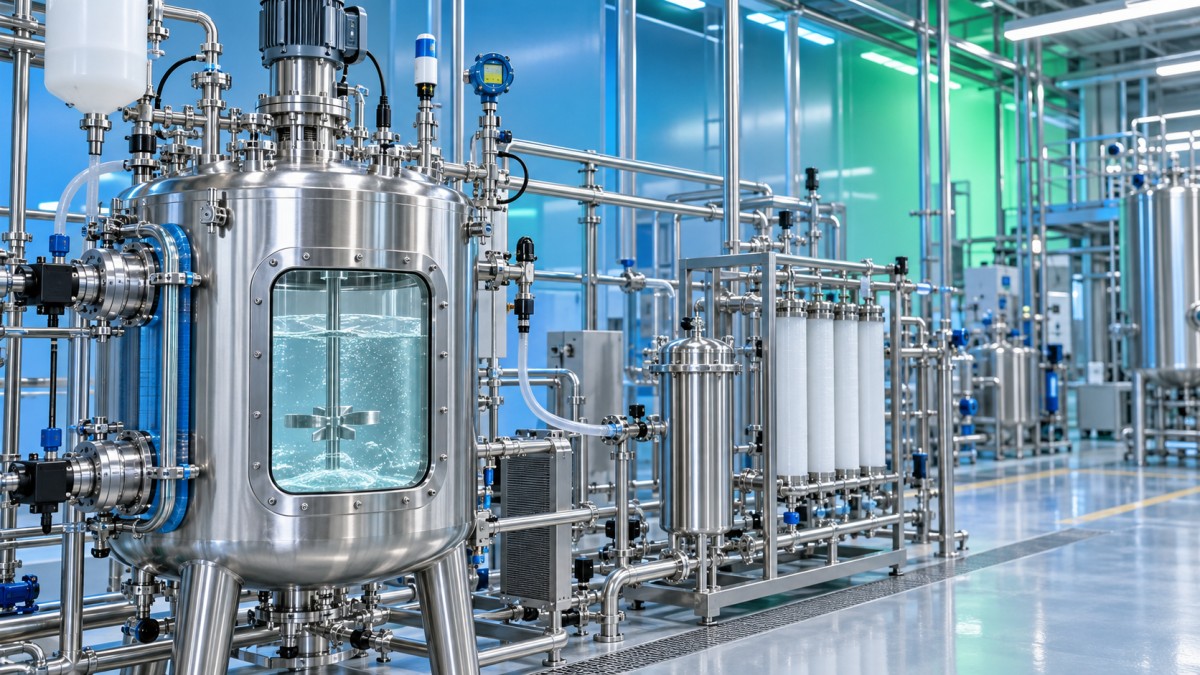
Choose reactor configuration from the catalyst lifecycle
The usual batch versus continuous discussion is too narrow. Reactor selection should follow the expected lifecycle of the enzyme and product rather than a preference for a particular technology.
A batch reactor is often the sensible first manufacturing configuration because it accommodates uncertainty. It allows controlled additions, sampling, endpoint adjustment, and easier response to feedstock variation. This flexibility is valuable during early commercial production, particularly where upstream material quality is still being characterized.
Immobilization can improve catalyst reuse and simplify product separation, but it should not be assumed to reduce total cost. Immobilization may introduce diffusional resistance, change the enzyme’s apparent stability, create a finite replacement schedule, or increase sensitivity to feed impurities. The business case is strongest when the catalyst retains useful activity across enough operating cycles and the feed stream can be kept sufficiently clean to avoid irreversible fouling.
Continuous operation can reduce hold times and support consistent throughput, yet it shifts the risk profile. A continuous system needs reliable feed composition, stable catalyst performance, effective monitoring, and a clear strategy for deviations. If incoming materials have wide seasonal or supplier-driven variability, a carefully engineered batch or fed-batch process may remain more robust than a theoretically efficient continuous design.
Control the variables that change product quality
Not every measurable parameter needs the same level of control. A practical development program identifies the variables that have a meaningful effect on critical quality attributes: conversion, impurity profile, stereochemical outcome, residual substrate, color, residual enzyme, or microbiological condition where relevant.
pH is a common example. It is not enough to define a starting value. The process must account for pH drift caused by reaction stoichiometry, substrate solution composition, carbon dioxide uptake or release, and base or acid addition. Aggressive correction can create local pH excursions that damage the enzyme. Buffered systems reduce this risk, but buffering components may complicate downstream processing or raise salt load. The right choice is usually the least complex system that maintains the necessary pH control without compromising isolation.
Temperature control needs a similar distinction between setpoint and actual exposure. The relevant question is whether all parts of the reactor remain within an acceptable range during charging, feeding, mixing changes, and cooling demand. This is why scale-down models are valuable: they can reproduce local deviations and longer mixing times before a full-scale campaign is exposed to them.
Reaction endpoint criteria should not rely solely on elapsed time. Time is a scheduling input, not proof of completion. An endpoint method should be linked to product quality and capable of distinguishing normal reaction progression from stalled conversion, unexpected degradation, or an impurity trend that requires intervention. Sampling plans must also account for phase separation and solids. A poorly representative sample can make a controlled process appear unstable.
Downstream recovery must shape upstream decisions
A reaction that reaches high conversion but requires difficult filtration, solvent exchange, decolorization, or enzyme removal is not necessarily an efficient process. Downstream recovery should be tested early with reaction liquor that reflects realistic substrate loading and impurity content. Small-scale reaction samples prepared under ideal conditions can give an overly optimistic picture of filtration rate, phase behavior, crystallization, and extraction efficiency.
Soluble enzymes may be removed by precipitation, filtration after adsorption, membrane operations, or other process-specific approaches. Immobilized catalysts may simplify separation, but particles can fracture, retain product, or create filtration burdens elsewhere. When the product is sensitive to pH, heat, oxidation, or residual water, the recovery train can become the main quality risk rather than the enzymatic reaction.
Technical evaluators should map the mass balance across the full process: input substrate, converted product, by-products, solvent, enzyme, wash streams, and unrecovered material. This does not require a perfect commercial model at the start. It does require visibility into where yield and cost are likely to be lost. Enzyme loading can appear expensive in isolation, while solvent consumption, extended cycle time, or poor product recovery quietly dominate the process economics.
Build GMP-aligned evidence into development work
For regulated fine chemicals and API-related manufacturing, scale-up evidence should be created in a form that supports later process understanding and validation. GMP alignment does not mean treating early development as a finished commercial process. It means documenting the rationale for material specifications, equipment choices, control ranges, sampling methods, cleaning approach, and deviation handling while the process is being learned.
Raw-material traceability is especially important for biologically derived inputs. The enzyme itself may have relevant origin, formulation, stabilizers, microbial controls, and lot-to-lot variability. Substrates from natural or agricultural sources may need defined acceptance criteria beyond assay, including impurity markers that affect the reaction. A robust supply strategy includes qualified alternatives only after they have been assessed against the same process envelope.
Cleaning and cross-contamination considerations should be addressed before equipment selection is finalized. Enzymes, proteins, and sticky organic residues can behave differently from conventional small-molecule residues. A cleaning procedure that visually clears a vessel may not adequately manage residual activity, retained solids, or carryover risk. The equipment must be compatible with the cleaning strategy, not merely with the reaction conditions.
A practical stage-gate for technical evaluation
Before committing to pilot or commercial equipment, use a decision sequence that forces the main assumptions into view:
- Define the target product attributes and the unacceptable failure modes.
- Test enzyme performance with representative substrate lots and realistic concentrations.
- Measure stability over the full reaction period, including planned feeds and workup exposure.
- Identify mass-transfer, solubility, gas-transfer, and heat-removal constraints through scale-relevant experiments.
- Demonstrate a workable recovery route before optimizing the final reaction rate.
- Set preliminary operating ranges and identify which parameters require active monitoring or control.
- Use a scale-down model to challenge mixing, feed, temperature, and raw-material variation scenarios.
The common error is to optimize a single performance number, usually conversion or enzyme loading, before proving that the surrounding process can be operated repeatedly. Robustness comes from managing the interactions: catalyst behavior, feed quality, reactor hydrodynamics, control response, and separation performance.
For organizations assessing biocatalytic routes across fine chemicals, bio-extracts, and primary processing, technical intelligence is most useful when it connects laboratory findings with supply-chain and operational realities. Publications such as AgriChem Chronicle are relevant in this context because enzyme-based manufacturing decisions often span biochemical engineering, feedstock sourcing, processing equipment, and regulated product requirements. The strongest scale-up proposal is not the one with the most impressive enzyme assay. It is the one that can explain how the complete process remains within specification when real manufacturing conditions change.
Related Intelligence
- APIs & IntermediatesEnzyme-Based Process Engineering: Designing Robust Biocatalytic Scale-UpEnzyme based process engineering for robust biocatalytic scale-up: optimize reactor control, transfer limits, recovery, and GMP-aligned manufacturing.
- APIs & IntermediatesWhat Role Does Compliance Play in Pharmaceutical Ingredient Sourcing?What role does compliance play in pharma ingredient sourcing? Discover how GMP, traceability, audits, and quality agreements protect supply, quality, and market access.
- APIs & IntermediatesWhat Should a Procurement Intelligence Library Include for Better Supplier Decisions?Procurement intelligence library essentials: evaluate supplier capability, compliance, performance, and supply-chain risk to make smarter, more resilient buying decisions.
The Morning Broadsheet
Daily chemical briefings, market shifts, and peer-reviewed summaries delivered to your terminal.
