

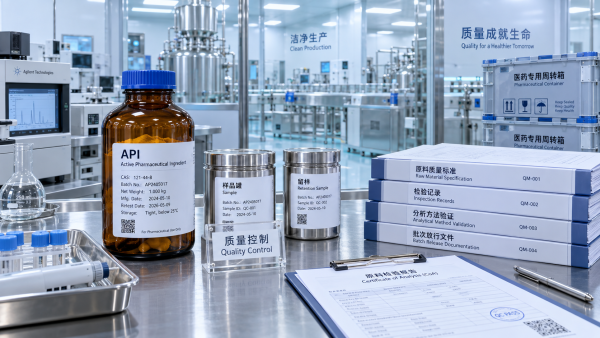
What role does compliance play in pharma ingredient sourcing? It is the operating foundation for supplier qualification, product quality, patient safety, and uninterrupted access to regulated markets.
For procurement leaders, compliance is not a documentation task completed after a purchase order. It determines whether an ingredient can be manufactured, released, shipped, audited, and defended.
When compliance controls are weak, an apparently economical API source can create far larger costs through rejected batches, import holds, remediation work, recalls, or delayed product launches.
Strong sourcing programs therefore treat regulatory expectations as commercial decision criteria, alongside price, capacity, lead time, technical fit, and long-term supplier reliability.
Compliance Turns Ingredient Purchasing into a Controlled Quality Decision
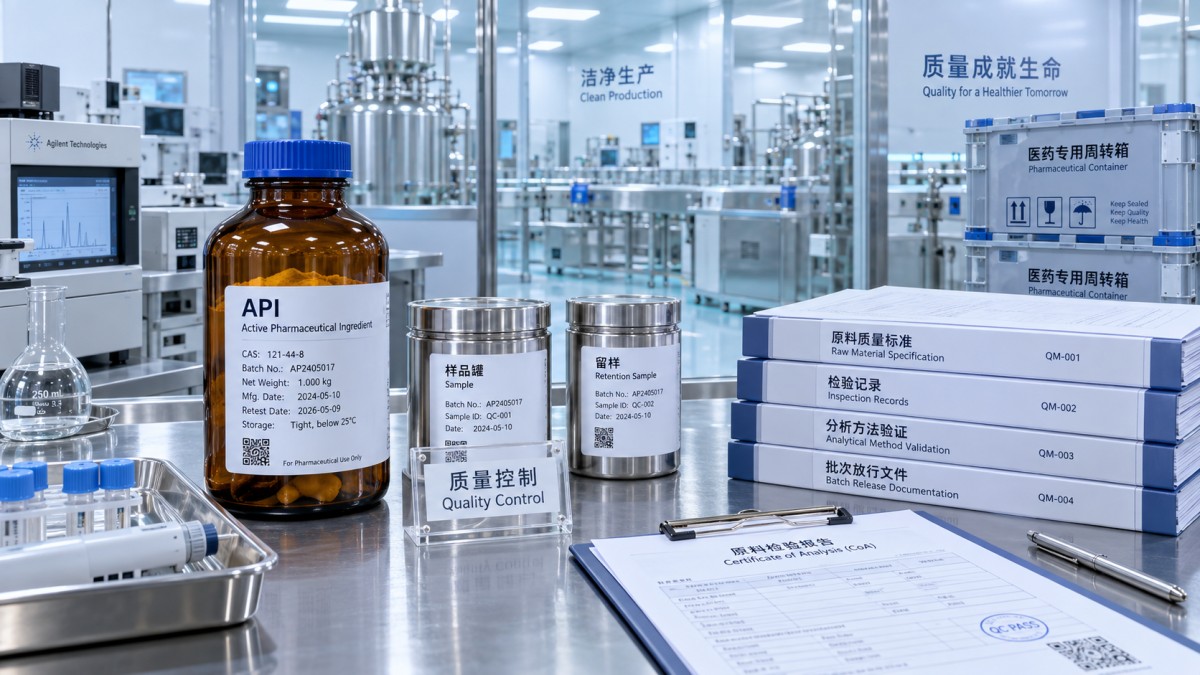
Pharmaceutical ingredient sourcing differs from ordinary industrial purchasing because the material directly influences a finished medicine's identity, strength, purity, quality, and safety profile.
Compliance provides the evidence that an API, excipient, intermediate, or bio-derived ingredient consistently meets approved specifications under controlled and traceable manufacturing conditions.
Without that evidence, procurement teams cannot confidently demonstrate that a supplier's material is suitable for use in a registered pharmaceutical product.
In practice, compliance connects commercial sourcing activity with quality assurance, regulatory affairs, manufacturing operations, laboratory testing, and pharmacovigilance responsibilities across the organization.
A supplier may offer attractive pricing and ample capacity, yet still represent unacceptable risk if its quality system cannot withstand customer audits or regulator inspection.
This is why qualified supplier status should never be inferred from a certificate, an online profile, or a successful laboratory sample alone.
Procurement decisions must reflect whether the supplier can repeatedly manufacture the same material within validated controls, manage deviations properly, and communicate changes before they affect supply.
Compliance also establishes accountability. It clarifies who approves suppliers, who reviews quality agreements, who evaluates change notifications, and who may authorize material release.
For management teams, this structure reduces the chance that commercial urgency overrides quality obligations during shortages, accelerated development programs, or unexpected demand increases.
GMP Verification Is the Core Test of Supplier Credibility
Good Manufacturing Practice, commonly called GMP, is the central benchmark used to assess whether pharmaceutical ingredients are produced through appropriate systems and documented controls.
GMP expectations cover more than clean facilities. They include personnel training, equipment qualification, process validation, data integrity, laboratory controls, deviation handling, and complaint investigation.
For API sourcing, the applicable GMP standard may depend on market, product category, manufacturing stage, and regulatory pathway, creating important differences between suppliers.
International guidance from bodies such as ICH, FDA, EMA, PIC/S, and national authorities often overlaps, but procurement teams should avoid assuming complete equivalence.
A current GMP certificate can be valuable evidence, yet it is not a substitute for reviewing the scope, issuing authority, inspection date, and manufacturing site covered.
Buyers should confirm that the certified facility actually produces the intended ingredient, using the relevant process route, quality system, and production scale.
Supplier qualification should include a risk-based audit strategy. High-risk APIs, sterile materials, controlled substances, and critical starting materials usually require deeper assessment than standard excipients.
Remote audits may support early screening, but they cannot always replace on-site evaluation where process complexity, historical quality concerns, or data-integrity risk is significant.
The practical question is not whether a supplier claims GMP compliance. It is whether documented evidence shows that compliance is embedded in routine manufacturing behavior.
Traceability Protects the Supply Chain When Something Goes Wrong
Traceability allows a company to identify where an ingredient came from, how it was processed, which batches were affected, and where finished products were distributed.
In pharmaceutical sourcing, traceability must extend beyond the immediate vendor. It should address original manufacturers, intermediates, critical raw materials, testing laboratories, warehouses, and logistics partners.
This visibility becomes essential when an impurity is detected, a supplier reports a deviation, regulators issue an alert, or a transportation incident threatens material integrity.
Effective traceability relies on consistent batch identifiers, approved specifications, certificates of analysis, manufacturing records, chain-of-custody documentation, and controlled enterprise data systems.
Procurement teams should understand whether a distributor is merely reselling stock or providing a fully documented and authorized route to the original manufacturer.
Unauthorized brokers can introduce risks involving counterfeit materials, altered documentation, improper storage, unexplained batch history, and limited access to original deviation investigations.
For higher-risk ingredients, buyers should require visibility into manufacturing locations, approved subcontractors, primary packaging controls, and transport conditions before approving a purchasing route.
Traceability is also a resilience tool. It enables faster impact assessments when geopolitical disruption, environmental events, export restrictions, or factory shutdowns affect a supply network.
A sourcing organization that can identify affected lots quickly can protect production schedules while making more defensible quality and regulatory decisions under pressure.
Cross-Border Documentation Determines Whether Materials Reach the Plant
Even a compliant manufacturer can become a supply risk when import documentation, customs classification, product registration support, or controlled-substance requirements are poorly managed.
Pharmaceutical ingredients often cross several borders before reaching a formulation site, creating multiple points where incomplete records can delay or stop a shipment.
Depending on the ingredient and destination, buyers may need certificates of analysis, GMP evidence, country-of-origin records, safety data sheets, import permits, and technical dossiers.
Some materials require additional documentation because they are narcotic precursors, biologically derived substances, hazardous chemicals, animal-origin materials, or subject to trade restrictions.
Procurement managers should involve regulatory and trade compliance specialists early, especially when entering new countries or sourcing from unfamiliar manufacturing regions.
Late documentation review is expensive because it often occurs after production planning, freight bookings, and customer commitments have already been made.
Shipping conditions also matter. Temperature-sensitive, light-sensitive, hygroscopic, or oxidation-prone ingredients require qualified packaging and documented conditions throughout transportation and storage.
A complete compliance file should demonstrate that the material remained suitable for use, rather than merely proving that it physically arrived at the destination.
Well-managed cross-border controls reduce unexpected demurrage, customs holds, warehouse losses, and emergency procurement that can compromise both margins and quality standards.
Supplier Audits Reveal Risks That Paper Reviews Can Miss
Supplier questionnaires and certificates are useful screening tools, but they rarely provide enough insight into how a quality system performs during routine operational stress.
An audit examines whether documented procedures match actual practice in production, warehousing, quality control laboratories, maintenance areas, and electronic data-management environments.
Auditors may assess batch record practices, raw-material control, cleaning validation, calibration systems, investigation quality, change control discipline, and employee knowledge of procedures.
Data integrity deserves special attention because unreliable laboratory or manufacturing data can invalidate otherwise favorable assumptions about material quality and batch release decisions.
Common warning signs include incomplete audit trails, unexplained repeat testing, uncontrolled spreadsheets, backdated records, weak access controls, and investigations that lack scientific root-cause analysis.
Procurement leaders do not need to perform every audit personally, but they should understand the business implications of critical and major audit observations.
A supplier with unresolved critical findings may threaten continuity, even if its commercial team promises corrective action or provides discounted inventory for immediate delivery.
Audit outcomes should lead to documented decisions: approve, conditionally approve, suspend, reject, or approve only after specific corrective actions are verified.
This discipline prevents informal exceptions from becoming permanent sourcing practices and gives management a clear record of why a supplier was selected or excluded.
Quality Agreements Define Responsibilities Before a Deviation Occurs
A quality agreement translates regulatory expectations into practical responsibilities between the buyer and supplier, reducing ambiguity when a quality event or supply interruption occurs.
It should define specifications, testing responsibilities, batch-release requirements, retention samples, complaint handling, deviation notification, investigations, change control, and audit access.
Change notification is especially important for pharmaceutical ingredients because changes in process, equipment, site, raw materials, analytical methods, or packaging may require regulatory assessment.
If a supplier changes an approved process without timely notice, the buyer may face a difficult decision about whether existing material remains suitable for production.
The agreement should specify notification periods, communication channels, documentation standards, and expectations for technical support during regulatory submissions or inspection responses.
Commercial contracts may address price, delivery, liability, and intellectual property, but they should not replace a detailed quality agreement managed by qualified functions.
Procurement teams benefit when the agreement clearly identifies escalation contacts for quality events, shipment disputes, stability concerns, and urgent manufacturing questions.
Effective agreements also support supplier performance reviews by defining measurable expectations for complaint rates, on-time delivery, change responsiveness, and corrective-action closure.
When responsibilities are defined in advance, organizations can resolve deviations faster and avoid costly disputes about which party owns the investigation or regulatory response.
Risk-Based Sourcing Balances Cost, Continuity, and Regulatory Exposure
Compliance should not be viewed as a barrier to procurement efficiency. Applied intelligently, it helps organizations identify where deeper controls produce the greatest business value.
A risk-based model ranks ingredients and suppliers according to patient impact, process complexity, regulatory criticality, supply concentration, geographic exposure, and historical performance.
For example, a single-source API with a narrow specification and long requalification period deserves more intensive oversight than a widely available, low-risk processing aid.
This prioritization helps organizations allocate audit budgets, quality resources, laboratory testing, inventory buffers, and executive attention where disruption would be most damaging.
Dual sourcing can improve resilience, but adding a second supplier is not simply a purchasing decision. Each alternative may require technical qualification and regulatory approval.
Management should account for validation costs, stability work, dossier updates, analytical transfer, and potential approval timelines when calculating the value of supply diversification.
Cost models should include the full cost of noncompliance, including rejected inventory, production downtime, remediation, inspection readiness, lost sales, reputational damage, and patient risk.
The lowest quoted price may therefore be economically inferior if it is linked to weak documentation, uncertain traceability, or a supplier unable to support regulatory expectations.
Leading procurement teams measure supplier value through total risk-adjusted cost, not price alone, and integrate quality indicators into routine sourcing governance.
How Procurement Teams Can Build a More Defensible Sourcing Program
A defensible program begins with clear supplier segmentation. Classify suppliers by material criticality, regulatory impact, patient risk, supply dependence, and historical quality performance.
Next, establish minimum qualification requirements for each category, including GMP evidence, technical documentation, audit expectations, quality agreements, and approved transportation controls.
Create a cross-functional approval process that includes procurement, quality assurance, regulatory affairs, technical operations, and legal or trade specialists where necessary.
Maintain an approved supplier list with current status, audit dates, certificate expiry dates, site information, material scopes, performance records, and outstanding corrective actions.
Supplier monitoring should continue after onboarding. Review delivery reliability, complaints, deviations, change notifications, right-first-time documentation, and response quality at planned intervals.
Teams should also rehearse disruption scenarios, including import holds, contamination concerns, plant closures, transport failures, and sudden regulatory actions against a manufacturing site.
These exercises reveal whether alternate suppliers, retained samples, inventory reserves, technical dossiers, and internal decision paths are adequate for a real event.
Digital supplier-management platforms can improve oversight, but they only add value when master data, document ownership, review cycles, and escalation workflows are consistently maintained.
The objective is not paperwork volume. It is timely, trustworthy evidence that allows decision-makers to protect supply continuity without weakening pharmaceutical quality obligations.
Conclusion: Compliance Is a Strategic Sourcing Asset
Compliance plays a decisive role in pharmaceutical ingredient sourcing because it determines whether a material can be trusted throughout its lifecycle, from manufacture to patient use.
GMP verification, traceability, audit readiness, cross-border documentation, quality agreements, and risk-based supplier oversight create the evidence needed for confident purchasing decisions.
For pharmaceutical procurement leaders, the strongest sourcing strategy combines commercial intelligence with quality and regulatory discipline rather than treating them as competing priorities.
Organizations that qualify suppliers thoroughly, monitor them continuously, and plan for disruption are better positioned to prevent shortages, control costs, and defend product quality.
Ultimately, compliance is not an administrative burden attached to sourcing. It is the mechanism that turns an ingredient purchase into a reliable, market-ready pharmaceutical supply decision.
