

The Authority in Global Agricultural Chemistry & Bio-Resources
What Should a Procurement Intelligence Library Include for Better Supplier Decisions?
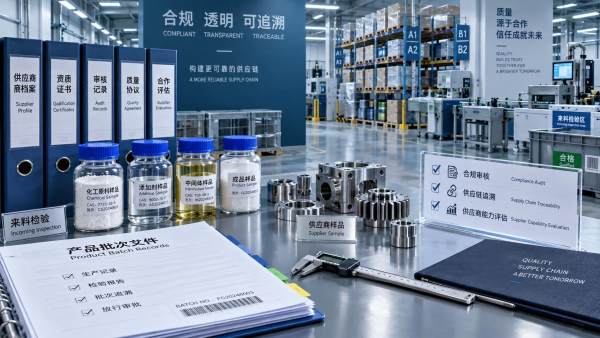
A procurement intelligence library should help a buyer answer a practical question before a purchase order is issued: Can this supplier deliver the required product, at the required standard, through the required period of supply? If the library only contains brochures, price lists, and old certificates, it may look complete while leaving the most consequential risks unresolved.
A useful procurement intelligence library combines supplier evidence, product-specific technical information, regulatory context, commercial history, and market signals in one structured source. That matters especially when sourcing fine chemicals, active pharmaceutical ingredients, agricultural machinery, feed-processing equipment, bio-extracts, or aquaculture systems. In these categories, a low quoted price can be outweighed by a quality deviation, an incomplete traceability record, a delayed shipment, or a supplier whose stated capacity cannot support commercial demand.
The purpose is not to create a large archive. It is to give decision-makers a reliable basis for comparison, qualification, monitoring, and escalation.
Start with the supplier profile, not the sales presentation
Every supplier record should begin with a clear, maintained profile. This is more than a company name, website, contact list, and product catalogue. Procurement needs to understand who is actually responsible for production, quality, logistics, and contractual performance.
A strong profile normally includes the legal entity and relevant production locations, ownership or group relationships where they affect risk, the supplier’s operating role, key contacts, manufacturing scope, and the products or services supplied. It should also distinguish between a manufacturer, distributor, trader, contract processor, and systems integrator. Treating these roles as interchangeable is a common source of weak supplier decisions.
For example, a distributor may be entirely appropriate for low-risk consumables or fragmented local availability. For a critical API, a specialized feed additive, or an engineered aquaculture installation, the buyer usually needs visibility beyond the distributor. The library should show the underlying producer, approved manufacturing site, and any subcontracted steps that could affect quality, lead time, or traceability.
Supplier records also need a review date and an owner inside the organization. Information without a date is easily mistaken for current intelligence. A certificate, capacity statement, or plant contact that was accurate two years ago may not support a present-day sourcing decision.
Product and capability data must be specific enough to compare
Supplier qualification often fails because a library records a broad category rather than the actual requirement. “Chemical supplier” or “machinery manufacturer” is not meaningful enough to support selection. Buyers need product-level intelligence tied to the purchase decision.
For materials, this may include grade, specification range, test methods, packaging formats, batch documentation, storage conditions, shelf-life handling, origin of key inputs, and change-control expectations. For equipment, it may include throughput range, material compatibility, utilities required, control systems, maintenance access, commissioning support, spare-parts availability, and the boundaries of the supplier’s installation responsibility.
Capability should be recorded separately from product claims. A supplier may offer a relevant material but lack the analytical controls, documentation discipline, production scale, or export experience required for the intended use. Similarly, a machinery OEM may build a suitable unit but rely on an external integrator for controls, installation, or service. That division of responsibility changes the risk profile.
Compliance information needs context, not a certificate folder
A library should preserve relevant compliance documentation, but certificates alone do not establish that a supplier is suitable. The useful question is whether the evidence applies to the product, site, process, and intended market involved in the purchase.
In regulated chemical and pharmaceutical supply, procurement may need quality agreements, audit findings, material traceability, change-notification procedures, batch-level documentation, and evidence of appropriate manufacturing controls. Environmental and safety obligations may also influence supplier selection, particularly where handling, storage, transport, discharge, or waste management creates operational exposure.
In agricultural machinery, feed processing, and aquaculture technology, compliance may involve product safety, environmental operating conditions, local installation requirements, water or emissions considerations, and equipment documentation. The exact requirements differ by application, but the procurement library should make the link between a requirement and the evidence used to assess it.
A practical structure is to label each document by four fields: what it supports, which product or site it covers, when it was issued or reviewed, and what action is required before it can be relied upon. This prevents a general corporate document from being treated as proof for a specific facility or product line.
Record performance history, including the inconvenient parts
Supplier intelligence becomes valuable when it captures what happened after onboarding. Quoted lead times and quality commitments belong in the file, but so do shipment delays, rejected lots, document discrepancies, service failures, shortages, and corrective actions.
The goal is not to create a punitive supplier dossier. It is to distinguish isolated, resolved issues from recurring patterns. A one-off customs delay has a different meaning from repeated late deliveries without a credible recovery plan. A quality deviation that was investigated, documented, and prevented may be manageable. Repeated deviations involving the same process or documentation gap require a different sourcing posture.
Performance records are most useful when they are structured rather than narrative. A short entry should identify the event, affected product or order, operational impact, root cause when established, supplier response, corrective action, and closure status. Procurement can then see whether the supplier’s response is proportionate to the risk.
Commercial information should be included as well, but it should not dominate the library. Pricing history, minimum order quantities, payment terms, tooling or qualification costs, freight assumptions, and price-adjustment mechanisms help buyers compare total sourcing conditions. They do not replace quality and continuity analysis.
Map supply-chain resilience at the level that matters
“Single source” is an important label, but it is not enough. Two approved suppliers may still depend on the same upstream intermediate, region, port, engineering subcontractor, or transport route. A procurement intelligence library should reveal shared dependencies where practical, especially for critical items.
For materials, record the country or region of manufacture, critical raw-material exposure, available alternate manufacturing sites, usual shipping method, storage sensitivity, and the feasibility of qualified alternatives. For equipment, note long-lead components, installed-base service coverage, spare-parts arrangements, software or controls dependencies, and whether specialized technicians are required for commissioning or repair.
This is where category intelligence adds value beyond supplier master data. Market reports, trade developments, production constraints, regulatory shifts, and technical changes can explain why an apparently stable source is becoming less resilient. A publication such as AgriChem Chronicle, which covers fine chemicals, primary processing, machinery, aquaculture technology, bio-extracts, and feed and grain operations, can be useful as a source of category context alongside internal supplier records. External intelligence should inform questions and risk reviews; it should not substitute for supplier-specific evidence.
Separate verified evidence from market signals
A reliable library does not treat all information as equally certain. Procurement teams often gather intelligence from audits, supplier documents, laboratory reports, trade publications, site visits, industry contacts, and sales discussions. These sources serve different purposes.
Verified evidence supports an approval or release decision: controlled documents, quality records, validated product data, contractual commitments, and documented audit outcomes. Market signals are early-warning inputs: reports of constrained feedstock, changing logistics conditions, new capacity announcements, acquisition activity, or shifts in buyer demand. Both are useful, but mixing them can create false confidence.
Each entry should identify its source, date, product or site relevance, confidence level, and the decision it may influence. This simple discipline helps a buyer say, “We have confirmed this,” rather than, “We heard this might be true.”
Build the library around decisions people actually make
A large shared drive rarely improves procurement because it is organized around documents instead of decisions. The library should support common workflows: screening a new supplier, comparing qualified suppliers, approving a new material or site, preparing for a contract renewal, reviewing a disruption, and planning a second source.
That usually means creating consistent decision views rather than asking users to read every attachment. A supplier comparison view might show technical fit, evidence status, quality risk, delivery performance, supply-chain exposure, and commercial terms side by side. A renewal review might focus on open deviations, changing cost drivers, capacity concerns, and unresolved actions.
Keep the scoring approach proportionate. A simple risk classification can direct attention to the right work: critical versus non-critical items, direct versus indirect impact, established versus new suppliers, and routine versus regulated applications. Complex scoring models are not automatically better. If users cannot explain how a score was reached or what action follows, the score is not helping the decision.
Common gaps that weaken supplier decisions
- Using certificates as a shortcut for qualification: a certificate can be relevant evidence, but it does not confirm product fit, site coverage, or current operational capability.
- Keeping technical data outside procurement records: when specifications and quality requirements sit only with engineering or quality teams, buyers may compare offers that are not equivalent.
- Recording price without total supply conditions: transport, packaging, qualification work, service obligations, inventory exposure, and failure risk can materially change the buying decision.
- Ignoring supplier changes after approval: changes in ownership, production site, key inputs, logistics routes, or subcontractors can alter the original qualification basis.
- Collecting intelligence without ownership: a library needs named responsibility for review, updates, access rights, and escalation of expired or incomplete evidence.
The first improvement does not require a sophisticated platform. Begin with the suppliers and materials that would cause the greatest operational, quality, regulatory, or financial impact if they failed. Define the evidence needed to approve them, organize records around that decision, and establish a regular review point for performance and supply-chain changes.
Once this foundation is in place, a procurement intelligence library becomes more than a repository. It becomes a working record of why a supplier was selected, what conditions support that decision, and what signals should prompt the team to reconsider it.
Related Intelligence
- APIs & IntermediatesWhat Should a Procurement Intelligence Library Include for Better Supplier Decisions?Procurement intelligence library essentials: evaluate supplier capability, compliance, performance, and supply-chain risk to make smarter, more resilient buying decisions.
- APIs & IntermediatesSpecification Support in the UAE: Defining, Reviewing, and Verifying RequirementsSpecification support UAE helps teams define, review, and verify technical requirements, reducing procurement risk and improving compliance, quality, and project performance.
- APIs & IntermediatesHow to Verify GMP Certification When Sourcing Quality Chemicals for Pharmaceutical ProductionQuality certified GMP chemicals: learn how to verify certificates, batch traceability, supplier controls, and quality agreements for confident pharmaceutical sourcing.
The Morning Broadsheet
Daily chemical briefings, market shifts, and peer-reviewed summaries delivered to your terminal.
