

The Authority in Global Agricultural Chemistry & Bio-Resources
ECHA Adds 3 Crop Protection Substances to REACH List
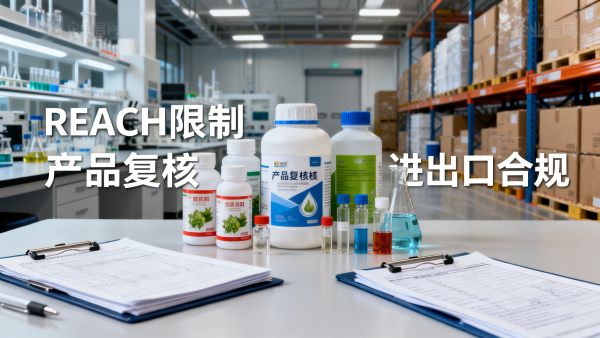
On August 7, 2026, the European Chemicals Agency (ECHA) announced that three agricultural active-substance groups or related substances have been added to the REACH Annex XVII restriction list, with imports of plant protection products containing them set to be banned from October 1, 2026. For agrochemical exporters, EU importers, and compliance teams handling formulations, labeling, and customs documentation, this is a near-term regulatory change with direct operational consequences rather than a distant policy signal.
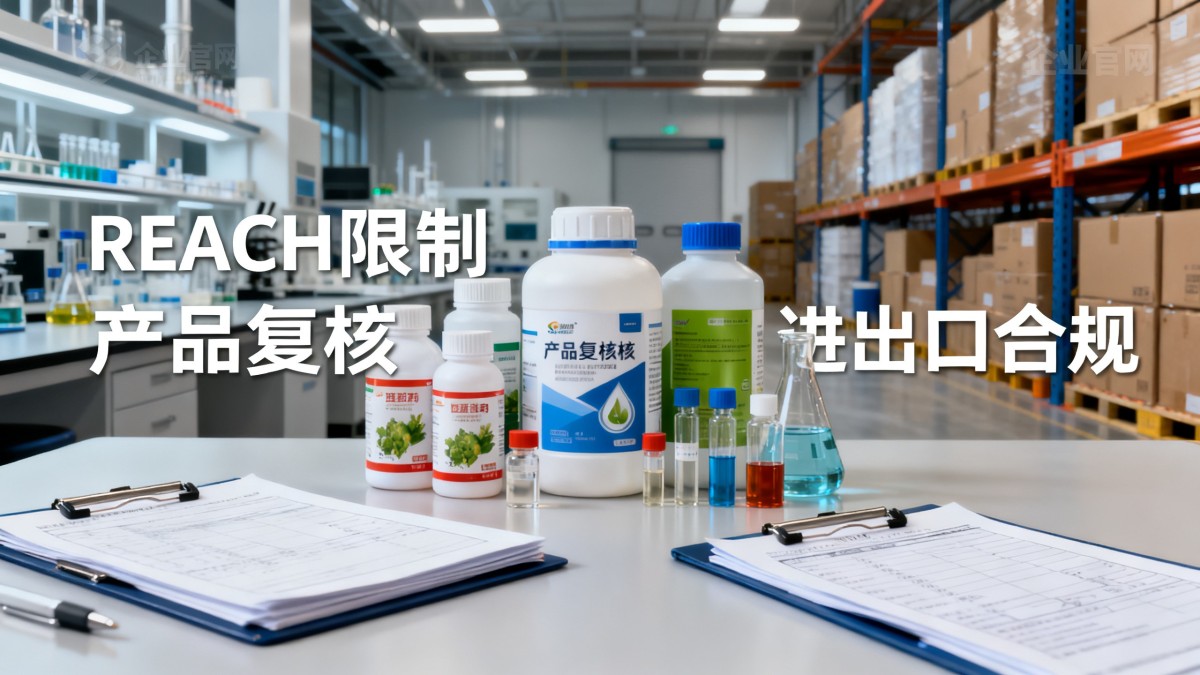
What the August 7 Announcement Confirms
According to the information provided, ECHA formally published an official notice on August 7, 2026, placing three substances on the REACH Annex XVII restriction list: N-methylglycine-based analogues, fluazinam analogues, and one metabolite of a new triazole fungicide.
The confirmed compliance consequence is that plant protection products containing these substances will no longer be allowed for import from October 1, 2026. The information provided also states that finished products containing the affected substances must complete formulation review, toxicological reassessment, and label updates before that date.
Importers are also identified as an immediately affected party, with a need to review existing inventory and customs clearance documentation in order to reduce the risk of cargo delays at port.
Where the Pressure Appears First in the Supply Chain
Exporters serving the EU market face an immediate product screening task
From an industry perspective, the first impact falls on agrochemical exporters that supply plant protection formulations into the EU. They may be affected because the restriction is tied directly to whether the finished product contains one of the listed substances. The practical pressure point is product portfolio review: companies need to determine which formulations remain eligible for export and which ones require reassessment work before the October 1 deadline.
Importers and distributors need to focus on goods already in motion
EU importers and downstream distributors may be affected because the restriction does not only concern future product planning; it also creates risk around current stock, in-transit goods, and customs paperwork. What deserves closer attention is whether inventory records, declarations, and clearance files are consistent with the new restriction status, since the provided information specifically flags port-hold risk.
Compliance, regulatory, and labeling teams are pulled into the front line
The announcement also shifts work onto internal regulatory and product stewardship functions. They may be affected because the required actions are not limited to a legal interpretation of the listing. The stated need for formulation review, toxicological reassessment, and label updating means that technical documentation and market-facing product information must be checked together, not in isolation.
Supply-chain service providers may see timing and document risks increase
Observably, logistics and customs-related service providers may also be affected where they support EU-bound agrochemical shipments. Their exposure is operational: documentation accuracy, shipment timing, and cargo status checks become more important when a restriction date is close and customs risk is explicitly highlighted in the source information.
What Companies Should Review Now
Map affected products against the restriction date
Companies with EU-facing crop protection business should first identify whether any finished products contain the listed substances. The immediate business issue is not abstract regulatory exposure but whether those products can still move through the EU import channel before October 1, 2026.
Separate technical reassessment from shipment readiness
Analysis shows that two workstreams need to be managed in parallel. One is technical and regulatory, covering formulation review, toxicological reassessment, and label updates. The other is operational, covering inventory checks, shipping status, and customs file review. Treating these as one task could slow decision-making at a point where timing is already compressed.
Check supplier documentation and customer-facing files together
For companies operating across multiple partners, a key point is document consistency. Supplier substance information, finished-product records, labels, and import documentation should be checked as a connected package. This matters because a restriction-driven disruption may come not only from formulation content itself, but also from incomplete or mismatched compliance files.
Watch for further clarification in official wording and implementation practice
What deserves closer attention is the difference between the policy signal and day-to-day execution. The provided information confirms the listing and the import ban date, but companies should continue checking for any further official wording, interpretive clarification, or implementation detail that could affect how products, stocks, and documents are handled in practice.
Why This Looks Like an Immediate Compliance Shift
Analysis shows that this development is better understood as a short-term compliance change with immediate commercial consequences, rather than as a broad long-cycle policy trend alone. The reason is straightforward: the information provided includes a specific regulatory action, a named effective date for import prohibition, and concrete remedial tasks tied to formulation, toxicology, and labeling.
At the same time, it is more appropriate to understand this as an evolving industry signal as well, because the operational impact will depend on how companies verify affected products and how consistently import documentation aligns with the restriction. In that sense, the rule is clear enough to require action now, while implementation outcomes still need close observation.
How the Industry Should Read This Development
In practical terms, this update matters because it compresses compliance, supply-chain, and customer-communication work into a short window for any business touching the affected plant protection products. The immediate issue is market access continuity into the EU, not only longer-term regulatory positioning.
A balanced reading is that the announcement has already created a defined regulatory result, but the full business impact will depend on how quickly exporters, importers, and support functions complete product checks and document review. For now, it is more appropriate to understand this as an actionable near-term restriction with broader follow-on implications still worth monitoring.
Basis of This Article and Ongoing Verification
This article is based on the user-provided news title, event date, and event summary. For this type of industry update, commonly relevant source categories may include official notices, company statements, industry association updates, authoritative media coverage, and standards or regulatory documents.
No specific official source link was provided in the input, so the exact official link still requires ongoing verification. Follow-up attention should remain on any additional official wording, implementation clarification, and practical guidance affecting formulation review, toxicological reassessment, labeling updates, inventory checks, and customs documentation.
Related Intelligence
- AgrochemicalsWhat Are the Main Risks of Non-Transparent Agricultural Supply Chains?what are the main risks of non transparent agri supply chains? Explore traceability, compliance, contamination, disruption, and cost risks—plus practical controls.
- AgrochemicalsGrain Production: Key Practices for Improving Yield While Protecting Soil HealthGrain production strategies to improve yield, protect soil health, manage nutrients, reduce compaction, and build resilient fields for lasting results.
- AgrochemicalsHow Do New FDA Rules Affect Agri-Chemical Sourcing Strategies?How do new FDA rules impact agri chemical sourcing strategies? Explore practical supplier screening, traceability, contaminant control, and risk-based compliance steps.
The Morning Broadsheet
Daily chemical briefings, market shifts, and peer-reviewed summaries delivered to your terminal.
