

The Authority in Global Agricultural Chemistry & Bio-Resources
Grain Production: Key Practices for Improving Yield While Protecting Soil Health
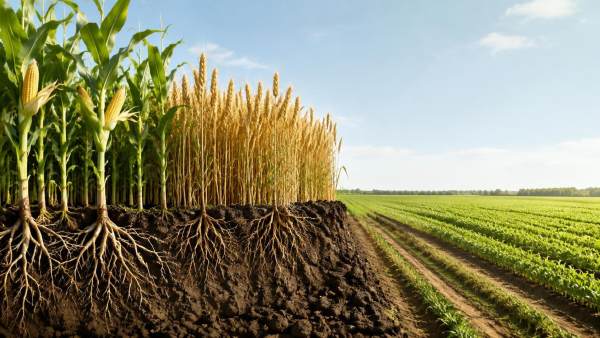
A grain field can appear productive through early summer and still be on course for disappointing results. Uneven emergence, pale lower leaves, compacted wheel tracks, or water pooling after rain often point to a problem that started below the crop canopy. In these situations, pushing for yield with more seed, fertilizer, or field passes can raise costs while further weakening the soil conditions that the crop depends on.
The central principle of durable grain production is straightforward: yield improves most reliably when crop demand is matched to soil supply, field traffic is controlled, and the soil remains biologically active and physically capable of storing water and air. Higher output and soil protection are not competing goals, but they do require management choices to be timed and adapted to each field rather than applied uniformly across the farm.
Start with the limiting factor, not the input rate
When a cereal, corn, soybean, or other grain crop underperforms, the visible symptom is not always the real cause. A low-yielding area may receive the same fertilizer rate as the rest of the field, yet still respond poorly because roots cannot penetrate compacted soil, nutrient availability is restricted by pH, or excess water has reduced oxygen around the root zone.
Before changing a program, separate the field into meaningful management areas. Soil type, slope, drainage pattern, cropping history, residue level, and recurring yield variation provide useful starting points. A single composite sample taken across highly variable ground can hide the condition that needs attention. Sampling stable zones separately makes nutrient and pH results more useful for decisions.
Field observation should accompany laboratory testing. During crop growth, inspect roots rather than relying only on leaf color. Healthy roots should extend through the available soil profile, with active branching and limited discoloration. Roots that flatten, turn sideways, or stop abruptly may indicate a compacted layer. Shallow rooting can make a crop vulnerable to short dry periods even where total seasonal rainfall seems adequate.
- Check soil pH before assuming that poor nutrient uptake is caused by insufficient fertilizer.
- Compare weak and strong areas for depth of topsoil, drainage, surface crusting, and residue cover.
- Dig below visible ruts and headlands, where repeated machinery traffic often creates dense layers.
- Review previous crop and manure applications, since residual nutrients can vary substantially across fields.
This approach prevents a frequent mistake in grain production: treating every low-yield zone as a fertilizer deficiency. Nutrient additions can be necessary, but they cannot compensate for poor structure, restricted rooting, or persistent saturation.
Build nutrient plans around crop demand and loss risk
Plants require sufficient nutrients at specific growth stages, but applying more than the crop can use does not guarantee more grain. It can increase the chance of leaching, runoff, volatilization, lodging, or delayed maturity. Nitrogen management is especially sensitive because the crop’s demand changes rapidly as growth accelerates and because weather can alter availability after application.
A practical nutrient plan begins with realistic yield expectations based on field history, rotation, soil test information, and expected crop response. It then accounts for nutrients supplied by previous legumes, manure, cover crops, irrigation water where relevant, and fertilizer already placed in the field. The objective is not to chase a theoretical maximum; it is to avoid a preventable shortage while reducing nutrients that are vulnerable to loss.
Match placement and timing to field conditions
Surface-applied nutrients may be appropriate in some systems, but their effectiveness depends on moisture, residue cover, soil chemistry, and forecast conditions. Incorporation or band placement can reduce certain losses and position nutrients closer to developing roots. Conversely, aggressive incorporation may disturb soil structure or leave erosion-prone ground exposed. The right choice depends on whether nutrient protection, residue retention, or reduced soil disturbance is the greater field-level need.
Splitting nitrogen applications can help align supply with crop uptake, particularly where early-season loss is a concern. A pre-plant or early application may support establishment, while a later application can respond to crop condition and moisture. This does not mean every field requires multiple passes. Extra traffic in wet soil can create compaction that offsets the intended benefit. Operational timing matters as much as the fertilizer schedule.
Phosphorus and potassium deserve similar discipline. Their management should reflect soil test levels, crop removal, placement strategy, and erosion risk. Phosphorus attached to eroded sediment can leave a field even when it is not highly mobile in the soil itself. Maintaining ground cover and reducing soil movement are therefore part of nutrient stewardship, not separate environmental tasks.
Protect soil structure during the operations that matter most
Soil compaction is often created when equipment enters fields before they can support the load. The pressure may be concentrated in headlands, grain cart routes, field entrances, and repeated spray tracks, but its effects can spread below the surface. Compacted soil holds less pore space for air and water movement. Crops may emerge unevenly, roots may remain shallow, and water may run off rather than infiltrate.
Reduced tillage can preserve aggregates and residue, but it is not simply a decision to make fewer passes. Residue distribution, planter setup, seed-to-soil contact, weed pressure, soil temperature, and drainage all influence whether reduced disturbance succeeds. In cold or poorly drained soils, planting into heavy residue without suitable equipment adjustment may delay emergence. In erosion-prone ground, intensive tillage may create a short-term seedbed advantage while increasing long-term vulnerability.
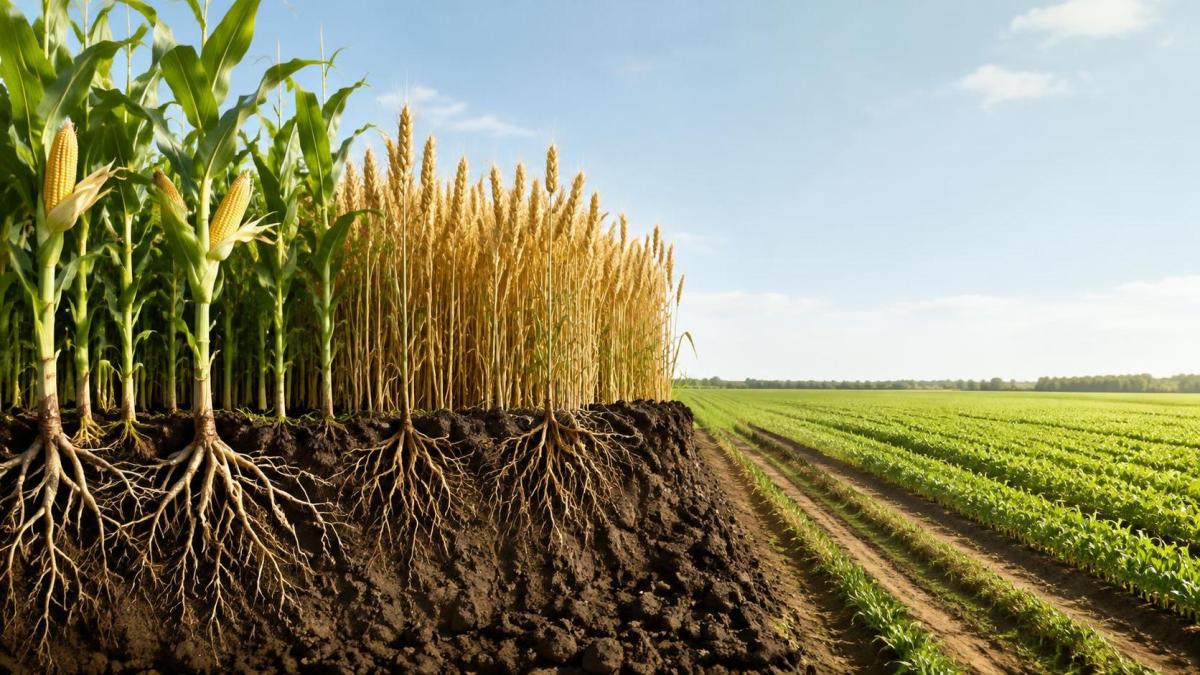
Controlled traffic is one of the clearest ways to limit avoidable compaction. Keeping heavy equipment on established lanes reduces the proportion of the field exposed to repeated load. Where fixed traffic patterns are not practical, operators can still reduce damage by avoiding unnecessary passes, matching tire pressure and axle load to the work, and waiting when wet soil is likely to smear or rut.
Deep tillage may temporarily fracture a compacted layer, but it is not a universal cure. It is most likely to have value when a restrictive layer has been confirmed, soil conditions are dry enough to shatter rather than smear, and future traffic practices will not recreate the problem. Biological approaches, including deep-rooted crops in rotation, can help develop channels over time, though they work gradually and depend on the underlying drainage and traffic conditions.
Use rotation and cover crops to solve specific soil problems
A rotation is more than a sequence chosen for market opportunity. Different crops leave different residue amounts, rooting patterns, nutrient demands, pest pressures, and planting windows. Alternating crop types can interrupt some disease and weed cycles while spreading fieldwork across the season. A rotation that includes a legume may contribute nitrogen to a following crop, but the amount and timing of that contribution depend on biomass, weather, residue decomposition, and management.
Cover crops are most useful when selected for a stated purpose. A grass cover can capture residual nitrogen and protect the soil surface. A legume can contribute biologically fixed nitrogen under suitable conditions. Species with strong rooting may help maintain soil porosity, while mixed stands can provide multiple functions but may also be harder to terminate and manage. Planting a cover crop without considering termination timing, available moisture, and the following cash crop can introduce competition rather than resilience.
Questions that should be answered before adding a cover crop
- What is the priority: erosion control, nutrient capture, grazing, weed suppression, or improved soil structure?
- Is there enough time after grain harvest for reliable establishment?
- How will the cover be terminated, and can that method be carried out under likely spring conditions?
- Will residue interfere with planting equipment or create a temporary nitrogen demand?
- Does the field have limited water storage, making spring moisture conservation more important than additional biomass?
These questions do not make cover crops less valuable; they make their use more intentional. A field with recurring erosion after harvest may benefit greatly from living cover. A dry field with delayed planting risk may require a shorter-season species or an earlier termination plan. The soil-health practice must fit the production system rather than be treated as a separate add-on.
Choose seed and establishment practices for the field, not only the catalogue
Resilient seed selection involves more than choosing a variety with a high yield rating. Maturity range, disease tolerance, lodging resistance, emergence traits, drought response, and suitability for local planting conditions can all affect final output. A variety that performs well in deep, fertile soil may not be the best option for lighter ground with uneven moisture or a history of a particular disease.
Seedbed condition and planting precision also influence whether genetic potential becomes usable yield. Uneven depth, poor seed-to-soil contact, crusting, or variable residue can produce uneven emergence. Plants that emerge late often remain less competitive and may contribute less to the final grain stand. Planters and drills should be checked for depth consistency, closing performance, row-unit wear, and residue handling before planting begins, especially after changes to tillage or cover-crop practices.
Planting date decisions require balance. Early planting may lengthen the growing season, yet planting into cold, saturated soil can slow emergence and expose seedlings to disease. Delaying until conditions improve may reduce establishment risks but can narrow the crop’s reproductive window. The better decision is based on soil condition, forecast risk, seed traits, and the actual readiness of the field rather than the calendar alone.
Manage water as a yield input and a soil-health indicator
Water stress is not limited to drought. Excess water can reduce oxygen around roots, increase disease pressure, delay field operations, and carry soil and nutrients away from the field. Areas that consistently pond after moderate rainfall may signal surface compaction, inadequate drainage, blocked outlets, or a mismatch between field grading and water flow.
Residue cover, stable aggregates, and living roots can improve infiltration, but they cannot correct every drainage limitation. Where water repeatedly collects in the same location, trace the pathway rather than treating the symptom with additional inputs. Check whether sediment has restricted channels, whether field entrances divert runoff, or whether a compacted zone prevents vertical movement. Drainage interventions should be planned with awareness of local rules, downstream effects, and soil conservation needs.
In irrigated grain systems, scheduling should reflect rooting depth and crop stage instead of applying water by routine. Frequent shallow applications can encourage shallow roots in some conditions, while excessive irrigation can move mobile nutrients below the root zone. Monitoring soil moisture at more than one depth provides a better basis for action than judging the field solely by the surface.
Measure progress across seasons, not just at harvest
Yield maps, scale tickets, and grain quality records remain important, but they tell only part of the story. Pair harvest information with notes on emergence, rainfall events, nutrient applications, traffic routes, pest outbreaks, and visible soil conditions. Over several seasons, these records can reveal whether a recurring weak zone is tied to drainage, compaction, fertility, residue, or crop sequence.
Useful indicators of improving soil function include more consistent infiltration, reduced ponding, better root depth, less crusting, stable residue cover, and fewer areas where crops show stress immediately after weather extremes. These observations should not replace soil testing or agronomic assessment, but they help determine whether management changes are addressing the original limitation.
Strong grain production systems usually improve through targeted adjustments rather than one dramatic intervention. Correcting pH where needed, limiting traffic on wet ground, matching nutrients to realistic demand, maintaining protective cover, and choosing crops suited to the field can reinforce one another. The result is a production approach that aims for yield while preserving the soil capacity needed to produce it again under less predictable conditions.
Related Intelligence
- AgrochemicalsUSDA Announces Over $500 Million for Eight Fertilizer Production ProjectsUSDA announces over $500 million for eight fertilizer production projects. Explore how expanded domestic supply could affect farm costs and agricultural supply chains.
- AgrochemicalsAgrochemicals Category Intelligence: Tracking Cost Drivers and Supply RiskExplore agrochemicals category intelligence to track cost drivers, uncover supply risks, and strengthen sourcing decisions. Learn how to negotiate smarter and secure reliable supply.
- AgrochemicalsChina’s Phosphate Fertilizer Exports Near Zero, Tightening Global SupplyChina’s phosphate fertilizer exports near zero in 2026 as sulfur shortages tighten global supply. Explore the risks for importers, prices and sourcing strategies.
The Morning Broadsheet
Daily chemical briefings, market shifts, and peer-reviewed summaries delivered to your terminal.
