

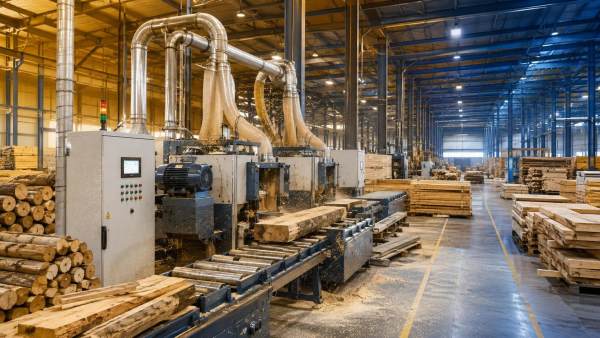
Selecting Timber Processing Equipment for Middle East Heat, Dust, and Wood Species
Selecting timber processing equipment for Middle East operations requires more than comparing throughput and price. Technical evaluators must account for extreme heat, abrasive dust, variable power conditions, and the machining behavior of regional hardwoods and imported softwoods.
The correct procurement decision is usually a protected, serviceable machine package with verified performance under local operating conditions, not simply the highest-capacity equipment listed in a supplier catalogue.
For mills, pallet plants, joinery workshops, and engineered-wood processors, the central question is whether equipment can preserve accuracy, uptime, and operator safety when ambient conditions are continuously hostile.
Start With the Operating Envelope, Not the Nameplate Capacity
Technical teams evaluating timber processing equipment for Middle East facilities should first define the actual operating envelope: temperature, airborne particulate load, daily operating hours, wood moisture range, and electrical stability.
Many imported machines are designed around moderate climates, clean workshops, stable three-phase power, and consistent timber feedstock. Those assumptions can create hidden maintenance costs in Gulf, Levant, or North African operations.
Ambient temperatures above 40 degrees Celsius affect motor cooling, hydraulic oil viscosity, lubrication performance, sensor reliability, and the operating life of electrical cabinets. Peak summer temperatures should be treated as a design condition.
Do not evaluate thermal capability from a motor's nominal rating alone. Request the motor insulation class, derating guidance, enclosure classification, cooling method, and maximum stated ambient operating temperature.
A machine rated for 40 degrees Celsius may require derating or additional cooling in a facility where enclosure temperatures rise significantly above outdoor ambient levels. Cabinet heat is often underestimated.
Dust exposure also varies by facility type. A sawmill handling rough timber produces coarse chips and fines, while MDF, plywood, and dry softwood machining can generate finer particles that enter electrical and mechanical systems.
Specify the intended wood flow in measurable terms: species, board dimensions, moisture content, knots, resin content, contamination risk, and annual processing volume. This information determines whether a standard configuration is adequate.
Suppliers should confirm their recommendations in writing against those conditions. A general statement that a machine is “suitable for hot climates” is not an engineering acceptance criterion.
Heat Resistance Depends on Motors, Drives, Hydraulics, and Control Cabinets
Motor selection is a primary reliability issue because timber equipment often operates near full load during sawing, planing, chipping, shredding, and high-speed feeding. Heat reduces the available thermal margin.
For continuous-duty machinery, technical evaluators should favor appropriately sized IE3 or IE4 motors with a documented duty rating, suitable insulation class, and thermal protection integrated into the control system.
Variable-frequency drives need equally careful review. Drives installed in poorly ventilated enclosures can fail prematurely when internal temperatures exceed component limits, even when the production floor appears acceptable.
Ask whether VFDs are oversized for ambient temperature, whether they include temperature monitoring, and whether electrical cabinets are supplied with filtered forced ventilation, heat exchangers, or industrial air-conditioning.
Cabinet cooling should not rely on ordinary office-grade equipment. Filters clog rapidly in dusty timber facilities, while weak cooling systems can introduce condensation, contamination, or uncontrolled maintenance requirements.
Hydraulic systems deserve similar scrutiny. High ambient heat can reduce oil viscosity, increase leakage risk, accelerate seal wear, and weaken response consistency in presses, log handling systems, and mobile processing lines.
Specify hydraulic oil cooling where calculations justify it, along with temperature sensors, high-temperature alarms, accessible filters, and seal materials proven for the selected fluid and environmental temperature range.
Power quality must be verified at the site. Voltage imbalance, unstable generator supply, harmonics, and frequent outages can damage motors and drives more quickly than routine mechanical wear.
Where local supply quality is uncertain, include phase monitoring, surge protection, undervoltage protection, soft-start or VFD control, and a clear restart procedure after power interruption.
Dust Protection Must Cover More Than the Extraction System
Dust collection is often specified for housekeeping and compliance, yet it is also a machine-protection requirement. Airborne dust shortens component life by entering bearings, sensors, switches, electrical panels, and cooling pathways.
A complete dust strategy begins at the cutting zone. Guards, hoods, extraction ports, duct sizing, airflow balancing, and collection capacity should be matched to each machine rather than added generically.
Undersized extraction may leave chips around saw blades and feed mechanisms, increasing friction, affecting cut quality, and creating avoidable fire risk. Stronger fans alone cannot correct poorly designed capture points.
For abrasive desert dust, assess enclosure ratings carefully. Electrical cabinets should have appropriate ingress protection, properly sealed cable entries, filtered ventilation, and maintenance access that does not compromise sealing.
IP ratings should be reviewed in context. A high rating on a component does not guarantee protection for the complete cabinet, particularly where cooling fans, door gaskets, cable glands, and field modifications are involved.
Linear guides, exposed ball screws, chains, and pneumatic valves should be protected from dust accumulation. Bellows, wipers, guarded cable tracks, and centralized lubrication can substantially reduce unplanned interventions.
Compressed air quality is another overlooked issue. Dusty intake air and condensate can damage pneumatic controls, so systems should include intake filtration, water separation, pressure regulation, and routine drain arrangements.
Request a maintenance schedule that explicitly includes cleaning filters, checking cabinet pressure, inspecting seals, servicing extraction ducts, and removing accumulated material from guarded machine areas.
Match Cutting Technology to Regional Hardwoods and Imported Softwoods
Wood species determine cutting forces, blade wear, feed stability, surface finish, and power demand. A machine proven on European softwood may not perform equally well on dense tropical hardwoods or reclaimed timber.
Middle East processors may handle imported pine, spruce, radiata pine, eucalyptus, acacia, teak, meranti, beech, oak, and mixed construction timber. Each category creates different mechanical demands.
Dense hardwoods generally require more rigid machine frames, stronger spindle assemblies, higher torque reserves, controlled feed rates, and blade materials selected for wear resistance rather than low initial cost.
Imported softwoods can introduce other challenges. Resinous species may create buildup on cutters and extraction lines, while low-density material can tear out when knives are dull or feed systems lack consistent pressure.
Technical evaluators should request demonstrated machining parameters for their priority species. Relevant data includes feed speed, cutting depth, blade type, kerf, spindle speed, surface quality, and expected tool-life intervals.
Blade selection should be treated as part of the equipment specification. Carbide-tipped, stellite-tipped, high-speed steel, and polycrystalline diamond tooling have different cost, quality, and maintenance implications.
For mills processing mixed grades, automatic feed control and robust anti-kickback arrangements can be more valuable than maximum advertised line speed. Stable material handling protects both output quality and operators.
Inspect the rigidity of fences, pressure rollers, clamping systems, and guide assemblies. Poorly controlled material movement causes dimensional variation, burning, chatter marks, and excessive tool consumption.
Where reclaimed, pallet, or construction timber is processed, include metal detection before primary cutting. Nails, screws, grit, and embedded debris can damage blades, create dangerous ejection events, and stop production.
Accuracy and Throughput Should Be Verified Under Real Feed Conditions
Published throughput figures commonly assume straight, uniform stock, sharp tooling, trained operators, and uninterrupted feeding. Procurement teams should distinguish theoretical capacity from sustained plant output.
Define acceptance criteria around the actual product mix. For example, specify board dimensions, permitted thickness variation, trim accuracy, recovery rate, surface-finish standards, and the proportion of material requiring rework.
A line that processes fewer boards per hour but produces less waste may create better economic value than a faster line with frequent stoppages, inaccurate cuts, or high reject rates.
Request factory acceptance testing with representative timber where practical. If shipping sample wood is impractical, require a detailed test protocol and evidence from comparable installations using similar species and dimensions.
For CNC saws, optimizers, and automated handling equipment, assess repeatability as well as speed. Encoder quality, servo configuration, calibration procedures, and mechanical backlash directly influence finished-product consistency.
Feed systems require sufficient holding force without marking the timber. Pneumatic pressure, roller material, spring adjustment, and synchronized drive design should be reviewed against both rough-sawn and finished stock.
Measurements should be taken after a realistic production run, not immediately after setup. Thermal expansion, dust buildup, and tool wear can reveal problems that are invisible during a short demonstration.
Include performance testing in the purchase contract. Acceptance terms should state test material, operating duration, measurable output, dimensional tolerances, safety functions, and remedies if the agreed threshold is missed.
Serviceability Often Matters More Than a Small Price Difference
In remote industrial areas, downtime is strongly shaped by service access. Equipment with sophisticated controls but unavailable spare parts can become a production bottleneck after a minor sensor, bearing, or drive failure.
Before selecting a supplier, map the local support model. Determine whether trained technicians are resident in the region, how quickly they can attend site, and which service activities local teams can perform.
Spare-parts availability should be evaluated by criticality, not by the length of a supplier's catalogue. Ask for recommended commissioning spares, two-year operating spares, and lead times for high-risk components.
Critical spares commonly include sensors, contactors, VFDs, belts, bearings, pneumatic valves, hydraulic seals, fuses, filters, cutterhead components, and machine-specific control modules.
Standardized components improve resilience. Motors, bearings, electrical devices, and pneumatic hardware from globally supported brands are usually easier to source than proprietary equivalents with uncertain regional stock.
Maintenance access should be physically inspected. Operators need safe room to change blades, clean extraction points, lubricate guides, inspect belts, replace filters, and troubleshoot sensors without excessive dismantling.
Digital diagnostics can reduce response time when they are practical. Remote access, alarm history, electrical drawings, multilingual manuals, and clear fault codes support local technicians during urgent production interruptions.
However, remote support does not replace local competence. The buyer should budget for operator training, maintenance training, commissioning supervision, and documented preventive-maintenance responsibilities from the first operating month.
Assess Safety, Fire Risk, and Compliance as Design Requirements
Timber processing combines rotating cutters, high-speed feed systems, combustible dust, electrical equipment, and manual material handling. Safety features should be specified before supplier comparison begins.
Review emergency-stop coverage, interlocked guards, braking systems, anti-kickback devices, lockout points, overload protection, safe blade-change procedures, and accessible isolation switches for every machine station.
Dust-related fire and explosion risk varies with material type, particle size, enclosure geometry, and local regulations. A formal hazard assessment should guide extraction, housekeeping, spark detection, and suppression decisions.
Facilities processing dry dust at scale may need engineered explosion protection measures. The required approach depends on the jurisdiction, risk study, equipment configuration, and applicable standards rather than generic supplier claims.
Technical evaluators should request complete electrical documentation, machine safety declarations, guard drawings, extraction requirements, noise data, and lists of applicable standards before issuing final approval.
Ergonomics also affects safety and productivity. Infeed heights, outfeed support, control-panel visibility, material weight, lifting aids, and access routes influence whether operators can work consistently through long shifts.
Safety systems should be tested during commissioning under production-like conditions. A guard or emergency stop that functions in isolation may still be poorly positioned or ineffective in normal operator workflows.
Use Total Cost of Ownership to Compare Competing Equipment Packages
Purchase price is an incomplete basis for selecting timber processing equipment for Middle East operations. The more useful comparison combines capital cost, energy use, tooling, extraction, consumables, labor, service, and downtime exposure.
Build a cost model over at least five years. Include expected annual operating hours, maintenance labor, replacement parts, blade sharpening, electricity cost, compressed-air demand, reject material, and lost output from stoppages.
Energy consumption should be measured per cubic meter or per finished unit, not only by connected load. Efficient motors and controls are valuable only when matched with correct process design and operating discipline.
Tooling costs can materially change the business case, especially when dense woods, dirty reclaimed stock, or inconsistent drying conditions accelerate wear. Ask suppliers to state expected tool-life assumptions transparently.
Installation costs should include foundations, ventilation, extraction ductwork, electrical distribution, air supply, lifting equipment, fire protection, operator training, and local permits where required.
Compare warranty language closely. Exclusions for dust, heat, poor power quality, insufficient maintenance, or third-party modifications may transfer substantial operating risk back to the buyer.
A supplier offering a slightly higher initial price may be commercially stronger when it provides climate-adapted engineering, local spares, documented performance testing, and responsive technical support.
The final recommendation should identify tradeoffs clearly: which features are essential for reliability, which options improve productivity, and which additions are unnecessary for the facility's actual product mix.
Conclusion: Specify for Conditions, Then Validate With Evidence
Reliable timber processing in the Middle East depends on engineering fit. Heat-rated drives, dust-resistant controls, protected moving parts, appropriate extraction, and species-matched tooling should be treated as core requirements.
Technical evaluators should convert site conditions into measurable specifications, then require suppliers to prove compliance through drawings, test data, component details, acceptance criteria, and support commitments.
The strongest procurement decision is not the machine with the most impressive brochure figure. It is the system that delivers safe, accurate, maintainable output across the region's heat, dust, power, and timber variability.
