

The Authority in Global Agricultural Chemistry & Bio-Resources
How to Choose Alarm Water Monitoring Systems for Critical Water Facilities
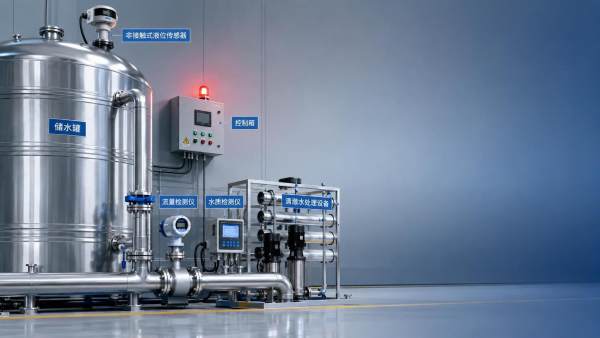
Selecting alarm water monitoring systems for a critical facility is primarily a risk-management decision. The most suitable system is not necessarily the one with the longest sensor list or the most polished dashboard. It is the one that detects the conditions that can cause operational, quality, safety, or environmental failure early enough for the site to act.
That distinction matters in water treatment, chemical processing, feed and grain operations, aquaculture, irrigation infrastructure, pharmaceutical utilities, and raw-material processing plants. A missed high-level condition may cause overflow. A delayed conductivity alarm may indicate contamination or an unsuitable rinse cycle. A failed pump alarm can become a production interruption if it reaches the right person too late. Evaluators should therefore begin with failure scenarios and response requirements, then select sensors, communications, alarms, and data handling to support those requirements.
Start with the event that must be detected
A monitoring project often becomes unfocused when the procurement list begins with devices: level transmitters, pH probes, flow meters, controllers, gateways, and software. Begin instead by documenting the events that the facility cannot accept.
For each water asset, ask four questions:
- What condition could become harmful or disruptive?
- How quickly can that condition develop?
- What action must occur after detection?
- Who owns that action during every operating period?
This process separates critical alarms from useful trend data. A tank level that changes slowly may only need a local indication and a warning alarm. A level in a sump serving a sensitive processing area may require a high-high alarm, automatic pump control, remote escalation, and a clear record of acknowledgment. Similarly, a temporary pH drift in an irrigation reservoir may need investigation, while an out-of-range condition in process water used near a controlled production step may require immediate isolation or a documented deviation workflow.
Classify each monitored point by consequence, not by sensor type. A practical structure is:
Without this distinction, facilities tend to over-alarm low-consequence events and under-design the alarms that matter most. The result is alarm fatigue: users receive so many messages that urgent notifications no longer stand out.
Match the sensing method to the water and the installation
Sensor selection should account for what is actually in the water, how the asset operates, and how the sensor will be maintained. A sensing method that performs well in clean utility water may be unreliable in a vessel containing solids, foam, biofilm, chemical residue, or turbulent inflow.
For level monitoring, the evaluation is not simply “radar versus ultrasonic versus pressure.” Consider vessel geometry, vapor, condensation, foam, mixing action, buildup on wetted components, and whether the sensor must remain accurate during cleaning cycles. Non-contact sensing can reduce exposure to aggressive or contaminated media, but it can still be affected by surface conditions and internal obstructions. Hydrostatic level measurement may be practical for some tanks and basins, but density changes, plugged ports, and submerged-cable conditions must be considered.
Water quality parameters deserve the same scrutiny. pH, oxidation-reduction potential, turbidity, dissolved oxygen, conductivity, temperature, and residual disinfectant sensors each have different maintenance demands and cross-sensitivities. A measurement can be technically valid while still being unsuitable for an alarm if it drifts between calibration intervals or reacts too slowly for the process risk. Specify the required decision, then ask whether the measurement can support that decision under normal operating conditions.
Flow and pressure alarms require attention to the hydraulic context. A low-flow signal might indicate a pump issue, a blocked filter, a closed valve, a leak, or a normal batch transition. If the monitoring logic cannot distinguish these states, operators will receive recurring alarms with little operational value. Pairing a flow signal with pump run status, valve position, tank level, or differential pressure often produces a more reliable alarm condition than using one input alone.
Alarm timing matters more than a fast sensor specification
Response time is a chain, not a single device attribute. It includes sensor response, controller scan time, communications delay, logic processing, message delivery, acknowledgment, and physical response by people or equipment. A fast measurement does not protect the site if notifications are sent to an unattended inbox or if an on-call escalation path is unclear.
Set alarm delays intentionally. Short delays can expose genuine rapid failures, but they also create nuisance alarms during pump starts, valve changes, tank agitation, backwash cycles, or routine transfers. Longer delays can stabilize normal transients, but they may allow a critical event to develop too far. The correct setting depends on how quickly the process changes and how much safe operating margin exists.
Use separate thresholds where the risk justifies it. A high warning can prompt inspection or corrective action. A high-high alarm can trigger escalation, interlock logic, or an emergency response. This staged design is often more effective than one threshold that attempts to cover every situation.
Alarm deadband is equally important. If a level or quality value hovers near a threshold, the system can repeatedly switch between alarm and normal status. Appropriate deadband, filtering, and delay settings prevent message storms while preserving meaningful detection. These settings should be visible, controlled, and documented rather than buried in an installer-only configuration screen.
Choose communications based on consequence and site reality
Connectivity should be assessed as part of the protection function. Wired connections are generally easier to support where cabling is practical and where high reliability, low latency, or integration with an existing control environment is required. Wireless monitoring can be valuable across large agricultural sites, remote reservoirs, mobile treatment units, distributed aquaculture assets, or difficult-to-cable areas. It introduces different questions: signal coverage, power source, gateway resilience, interference, antenna placement, and recovery after an outage.
For remote alarm water monitoring systems, do not treat cloud access as the alarm strategy. A system should define what happens when the internet connection, gateway, server link, or mobile network is unavailable. Critical local functions may need to continue at the controller or field-panel level, including audible indication, equipment interlocks, data buffering, and local display. Remote dashboards add visibility; they should not become the sole path for timely protection where local action is required.
Ask suppliers to demonstrate how the system behaves under communication loss, power restoration, and device restart. Important questions include whether alarms are retained, whether historical values are buffered, whether a missed notification is retried, and whether users can see the difference between an actual normal condition and a failed or silent device.
Evaluate alarm delivery as an operational workflow
An alarm that reaches a person is only useful when that person can identify the asset, understand the severity, and act. Messages should include enough context to support a first response: asset name, site or zone, measured condition, threshold crossed, time, severity, and any related equipment status. “Tank alarm” is inadequate when a facility has multiple tanks, remote buildings, or parallel treatment trains.
Notification channels should match the consequence and staffing model. A local beacon or horn may suit a continuously staffed process area. Text, voice, email, or application notifications can support distributed teams. Critical events often warrant escalation when no acknowledgment occurs within the response window. The system should make the escalation sequence configurable, because roles, shifts, and contractor arrangements change over time.
Do not confuse acknowledgment with resolution. An effective workflow records both: who acknowledged the event and what was done to restore the process. In regulated or quality-sensitive environments, this distinction supports investigation, trend review, and accountability. It also exposes chronic issues, such as an alarm repeatedly acknowledged without a maintenance task being completed.
Environmental durability is a system-level requirement
Field hardware must tolerate its actual location, not an ideal equipment-room environment. Review enclosure protection, temperature exposure, washdown, UV exposure, vibration, corrosive atmospheres, cable routing, lightning risk, and access for calibration. In chemical and processing environments, the material compatibility of wetted parts, seals, cable jackets, and mounting hardware can be as important as the sensor’s measurement range.
Power design deserves equal attention. A remote level sensor with a solar or battery supply may be appropriate where low-power telemetry is sufficient, but it may not support frequent transmissions, heaters, high-power relays, or continuous instrumentation without careful engineering. For critical alarms, determine whether the site needs backup power, low-power alerts, and a defined response when supply voltage falls below an acceptable level.
Maintenance access is commonly underestimated. A sensor located above a full tank, inside a confined area, or behind operating equipment may be theoretically serviceable but costly and disruptive to maintain. Selection should include the physical work required for inspection, cleaning, calibration, replacement, and verification. A slightly less sophisticated device that can be maintained consistently is often the stronger operational choice.
Data integrity and integration should fit the facility’s decisions
Not every alarm system needs enterprise-level integration. A standalone monitored asset may only require local control, remote alerting, and basic event history. A site with existing PLC, SCADA, historian, laboratory, maintenance, or quality systems may need defined interfaces, time synchronization, user permissions, audit trails, and consistent tag naming.
Choose the architecture according to the decisions the data must support. If staff only need to respond to an overflow risk, complex analytics may add little value. If a site must investigate recurring quality deviations, show the sequence of events around an alarm, or correlate water conditions with production activity, reliable historical records become essential.
For facilities operating within GMP-oriented processes or environmental control programs, the focus should be on dependable records and controlled alarm management rather than assuming a product label alone satisfies the site’s obligations. The monitoring solution must fit the facility’s documented procedures, validation approach, quality responsibilities, and retention needs.
Use the supplier evaluation to test operational maturity
A technical comparison should include more than a data sheet. Ask each supplier to explain how the proposed arrangement will be commissioned, tested, maintained, and supported after handover. Request a point list that identifies every monitored variable, alarm threshold, priority, delay, notification route, response owner, and required action. This document often reveals missing logic before installation begins.
Useful evaluation topics include:
- How are sensor faults, communication loss, low power, and out-of-range values alarmed?
- Can users adjust alarm settings under controlled permissions?
- How are calibration, inspection, and proof-test activities recorded?
- What happens to local control and alarm history during a network outage?
- Can the system expand without replacing the original controller or software architecture?
- Are spare parts, compatible replacements, and technical documentation available for the expected service life?
A vendor that can clearly address these questions is generally more useful than one that only compares measurement accuracy under ideal conditions. Critical facilities need a supportable operating system, not a collection of disconnected instruments.
Common selection mistakes that create weak protection
The first mistake is specifying sensors before defining the consequence of failure. This produces a monitoring package that may collect data but does not reliably protect the process.
The second is relying on one remote notification path. Cellular, internet, application, and email services can each be appropriate, but a critical alarm design should consider how alerts will still be detected when one path is unavailable.
The third is treating all alarms as equally urgent. A crowded alarm feed encourages delayed acknowledgment and masks conditions that need immediate intervention. Priority, escalation, and response expectations should reflect actual risk.
The fourth is ignoring maintenance. Probes foul, floats stick, batteries age, impulse lines block, network settings change, and staff responsibilities shift. A monitoring system should make these conditions visible and include routine functional testing in the operating plan.
The final mistake is selecting for present connectivity only. A system may work well in a single building yet become difficult to manage when additional wells, tanks, water loops, treatment skids, or remote sites are added. Expansion does not require buying the largest platform available, but it does require an architecture that can add points, users, and alarm routes without a costly redesign.
Make the decision with a site-specific acceptance test
Before final approval, convert the risk assessment into acceptance scenarios. Simulate a high level, low level, sensor disconnection, power interruption, communication loss, and restoration of service. Confirm that the correct local indication, remote alert, escalation, event record, and equipment response occur in the expected order. Test the system with the people who will receive the notifications, not only with the installation team.
The best choice is usually the one that can demonstrate this full sequence clearly: it detects the right condition, avoids unnecessary alarms, reaches the responsible person, continues safely through foreseeable failures, and leaves a usable record afterward. That is the standard that turns water monitoring from passive visibility into dependable operational control.
Related Intelligence
- Aeration & Water TechHow Water Treatment Research Guides Technology Selection for Industrial Wastewater ProjectsWater treatment research guides smarter industrial wastewater technology selection. Learn how to assess variable streams, pilot risks, compare process trains, and reduce compliance costs.
- Aeration & Water TechSelecting Solids Filtration for Aquaculture: Flow Rates, Loading, and Fish WelfareSolids filtration aquaculture guide: compare flow rates, peak loading, capture performance, maintenance, and fish welfare to choose a reliable system.
- Aeration & Water TechWhat RO water treatment systems deliver consistent 98% salt rejection at 25°C with feed TDS over 3,000 ppm?RO water treatment systems that deliver proven 98% salt rejection at 25°C with >3,000 ppm TDS—engineered for API synthesis, aquaculture & grain processing.
The Morning Broadsheet
Daily chemical briefings, market shifts, and peer-reviewed summaries delivered to your terminal.
