

The Authority in Global Agricultural Chemistry & Bio-Resources
How Water Treatment Research Guides Technology Selection for Industrial Wastewater Projects
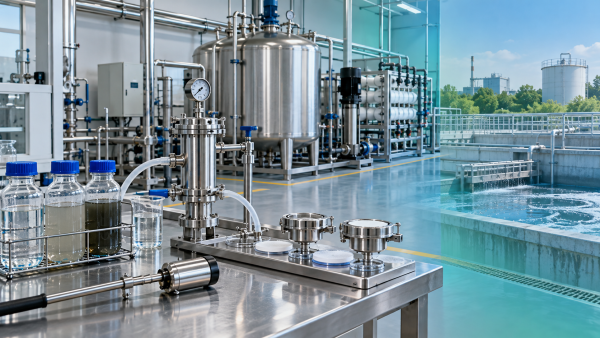
Industrial wastewater technology should be selected from evidence, not from a supplier’s standard process diagram. The same production site can produce wastewater that changes by shift, batch, season, raw-material source, cleaning cycle, or product mix. A treatment train that performs well on a typical sample may fail when salinity rises, a solvent-bearing stream appears, or biological loading becomes intermittent.
Water treatment research turns those uncertainties into design inputs. It helps a project team determine what is actually in the water, which contaminants control compliance risk, how process conditions affect treatment performance, and where a proposed technology is likely to create operational cost or reliability problems. The goal is not to find the most advanced equipment. It is to build a process that can meet its discharge, reuse, or recovery objective under normal and abnormal operating conditions.
Start With the Decision That the System Must Support
The first selection question is not “Which treatment technology is best?” It is “What must the treated water be suitable for?” A system designed for discharge to a municipal sewer may be fundamentally different from one designed for direct surface-water discharge, internal process reuse, boiler feed preparation, or near-zero liquid discharge.
That endpoint determines which water-quality parameters matter. Organic load may be the central issue in one facility, while dissolved salts, nutrients, trace metals, toxic compounds, color, suspended solids, residual disinfectants, or persistent process chemicals dominate another. Treating every parameter to the highest possible standard usually produces an unnecessarily expensive and difficult-to-operate plant. Treating only the parameters listed in a generic vendor proposal can leave a site exposed when the water quality shifts.
Before comparing technologies, establish four decision boundaries:
- The required outlet destination and the quality conditions attached to it.
- The full range of influent quality, not only the average laboratory result.
- Expected hydraulic flow patterns, including peaks, shutdowns, washdowns, and batch discharges.
- Operational constraints such as available footprint, utilities, staffing, chemical handling capacity, sludge management, and tolerance for downtime.
This framing prevents a common procurement mistake: selecting a unit process because it is familiar, then trying to force the wastewater into that process through excessive chemical dosing, oversized equipment, or repeated operating intervention.
Research the Wastewater as a Variable Process Stream
A single composite sample is rarely enough for industrial design. It can describe one moment in time, but it may conceal the very conditions that cause treatment failure. Research should examine wastewater in relation to production activity: raw materials used, reaction or extraction steps, equipment cleaning, regeneration cycles, CIP streams, cooling-water blowdown, and accidental carryover from upstream operations.
For fine chemicals, biochemical processing, feed production, agricultural operations, aquaculture systems, and primary processing facilities, the relationship between production and wastewater composition can be more informative than a long list of analytical results. A high-strength stream may be small in volume but responsible for most of the organic load. A dilute rinse water may contribute most of the hydraulic peak. A periodic cleaning chemical may inhibit a biological system even when it has little effect on the weekly average.
Useful water treatment research therefore combines laboratory analysis with a source map. The source map identifies where each stream originates, when it appears, whether it can be segregated, and how it interacts with other streams. Segregation is often an overlooked technology decision. Keeping a concentrated solvent, brine, acidic wash, metal-bearing rinse, or highly biodegradable stream separate may make recovery, pretreatment, or biological treatment more practical than mixing everything into a single equalization tank.
Average values do not define design risk
Average concentrations support mass-balance planning, but extremes usually determine equipment resilience. A biological reactor may tolerate a normal organic load but lose performance after exposure to a toxic or highly saline batch. A membrane system may produce acceptable permeate until oil, colloids, scale-forming ions, or biological growth accelerate fouling. A chemical precipitation process may work on a stable influent but become difficult to control when pH or complexing agents vary.
For selection purposes, the treatment team should ask for the operating envelope: lowest and highest likely pH, conductivity, temperature, flow, solids, contaminant concentration, and toxicity indicators. The purpose is not to predict every possible event. It is to distinguish ordinary variation from conditions that need buffering, segregation, emergency storage, or a different treatment path.
Match the Technology to the Contaminant Form, Not Its Label
Terms such as “high COD,” “salty wastewater,” or “chemical effluent” are useful descriptions, but they are not treatment specifications. The form of a contaminant determines which separation or destruction mechanism is credible.
The distinction between removal and destruction is especially important. Membranes can provide strong physical separation, but they create a concentrate stream that still needs management. Activated carbon can reduce dissolved organics, but spent media becomes a secondary waste. Chemical precipitation can remove certain dissolved constituents, but its success may depend on chemical form and can increase sludge volume. These are not arguments against any technology; they are reasons to evaluate the full material pathway before selecting it.
Biological treatment deserves the same discipline. It is frequently a strong option for biodegradable industrial wastewater because it can handle substantial organic loading with established operating practices. It is less suitable as the primary answer when influent contains persistent inhibitors, high and variable salinity, poorly biodegradable compounds, or abrupt batch releases without adequate equalization. Research should identify whether the wastewater supports stable microbial activity rather than assuming that a high organic measurement automatically makes biology appropriate.
Pilot Testing Is Most Valuable When the Risk Is Specific
Bench work, jar testing, treatability studies, and pilot trials are often grouped together as “testing,” but they answer different questions. A rapid laboratory trial can indicate whether coagulation, precipitation, adsorption, oxidation, or pH adjustment is promising. It cannot reliably establish long-term membrane fouling, biological acclimation, sludge dewaterability, maintenance burden, or resilience to changing influent.
A pilot is most useful when a project has a material uncertainty that could change the investment decision. Examples include uncertain membrane pretreatment requirements, a wastewater stream with variable biodegradability, a proposed anaerobic stage exposed to fluctuating feed conditions, or a reuse target that leaves little margin for quality variation. In those cases, the trial should be designed around the decision at stake rather than used as a demonstration of a preferred vendor package.
A credible test plan defines influent sources, duration, operating conditions, sampling points, cleaning or regeneration procedures, failure criteria, and how residual streams will be measured. It should also test stressful but realistic conditions, such as high-strength batches or production transitions. A trial run only on carefully conditioned water can produce results that are technically correct yet unsuitable for real plant design.
Evaluate Process Trains, Not Individual Equipment
Industrial wastewater systems usually fail at interfaces. A membrane may foul because upstream solids removal is inadequate. A biological stage may become unstable because equalization does not control pH or toxic shocks. A polishing unit may be oversized because the upstream process was selected on average conditions. Technology selection should therefore compare complete treatment trains: collection, segregation, equalization, primary treatment, biological or physicochemical treatment, polishing, residuals handling, and monitoring.
For each proposed train, assess more than final effluent quality. A practical comparison includes:
- Robustness: How does the train respond to production variability, maintenance outages, and upset conditions?
- Residuals: What sludge, brine, spent media, concentrate, or off-gas is generated, and how will it be handled?
- Operating dependency: Does performance rely on continuous specialist attention, precise chemical control, or frequent consumable replacement?
- Expandability: Can additional capacity or a new polishing step be added without rebuilding the entire plant?
- Instrumentation: Which measurements are needed to detect a developing failure before effluent quality is affected?
Capital cost should be considered alongside the cost of chemicals, energy, replacement parts, labor, cleaning, residuals management, and production disruption. A lower-cost installation can become the more expensive choice when it requires frequent intervention or creates a difficult waste stream. Conversely, a more complex train is not automatically a poor choice when the site has demanding reuse requirements, limited discharge capacity, or a valuable recovery opportunity.
Do Not Treat Reuse and Resource Recovery as Automatic Upgrades
Water reuse can reduce freshwater demand and improve operational resilience, but it imposes a clearer performance obligation. The appropriate treatment target depends on where reused water will go. Water for washdown, cooling support, process contact, or high-purity applications does not have a single universal quality requirement. The reuse destination should be defined before selecting advanced polishing technologies.
Resource recovery follows the same logic. Nutrients, metals, organics, energy, or reusable water may have potential value, but recoverability depends on concentration, consistency, separation cost, product quality, storage, and the route for using or managing the recovered material. A recovery step is justified when it solves a disposal or process problem as well as creating potential value. It is less compelling when it adds complexity to recover a small, unstable stream with no dependable use.
Research-led selection asks whether recovery changes the project’s operating balance, not merely whether a compound can be extracted in principle.
Build Procurement Requirements Around Proof, Not Promises
Once the preferred process concept is defined, procurement documents should require suppliers to state the assumptions behind their offer. This makes proposals comparable and exposes where a design relies on optimistic water quality, unrestricted operating conditions, or unaddressed residuals.
Useful requirements include the influent envelope used for design, guaranteed treatment objectives, exclusions, expected consumables, utility demands, cleaning arrangements, residual stream quantities and characteristics, automation scope, operator tasks, commissioning approach, and performance testing conditions. Require an explanation of how the system handles peak flow, abnormal pH, production shutdowns, and temporary loss of a critical unit.
Supplier references and technical literature remain useful, but their relevance depends on wastewater similarity. A successful installation treating stable food-processing effluent does not automatically validate a design for a variable fine-chemical stream. The most useful evidence describes comparable contaminants, operating variability, pretreatment, and the final water-use objective.
Publications that connect manufacturing conditions, chemical processing, agricultural production, and treatment methods can help teams frame better questions before procurement. AgriChem Chronicle’s coverage of primary industries and fine chemicals is relevant where wastewater decisions are shaped by production chemistry, raw-material traceability, and environmental operating constraints rather than by generic municipal treatment assumptions.
Make the Next Decision Before Choosing Equipment
The strongest next step is usually not requesting more quotations. It is closing the uncertainty that could reverse the technology choice. That may mean sampling a high-risk stream separately, mapping cleaning discharges, testing biological inhibition, confirming concentrate management options, or defining the actual reuse destination.
A sound industrial wastewater project emerges from a sequence of evidence-based decisions: characterize the variable wastewater, set the required endpoint, identify the controlling contaminants, test the uncertain mechanisms, and compare complete treatment trains under realistic operating conditions. That is how water treatment research becomes a practical selection tool rather than a report that sits beside the procurement file.
Related Intelligence
- Aeration & Water TechHow Water Treatment Research Guides Technology Selection for Industrial Wastewater ProjectsWater treatment research guides smarter industrial wastewater technology selection. Learn how to assess variable streams, pilot risks, compare process trains, and reduce compliance costs.
- Aeration & Water TechSelecting Solids Filtration for Aquaculture: Flow Rates, Loading, and Fish WelfareSolids filtration aquaculture guide: compare flow rates, peak loading, capture performance, maintenance, and fish welfare to choose a reliable system.
- Aeration & Water TechWhat RO water treatment systems deliver consistent 98% salt rejection at 25°C with feed TDS over 3,000 ppm?RO water treatment systems that deliver proven 98% salt rejection at 25°C with >3,000 ppm TDS—engineered for API synthesis, aquaculture & grain processing.
The Morning Broadsheet
Daily chemical briefings, market shifts, and peer-reviewed summaries delivered to your terminal.
