

The Authority in Global Agricultural Chemistry & Bio-Resources
How Do New FDA Rules Affect Agri-Chemical Sourcing Strategies?
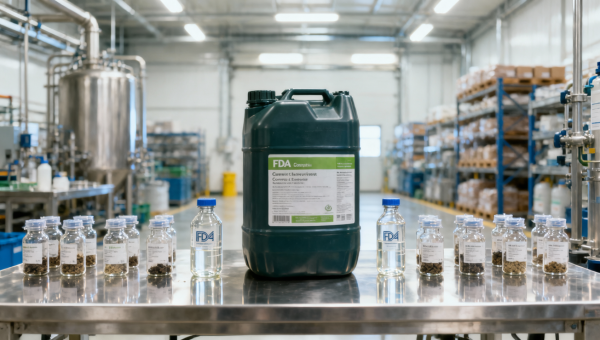
A sourcing team may be preparing to renew a preservative, processing aid, botanical extract, feed-adjacent ingredient, or chemical intermediate contract when a familiar supplier suddenly becomes harder to approve. The issue is often not the quoted price or even the chemical specification. A missing lot history, an unclear manufacturing change, incomplete contaminant records, or an inability to identify the responsible facility can turn a routine purchase into a market-access risk.
How do new FDA rules impact agri chemical sourcing strategies? They move sourcing decisions away from simple specification-and-price comparisons toward documented control of origin, manufacturing conditions, intended use, safety evidence, and traceability. The exact impact depends on whether the material falls within FDA jurisdiction. Food ingredients, dietary supplement ingredients, food-contact-related inputs, certain animal-food materials, and pharmaceutical or API-related chemicals can trigger FDA expectations. Conventional pesticides, by contrast, are generally regulated primarily by the EPA under a different framework. The first task is to classify the material correctly before applying the wrong compliance screen.
Start with jurisdiction, intended use, and product status
“Agri-chemical” is a commercial label, not a single regulatory category. A substance used on a farm, in a feed mill, in a crop-processing plant, or as a starting material for a bio-extract may sit under very different requirements depending on its intended use and how it is marketed.
A buyer should not assume that a supplier’s general statement of “FDA compliant” answers the real question. Ask what the material is, where it is made, what it will be used for, and which finished product category it enters. A solvent used only in industrial equipment has a different sourcing profile from the same solvent used in extraction for an ingredient intended for human consumption. Likewise, a botanical powder sold for food use requires a different evidence package from one supplied solely for technical agriculture.
This classification step prevents a costly mistake: collecting a thick file of generic certificates while failing to verify the regulatory route that actually governs the finished product. It also helps procurement involve the right internal reviewers early, whether that is food safety, regulatory affairs, quality assurance, veterinary specialists, or pharmaceutical quality personnel.
The supplier file now has to show control, not just identity
A certificate of analysis remains useful, but it is only one record from one batch. FDA-related sourcing risk is increasingly managed through the supplier’s ability to explain and document how the batch was made, controlled, released, stored, and traced. A supplier that can meet the numeric limits on a COA but cannot connect that document to a verified manufacturing site, raw-material source, or lot history creates an avoidable weak point.
For materials entering food, feed, or ingredient production, procurement should expect a supplier approval package that is proportional to the risk of the material. It may include a current specification, lot-specific COA, manufacturing-site details, allergen and composition statements where relevant, process-flow information, traceability procedures, and evidence of contaminant controls. For higher-risk inputs, buyers may also need documentation on supplier qualification, corrective actions, change notification, retention practices, and transportation conditions.
The important distinction is between a document that makes a claim and a system that supports the claim. “No heavy metals detected,” for example, is incomplete without clarity on the test method, reporting limit, sample identity, laboratory status, and whether the test plan matches the actual risk profile of the raw material. The same principle applies to microbial results, pesticide residues, residual solvents, mycotoxins, identity testing, and undeclared adulterants.
Traceability changes the way contracts and purchase orders are written
Traceability is often discussed as a recall issue, but its sourcing value appears much earlier. When a receiving team discovers a discrepancy, it needs to know whether the affected lot can be isolated, which production runs used it, and whether substitute material entered the same inventory stream. That is only possible when supplier and buyer records use compatible lot identifiers and maintain clear chain-of-custody information.
Stronger sourcing strategies therefore place operational requirements into supplier agreements rather than leaving them as informal requests. Useful provisions can cover:
- lot-level identification on shipping documents, containers, and COAs;
- advance notice of changes to raw materials, manufacturing location, process, analytical method, specification, or packaging;
- defined retention periods for batch and testing records;
- timely notification of deviations, contamination events, regulatory actions, or material withdrawals;
- the buyer’s right to request supporting records or conduct a risk-based supplier review; and
- rules for subcontracting, repacking, relabeling, and use of brokers.
These terms matter especially where distributors are involved. A distributor can be a valuable logistics partner, but it should not become a documentation blind spot. The buyer should be able to identify the original manufacturer, each handling point that could affect integrity, and the party responsible for release decisions. When the source is withheld as “confidential,” the procurement team should determine whether enough controlled information can still be reviewed to support approval. For high-risk or highly regulated materials, an unknown original manufacturer is usually difficult to justify.
Contaminant control becomes a sourcing criterion, not a laboratory afterthought
New or evolving FDA expectations tend to sharpen attention on foreseeable hazards rather than create a single universal testing list. The right question is not “Which test does every supplier need?” but “What could reasonably go wrong with this material, given its origin, process, and use?”
A sea-derived extract may require a different review from a grain-derived ingredient. A fermentation product presents risks unlike those of a mined mineral, while a solvent-extracted botanical needs scrutiny of both the plant material and the extraction process. Country of origin, seasonal variability, water source, storage duration, agricultural practices, and upstream processing can all influence the control plan.
Risk-based sourcing should connect each material to a documented hazard rationale. That rationale can identify which attributes require routine testing, which are controlled through supplier verification, and which events would trigger intensified review. A material with a stable history may warrant periodic verification rather than redundant testing of every possible analyte. Conversely, a material vulnerable to economically motivated adulteration or variable contamination may need tighter incoming controls, more frequent supplier evidence, or independent confirmation.
Do not confuse a specification with a hazard program
Specifications define acceptance criteria. They do not automatically prove that a supplier has identified and controlled the sources of failure. A well-designed program asks whether the sampling plan is representative, whether the method is suitable for the matrix, whether a result near a limit receives investigation, and whether trends are reviewed across lots. Procurement does not need to run the laboratory, but it does need enough technical input to avoid buying an attractive specification that cannot be consistently supported.
Foreign sourcing requires more than translated paperwork
International supply chains introduce practical issues that are easy to overlook during qualification. A document may be complete in form but difficult to verify. Site addresses may change, company names may be translated inconsistently, and a trading company may appear as the manufacturer on one record but not another. Time-zone delays, customs holds, repacking, and mixed-load transport can add further gaps between production and receipt.
Before approving an overseas source, reconcile the legal entity, manufacturing site, exporter, and shipper across the contract, invoice, COA, label, and shipping records. Confirm who owns quality decisions and who can authorize a manufacturing change. Evaluate whether the supplier can provide records promptly in a usable language and whether its testing methods, units, and limits can be interpreted against the buyer’s specification.
For FDA-regulated imports, import admissibility and supplier verification responsibilities may be relevant depending on the product category and the importer’s role. That does not mean every purchasing manager must become a regulatory specialist. It does mean that sourcing cannot treat customs clearance as proof of product compliance. A shipment can move successfully while underlying supplier controls remain inadequate for the intended finished product.
A practical way to re-rank suppliers
When requirements change, replacing every approved supplier is rarely necessary or sensible. A more disciplined response is to re-rank suppliers based on material risk and evidence quality. This identifies which relationships need deeper review first and which documentation gaps can be corrected without disrupting supply.
- Map each material to its intended use. Record whether it enters food, animal food, a dietary ingredient pathway, pharmaceutical production, technical processing, or another application. Include maximum use level and downstream processing where those details affect risk.
- Identify the material’s critical attributes. These may include identity, purity, microbial condition, residues, solvent profile, elemental impurities, allergens, moisture, particle size, or species-specific suitability for feed applications.
- Score the supplier’s evidence. Look beyond certificates: assess manufacturing transparency, change-control discipline, testing capability, response quality, traceability, and history of deviations or unresolved questions.
- Separate correctable gaps from unacceptable gaps. A missing translation or outdated questionnaire may be remediated. An unverifiable manufacturer, unexplained process change, or inability to provide lot traceability may require a hold or alternative source.
- Align incoming controls with the score. Higher-risk suppliers or materials may justify quarantine, expanded review, verification testing, or release by quality personnel. Lower-risk, well-controlled sources can be managed with routine record review.
- Set a review trigger. Reassess when the supplier changes site, feedstock, process, analytical methods, ownership, distribution route, or product claims—not only at a fixed calendar interval.
This approach makes compliance work more useful to procurement. Instead of receiving a vague instruction to “obtain more documentation,” the buyer knows which evidence is needed, why it matters, and what happens if it cannot be obtained.
Where sourcing teams often misjudge the risk
One frequent error is treating supplier certifications as interchangeable. A quality-system certificate may provide useful context, but it does not establish that a particular ingredient, extract, or chemical is appropriate for a particular FDA-regulated use. Another error is assuming that a long trading history eliminates the need for change control. A reliable supplier can still alter a raw-material source, equipment train, test method, or subcontractor in ways that affect the customer’s assessment.
Teams also sometimes focus on the purchase-stage file and overlook post-approval monitoring. Late COAs, repeated formatting changes, unexplained shifts in test results, substitutions in container labels, or reluctance to answer technical questions can be early signs that the supplier relationship needs reassessment. None of these signals proves noncompliance on its own. Together, they justify a closer look before the next purchase order is released.
Questions procurement teams ask during FDA-related supplier reviews
Do FDA rules apply to every chemical used in agriculture?
No. Regulatory responsibility depends on the product category and intended use. Inputs used in food, animal food, dietary ingredients, pharmaceuticals, or related processing may involve FDA requirements, while pesticides and many agricultural chemicals fall principally under other regulatory systems. Confirm the classification before creating a qualification plan.
Is a COA enough to approve a new source?
Usually not for a material with meaningful safety, quality, or regulatory impact. A COA supports batch acceptance, but supplier approval also depends on identity, manufacturing-site transparency, traceability, appropriate testing, change notification, and evidence that the result is representative of controlled production.
Should every supplier receive an on-site audit?
Not necessarily. Audit depth should reflect material risk, supplier transparency, the consequences of failure, and the adequacy of available evidence. A lower-risk supplier may be managed through documentation and remote assessment, while a critical API, vulnerable botanical, or complex high-risk ingredient may require more direct verification.
What should trigger a temporary sourcing hold?
A hold may be appropriate when lot identity cannot be reconciled, the original manufacturer is unverifiable, a significant process change was not disclosed, required contaminant evidence is missing, or records conflict in a way that affects release decisions. The response should be documented and coordinated with quality and regulatory functions before material is used.
Related Intelligence
- AgrochemicalsGrain Production: Key Practices for Improving Yield While Protecting Soil HealthGrain production strategies to improve yield, protect soil health, manage nutrients, reduce compaction, and build resilient fields for lasting results.
- AgrochemicalsHow Do New FDA Rules Affect Agri-Chemical Sourcing Strategies?How do new FDA rules impact agri chemical sourcing strategies? Explore practical supplier screening, traceability, contaminant control, and risk-based compliance steps.
- AgrochemicalsBrazil Eases Entry for Chinese Visitors Ahead of August Agrochemical ShowBrazil eases entry for Chinese visitors ahead of AgrochemShow, helping agrochemical businesses plan faster meetings, visits, and exhibition travel in Sao Paulo.
The Morning Broadsheet
Daily chemical briefings, market shifts, and peer-reviewed summaries delivered to your terminal.
