

The Authority in Global Agricultural Chemistry & Bio-Resources
Is There a Global Standard for Biochemical Engineering Product Quality?
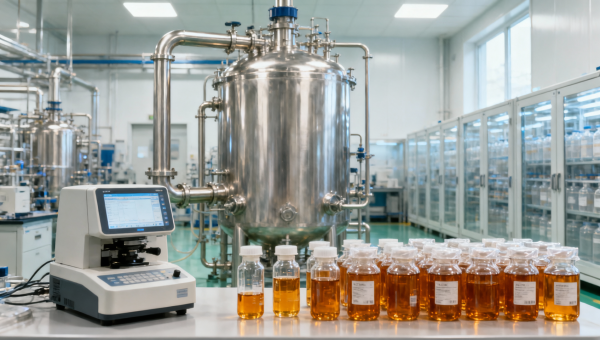
Is There a Global Standard for Biochemical Engineering Product Quality?
Is there a global standard for biochemical engineering product quality? Procurement teams often ask the question as though a single certificate could settle it. In practice, the answer is no—and that is not a failure of international regulation. Biochemical engineering covers products with very different risk profiles: active pharmaceutical ingredients, fermentation-derived intermediates, enzymes, botanical extracts, feed additives, water-treatment cultures, biostimulants, and components used in aquaculture or primary processing. A quality system appropriate for one may be insufficient, irrelevant, or legally inapplicable for another.
What exists instead is a layered international architecture. GMP requirements, pharmacopoeial monographs, ISO management standards, national product laws, environmental rules, customer specifications, and supply-chain controls overlap. The practical objective is not to collect the most certificates. It is to demonstrate that a product is consistently made, correctly identified, fit for its intended use, and traceable through every material, process, test, and change that could affect it.
That distinction matters when a buyer compares suppliers across borders. Two producers may both state that they operate under “international standards,” yet one may have a validated process and batch-release system suitable for a regulated API, while the other may hold an ISO 9001 quality-management certificate for a non-pharmaceutical fine chemical. Neither claim should be read without context.
A global framework, not a global certificate
For pharmaceutical materials, the closest thing to a shared international language is GMP. The World Health Organization publishes GMP guidance, the European Union maintains its own GMP framework, and the United States regulates pharmaceutical manufacturing through the Food and Drug Administration. For API manufacturing, ICH Q7 is widely recognized as a central reference for good manufacturing practice. It addresses areas such as quality management, personnel, buildings and equipment, documentation, materials management, production controls, laboratory controls, and handling of complaints and recalls.
Yet “widely recognized” does not mean identical legal treatment in every market. A company supplying an API into the United States, the European Union, Japan, or another regulated destination must examine the importing market’s specific requirements, the product’s regulatory classification, and the expectations placed on the finished-dose manufacturer. An API is not automatically acceptable because a facility claims GMP alignment. The buyer still needs to assess the manufacturing site, quality agreement, specifications, impurity profile, analytical methods, audit history where appropriate, and the reliability of the supporting documentation.
Outside pharmaceuticals, the picture becomes less uniform. ISO 9001 can indicate that an organization has an established quality-management system, but it does not certify that a particular biochemical product meets a particular regulatory specification. ISO 22000 and related food-safety systems may be relevant to ingredients and feed applications. Laboratory competence may be evaluated under ISO/IEC 17025, but accreditation scope matters: a laboratory is not necessarily accredited for every method or analyte it reports. Environmental obligations may also affect manufacturing and use, especially where microbial products, wastewater streams, emissions, or chemical releases are involved.
The EPA and FDA are frequently named together in supplier discussions, but they do different jobs. In the United States, FDA oversight is central to foods, drugs, and certain biological products, while EPA requirements can become relevant to pesticides, industrial chemicals, microbial products, environmental releases, and other regulated uses. Neither acronym should be treated as a universal badge of quality. Their relevance depends on what the product is, how it is marketed, and where it will be used.
Quality begins with intended use
The same fermentation capability can produce materials for radically different markets. A microbial biomass intended for industrial enzyme production, for example, may require controls that differ from those needed for a therapeutic recombinant protein or a live microbial agricultural input. The difference is not merely paperwork. It changes the acceptable impurity risks, testing strategy, packaging requirements, transport conditions, labeling, shelf-life evidence, and response to deviations.
This is why a useful quality assessment starts with a narrow question: what is the product expected to do, and what harm could arise if it varies? For an API, identity, assay, related substances, residual solvents, elemental impurities, microbial limits, and stability may be material considerations depending on the substance and applicable standards. For a botanical extract, the critical issues may include botanical identity, adulteration risk, extraction solvent residues, marker-compound consistency, contaminants, and lot-to-lot variability. For aquaculture inputs or systems, materials compatibility, biosecurity, water-contact performance, reliability of monitoring equipment, and local environmental permissions may carry greater weight than pharmaceutical-style GMP.
A standard only becomes meaningful when it is tied to that intended use. Generic language such as “premium grade” or “international quality” does not define an acceptance criterion. A controlled specification does.
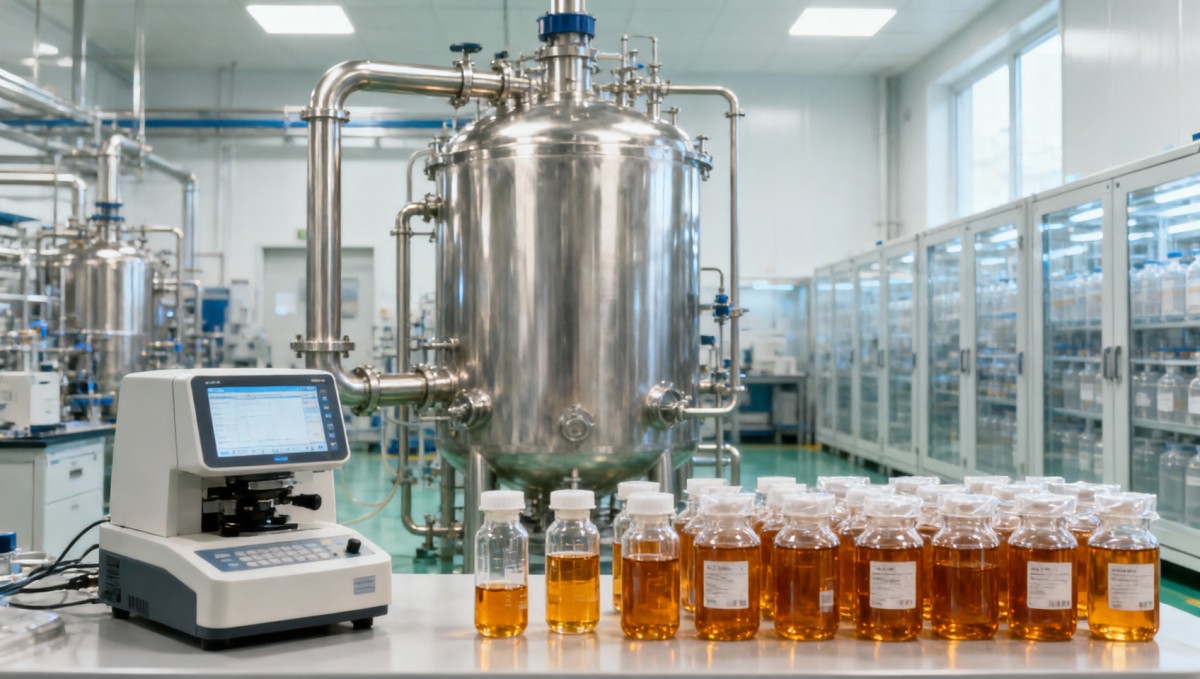
The controls that travel across borders
Although regulations vary, several quality disciplines are consistently important in biochemical engineering. They form the practical bridge between regional rules and global procurement.
The common weakness is not usually the absence of a certificate. It is the gap between the certificate and operational evidence. A supplier may provide a polished quality manual but be unable to explain how it manages out-of-specification results, reprocesses material, qualifies a new raw-material source, or prevents cross-contamination in shared equipment. Those questions reveal whether quality is embedded in the plant or confined to a presentation deck.
Why biochemical products are especially difficult to standardize
Biochemical engineering sits at the intersection of biology, chemistry, process engineering, and regulation. The source material itself can be variable. Strain performance can shift. Agricultural feedstocks may change with season, origin, storage conditions, or extraction method. A downstream purification step can alter the impurity pattern without changing headline assay. These are manageable risks, but only when the manufacturer understands which variables are critical and has a disciplined way to monitor them.
Scale-up introduces another complication. A process that produces acceptable laboratory material is not necessarily robust at commercial volume. Oxygen transfer, mixing, heat removal, foam control, nutrient delivery, hold times, filtration behavior, and cleaning effectiveness can all change as equipment size changes. For buyers of fermentation-derived ingredients or APIs, “commercial scale” should prompt follow-up questions about process consistency, batch history, technology transfer, and the evidence supporting the proposed manufacturing route.
Supply chains make the challenge broader still. Quality may be lost after release if the material is repacked by an uncontrolled party, exposed to unsuitable temperatures, stored beyond its retest date, or shipped without adequate chain-of-custody records. This is particularly relevant for sensitive extracts, enzymes, live cultures, and materials requiring controlled environmental conditions. A certificate of analysis confirms a batch at the point tested; it does not, by itself, prove that the delivered product remained unchanged.
How to evaluate an international supplier without reducing the review to paperwork
A risk-based supplier review is more useful than a universal checklist. The review should become deeper as patient, consumer, animal-health, environmental, or production risk rises. For a regulated pharmaceutical input, a formal quality agreement, technical audit, and detailed document review may be appropriate. For a lower-risk industrial biochemical, the emphasis may be on specification control, repeatability, safety data, contamination prevention, and the supplier’s ability to investigate complaints.
At minimum, procurement and technical teams should align on several points before approving a source:
- The exact product identity, grade, intended application, and target-market regulatory status.
- The current specification and whether every listed test is performed by the manufacturer, a qualified external laboratory, or both.
- Whether production is dedicated, campaign-based, or shared with other materials, and how segregation is managed.
- The origin and control of critical raw materials, including biological starting materials where relevant.
- The notification period and approval process for material changes.
- Storage, packaging, transport conditions, retest dates, expiry claims, and responsibility during distribution.
There is also a commercial reason to ask these questions early. When specifications are vague, disputes emerge late: after a batch has been produced, shipped, incorporated into a formulation, or installed in an operating system. A clear technical agreement does not eliminate problems, but it establishes what will happen when a result falls outside expectation. That is more valuable than broad assurances that a supplier “meets global quality standards.”
The role of independent industry intelligence
The quality question rarely belongs to quality assurance alone. Pharmaceutical procurement directors need to understand supplier concentration and trade restrictions. Chief agronomists must consider how biochemical inputs interact with local crop systems and registration rules. Industrial farming operators may need to weigh equipment reliability, water management, feed safety, and service support alongside product documentation.
This is the gap that specialist industry reporting can help address. AgriChem Chronicle examines the connected realities of fine chemicals and APIs, agricultural and forestry machinery, aquaculture and fishery technology, bio-extracts and ingredients, and feed and grain processing. In these sectors, a technical claim is more useful when readers can place it beside regulatory context, manufacturing evidence, trade conditions, and real operational constraints. Independent review does not replace supplier qualification, but it can make the right questions visible before procurement decisions become difficult to reverse.
The practical answer: define equivalence, then verify it
There is no single global standard for biochemical engineering product quality because there is no single biochemical product risk. The more defensible approach is to identify the applicable regulatory pathway, convert intended use into measurable specifications, and verify that the supplier’s process and supply chain can repeatedly meet them. GMP, ISO systems, pharmacopoeial references, environmental obligations, and regional approvals all have a place, but none should be treated as a shortcut around technical due diligence.
For global buyers, the final test is straightforward: can the supplier provide a transparent, controlled, and auditable explanation for why each batch is suitable for the intended market? If the answer depends on vague certificates, unsupported claims, or documents that do not match the actual manufacturing route, the quality discussion is not finished. It has only just begun.
- Fine Chemicals
- Bio-Extracts
- APIs
- Grain Processing
- Pharmaceutical Ingredients
- Biochemical Engineering
- Industrial Farming
- Feed Additives
- fishery technology
- Pharmaceutical Procurement
- Primary Processing
- Procurement Directors
- Aquaculture
- Botanical Extracts
- Feed and Grain
- Agricultural and Forestry Machinery
- Feed and Grain Processing
- Bio-Extracts and Ingredients
- Forestry Machinery
- industrial enzyme production
- is there a global standard for biochemical engineering product quality
Related Intelligence
- Food Grade EnzymesIs There a Global Standard for Biochemical Engineering Product Quality?Is there a global standard for biochemical engineering product quality? Explore GMP, ISO, traceability, and supplier checks for confident global sourcing.
- Food Grade EnzymesHow Enzymes for Cracker Formulation Improve Texture and Shelf LifeEnzymes for cracker formulation can enhance dough handling, crisp texture, and shelf life. Explore targeted enzyme strategies for consistent, high-quality crackers.
- Food Grade EnzymesWhat to Look for in Enzyme Blend Ingredients for Food and Supplement FormulasExplore enzyme blend ingredients for food and supplement formulas—learn how to assess activity, stability, compliance, and performance for smarter sourcing.
The Morning Broadsheet
Daily chemical briefings, market shifts, and peer-reviewed summaries delivered to your terminal.
