

The Authority in Global Agricultural Chemistry & Bio-Resources
What Documentation Is Required to Import Grain Milling Equipment?
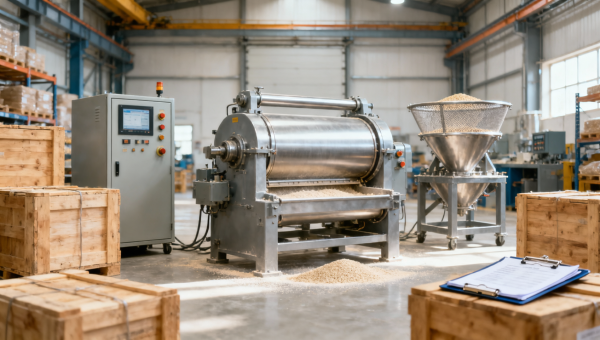
Importing grain milling equipment requires a core set of commercial, transport, customs, technical, and compliance records that all describe the same machine in consistent terms. The exact file set changes with the destination country, the equipment’s electrical configuration, whether it is new or used, and whether it will process food for human consumption or feed. A roller mill, hammer mill, plansifter, pneumatic conveyor, bagging unit, and complete milling line may be declared as separate items or as one functional installation, but the invoice, packing list, tariff classification, and technical documentation must support the chosen treatment.
Before shipment, establish the machine description that will appear across every document: equipment name, model, serial number where available, quantity, principal function, country of origin, electrical rating, and declared value. A vague description such as “mill machinery” often creates avoidable questions. “Roller mill for cereal grain processing, model X, 400 V, 50 Hz, with feed hopper and motor” gives customs authorities, carriers, insurers, and inspectors a clearer basis for review.
Core documents that travel with nearly every shipment
Commercial invoice. The commercial invoice is the primary value and transaction record. It should identify the seller and importer, invoice number and date, payment currency, Incoterm, country of origin, destination, and a line-by-line equipment description. Each line should show the unit price, quantity, total price, and any separately charged items such as crating, commissioning tools, spare parts, or freight. When a complete plant is split into modules, the invoice should distinguish milling machinery from building materials, installation services, or consumables rather than combining everything into a single lump sum.
Packing list. This document connects the invoice to the physical cargo. It normally states the number of packages, package marks, dimensions, gross and net weights, and contents of each crate, pallet, or container. Grain processing machinery is frequently shipped in mixed crates: a main machine body may be separate from motors, control cabinets, screens, belts, rollers, fasteners, and spare parts. The packing list should reveal that arrangement. Customs examinations and port handling are slower when a crate marked “accessories” contains several undeclared equipment categories.
Bill of lading or air waybill. The transport document records shipment terms, consignor, consignee, route, package count, and cargo reference. Its descriptions do not need to reproduce the full technical specification, but they must not conflict with the invoice or packing list. The consignee name must also match the importing entity or an authorized customs representative. For sea freight, confirm whether an original bill of lading, express release, or another release method is being used before the cargo reaches the port.
Customs declaration data. The importer or customs broker submits the formal declaration under the destination country’s system. Supporting data normally includes the tariff classification, customs value, origin, shipping terms, freight and insurance charges where relevant, and importer identification details. The declaration is not a simple copy of an invoice. Customs valuation rules can require additions to the declared transaction value, such as certain assists, royalties, packing charges, or transport costs, while local treatment of installation or post-import services may differ.
Certificate of origin. A certificate of origin may be requested by customs, a bank, a customer, or a preferential trade arrangement. It should state the actual origin of the goods, not merely the country of shipment. Equipment assembled in one country from major imported components requires special attention because origin rules may depend on the degree of processing and applicable trade agreement. A supplier declaration that says “exported from” is not always enough to prove preferential origin.
Insurance certificate, when cargo insurance is arranged. This record should identify the insured shipment, coverage terms, transit route, and insured value. It is particularly relevant where delivery terms place marine insurance responsibility on one party or where a letter of credit requires evidence of cover. It does not replace a transport document or prove the customs value of the equipment.
Classifying milling equipment correctly
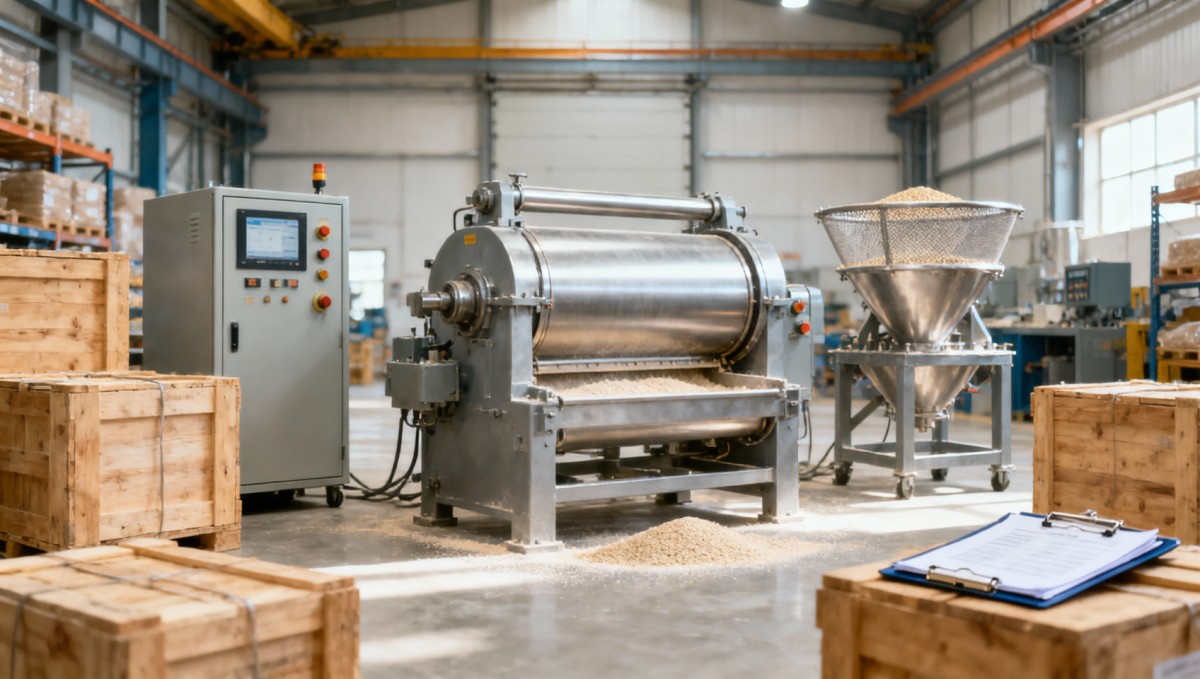
Tariff classification shapes duty, import restrictions, statistical reporting, and sometimes eligibility for preferential treatment. Grain milling equipment is often classified by its principal function, but the functional boundary deserves careful review. A machine designed to clean grain before milling, a flour sifter, a roller mill, and a conveying system do not necessarily belong under the same tariff heading. A line imported as a complete, unassembled installation can be treated differently from individual machines sold and shipped independently.
Provide the broker with a technical description early enough to resolve classification before cargo is booked. Useful evidence includes a general arrangement drawing, process flow diagram, catalogue page, bill of materials, and a short statement of the machine’s role in the milling process. Describe whether the unit cracks, grinds, rolls, sifts, separates, conveys, bags, or controls product flow. The presence of a motor alone does not make an item electrical equipment for classification purposes; its principal mechanical or processing function can remain decisive.
Do not assign a code solely because a similar-looking machine used it in a previous shipment. Capacity, product application, integrated functions, and the form of importation can change the result. A quotation that groups a destoner, magnetic separator, roller mill, elevator, filter, and control cabinet under one title may be commercially sensible, yet inadequate for customs classification.
Technical records that support admission and installation
Customs documentation establishes what is crossing the border. Technical records establish whether the equipment may be placed on the market, connected to local utilities, or used safely after arrival. The destination jurisdiction determines the applicable obligations, but the following records are commonly requested during conformity review, installation, insurance assessment, or site acceptance.
- Machine specification sheet: model designation, throughput range, dimensions, installed power, voltage, frequency, phase, compressed-air demand, dust-extraction requirements, and intended grain types. Throughput should be identified as a design or rated condition, because output varies with grain moisture, screen aperture, roller setting, product specification, and upstream cleaning quality.
- Electrical documentation: circuit diagrams, control-panel layout, motor nameplate details, cable requirements, grounding instructions, and component declarations where the market requires them. A control cabinet built for 60 Hz supply may need more than a plug change in a 50 Hz installation. Motor speed, fan performance, protective devices, and programmed drive settings all require review.
- Operating, maintenance, and safety manuals: installation instructions, lockout procedures, lubrication schedule, roller or screen replacement method, guard locations, emergency-stop function, cleaning instructions, and residual hazards. Manuals should be available in the language required by the destination market where local rules impose that condition.
- Conformity and test records: declarations, inspection reports, test certificates, or other evidence relevant to machinery safety, electrical safety, electromagnetic compatibility, pressure systems, or food-contact materials. The required form varies by market and machine configuration. A declaration for a motor or sensor does not automatically cover the assembled milling machine.
- Dust and explosion-control information: grain dust can form an explosive atmosphere under certain conditions. Where equipment includes aspiration, filters, cyclones, rotary valves, dust collectors, explosion vents, isolation devices, or bonded ducting, retain the design information showing intended location and service. The documentation must match the actual supplied configuration, not an optional catalogue feature.
For food-grade applications, material declarations can matter as much as the machine’s mechanical performance. Identify product-contact surfaces, coatings, food-grade lubricants, seals, sieve materials, and any polymer components exposed to grain or flour. Stainless steel is not, by itself, a complete food-contact statement; alloy grade, finish, weld treatment, cleaning chemistry, and the location of the component may be relevant. Feed milling may be regulated under a separate framework, especially where additives, medicated feed, or cross-contamination controls are involved.
New, used, rebuilt, and prototype machines require different evidence
New equipment is generally supported by manufacturer specifications, factory test records, serial-number identification, and current conformity documentation. Used equipment often needs additional records because authorities, insurers, and installation contractors may ask about condition, age, prior use, refurbishment scope, and remaining safety features. Missing guards, altered wiring, obsolete control components, or corrosion inside product-contact zones can turn a straightforward import into a repair and recertification project.
When a machine is described as rebuilt or refurbished, document what was actually replaced or modified. A rebuild that includes new rollers, bearings, belts, screens, and paint is different from one that changes the control system, motors, safety interlocks, dust collection interface, or processing capacity. The invoice should avoid presenting a materially rebuilt machine as “new” unless that description is accurate under applicable law and commercial terms. Photographs, pre-shipment inspection records, serial-number lists, and a condition report can clarify the status of used assemblies.
Prototype, demonstration, leased, or temporarily imported equipment can follow a different customs route from permanently imported machinery. Temporary admission may require a bond, re-export commitment, or specific supporting documents. Do not assume that a demonstration mill can be converted to permanent use later without additional declarations, duties, or compliance action.
Records linked to wood packaging, crating, and plant-health controls
Large roller mills and sifters are frequently packed in timber crates or on wood skids. Many destinations control wood packaging material because untreated wood can carry pests. Where applicable, retain the treatment or marking evidence for crates, pallets, dunnage, and blocking. The obligation concerns the packaging material, not the milling machine itself, but non-compliant wood can hold up an otherwise correctly documented shipment.
Plant-health certificates usually concern the grain or other biological commodities, not clean industrial machinery. Confusion arises when used equipment contains residual grain, flour dust, insects, or organic debris. A used cleaner, elevator boot, pneumatic line, or bagging unit should be cleaned before packing, and the cleaning process should be documented when contamination is a realistic concern. An inspection finding of residual product can lead to cleaning, treatment, or rejection at the border.
Keep the document trail aligned with the physical machine
Serial numbers are one of the simplest ways to prevent disagreement between commercial, customs, and technical records. List them on the invoice or an attached equipment schedule when the equipment has traceable serial plates. For a system without serial numbers on every component, use manufacturer assembly numbers, crate references, or a bill of materials that ties major modules to the main machine. Control cabinets, main drives, dust filters, and bagging modules are especially useful to identify separately.
Descriptions should also match the actual shipment condition. If motors are removed for transport, say so. If the control panel ships in a separate crate, identify it separately. If the invoice includes commissioning spares, label them as spares rather than embedding them in the machine value without detail. Replacement rollers, screens, bearings, belts, and sensors may attract different tariff treatment from the primary equipment and may be subject to different quantity or origin questions.
A frequent paperwork problem is the mismatch between the sales contract and the customs invoice. The contract might describe a turnkey milling line, while the invoice contains only machinery because installation is performed after arrival. That distinction needs to be explicit. Record the division between delivered goods, engineering, erection, testing, training, and local services. It supports customs valuation and prevents a customs authority from assuming that an omitted item is undeclared equipment.
Before release: questions that expose missing documents
Confirm whether the importer has the registrations, tax identifiers, permits, or broker authorizations required to make the declaration. Some jurisdictions impose special conditions on food-processing equipment, used machinery, radio-enabled controls, industrial electrical equipment, or equipment installed in hazardous dust areas. These conditions are destination-specific and should be confirmed against the final machine configuration rather than a broad product category.
Verify that the shipment documents use the same legal importer name, address, country of origin, Incoterm, currency, package count, and goods description. Resolve discrepancies before departure. A corrected invoice after arrival is possible in many settings, but it can delay clearance and complicate release of containers subject to storage or demurrage charges.
Finally, separate import clearance from commissioning approval. Customs release does not prove that a grain milling line is ready to operate. Site installation still requires adequate foundation loading, electrical supply, dust extraction, guarding, earthing, access for maintenance, and connection of any safety devices supplied separately. The complete record set should remain available after clearance because it supports installation, inspection, warranty claims, spare-parts ordering, and future resale or re-export.
Related Intelligence
- Milling MachineryWhat Documentation Is Required to Import Grain Milling Equipment?What documentation do I need for importing grain milling equipment? Explore essential customs, technical, compliance, and shipping records for smooth clearance.
- Milling MachineryDo Agricultural Processing Operations Require Specific Environmental Permits?Does agricultural processing require specific environmental permits? Discover key air, wastewater, stormwater, waste, and chemical compliance requirements before expanding operations.
- Milling MachineryPellet Mill Vendor Comparison: Evaluate Capacity, Energy Use, and SupportPellet mill vendor comparison: evaluate sustainable capacity, energy use, pellet quality, controls, and lifecycle support to select a reliable, cost-effective solution.
The Morning Broadsheet
Daily chemical briefings, market shifts, and peer-reviewed summaries delivered to your terminal.
