

The Authority in Global Agricultural Chemistry & Bio-Resources
What Are the Main Risks of Non-Transparent Agricultural Supply Chains?
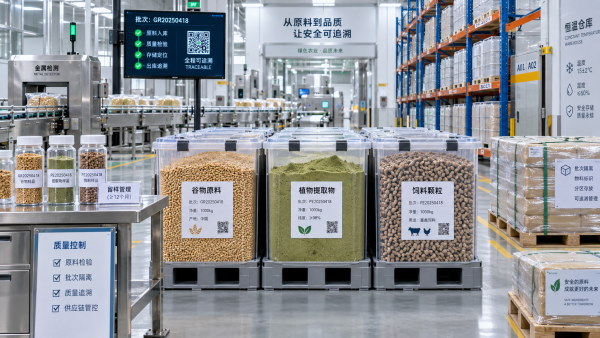
Non-transparent agricultural supply chains create risk long before a product reaches a farm, a processing line, a feed mill, or a regulated manufacturing facility. The immediate concern is usually traceability: a buyer cannot clearly establish where a material came from, who handled it, or whether it met the agreed specification. But the operational consequences are broader. Limited visibility can turn an ordinary quality issue into a food-safety event, a shipment delay into a production stoppage, or a low-cost purchase into a regulatory and reputational liability.
For anyone asking what are the main risks of non-transparent agri supply chains, the practical answer is this: when origin, handling, testing, and supplier relationships cannot be verified, an organization loses the ability to make informed decisions before a problem reaches its operations. The greatest exposure is not simply “unknown information.” It is the inability to isolate, investigate, replace, or defend a supply decision when something goes wrong.
Unverified origin makes quality claims difficult to trust
Agricultural materials often pass through collectors, brokers, consolidators, warehouses, processors, and exporters before reaching the final buyer. This can be normal commercial practice. The risk begins when documents identify only the immediate seller while the actual producer, growing area, processing site, or storage history remains unclear.
For grain, feed ingredients, botanical extracts, oils, fishery inputs, and chemical precursors, origin affects more than a label. It can influence expected composition, contamination risk, seasonal availability, permitted uses, and consistency between batches. A supplier may provide a certificate of analysis, but that document has limited value if the buyer cannot link the sample to a clearly controlled lot and a credible chain of custody.
This matters especially where a purchased material will be blended, concentrated, processed, or used as an input for a higher-value product. Once material from unclear sources is mixed into a larger batch, separating compliant stock from questionable stock may become expensive or impossible. A small documentation gap at intake can therefore affect a much larger volume downstream.
Food safety, feed safety, and contamination incidents become harder to contain
Transparency is a control mechanism during an incident. If a contaminant, undeclared substance, pathogen, residue concern, or damaged shipment is identified, the first operational question is not simply whether the material failed a test. It is: Which lots are affected, where did they go, and what shared source or handling point connects them?
In a transparent network, records can help identify the relevant producer group, processing run, transport leg, warehouse location, and customer deliveries. In a non-transparent network, businesses may need to hold or withdraw a much wider range of inventory because they cannot confidently define the affected boundary. That creates avoidable waste, delayed customer communication, and disruption to production planning.
The risk is particularly acute when raw materials are converted into products with little visual distinction between lots. A feed ingredient may look acceptable despite a storage problem. A plant extract may meet a basic appearance check while carrying an unexpected impurity. A processed grain shipment may be difficult to trace once it has entered a shared silo system. Transparency does not eliminate contamination, but it makes detection, segregation, and response more manageable.
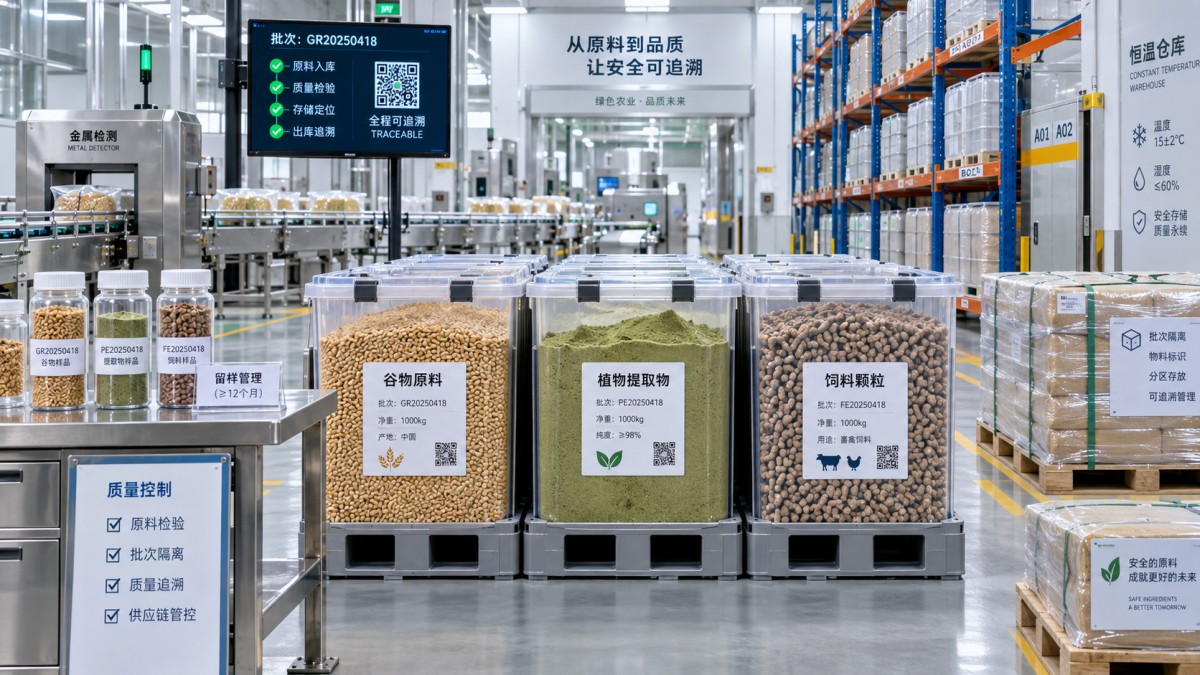
Regulatory compliance can fail even when the product appears usable
A material can perform adequately in use and still create a compliance problem. Agricultural and biochemical supply chains may involve requirements related to material identity, permitted residues, import documentation, environmental controls, labeling, storage, worker safety, or manufacturing practices. The applicable obligations depend on the product and market, but the underlying procurement issue is consistent: compliance cannot be demonstrated through assumptions.
Non-transparent supply chains often rely on broad assurances such as “export quality,” “standard grade,” or “equivalent material.” Those descriptions do not establish whether the material was produced, processed, transported, or documented in a way that supports its intended use. This is a major concern for ingredients entering food, feed, pharmaceutical, nutraceutical, or specialty chemical workflows, where the buyer may need more than a commercial invoice and a generic product description.
Compliance risk also extends to suppliers’ subcontractors. A direct supplier may have sound internal controls but source part of its volume through informal channels during a shortage. If that substitution is not disclosed, the buyer may continue approving material based on a supplier profile that no longer reflects the actual supply base.
Counterfeit, adulterated, and substituted inputs become easier to introduce
Where products are difficult to distinguish by sight, price pressure can encourage substitution. This may involve dilution, relabeling, mixing grades, replacing a specified ingredient with a lower-cost alternative, or presenting material from an unapproved source as an approved lot. The problem is not limited to high-value fine chemicals. Seeds, crop-protection inputs, feed additives, spare parts, machinery components, fish health products, and bio-based ingredients can all be vulnerable when purchasing controls are weak.
A common mistake is to treat this only as a supplier fraud issue. In practice, it is also a specification-management issue. If procurement teams have not defined the critical attributes of a material, required proof of origin, acceptable test methods, lot identification, and change-notification rules, they may not notice a substitution until performance changes or a downstream customer raises a complaint.
Counterfeit agricultural inputs can create direct production loss. In more sensitive applications, a substituted or adulterated material may introduce quality, safety, or regulatory exposure that is disproportionate to the original purchase value. The cheapest offer is not necessarily the highest-risk choice, but a price difference without a clear explanation should trigger closer scrutiny of source, grade, and documentation.
Supply disruption becomes a surprise instead of a managed event
Transparency is also about knowing how dependent a business is on a single region, processor, port, warehouse, or intermediary. A supply chain may look diversified because several vendors appear on the approved supplier list, while all of them draw from the same upstream producer network or logistical route.
That hidden concentration creates a false sense of resilience. When weather damage, disease pressure, transport restrictions, equipment failure, export delays, or local storage constraints affect the shared source, several “independent” suppliers may fail at once. Procurement teams then discover that they do not have genuine alternatives, only different commercial contacts.
For agricultural machinery and commercial aquaculture systems, opacity can affect after-sales support as well. A buyer may receive equipment through a distributor without a clear record of component origin, authorized parts availability, service responsibility, or technical documentation. The asset may operate initially, but maintenance becomes difficult when a critical part needs replacement or a warranty issue arises.
Financial exposure often appears after the purchase order is signed
Non-transparent sourcing can distort the apparent cost of a material. A low quoted price may exclude the cost of additional testing, rejected loads, storage holds, emergency purchases, rework, customer claims, or delayed production. These costs usually fall on the organization that receives and uses the material, even if an intermediary supplied incomplete information.
There is also a working-capital issue. When inventory cannot be released because its documentation is incomplete, the business may have stock on hand but no usable supply. When a problem cannot be traced to a defined lot, more inventory may need to be quarantined than necessary. In seasonal agricultural markets, replacing a rejected input may be difficult because the relevant crop, processing window, or shipping capacity is no longer readily available.
Reputational damage is usually driven by the response, not only the incident
Buyers, regulators, business partners, and end users recognize that supply incidents can occur. What damages confidence most severely is an organization that cannot explain what it purchased, where it was used, or how it is addressing the issue. Weak traceability makes credible communication difficult because the company may not know the full scope of the problem.
This is especially relevant for businesses making claims about responsible sourcing, ingredient quality, environmental practices, or product consistency. Public claims create an expectation that the organization can substantiate them. If supplier records cannot support those claims, the risk is not just a disputed shipment. It is a wider challenge to the credibility of the company’s procurement and quality systems.
What good transparency looks like in practice
Transparency does not require every buyer to own farms, factories, warehouses, or transport fleets. It requires enough verified information to make operational decisions. The appropriate level depends on the material’s risk, its intended use, and the consequences of failure.
For a low-risk commodity purchase, a practical system may focus on consistent supplier identification, lot numbers, delivery records, agreed specifications, and an escalation process for changes. For higher-risk ingredients, regulated materials, or inputs used in sensitive production, the control set normally needs to be deeper: source qualification, traceable batch records, documented testing, transport and storage conditions where relevant, and clear accountability when a supplier uses subcontractors.
The most useful starting point is to identify the point at which your organization loses sight of the material. Is it before primary production, during aggregation, after processing, in transit, or at the point a distributor substitutes stock? That question produces a more useful improvement plan than asking for “more traceability” in general.
Prioritize the information that changes a decision
- Who produced or processed the material, and can that source be linked to the delivered lot?
- Which specification is critical for the intended application, beyond a broad grade name?
- Who handled, stored, blended, or repackaged the material before delivery?
- Can the supplier identify upstream subcontractors and notify the buyer before a source changes?
- What records would be needed to isolate affected stock within hours rather than days?
- Do multiple approved suppliers depend on the same upstream region, processor, or transport route?
Documentation alone is not enough. A large file of certificates can create the appearance of control while leaving the central questions unanswered. Records should connect to real lots, real facilities, and real handoffs. They should also be reviewed by people who understand what the material is supposed to do. A procurement record may confirm that a shipment arrived; it does not prove that the shipment is suitable for a particular formulation, feed program, processing line, or regulated application.
Build transparency into supplier selection, not only incident response
Organizations often strengthen traceability after a rejection, recall, shortage, or audit finding. By then, the options are limited. Supplier onboarding is the better point to establish expectations: what information must accompany each lot, which changes require prior notice, how nonconforming material is handled, and what access the buyer has to evidence behind quality claims.
Risk-based sourcing is more effective than imposing the same burden on every purchase. A routine, readily replaceable commodity may need a lighter approach than an active ingredient, specialized extract, fish-health input, or equipment component that can interrupt an entire operation. The more difficult the material is to replace, the more important it is to understand its true upstream dependencies.
Reliable sector intelligence can support this work by helping teams interpret supply-market signals, technical requirements, and regulatory exposure across primary industries. Publications such as AgriChem Chronicle, which covers fine chemicals, agricultural machinery, aquaculture technology, bio-extracts, and feed and grain processing, are most useful when they help buyers ask better sourcing questions rather than treating published information as a substitute for supplier-level verification.
A transparent agricultural supply chain is not one that promises zero risk. It is one in which a business can identify what it bought, demonstrate why it was accepted, see where disruption may spread, and act quickly when a condition changes. That capability protects quality, continuity, compliance, and trust at the same time.
- Fine Chemicals
- Bio-Extracts
- Agricultural Machinery
- Grain Processing
- Aquaculture Systems
- Feed Additives
- Feed Ingredients
- Aquaculture
- Botanical Extracts
- Feed and Grain
- Feed and Grain Processing
- Commercial Aquaculture Systems
- Aquaculture Technology
- Agricultural Supply Chain
- commercial aquaculture
- transparent agricultural supply chain
Related Intelligence
- AgrochemicalsWhat Are the Main Risks of Non-Transparent Agricultural Supply Chains?what are the main risks of non transparent agri supply chains? Explore traceability, compliance, contamination, disruption, and cost risks—plus practical controls.
- AgrochemicalsGrain Production: Key Practices for Improving Yield While Protecting Soil HealthGrain production strategies to improve yield, protect soil health, manage nutrients, reduce compaction, and build resilient fields for lasting results.
- AgrochemicalsHow Do New FDA Rules Affect Agri-Chemical Sourcing Strategies?How do new FDA rules impact agri chemical sourcing strategies? Explore practical supplier screening, traceability, contaminant control, and risk-based compliance steps.
The Morning Broadsheet
Daily chemical briefings, market shifts, and peer-reviewed summaries delivered to your terminal.
