

The Authority in Global Agricultural Chemistry & Bio-Resources
Are Third-Party Auditors Necessary When Buying Grain Machinery?
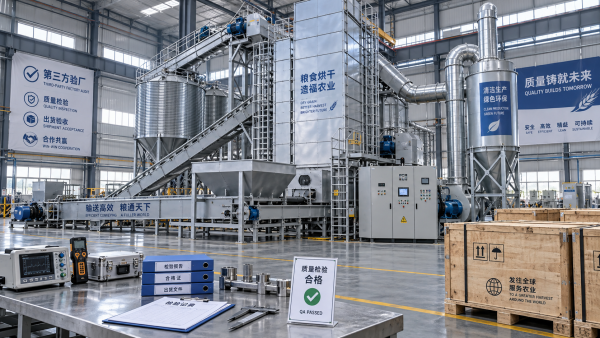
Are Third-Party Auditors Necessary When Buying Grain Machinery?
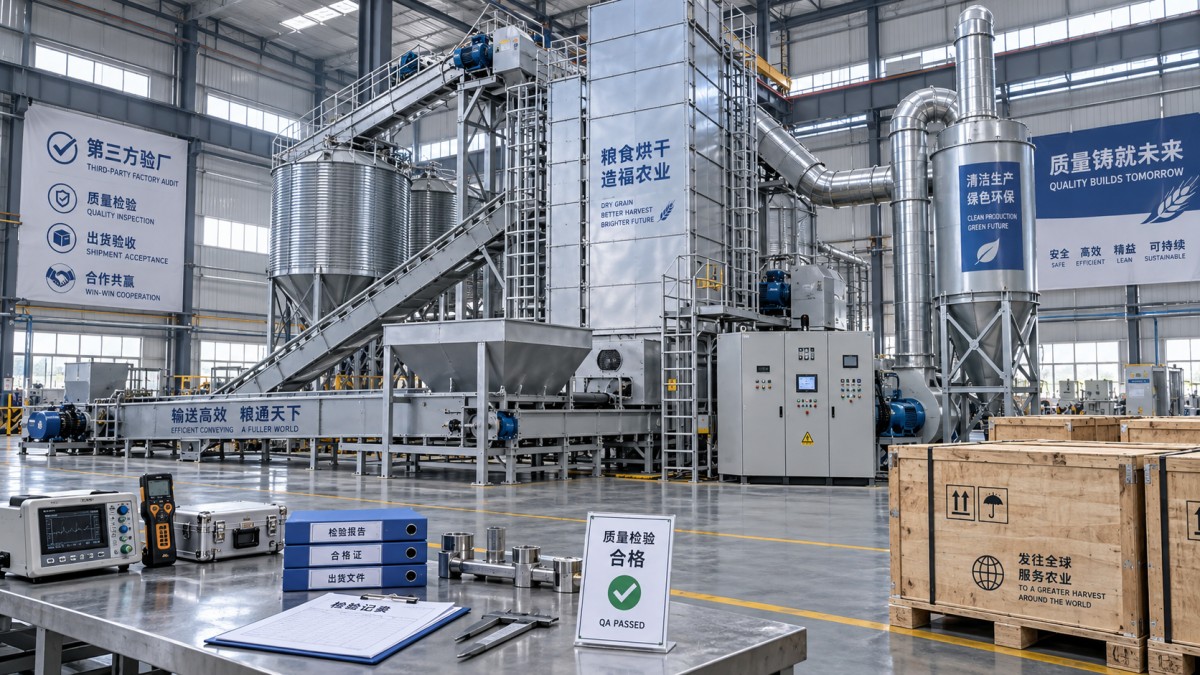
When investing in grain machinery, buyers must balance equipment performance, compliance, supplier credibility, and long-term operating costs. Independent verification often determines whether those assumptions withstand operational reality.
So, is it necessary to hire third party auditors for grain machinery? The short answer is not always, but it is strongly advisable for high-value, customized, cross-border, or compliance-sensitive purchases.
An audit is most valuable when the buyer cannot personally verify manufacturing controls, test procedures, component sourcing, or shipment readiness. It converts supplier claims into documented evidence before capital is exposed.
For industrial farming operators, grain processors, and procurement directors, the question is less about whether audits add cost. It is whether unaudited risk could create larger losses.
What Buyers Really Need to Verify Before Purchasing
Grain machinery purchases rarely involve a single risk. A dryer, cleaner, conveyor line, silo system, or milling unit must perform reliably within a larger handling operation.
Buyers need confidence that stated throughput, moisture reduction, energy consumption, automation capability, and safety features reflect actual machine performance rather than optimistic catalog specifications.
They also need to know whether the supplier has stable production capacity. A technically capable prototype workshop may still lack the process discipline required for repeatable commercial manufacturing.
For international procurement, documentation creates another concern. Machinery may require CE marking, electrical compliance evidence, pressure-vessel records, emissions documentation, or local safety certification before commissioning.
Third-party auditors examine these practical issues with less commercial pressure than a sales representative. Their role is to validate evidence, identify deviations, and report findings in usable procurement language.
This matters because grain machinery failure can affect more than production schedules. It can increase spoilage, create fire or dust-explosion exposure, damage stored grain, and disrupt contracted deliveries.
When Third-Party Audits Deliver the Highest Return
Auditing is not equally necessary for every purchase. A buyer sourcing standard replacement belts, bearings, or small motors from an approved distributor may require only routine incoming inspection.
The business case becomes stronger when machinery is expensive, engineered to order, difficult to return, or sourced from a supplier with limited operating history.
Large drying systems are a clear example. Poor airflow design, inadequate insulation, weak burner integration, or incorrect control logic may only become visible after installation.
By that stage, correcting defects can require expensive site work, delayed harvest handling, additional fuel use, and disputes over who is responsible for performance shortfalls.
Audits are also valuable when a project includes several connected machines. Interfaces between intake pits, elevators, cleaners, dryers, conveyors, bins, and control systems frequently create avoidable commissioning problems.
Procurement teams should consider independent auditing when the supplier is new, the country of manufacture is distant, the equipment is customized, or on-site visits are impractical.
It is particularly useful where payment terms require a substantial advance deposit. Verification before milestone payments protects leverage and reduces the risk of financing incomplete or nonconforming work.
For buyers managing regulated food, feed, seed, or export operations, audit findings can also support internal governance. Documented supplier qualification is easier to defend than informal assurances.
Supplier Audit, Production Inspection, and Factory Acceptance Testing
“Third-party audit” is often used broadly, but buyers should distinguish among supplier audits, in-process inspections, pre-shipment inspections, and factory acceptance tests. Each answers a different question.
A supplier audit evaluates the manufacturer’s systems. It reviews production facilities, engineering controls, quality procedures, traceability, workforce capability, calibration practices, and management of nonconforming materials.
This assessment is most useful before selecting a new supplier. It helps buyers determine whether the factory can consistently build the requested machinery, not merely produce a convincing sample.
An in-process inspection occurs while fabrication is underway. It can check steel grades, welding quality, dimensional tolerances, component installation, paint preparation, and adherence to approved drawings.
For critical assemblies, inspectors may review welding procedure qualifications, welder certifications, non-destructive testing records, and material certificates. These records are difficult to reconstruct credibly after shipment.
A pre-shipment inspection focuses on the finished goods. It verifies quantities, appearance, labeling, packing, accessories, manuals, spare parts, and visible conformity against purchase-order requirements.
Factory acceptance testing, often called FAT, is the most important performance-oriented step. It confirms that controls, motors, safety interlocks, sensors, and mechanical functions operate as specified.
Not every grain machine can be tested under full production load at the factory. However, buyers should still require a defined FAT protocol and identify limitations clearly.
For example, a dryer may undergo motor rotation, burner control, alarm, interlock, and automation checks. Actual moisture-removal capacity may need later verification during site acceptance testing.
What an Auditor Should Inspect in Grain Machinery
A useful audit scope begins with the buyer’s operating requirements. Generic checklists are insufficient when grain type, climate, storage duration, dust conditions, and target throughput vary significantly.
The auditor should compare the manufacturer’s technical submission against the purchase order, approved drawings, bill of materials, and applicable standards before visiting the factory.
Mechanical construction deserves close attention. Inspectors should review frame rigidity, corrosion protection, bearing arrangements, drive alignment, access platforms, guards, and maintenance access points.
For conveying equipment, key checks include belt or chain specifications, bucket materials, pulley alignment, tensioning systems, discharge design, and measures that limit grain damage or carryback.
Dust management requires equal scrutiny. Grain dust presents operational, health, and fire risks, especially at transfer points, elevators, cleaners, and enclosed conveying sections.
Auditors should assess whether dust extraction connections, sealed enclosures, access doors, grounding provisions, and explosion-protection measures align with the project’s stated risk assessment.
Electrical and automation reviews should verify enclosure ratings, cable identification, emergency stops, control panel workmanship, programmable logic controller configuration, and alarm response logic.
Documentation is not secondary. Accurate manuals, wiring diagrams, spare-parts lists, maintenance schedules, test records, and certificates reduce commissioning time and improve future serviceability.
Where equipment will be installed in a regulated market, the auditor should verify declared compliance evidence. They should not assume that a nameplate or logo proves conformity.
How to Evaluate the Cost Versus the Risk
Audit fees should be evaluated against the total cost of ownership, not merely against the purchase price. A modest inspection cost can prevent disproportionate commercial consequences.
Consider a grain intake and drying line purchased for several hundred thousand dollars. A small design or assembly defect could delay operation during a narrow harvest window.
The resulting loss may include emergency rental equipment, overtime labor, wet-grain spoilage, contract penalties, damaged customer relationships, and higher energy consumption after rushed modifications.
In contrast, an auditor may identify incomplete guarding, undersized motors, missing components, inconsistent welding, or control-system deviations while the supplier can still correct them efficiently.
Buyers should estimate the expected cost of failure by considering defect probability, impact severity, time required to remedy issues, and the supplier’s ability to provide field support.
Where these factors are low, a full audit may be excessive. A remote document review, video inspection, or targeted pre-shipment check may provide sufficient assurance.
Where they are high, avoiding independent verification is usually a false economy. The goal is proportional due diligence, not maximum inspection for every transaction.
How Procurement Teams Should Select an Independent Auditor
Auditor independence is essential. The inspection provider should report to the buyer, use an agreed scope, disclose conflicts of interest, and avoid compensation tied to supplier approval.
Technical relevance also matters. A general consumer-goods inspector may recognize packaging defects but lack the engineering knowledge needed to assess industrial grain handling equipment.
Choose auditors with experience in agricultural machinery, bulk solids handling, fabrication quality, electrical controls, and relevant regional compliance frameworks. Their reports should show practical technical judgment.
Before engagement, request a sample report with sensitive information removed. It should contain photographs, measurable observations, document references, defect classifications, and clear recommendations.
A report that simply states “passed” or “failed” is rarely enough. Buyers need to understand what was inspected, what could not be verified, and what corrective action is required.
The auditor should also be capable of escalating major nonconformities quickly. Discovering a serious issue days before shipment is useful only when decision-makers receive the information immediately.
Language capability can influence audit quality in international projects. Inspectors must communicate accurately with factory personnel while preserving the buyer’s contractual requirements without ambiguity.
Build the Audit Requirements Into the Purchase Contract
Auditing works best when it is defined before the purchase order is issued. Last-minute inspections often fail because acceptance criteria were never agreed in measurable terms.
The contract should identify applicable drawings, performance specifications, inspection stages, documentation requirements, testing procedures, notification periods, and responsibility for corrective actions.
It should specify whether the buyer or auditor may witness tests, access production records, photograph equipment, review calibration certificates, and inspect subcontracted critical components.
Define the treatment of nonconformities. Material deviations should require corrective action and documented closure before shipment, while minor cosmetic issues may be recorded separately.
Payment milestones should support the process. Retaining a reasonable final payment until successful inspection, documentation delivery, and agreed acceptance conditions are complete strengthens accountability.
Buyers should avoid vague clauses requiring machinery to be “good quality.” Specific requirements concerning capacity, materials, safety features, component brands, and tests are more enforceable.
For performance-critical installations, add site acceptance testing. This establishes how throughput, grain damage, moisture performance, energy use, and control behavior will be measured after commissioning.
Warning Signs That Make Auditing Essential
Some supplier behaviors should immediately increase the level of independent scrutiny. These signals do not prove misconduct, but they indicate that informal trust is insufficient.
One warning sign is reluctance to share detailed drawings, component lists, test records, or quality procedures. Legitimate manufacturers may protect proprietary information while still providing meaningful evidence.
Another concern is inconsistent technical communication. If the sales team repeatedly changes capacity claims, power requirements, material grades, or delivery dates, execution risk may be elevated.
Buyers should also investigate unusually low pricing. A lower bid can reflect efficient manufacturing, but it can also conceal inferior components, reduced steel thickness, omitted safeguards, or unrealistic scope assumptions.
Limited references are not automatically disqualifying, especially for new suppliers. However, they justify factory verification and closer examination of production capability before committing funds.
Rapidly changing subcontractors can create traceability issues. This is especially relevant for gearboxes, burners, electrical panels, motors, dust-control equipment, and structural steel fabrication.
When the supplier discourages FAT participation or insists that testing is unnecessary, the buyer should ask what operational evidence supports that position and whether contract remedies remain adequate.
When You May Not Need a Full Third-Party Audit
It is not necessary to hire third party auditors for grain machinery in every situation. Mature supplier relationships and low-risk purchases can justify a lighter verification model.
A full audit may be unnecessary when equipment is standardized, readily available, purchased from an established OEM, covered by reliable warranty support, and locally serviceable.
Repeat buyers can also rely on their own historical data. Consistent delivery quality, proven field performance, responsive spare-parts support, and stable engineering documentation reduce uncertainty over time.
Even then, procurement teams should retain basic controls. Confirm the exact model, revision level, supplied options, delivery condition, serial numbers, and documentation before releasing final payment.
For routine equipment, a supplier self-inspection certificate combined with incoming checks may be enough. The decision should reflect evidence, not simply a desire to reduce administrative expense.
Conclusion: Make Assurance Proportional to Exposure
Third-party auditors are not a mandatory expense for every grain machinery purchase. They are a risk-management tool whose value rises with project complexity, financial exposure, and supplier uncertainty.
For high-value, custom, cross-border, or safety-sensitive systems, independent audits can reveal defects before shipment, preserve contractual leverage, and improve confidence in commissioning outcomes.
The most effective approach combines supplier qualification, targeted production inspection, clear FAT requirements, and site acceptance testing where real operating performance must be demonstrated.
Ultimately, buyers should ask whether they can independently verify the supplier’s claims and absorb the consequences of being wrong. If the answer is no, third-party auditing is justified.
Related Intelligence
- Milling MachineryAre Third-Party Auditors Necessary When Buying Grain Machinery?Is it necessary to hire third party auditors for grain machinery? Discover when independent inspections reduce risk, verify compliance, and protect your investment.
- Milling MachineryWhat Documentation Is Required to Import Grain Milling Equipment?What documentation do I need for importing grain milling equipment? Explore essential customs, technical, compliance, and shipping records for smooth clearance.
- Milling MachineryDo Agricultural Processing Operations Require Specific Environmental Permits?Does agricultural processing require specific environmental permits? Discover key air, wastewater, stormwater, waste, and chemical compliance requirements before expanding operations.
The Morning Broadsheet
Daily chemical briefings, market shifts, and peer-reviewed summaries delivered to your terminal.
