

The Authority in Global Agricultural Chemistry & Bio-Resources
How to Choose a Glass Greenhouse Manufacturer for Commercial Growing Projects
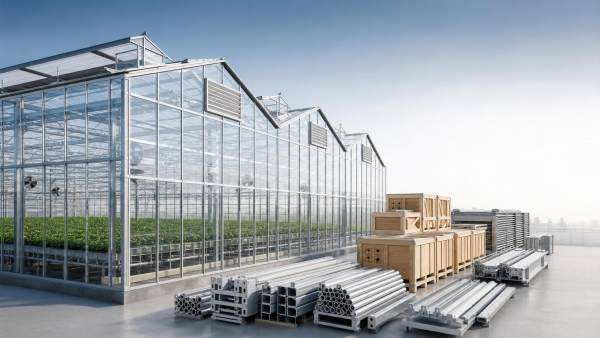
How to Choose a Glass Greenhouse Manufacturer for Commercial Growing Projects
Selecting the right glass greenhouse manufacturer can determine whether a commercial growing project delivers long-term efficiency, compliance, and return on investment.
For large projects, the decision goes far beyond comparing quotations. Structural design, climate systems, delivery control, and technical support all shape final performance.
A capable glass greenhouse manufacturer should help reduce construction risk, simplify integration, and support stable crop output over many seasons.
Start with Project Fit, Not Just Factory Scale
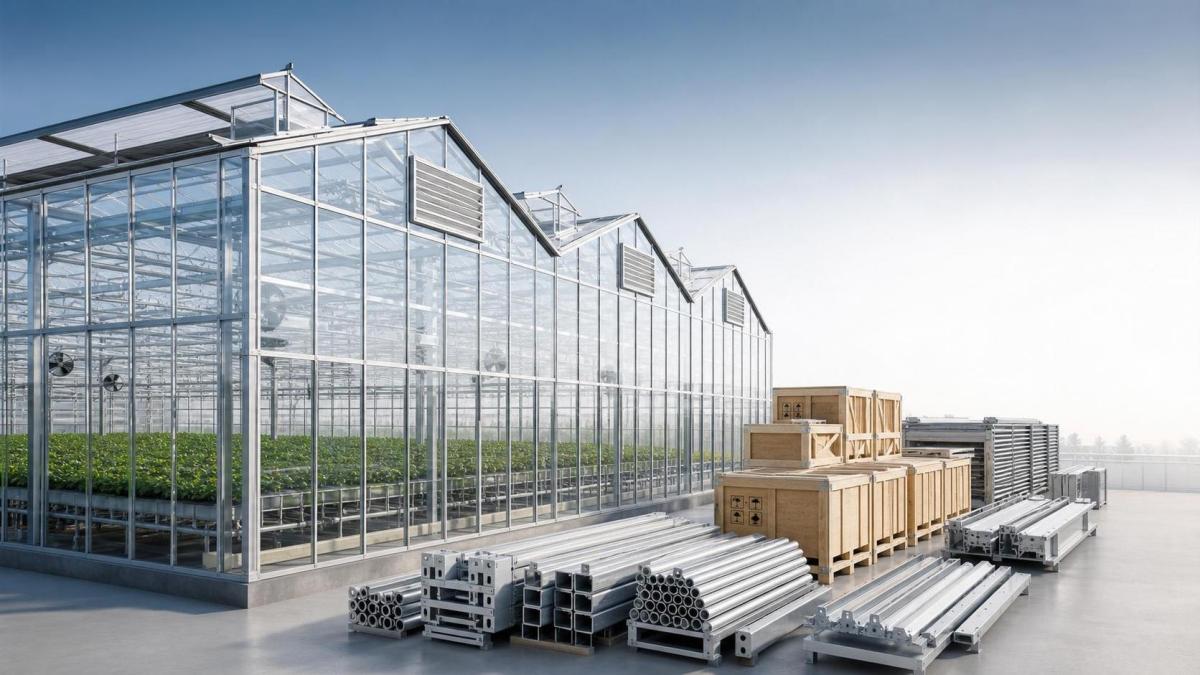
A large factory is not automatically the right partner. The better question is whether the manufacturer matches the project’s operating model.
Commercial tomato production, seedling propagation, cannabis cultivation, and flower growing all place different demands on greenhouse design.
In practice, an experienced glass greenhouse manufacturer should ask about crop type, local climate, target yield, labor strategy, and automation level early.
If those questions never come up, that is usually a warning sign. It often means the supplier is selling a standard structure, not a project solution.
- Define growing area, crop strategy, and production targets.
- Clarify whether the site needs phased expansion.
- List utility limits for power, water, gas, and drainage.
- Identify local code, permitting, and environmental constraints.
These basics make supplier comparison far more accurate. They also prevent expensive redesign after procurement has already started.
Assess Structural Engineering in Detail
The core product is still a building system. That means engineering quality should carry more weight than sales presentation.
A reliable glass greenhouse manufacturer should provide clear data on steel grade, aluminum profile design, glass specification, corrosion protection, and load calculations.
Recent market changes make this even more important. Weather volatility is increasing design pressure in both temperate and high-heat regions.
Look closely at these structural points:
- Wind load and snow load compliance for the exact site.
- Glass thickness, coating options, and light transmission performance.
- Gutter design, drainage handling, and condensation control.
- Foundation interface drawings and anchor requirements.
- Expected service life in coastal, humid, or high-UV conditions.
Ask for engineering calculations, not summary claims. A serious glass greenhouse manufacturer should be comfortable sharing stamped or review-ready technical documents.
Review Climate-Control Integration, Not Separate Components
Commercial greenhouse performance depends on system integration. A strong structure alone will not protect margins if climate control is poorly coordinated.
This is where many selection mistakes happen. Buyers compare frame prices, then discover later that ventilation, heating, and shading do not work as one system.
An experienced glass greenhouse manufacturer should explain how the greenhouse will perform across summer peaks, winter lows, humidity swings, and shoulder seasons.
The most useful review areas include:
- Roof and side ventilation capacity.
- Heating method and energy source compatibility.
- Screen systems for shading and energy retention.
- Cooling options such as fogging or pad-and-fan systems.
- Control software, sensor placement, and remote monitoring.
The better manufacturers model these elements together. That integrated approach usually produces more predictable crop conditions and lower operating waste.
Check Manufacturing Discipline and Supply Chain Transparency
For commercial growing projects, delivery discipline matters almost as much as design quality. A project can lose an entire season if the schedule slips.
This is why supplier audits should cover production planning, sourcing stability, packaging control, and export experience.
A trustworthy glass greenhouse manufacturer should identify where core materials come from, how quality is checked, and how replacement parts are managed.
More importantly, they should show traceability without hesitation. That includes batch records, inspection points, and logistics planning.
In actual procurement, transparency often separates dependable partners from quote-driven traders.
Verify Certifications, Standards, and Local Compliance
A glass greenhouse manufacturer should meet relevant standards, but certificates alone are not enough. The details behind them matter.
Review whether certifications apply to the production site, product category, and current export scope. Some documents look impressive but have little project value.
Depending on the project, useful references may include ISO quality systems, CE-related documentation, structural code compliance, and electrical safety records.
It is also worth checking whether the manufacturer can support permit submissions, engineering reviews, and document localization for local authorities.
- Request certificate numbers and issue dates.
- Confirm which factory and product line they cover.
- Ask for past project references in similar jurisdictions.
- Check whether third-party testing can be arranged.
This step may feel administrative, but it directly affects build approval, insurance, and long-term operating confidence.
Compare Customization Capacity and Engineering Support
Many commercial greenhouse projects are not truly standard. Site topography, utility routing, labor planning, and crop handling often require custom engineering.
A capable glass greenhouse manufacturer should support adaptations without turning every change into confusion or cost escalation.
Look for evidence in drawing turnaround speed, coordination quality, and the ability to solve interface issues with irrigation, fertigation, benches, and internal logistics.
Useful questions include:
- Can they modify span, bay layout, or gutter height?
- Can they coordinate around local utility corridors?
- Do they provide detailed installation drawings?
- Who owns technical communication during execution?
The stronger the engineering interface, the smoother the project tends to run once civil works and installation begin.
Look Beyond Purchase Price to Total Project Value
Lowest price often creates the highest total cost. That pattern is common in commercial greenhouse procurement.
A lower initial quote may exclude critical accessories, engineering revisions, installation guidance, or performance-related components.
When comparing a glass greenhouse manufacturer, build a full cost view that covers construction, operations, maintenance, and downtime risk.
This broader review should include energy efficiency, replacement intervals, labor savings, and expected crop consistency.
A slightly higher capital cost can be justified if the design improves climate precision and lowers annual operating loss.
Test After-Sales Support Before Signing
Support quality becomes visible after shipment, not during the sales call. That is why it should be tested before award.
A dependable glass greenhouse manufacturer should define response times, spare-part supply terms, remote troubleshooting methods, and warranty boundaries in writing.
Ask for a sample support workflow. See how they handle installation errors, actuator failures, broken glass, or control-system issues.
Reference checks are especially useful here. Previous buyers can usually tell you whether service promises matched real-world behavior.
Build a Shortlist with a Weighted Scorecard
To make the final decision more objective, use a weighted scorecard. It helps keep the process anchored to project outcomes.
A practical scorecard for a glass greenhouse manufacturer can include structural engineering, climate integration, compliance, lead time reliability, customization, and support.
You can also add commercial items such as payment terms, installation scope, and long-term parts availability.
The main point is simple: choose the manufacturer that fits the project best, not the one that only looks cheapest or fastest on paper.
A disciplined evaluation process usually leads to better build quality, fewer surprises, and stronger greenhouse performance after commissioning.
When the shortlist is ready, request detailed technical clarification, verify references, and move forward only with a glass greenhouse manufacturer that can prove both capability and consistency.
Related Intelligence
- Smart GreenhouseGreenhouse Equipment for Vertical Farming: Choosing Lighting and VentilationChoose greenhouse equipment for vertical farming with confidence. Compare lighting, airflow, and moisture control to improve crop uniformity and manage costs. Explore the guide.
- Smart GreenhouseSelecting Greenhouse Propagation Equipment for Hot, Humid Southeast Asian NurseriesGreenhouse propagation equipment Southeast Asia: discover how to select resilient irrigation, ventilation, benches, and automation for hot, humid nurseries.
- Smart GreenhouseWhat Are the Biggest Challenges in Agri-Tech Adoption in 2026?What are the biggest challenges in agri tech adoption for 2026? Explore cost, data, connectivity, skills, compliance, and ROI barriers.
The Morning Broadsheet
Daily chemical briefings, market shifts, and peer-reviewed summaries delivered to your terminal.
